
‘Streamlined Service Delivery, Electronic Governance, and Corruption Control Now Priorities’





News Summary
- The Good Governance Roadmap Study Committee submitted a report to the government encompassing 1,765 activities divided into 14 clusters aimed at governmental reform.
- The committee recommended prioritizing coordination among the three levels of government, legal reforms, and digital governance.
- The report emphasized the need to develop administrative capacity, financial discipline, and improve service delivery at provincial and local levels.
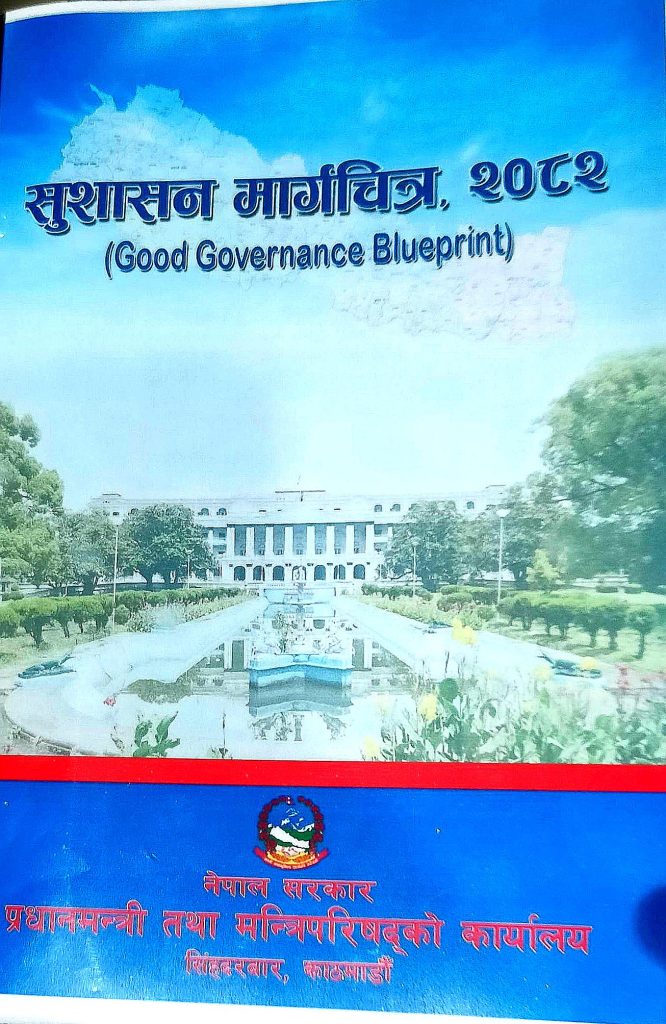
March 16, Kathmandu – The Good Governance Roadmap Study Committee has conducted a comprehensive study on the necessary tasks for government reform and submitted their report to the government. The committee was formed to review reform activities in line with the demands and spirit of the Gen Z Movement.
The committee was established under the leadership of Govinda Bahadur Karki, Secretary in charge of the Governance Division at the Prime Minister and Council of Ministers’ Office. The report was handed over to Chief Secretary Suman Raj Aryal.
According to the committee member and Deputy Secretary Bhishma Bhusal, the study aimed to address governance and corruption control issues raised by the Gen Z Movement.
“We engaged in discussions with over 500 individuals and various stakeholders. The report integrates suggestions and advice gathered from seven governance dialogues,” Bhusal stated. “We divided different sectors into 14 clusters and prepared a report highlighting necessary reforms.”
The study identified 1,765 activities requiring improvement. Bhusal noted the report analyzes concerns outlined in party manifestos and includes recommendations on legislative and judicial reforms.
Chief Secretary Suman Raj Aryal assured the report will be presented to the incoming government to review and implement based on priority.
Deputy Secretary Bhusal added, “Streamlining service delivery, enhancing electronic governance, and controlling corruption are placed at the highest priority.”

The committee highlighted a lack of coordination, cooperation, and coexistence among the three tiers of government. Clear division of powers, legal reforms, proactive measures, and regular intergovernmental coordination are essential.
The federal government’s portion of the report advocates simplifying and technology-friendly service delivery, expanding one-window service systems, implementing integrated public service standards, and strengthening institutional and technical capacity at provincial and local levels.
Provincial level challenges, including the absence of federal laws, staff management complexities, financial dependency, and weak administrative capabilities, hinder service delivery, the committee concluded.
The report calls for institutional restructuring, administrative capacity development, financial discipline, digital governance, and stronger intergovernmental coordination to meet public expectations at the provincial level.
At the local government level, the committee observed procedural complexities in service delivery, inconsistencies in service standards, lack of digital infrastructure, and political interference causing administrative distortions. It recommended halting federal and provincial government interference in local governance.
However, the committee acknowledged some local governments have demonstrated successful and exemplary practices, urging for the replication of these national-level initiatives.
“Implementing this report could transform local governments into the ‘first government’ closest to citizens, ensuring transparent, accountable, and result-oriented service delivery,” the report states.
The committee pointed out that political instability, weak leadership commitment to reform, and delays have hindered needed improvements in revenue systems and budget management. Structural problems persist in financial administration.
Budget discipline is weak as planning and resource management are neglected in favor of distribution-focused programs. There is a tendency to inflate revenue forecasts and expand budget sizes beyond capacity, which the report suggests correcting.
The committee also studied industry, commerce, supply, and investment sectors and offered recommendations. It emphasized the need for financial discipline and effective regulation in the cooperative sector.
Noting Nepal’s failure to attract high-value tourists, the report concludes that digital marketing and international branding are weak.
Regarding aviation, the committee highlighted delays in infrastructure expansion and weaknesses in air safety. It called for meeting international aviation security standards and strengthening technical capacity and infrastructure in civil aviation.
Public institutions are reportedly inefficient, with political interference in appointments, frequent leadership changes, and a lack of professional management, signaling an urgent need for comprehensive reform.
The report insists that public institutions must be freed from political interference and transformed into professionally managed, transparent, and competitive organizations.
Additionally, the committee recommended reforms in procurement laws and enhancing transparency and effectiveness in accounting and financial management.
Infrastructure projects progress slowly, partly due to unclear mandates and overlapping responsibilities among the three levels of government.
A lack of coordination among government entities causes impediments to project implementation, requiring immediate improvement.
In education, the study identified problems and recommended raising the quality of school education and revising curricula.
To enhance competitiveness, universities should focus on specialization in higher education and research systems.
The health system requires policy and structural reforms to become citizen-centered and quality-based, with priorities given to non-communicable diseases, mental health, and road accident control.
Improvements in skilled manpower, equipment, medicine availability, governance, and financial sustainability are needed alongside infrastructure expansion in health institutions.


