





Those in power appear determined to do whatever it takes to retain control over Nepali football. Despite repeated warnings from external parties, the leadership continues to disregard these concerns.
Summary
Reviewed.
- The A-Division League in Nepali football has not been held for three seasons, intensifying protests and conflicts among clubs and players.
- The All Nepal Football Association (ANFA) has agreed to launch the league on Chaitra 30, but clubs are protesting, staging relay fasts and office lockouts.
- ANFA’s election date has been postponed twice, with preparations made to hold polls in Jhapa on Chaitra 13, which remains highly contentious.
April 17, Kathmandu — Nepali football is currently drawing attention more for its off-field conflicts than on-field action. Though 17 clubs are registered for the national league, the atmosphere is far from competitive and matches have dwindled.
Off the field, rivalry has escalated between the All Nepal Football Association (ANFA), certain national league clubs, the Shaheed Smarak Division clubs, and the Nepal Football Players Association.
The main issues involve who dominates whom, who is influential, and whose directives get priority within Nepal’s football administration.
***
Two primary issues fuel this rivalry: the unsuccessful Shaheed Smarak A-Division League and the repeatedly postponed ANFA electoral general assembly.
Nepal’s top-tier A-Division League has not been conducted for three seasons. After the 2079 league started and concluded in Jestha 2080, two subsequent seasons have failed to materialize, and the current season has nearly stalled.
When Pankaj Bikram Nembang’s new executive committee took office, it pledged significant reforms for Nepali football. However, failure to successfully operate the A-Division League has become the principal criticism.
With the A-Division League inactive, clubs and players have raised their voices against ANFA.
The players’ association has declared plans to launch protests, while clubs have been pursuing various actions to press their demands.
ANFA, after securing agreement from players, committed to inaugurate the league on Chaitra 30. Nevertheless, clubs have boycotted the initiative and are ramping up pressure to enforce the November agreement.
On Monday, clubs announced programs including relay fasts outside ANFA, and in the evening, they locked down ANFA’s main office.
Although discussions were held with General Secretary Kiran Rai and CEO Indraman Tuladhar, no resolution was achieved. Clubs continue daily relay fasts.
Meanwhile, ANFA has proceeded with its plans by inaugurating the Shaheed Smarak Women’s League from Wednesday at Chyasal Stadium.
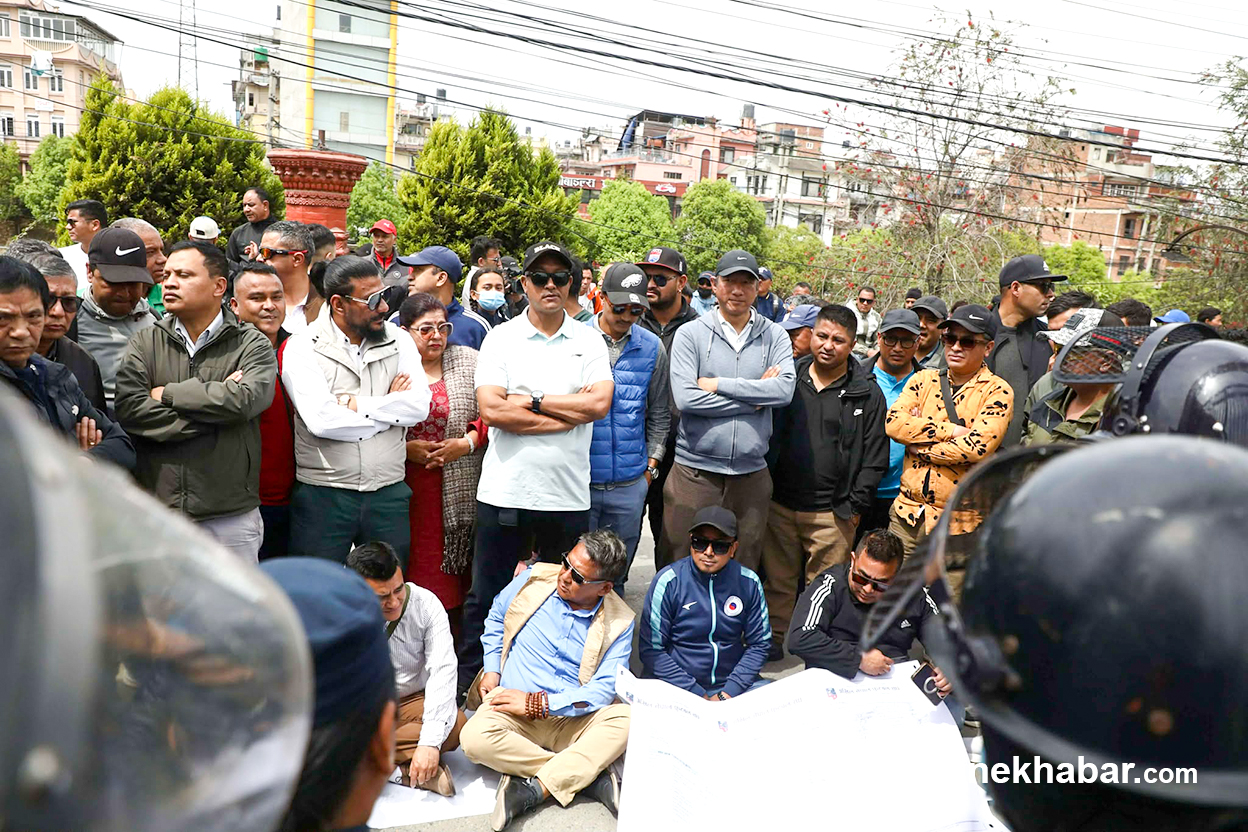
Currently, Nepali football is in a state of disorder with actors doing as they please. The players’ association has paused protests after securing some demands; however, clubs remain actively engaged in a decisive movement.
Given that players and clubs form the core foundation of Nepali football, questions about development and whose interests are being served continue to arise.
***
Another significant concern related to the A-Division League is the ongoing electoral controversy. The election, scheduled for Chaitra 13 in Jhapa, has become a challenging issue.
ANFA office bearers have disclosed that this election is part of a strategic plan.
While the current leadership appears intent on pushing through the election almost forcefully, opposition groups are focused on declaring the election illegal and obstructing it.
ANFA leadership is advancing the electoral process in a planned manner.
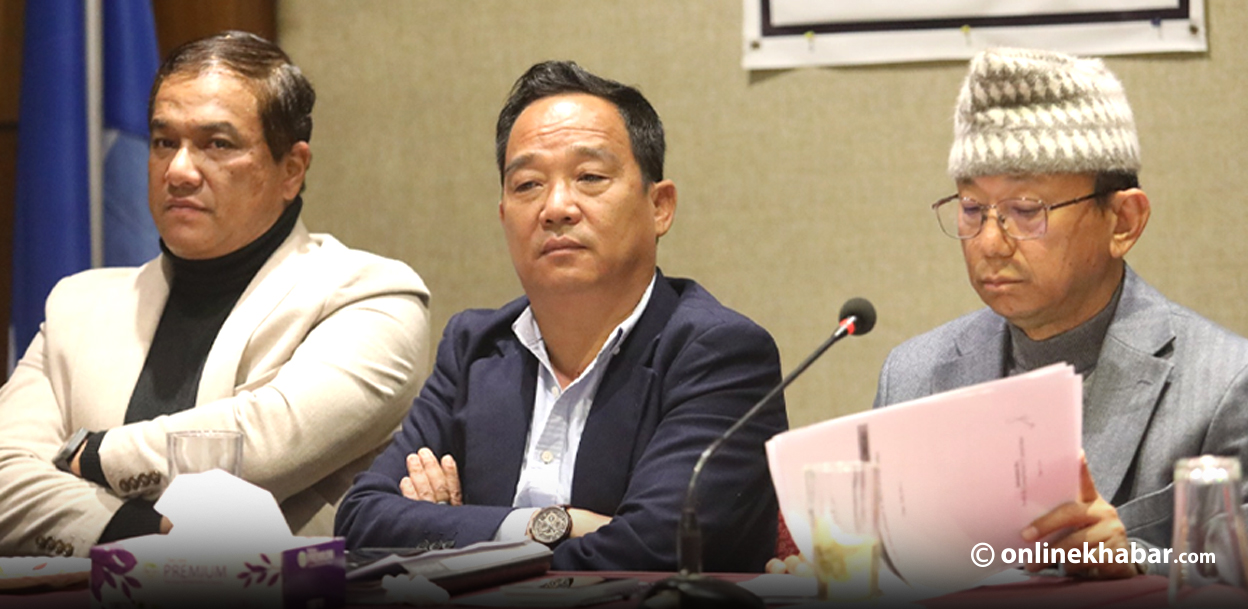
At the ANFA executive committee meeting on Poush 16, the decision was made to hold elections on Magh 28 in Jhapa. Although the committee’s term expires in Asar 2083, citing the FIFA World Cup and technical reasons, an early election date was announced.
The election date has been postponed twice, but there is a concerted effort to conduct it on the third scheduled date despite ongoing opposition.
Critics argue that ANFA’s constitution does not provide for early elections and that this conflicts with decisions made during the 2082 Dhulikhel general assembly, thus rendering the election immoral in the eyes of some groups.
However, the leadership maintains that the process is constitutionally valid. The dispute and ambiguity surrounding this issue continues to maintain a cloud over the football community.
Overall, it appears those in power are prepared to go to great lengths to safeguard their authority in football. Despite repeated warnings from opposition groups, the leadership has largely ignored external counsel.


