





March 18, Kathmandu. China has been preparing for a potential oil crisis for quite some time. The ongoing war in West Asia has put China’s preparedness to the test amid an emerging energy crisis.
Iran’s threat to attack ships passing through the Strait of Hormuz has disrupted energy supplies coming from the Middle East. This blockade is a response from Iran to attacks by the United States and Israel.
This blockade has caused global oil supply disruptions, severely impacting Asian countries dependent on Gulf states.
To conserve fuel, the Philippines has implemented a four-day workweek system, while Indonesia is seeking measures to prevent its limited fuel reserves from depleting quickly.
In this situation, China—the world’s largest oil importer—is also feeling the pressure. However, China’s position is somewhat better than its neighbors because it has long adopted policies to prepare for any potential energy crisis.
China Facing a Critical Test
The energy crisis has caused instability in the global economy, with oil prices frequently rising to as much as $120 per barrel. Attacks on transport and energy infrastructure are ongoing.
This situation emerged after Iran closed the Strait of Hormuz, one of the world’s busiest oil routes. According to the U.S. Energy Information Administration (EIA), roughly 20 percent of the world’s oil supply passes through this route.
With supply disrupted, countries are seeking alternative crude oil suppliers beyond the Gulf region, while some are consuming oil from their own reserves.
Analysts note that after the U.S., China is the world’s second-largest oil consumer, using approximately 15 to 16 million barrels daily. China’s vast transportation network—including cars, trucks, and airplanes—relies heavily on this oil. China imports most of its oil from foreign countries, with Gulf states as its main suppliers. According to the EIA, oil from Saudi Arabia and Iran accounts for more than 10 percent of China’s total imports.
Crude oil arriving from Iran and the Middle East through the South China Sea is primarily used as industrial and transportation fuel in southern China, where consumption is higher.
Northern China is mostly supplied by domestic production and Russian pipelines, so the Middle East conflict has not impacted northern supply.
Despite U.S. and European sanctions, Russia remains one of China’s largest oil suppliers. Coal is also a primary source of electricity generation in China and is abundantly available within the country.
China is the world’s largest coal producer, controlling more than half of global production.
In China’s total energy mix, oil and gas make up just over a quarter, making the country less dependent on these sources compared to Europe and the U.S.
Preparedness for Challenging Times
According to Ole Hansen, Head of Commodity Strategy at Saxo Bank, China has taken advantage of low crude oil prices and abundant supplies from Gulf countries in the past to build the world’s largest oil reserves.
Customs data shows that Beijing increased crude oil purchases by 16 percent in January and February 2024 compared to last year.
Iran is a key supplier of affordable crude oil for China. Various reports indicate that China purchases over 80 percent of Iran’s total oil exports.
Since the recent outbreak of war, ship tracking data shows that some of this oil is still reaching China. However, analysts differ regarding the total size of China’s oil reserves.
According to trade analytics group Kpler, more than 46 million barrels of Iranian crude oil are stored in tankers in the South China Sea—enough to supply energy needs for many months.
Hansen estimates that China’s reserves total approximately 900 million barrels, equivalent to about three months of imports.
Chinese state media, citing Columbia University data, reports that China holds roughly 1.4 billion barrels of petroleum reserves.
Such vast reserves provide China with a “strong security shield” during any crisis. Nonetheless, Beijing has indicated it will remain cautious in managing supplies in the near future.
Chinese officials have instructed oil refineries to halt fuel exports to help control domestic prices. The Chinese government has not issued any official comment on this matter.
China’s Pursuit of Energy Self-Reliance
China is among the world’s leaders in clean energy and is rapidly expanding wind and solar power projects nationwide.
In 2024 alone, wind, solar, and hydropower generated more than one-third of China’s total electricity output. This progress has reduced the share of crude oil in total energy consumption to about 20 percent. Moreover, the renewable energy network continues to expand.
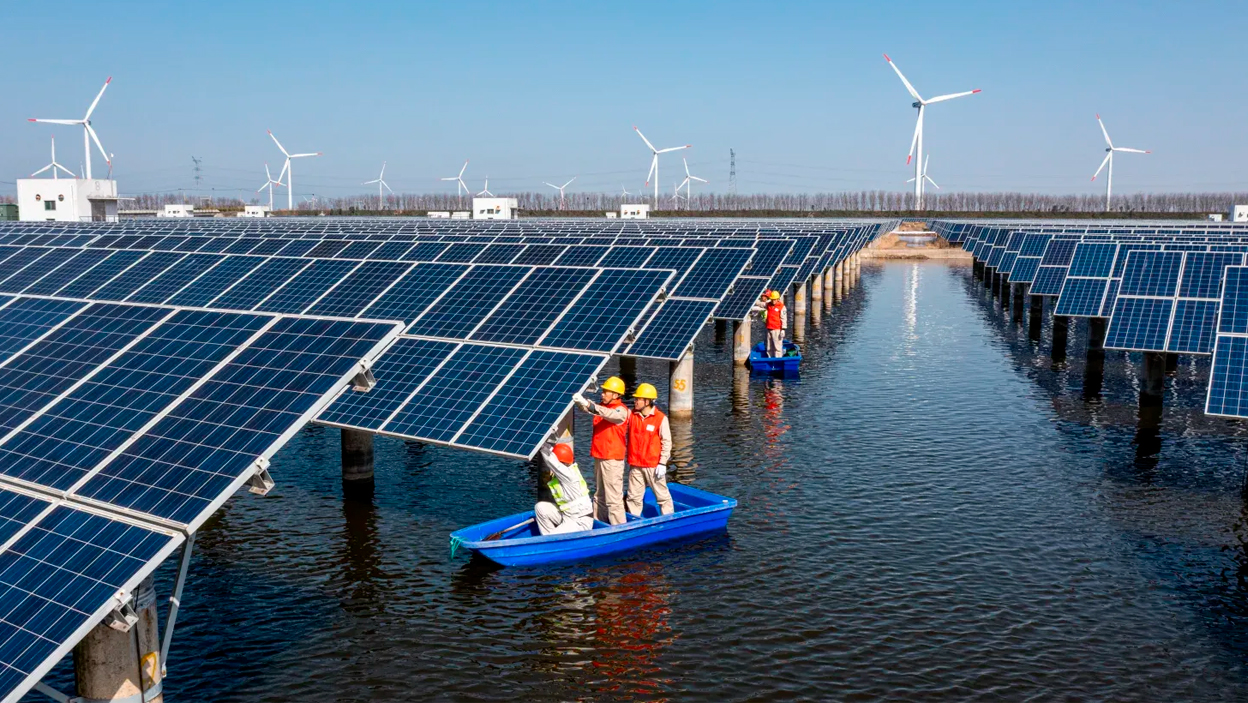
According to the International Energy Agency, there is unlikely to be significant growth in oil demand in China in the future.
Energy economist Roger Fouquet notes that China’s ambitious shift to renewable energy has not only benefited the environment but also helped protect its economy from global risks.
“China is somewhat fortunate. It began investing in renewables 25 years ago and is now reaping the rewards,” Fouquet said.
According to Rob Lee of the University of Sydney, at least one-third of new cars sold in China are electric, helping reduce dependence on oil. He states, “This means that electric vehicle owners in China are less affected by fuel price increases caused by Middle East tensions. They are somewhat insulated from the international oil market.”
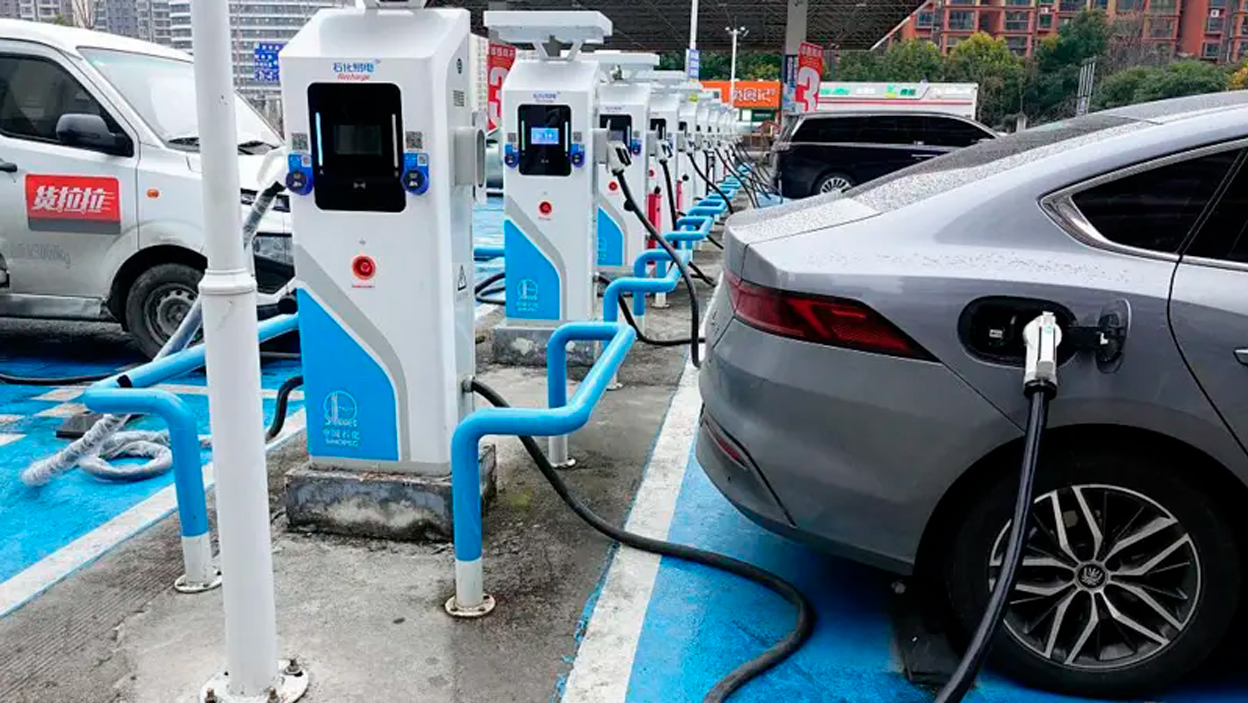
However, experts caution that China’s economy cannot be considered completely insulated from an oil supply crisis. The energy shortage could lead to higher fuel prices as well as increased charging costs for electric vehicles.


