




News Summary
Compiled from sources, editorially reviewed.
- Finance Minister Rameshwar Khanal managed the Finance Ministry and the Ministry of Federal Affairs for six months.
- Khanal noted challenges including a weak economy and reduced revenue collection following the Janajeevan movement on 8th and 9th September.
- He stated that the economic growth rate stands at 3.02 percent and highlighted potential petroleum supply disruptions due to the ongoing war.
March 19, Kathmandu – The economy had not gained momentum amid the backdrop of the Janajeevan movement that took place on September 8 and 9; private sector morale declined, public spending was weak, and revenue collection had fallen.
Rameshwar Khanal, a respected economist, inherited this economic situation when he took charge of the Finance Ministry. After six months at the helm, as he prepares to depart from his post, Khanal maintains a positive personal reputation.
On the contrary, he undertook some profound initiatives to improve financial administration, creating a more favorable environment for the next Finance Minister. In addition to finance, he was responsible for the Ministry of Federal Affairs and General Administration, and he released a final report on his tenure on Thursday.
“I am confident this report will provide essential information to the incoming ministers of these two ministries,” he stated in the same document.
What challenges did the Finance Minister face?
Khanal detailed the challenges encountered during his term in his report. According to him, the Finance Ministry was responsible for managing resources and logistics to hold the House of Representatives election on February 3, which had been scheduled since the formation of the government. Operating within the constraints of a mid-fiscal-year approved budget added to the difficulty.
Expenses related to relief for martyr families, treatment and aid for the injured, reconstruction of public infrastructure damaged during the movement, and restoration of services in offices disrupted due to the strike required careful management of materials, equipment, and temporary infrastructure—all posing significant challenges.
Furthermore, commercial properties and activities in principal economic centers, including the Kathmandu Valley, suffered damage. Acts of vandalism and damage to business owners’ residences brought economic activity to a halt, leaving entrepreneurs deeply demoralized—adding to the difficulty of boosting morale.
According to Khanal, by the end of September (mid of Ashwin), only 72.65 percent of the revenue collection target was achieved. Revenue growth was negative, declining by -6.38 percent. Capital expenditure was limited to just 1.56 percent.
Although macroeconomic indicators like inflation, exchange rate negotiations, current account status, and foreign exchange reserves improved, essential credit flow and capital formation for economic growth remained weak. Internal Revenue Offices suffered substantial damage to their records and infrastructure.
Nonetheless, by establishing temporary infrastructure and supporting staff, the ministry prevented further declines in revenue collection, Khanal asserted. Comparing to mid-September, the economy is now in a satisfactory condition, he added.
Currently, revenue collection growth stands at 3.77 percent, and 82.02 percent of the target has been met. Capital expenditure has reached 19.63 percent. The economic damage from late September and the transition period was brief, allowing a 3.02 percent growth rate in the first quarter.
However, the war in the Middle East and the Gulf region poses potential unexpected economic challenges for Nepal, the Finance Minister cautioned.
What are the potential economic challenges?
Khanal identified future economic risks stemming from the war, which could disrupt petroleum product supplies. This disruption may cause price increases and have negative effects on economic growth.
Many Nepalese traveling between Nepal and Western countries transit through Gulf airports. Any disruption in these routes could impact Nepal’s economy. Approximately two million Nepalese reside in the Gulf states. A prolonged war could threaten their employment and businesses, potentially requiring their evacuation, Khanal warned.
Khanal issued 828 decisions, only 27 on paper
During his tenure, Finance Minister Khanal reported having issued a total of 828 decisions. Of these, only 27 were made through traditional paper processes, while the remaining were executed via the Digital Integrated Office Management System.
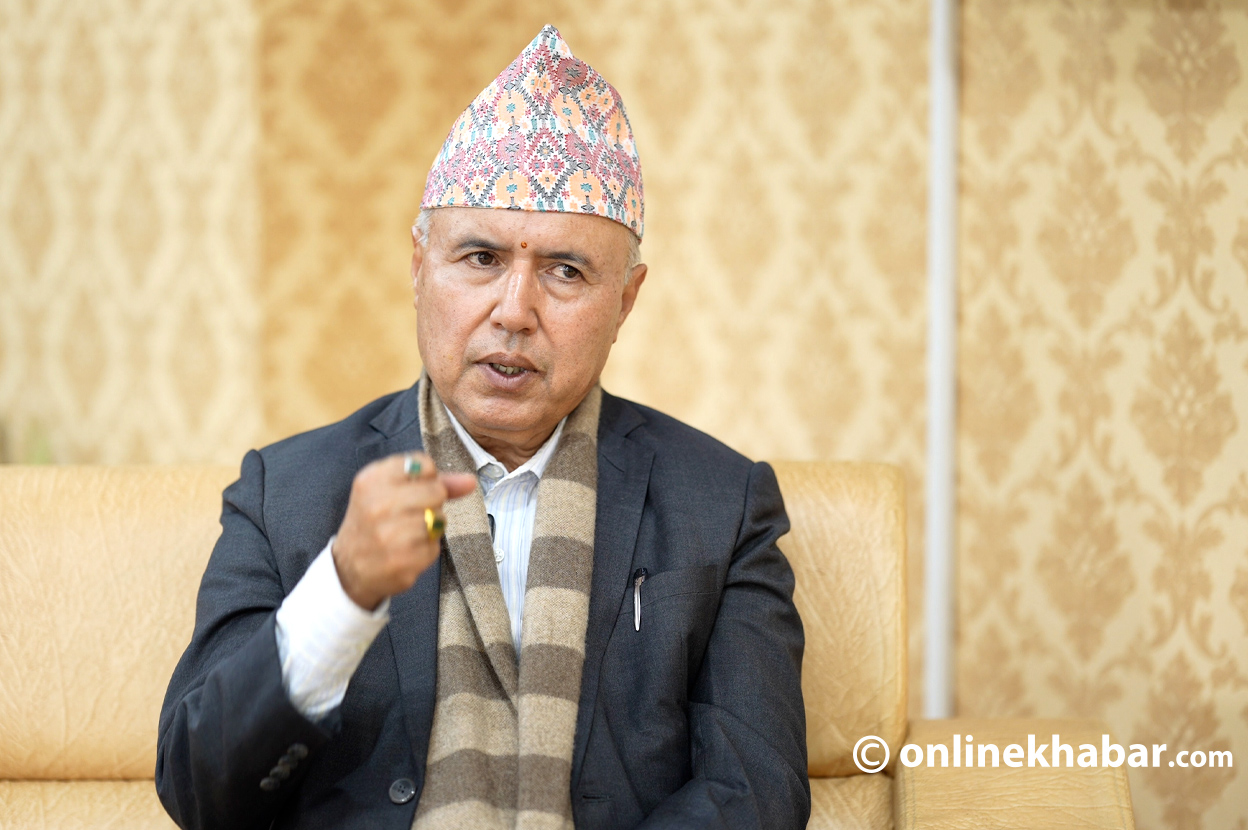
This averages to approximately 6.68 decisions daily. During this period, 648 meetings were coordinated, with 28.4 percent involving other ministries, 27.5 percent engaging private sector representatives, and 10.5 percent including development partners or diplomatic missions.
What administrative reforms were undertaken?
Khanal reflected that he did not have full time during the six-month term to implement significant improvements in governance and service delivery quality. Nevertheless, the successful implementation of the Integrated Office Management System was achieved. Organizational and management surveys led to the restructuring of tax service offices.
An online tax clearance certificate system was launched. The Revenue Management Information System incorporated an international payment system. A tax investigation unit and foreign investment coordination unit were also established.
Budget implementation included allocating NPR 1.96 billion for elections during the fiscal year, with suspensions on undelivered programs, totaling NPR 11.9 billion, of which NPR 5.29 billion had been released.
Only one project secured multi-year contract approval during this period. Vehicles and security personnel previously misused by former officials were fully returned, according to the ministry.
Nepal has maintained its sovereign credit rating and cleansing of assets, progressing towards removal from the grey list, the Finance Minister also noted.
Under financial federalism, the first intergovernmental finance council meeting for the current fiscal year was held during this period. Khanal detailed subtle reforms in revenue management including issuing PAN numbers through national ID cards, implementing a customs valuation system based on trade prices at all border points, and removing the requirement for government offices to affix postage stamps on income tickets.
What further reforms are underway?
Khanal also disclosed a list of ongoing or incomplete projects started during his term, including reconstruction plans and health insurance funding shortages.
He provided information for the incoming minister on international economic relations, financial sector management and institutional coordination, financial federalism, upcoming revenue management meetings, and laws advanced or in progress. Additionally, 85 decisions were made in the area of federal affairs.
“I did not appoint a personal secretary; ministry officials performed excellently”
Before leaving office, the Finance Minister praised government officials. He refused to appoint a personal secretary or advisor funded by government expenditure.
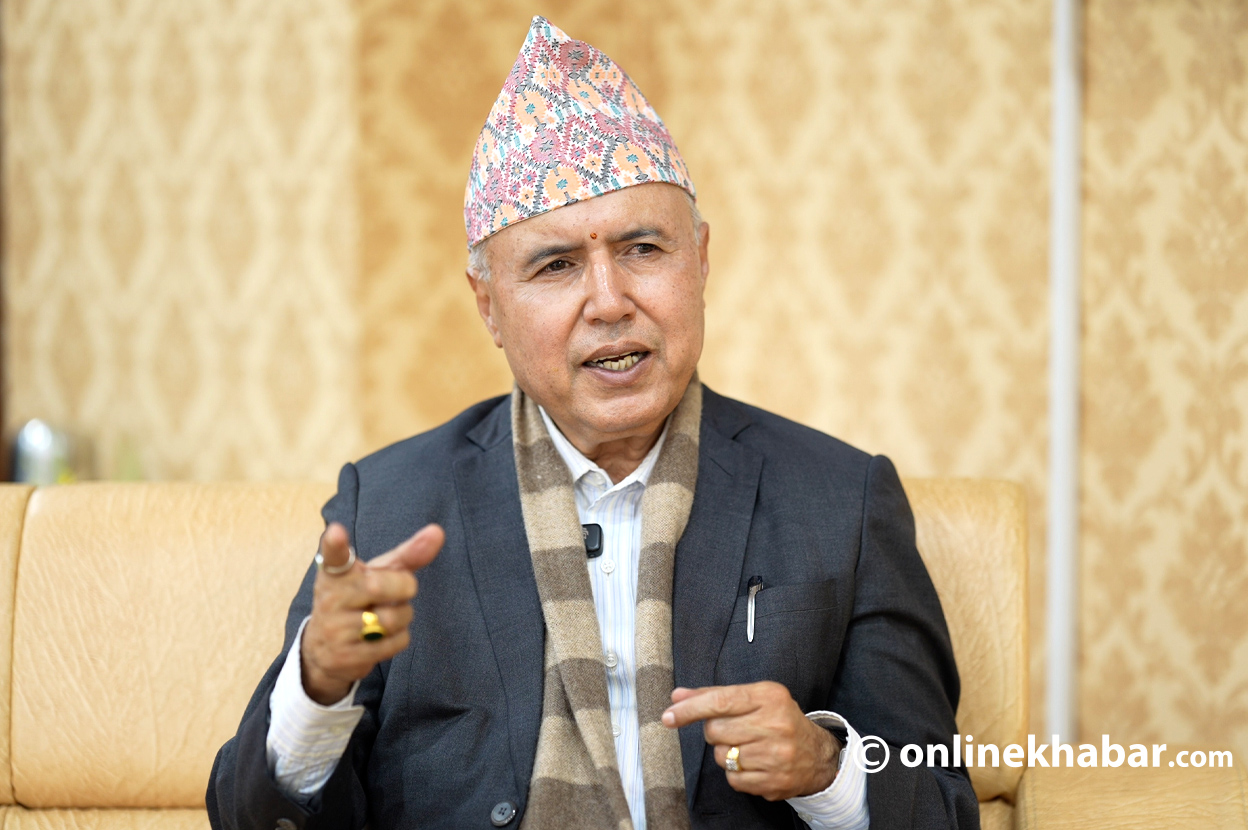
“The officials assigned by the ministry secretaries provided excellent support in my work,” he stated. He commended Undersecretary Subodh Khatri, Section Officer Bhimkant Nyaupane, and Computer Operator Niraj Bhusal.
He also expressed appreciation for Undersecretary Dipak Dhakal and Section Officer Dayaram Tiwari of the Federal Affairs Ministry. Praising secretaries and joint secretaries alike, he remarked, “Employees of both ministries have proven that civil servants can work purposefully and be result-oriented. The civil service should take pride in this, and I wish them all success.”


