




News Summary
Editorially reviewed.
- While all direct office bearers including UML Chairman KP Sharma Oli were defeated, young leader Suhang Nembang was re-elected from Ilam-2.
- Suhang won with 22,426 votes, defeating Congress’s Bhesraj Acharya by 7,776 votes, and is regarded as a leader who secured an easy victory within UML.
- Suhang is preparing to become the parliamentary party leader, with increasing pressure within the party to connect with the younger generation while valuing the contributions of the old guard.
March 18, Kathmandu – While all direct office bearers including party chairman KP Sharma Oli were defeated in the elections, several young leaders from the Communist Party of Nepal (UML) emerged successful.
Among those elected, the youngest is Suhang Nembang.
Suhang, re-elected from Ilam-2, is 36 years old. He was first elected to the House of Representatives in a by-election held in Baisakh 2081 (around April 2024), following the death of former Constitutional Assembly chairman and UML former vice chairman Subas Nembang.
However, due to political developments after the Genji Movement, Suhang was unable to serve for the remaining term after the by-election. Within 16 months of becoming an MP, the Genji Movement occurred on September 8, and the House of Representatives was dissolved.
The House elections held on February 21 were among the worst parliamentary results for the UML. While the Rastriya Swatantra Party (RASWAP) secured a near two-thirds majority, UML’s presence was limited to 25 seats – 9 from direct elections and 16 from proportional representation.
With 49 candidates unable to retain their deposits, the party is analyzing candidates and constituencies that secured comparatively better votes. “We have suffered defeat, but an integrated analysis of the results is underway to plan for the future,” a leader said.
According to leaders, the results from most constituencies are unsatisfactory. However, among the winners, Suhang Nembang’s victory appears relatively comfortable. The candidate with the highest votes is Mohammad Istiyak Rai from Banke-2.
Istiyak won with 24,628 votes, while his closest rival from RASWAP, Bibek Kumar Shrestha, received only 18,682 votes, marking a difference of 5,946 votes.
The second-highest votes went to Suhang, who secured 22,426 votes, defeating Congress’s Bhesraj Acharya, who managed only 14,650 votes. The margin was 7,776 votes.
Among UML’s nine elected representatives, Suhang is regarded as the leader who won with the most significant margin. Despite the defeat of senior office bearers, Suhang’s substantial margin has increased his appeal both inside and outside the party.
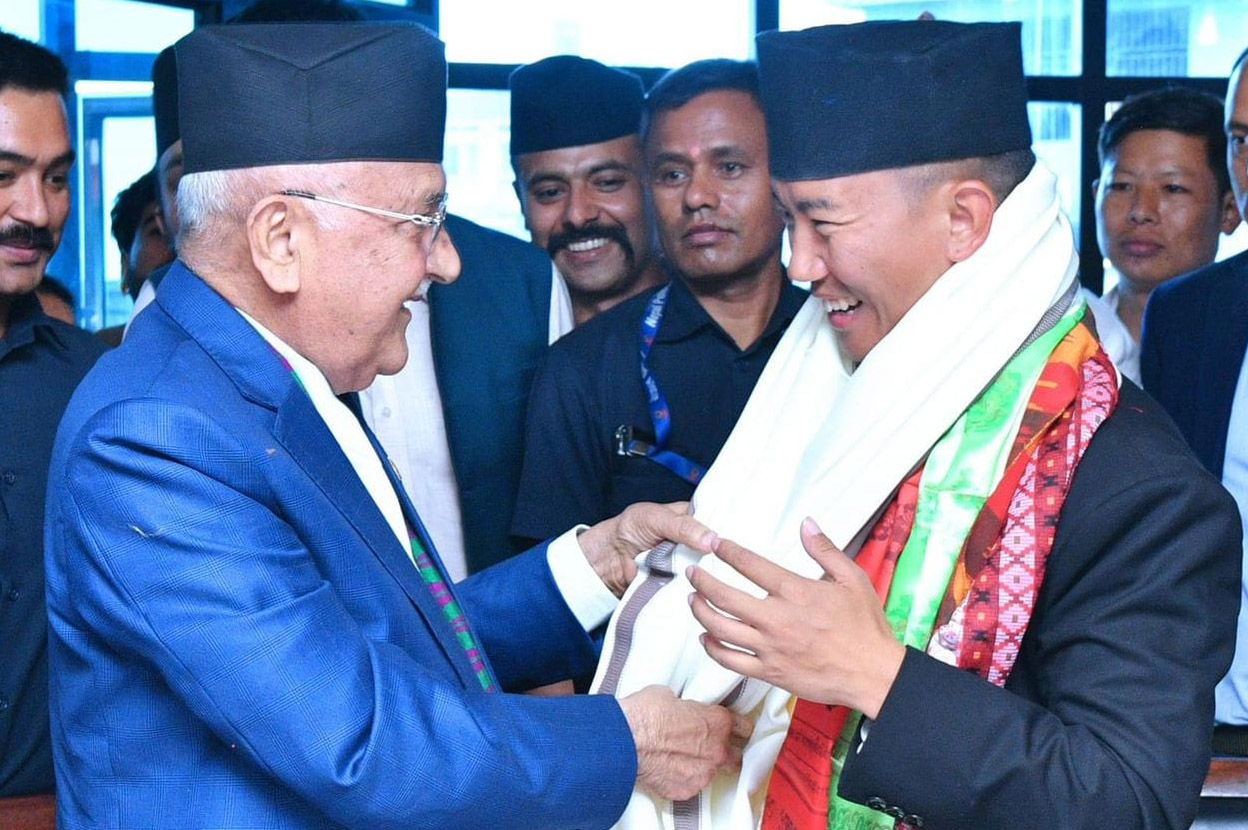
“The current political wave and Suhang’s smooth victory may have boosted his popularity,” said a UML official, “His win has brought a message of hope to the party’s younger generation.”
According to leaders, Suhang plans to utilize the opportunity to facilitate generational transition and transformation within the party. “Even during the party’s crisis, Suhang’s ease in winning has earned him the support of young members,” said a UML leader. “There is growing pressure that Suhang should become the parliamentary party leader to connect the party with the new generation while preserving the contributions of the former generation. Suhang himself is aware of this.”
Reports indicate that discussions about Suhang becoming party leader have already started among his close associates. “Given the current UML dynamics, it is not easy for Suhang to become leader, but he is actively pursuing it,” a source said.
UML Secretary Padma Aryal said that discussions about the parliamentary party leader have not yet taken place within the party. “Proportional representation MPs have not received their certificates yet. They are scheduled to take oath on the 16th,” Aryal stated. “Only after the oath-taking can the party leader be determined.”
According to Aryal, the leader will be selected according to rules and traditions. Based on her comments, party vice chairman Ram Bahadur Thapa ‘Badal’, who became an MP through proportional representation, could potentially become the parliamentary party leader. Subsequently, alongside him, Aryal, former vice chairman Guru Baral, or Comptroller General Pushpa Kandel might serve as senior leaders holding the party leadership.
However, doubts remain whether appointing proportional representation MPs to high leadership roles will enhance UML’s popularity. Suhang seeks to become party leader with the support of these members.
“Circumstances have positioned me as someone who understands the contributions of the old generation and can attract the youth,” Suhang reportedly told close leaders. “I need support to become party leader to honor the message of this election.”


