Madhesh Government Prepares to Revive Discredited Consumer Committees for Project Implementation





News Summary
Editorially reviewed.
- The Madhesh Province government is planning to implement projects valued up to NPR 2.5 million through consumer committees.
- The Ministry of Physical Infrastructure has given verbal instructions to its subordinate offices to carry out work through consumer committees.
- The government has committed to implementing projects according to the Public Procurement Act to prevent corrupt practices such as fake letter trading seen in the past.
March 19, Janakpurdham – In Madhesh Province, the practice of implementing projects through consumer committees has long been infamous. Due to widespread complaints about the trading of fake letters to secure projects, the previous provincial government had decided not to use consumer committees for execution this year.
However, the current coalition government is preparing to revive this discredited system. The Nepali Congress-led coalition, facing time constraints in project implementation, is planning to revert to the discredited consumer committee method.
The Ministry of Physical Infrastructure Development, which holds the highest number of projects in Madhesh, has approximately 2,500 projects, each worth up to NPR 2.5 million.
This ministry has verbally instructed its subordinate physical infrastructure offices to carry out work through consumer committees. Acting Secretary Sanjay Kumar Sah confirmed that verbal orders were given to implement projects worth up to NPR 2.5 million via consumer committees.
“No official correspondence has been issued, but verbal instructions were given to subordinate bodies to implement projects up to NPR 2.5 million,” he stated.
Apart from the Physical Infrastructure Ministry, projects valued up to NPR 2.5 million are also under the ministries of Energy, Irrigation and Drinking Water, Industry and Tourism, Land Management and Agriculture Cooperatives, Education and Culture, Sports and Social Welfare, and Health and Population. In these ministries and their subordinate bodies, parliamentarians, brokers, and close affiliates have already begun contesting for fake letters to obtain consumer committee-managed projects.
Currently, coalition partners including the Janata Samajwadi Party (JSP) Nepal and the Nepal Communist Party aim to continue the old practice by executing projects through consumer committees.
During the fiscal year 2081/82 BS (2024/25 CE), the then Satish Kumar Singh-led Janamat Party government had expressed intent in the budget speech to implement projects via open competition while banning work through consumer committees. However, under pressure from parties such as UML and Congress, they withdrew the ban and passed a resolution allowing project implementation through consumer committees for amounts up to NPR 5 million.
The consumer committees’ system became notorious due to the widespread issue of fake letter distribution and trading. Major opposition parties JSP Nepal and the Maoist Centre opposed this. Following prolonged pressure, an investigative committee was formed in the provincial assembly on June 5, 2024 (Jestha 22, 2081 BS), but its report has yet to be made public.
Despite past controversies, the current coalition, including JSP Nepal and the Communist Party, intends to revive the consumer committee system.
JSP parliamentary leader and former Chief Minister Saroj Kumar Yadav justifies the preparation, citing time constraints to implement projects effectively.
“There is limited time, so it’s not feasible to carry out all projects through a tender process,” he said. “Implementing through consumer committees is not wrong; what’s wrong is the fake letter trading. Previously, more than 10,000 projects were implemented through consumer committees. Many complaints were filed with the Commission for the Investigation of Abuse of Authority, but no faults were found. Meanwhile, many lawsuits arose from the tendering process.”
Physical Infrastructure Minister Rajkumar Gupta stated that discussions among parties are ongoing regarding executing projects through consumer committees.
According to Mahesh Prasad Yadav, parliamentary leader of Janamat and also Finance Minister, there is a cross-party consensus to implement projects up to NPR 2.5 million via consumer committees.
“Coalition and multi-party meetings have taken place. The Chief Minister was initially opposed to the consumer committee approach, but all sides acknowledged time constraints and potential issues with projects getting divided and disrupted by following competitive procurement by secretaries,” he said.
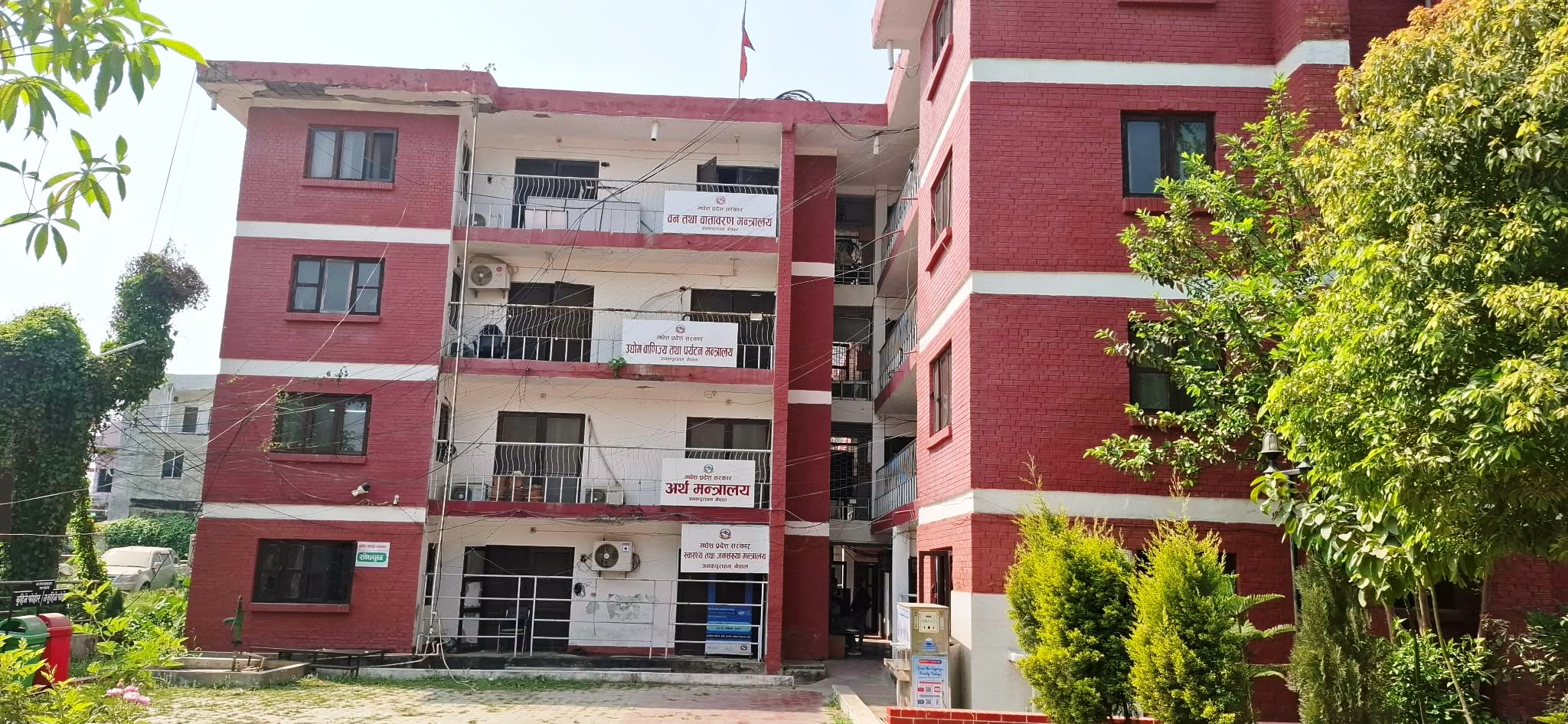
Minister Yadav added that there is a verbal agreement in the multi-party meeting to implement projects following the Public Procurement Act to avoid repeating past corrupt practices.
“This initiative aims to move forward systematically through multi-party consensus to avoid weak implementation caused by time constraints and fragmented projects,” he said. “If corrupt activities like fake letter trading recur, the responsible ministers and parties will be held accountable.”
However, Yubaraj Bhattarai, parliamentary leader of the Maoist Centre (now Nepal Communist Party), claims there have been no discussions or consensus about executing projects up to NPR 2.5 million via consumer committees.
Historically, in Madhesh, consumer committees have rarely been used as intended.
“Within the coalition, there is no agreement on work through consumer committees,” he declared.
The Sushila Karki-led government issued a directive last October that all provincial governments and local bodies must implement projects above NPR 1 million via open competition.
The directive stated in point 14: “Projects funded or transferred financially by the Government of Nepal with amounts exceeding NPR 1 million shall not be implemented through consumer committees, nor should projects be divided to be executed through consumer committees.”
However, instead of promoting good governance and reducing malpractice, the Madhesh government appears to be endorsing the previously discredited consumer committee system.
Why Did Consumer Committees Become Discredited in Madhesh?
The Public Procurement Act allows consumer committees to implement projects up to NPR 10 million. However, proper procedures have not been followed in Madhesh.
Consumer committees should be formed through open public meetings at various levels. Instead, secret lists are compiled by ministers’ secretariats and sent to offices. Individuals on those lists negotiate with parliamentarians and brokers to covertly finalize processes to establish committees. Subsequently, contractors are hired on petty contracts, leading to the deterioration of the consumer committees’ reputation.
The previous controversial decision by then Chief Minister and UML parliamentary leader Saroj Kumar Yadav to disallow projects above NPR 2.5 million from going through consumer committees had provided some relief. He had mandated competitive procurement for projects above that threshold. Although his staff transfers were reversed after the Congress-led government was formed, this decision remains intact. This forms the basis for the current Madhesh government’s plan to implement projects up to NPR 2.5 million through consumer committees.


