




The tournament, featuring only four teams and conducted over two days, has so far provided limited encouragement towards Nepal achieving Test status in cricket.
News Summary
- Nepal Police Club successfully defended its title in Nepal’s only multi-day cricket competition, the Jai Trophy.
- The Cricket Association of Nepal (CAN) plans to expand the Jai Trophy in future editions by including more teams.
- CAN Secretary Paras Khadka stated that efforts are ongoing to prioritize the red-ball format to achieve Test status for Nepal.
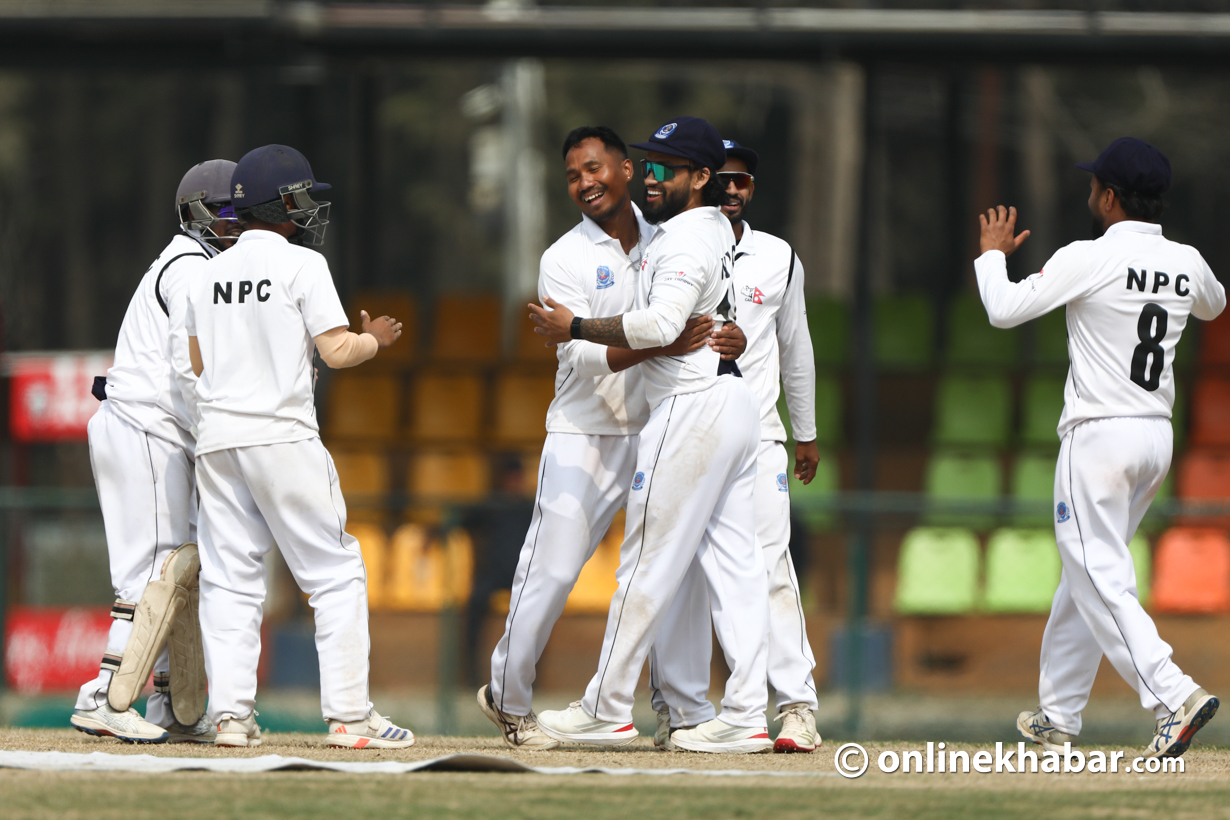
March 19, Kathmandu – Nepal’s only multi-day cricket competition, the Jai Trophy, concluded this Thursday. In the tournament between the top four teams from the Prime Minister’s Cup, Nepal Police Club successfully defended their title.
Several players from the Nepal national cricket team participated in the Jai Trophy. This tournament, considered vital for the country’s long-format cricket development, provides players with crucial experience that enhances their performance in both one-day and multi-day formats.
There is growing demand to expand the Jai Trophy, increasing the number of participating teams and organizing at least two to three multi-day competitions each year going forward.
Players and analysts alike believe that multi-day cricket not only develops skills but also helps players adapt to the longer format of the game.
Additionally, players have urged that the competition be extended from two to three days to better serve this purpose.
The next domestic tournament, the Prime Minister’s Cup (PM Cup), is about to begin soon. Played in the ODI format, this tournament will also aid preparations for the upcoming ICC World Cricket League 2.
However, expanding the scope and number of domestic tournaments such as the PM Cup and Jai Trophy in Nepal appears crucial for the sustainable development of Nepalese cricket.
According to the annual calendar released by the Cricket Association of Nepal (CAN), there are no major long-format tournaments scheduled following the PM Cup.
Focusing primarily on T20s and having limited domestic competitions in the ODI format means that the goal of achieving Test status for Nepal faces challenges.
What is the basis for achieving Test status?
Currently, the Jai Trophy stands as Nepal’s only multi-day cricket competition. Featuring four teams and played over two days—with the final generally lasting up to three days—this tournament has limited capacity to elevate Nepal to Test status.
Due to the small number of teams and the short duration of matches, the tournament sends only a modest message towards Nepal’s Test aspirations.
Two years ago, CAN Secretary Paras Khadka outlined the goal of making Nepal a Test nation within 10 years. The ICC’s annual conference also expressed confidence that Nepal would soon achieve Test status.
Although this target has been reiterated several times, concrete progress is yet to be seen. Khadka mentioned that positive feedback has emerged over the last two seasons, with red-ball cricket prioritized to build experience in the longer format.
“After two editions, players have given good feedback. Full membership and Test status remain our dreams. We do not know exactly when we will achieve Test status, but since red-ball formats help player and skill development, we have prioritized it,” Khadka said.
“So far, red-ball cricket in proper ODIs, domestic cricket, and professional setups has improved player capabilities, which is why we emphasize it,” he added.
To realize the dream of Test status, structural development of red-ball cricket within Nepal is necessary. Regular multi-day competitions will allow players to internalize this format.
What do the players say?
While long-format cricket development is continuously discussed, players also call for more tournaments like the Jai Trophy.
Sompal Kami, the runner-up captain from Tribhuvan Army Club, emphasized the need for more such competitions. “There should be more tournaments like the Jai Trophy. It helps test the skills of both batsmen and bowlers,” Sompal said after the final.
CAN Secretary Khadka confirmed plans to expand the tournament’s scope in future editions and mentioned ongoing efforts to organize matches at the provincial level, pending necessary budget allocations. “Based on feedback from two seasons, we will make the next edition more extensive,” he said.
Players also praised the quality of the wickets used during the tournament. Sompal noted that the pitches were challenging for both batting and bowling. “Having such wickets will improve Nepalese cricket,” he added.
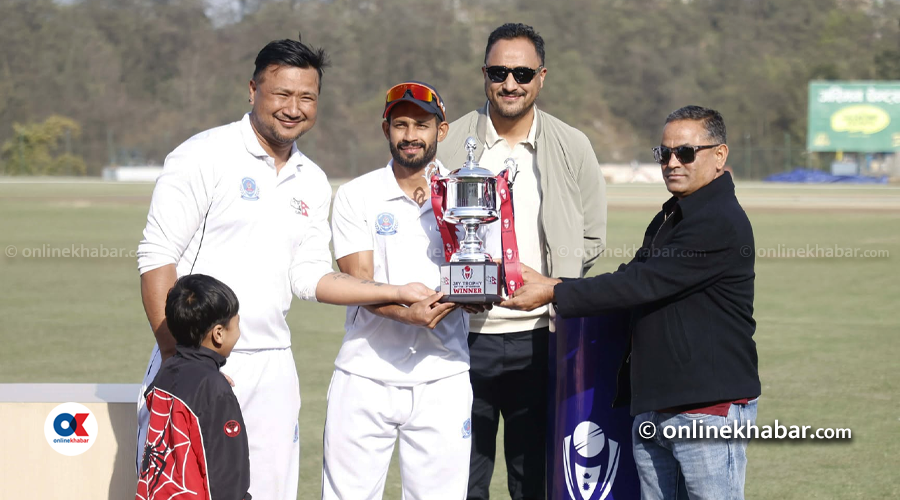
Police captain Arif Sheikh also remarked that the wickets provided a balanced challenge to both batting and bowling. “Wickets should test temperament, fitness, and endurance,” he explained.
Arif further stressed that if the competition extends to three days, all three days should be fully played, with players adapting accordingly and avoiding premature dismissals.
Players acknowledged that this competition greatly supported their preparation and boosted their confidence for upcoming matches.
What is the upcoming schedule?
Following last year’s intense focus on T20 cricket due to the World Cup, the Nepal national team appears set to emphasize the longer format this year.
After the World Cup, the Nepalese players who participated in the Jai Trophy were scheduled to play an ODI series in the domestic ground linked to League 2 cricket. However, the series was postponed due to tensions in the Middle East.
Although the start date for the series remains uncertain, the Prime Minister’s Cup starting Sunday will provide valuable preparation.
In addition, the ACC Premier Cup and bilateral series are scheduled. After these, players are expected to shift back to T20 format competitions.
Therefore, it seems that multi-day domestic competitions will remain limited for at least another year. CAN Secretary Khadka emphasized that expanding the scope and duration of the Jai Trophy in the next edition will allow more teams to gain experience in multi-day cricket.


