Other Countries Actively Rescue Citizens Amid Middle East Conflict; Nepal Stays Focused on Situation Analysis





News Summary
- The military clashes between Iran and Israel-US since February 28, 2026, have placed the lives of millions of migrant workers in the Middle East at serious risk.
- India has successfully evacuated approximately 220,000 citizens from the Gulf region by March 16, conducting the world’s largest diplomatic evacuation operation.
- The Nepal government has prioritized the safety of over 1.7 million Nepalis in the Gulf and conflict-affected countries, forming an Emergency Response Team and organizing necessary evacuation measures.
6 Chaitra, Kathmandu – Since February 28, 2026, the direct military conflict between Iran and Israel-US has severely endangered not only the geography of the Middle East but also the lives of millions of migrant workers who form the economic backbone of the region.
Under the operation dubbed ‘Epic Fury,’ the US and Israel launched strikes against Iran’s strategic centers. In retaliation, Iran targeted US military bases and energy hubs in countries like the United Arab Emirates (UAE), Saudi Arabia, Qatar, and Kuwait with missile and drone attacks, turning the Gulf region into an active war zone.
While analysis abounds on the economic, geopolitical, and balance of power impacts, the safety of individuals remains a critical concern.
The war-torn areas disproportionately affect citizens from South and Southeast Asian countries, many of whom have been working tirelessly in construction and service sectors across these nations for decades.

Current Risks and Humanitarian Concerns
The Gulf Cooperation Council (GCC) member states alone employ over 35 million migrant workers.
Following drone and ballistic missile strikes by Iran on US military installations in Saudi Arabia, UAE, Qatar, Kuwait, and Oman, the Gulf region has effectively become a ‘no-fly zone.’
Ninety-two percent of these workers are concentrated in the UAE. Since the onset of the conflict, flights to business hubs like Dubai and Abu Dhabi have been severely disrupted, forcing people to seek shelter in underground bunkers and secure shelters.
As of the third week of March 2026, Iran’s attacks have resulted in at least 14 civilian deaths in the UAE and other Gulf countries, including 11 foreign nationals.
The casualties include workers from Nepal, India, Pakistan, and Bangladesh. Drone and missile debris in busy urban centers like Abu Dhabi and Dubai have directly targeted transportation and workers.
While wealthy citizens have managed relocations via private jets or alternate routes, lower-income workers face the grave dilemma of choosing between continuing work or preserving their lives. Many are unable to abandon their jobs due to fears that family remittances will stop.
The International Labour Organization (ILO) notes that the ‘kafala system,’ which binds workers to their workplaces, makes immediate departure extremely challenging.

India’s Diplomatic Evacuation Model
India has implemented a highly successful diplomatic plan to evacuate its citizens from Gulf countries, safely extracting about 220,000 people by March 16, 2026, in what is reportedly the world’s largest evacuation effort.
On March 4, India’s Ministry of External Affairs set up a 24-hour war room in New Delhi, fully activating its diplomatic networks. Employing a ‘multi-modal’ transportation approach, the operation did not rely solely on air travel, ensuring smoother and safer evacuations.
Between March 1 and 7 alone, over 52,000 Indian citizens returned from the UAE and Saudi Arabia, with the number reaching over 67,000 by March 9. India utilized not only air travel but also road routes to provide safe transit for its people.
Foreign Minister S. Jaishankar secured permissions for ‘special corridors’ for Indian ships through talks with Gulf counterparts.
Meanwhile, Indian embassies tracked citizens through the ‘Pravasi Bharatiya’ portal, prioritizing evacuations efficiently.
US and Western Powers’ Task Force Strategy
The United States established a ‘State Department Task Force’ to protect nearly one million US citizens in the Middle East, taking stringent measures. Former President Trump issued directives urging immediate evacuation or safe sheltering, and charter flights were arranged from Saudi Arabia and the UAE.
By mid-March, more than 28,000 Americans received direct assistance, and over 43,000 were relocated to safer destinations.
European countries collectively activated the ‘EU Civil Protection Mechanism.’ France evacuated 180 citizens from Abu Dhabi and 205 from Israel promptly. The UK repatriated 4,000 out of 130,000 registered citizens from Oman via safe transit routes.
Italy evacuated over 25,000 citizens using land routes through Saudi Arabia, Kuwait, and Qatar.
Key evacuation hubs were established in Muscat (Oman), Amman (Jordan), and Sharm El-Sheikh (Egypt) by the US and European countries.
The Netherlands successfully evacuated more than 75 citizens via bus from UAE to Oman, then through Hurghada in Egypt, before flying to Amsterdam. Embassies from involved countries deployed ‘Rapid Consular Support Teams’ to facilitate these operations.
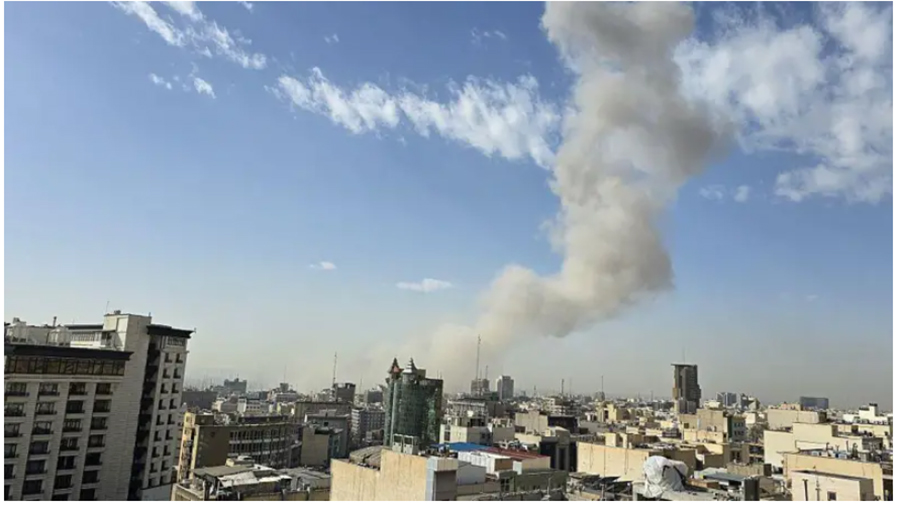
Struggles of Southeast Asian Countries in Citizen Management
Countries such as the Philippines, Pakistan, Indonesia, and Bangladesh faced economic and technical challenges while trying to evacuate millions of citizens simultaneously.
The Philippines managed to evacuate 1,416 out of over 2 million citizens. Indonesia airlifted 10,060 pilgrims from Jeddah to Jakarta via special flights.
Pakistan’s situation is complex due to proximity to Iran; it managed to repatriate 792 citizens via Azerbaijan.
Malaysia evacuated 431, South Korea over 500 citizens from the UAE through chartered flights. Thailand repatriated 292 citizens via routes through Turkey.
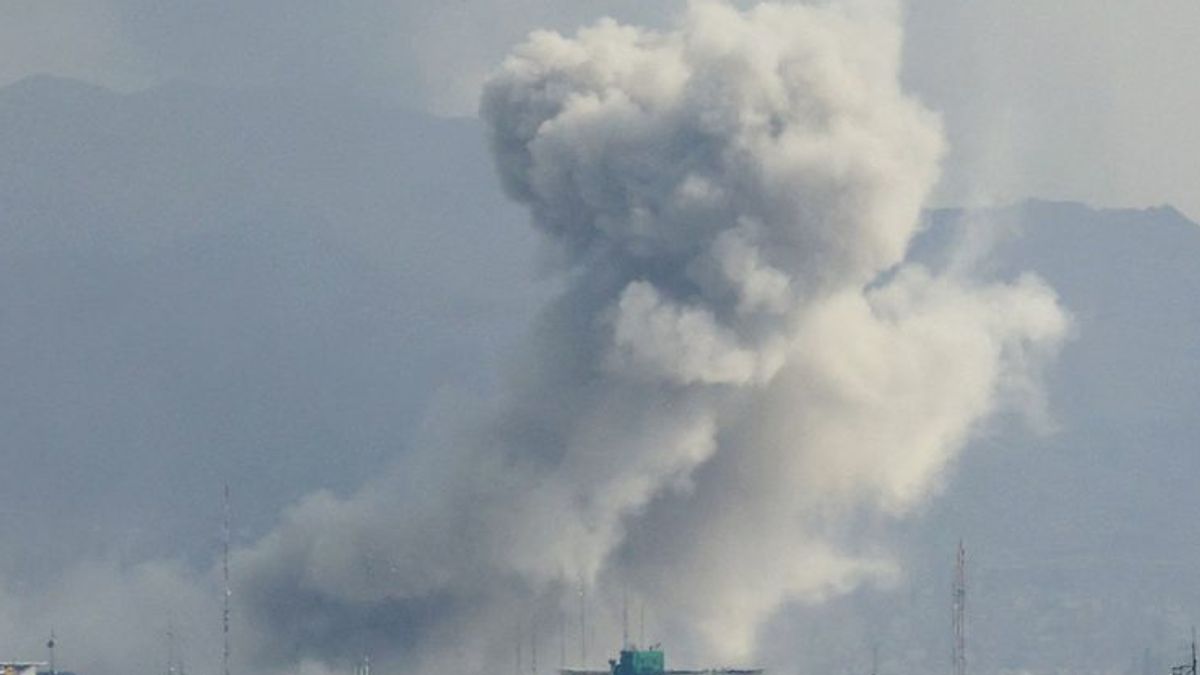
Oman and Qatar’s Humanitarian Corridors
Oman and Qatar set outstanding examples of humanity in this conflict.
With UAE and Saudi airspaces becoming unsafe, Oman opened its land and air routes for foreign citizen evacuation.
Thousands of foreigners in the UAE were escorted across the Oman border by bus, from where flights to safety were organized.
Qatar utilized its modern airports and large aircraft for emergency evacuations, negotiating with conflicting parties to secure a ‘humanitarian corridor,’ which facilitated the release of stranded passengers at airports.
The deployment of military aircraft by Poland and Singapore to evacuate their citizens further underscores the seriousness of the war.
Nepal’s Situation and Preparedness
According to the latest Ministry of Foreign Affairs data, about 1,729,288 Nepalis are residing in Gulf and conflict-affected countries. Including undocumented individuals, this figure could approach 2 million.
Previously there were six Nepalis in Iran; now four more have contacted authorities, making a total of 10, all of whom are safe and registered to return via Indian ships.
The concentration of Nepali workers is substantial, particularly around 700,000 in the UAE, 384,865 in Saudi Arabia, and 357,913 in Qatar.
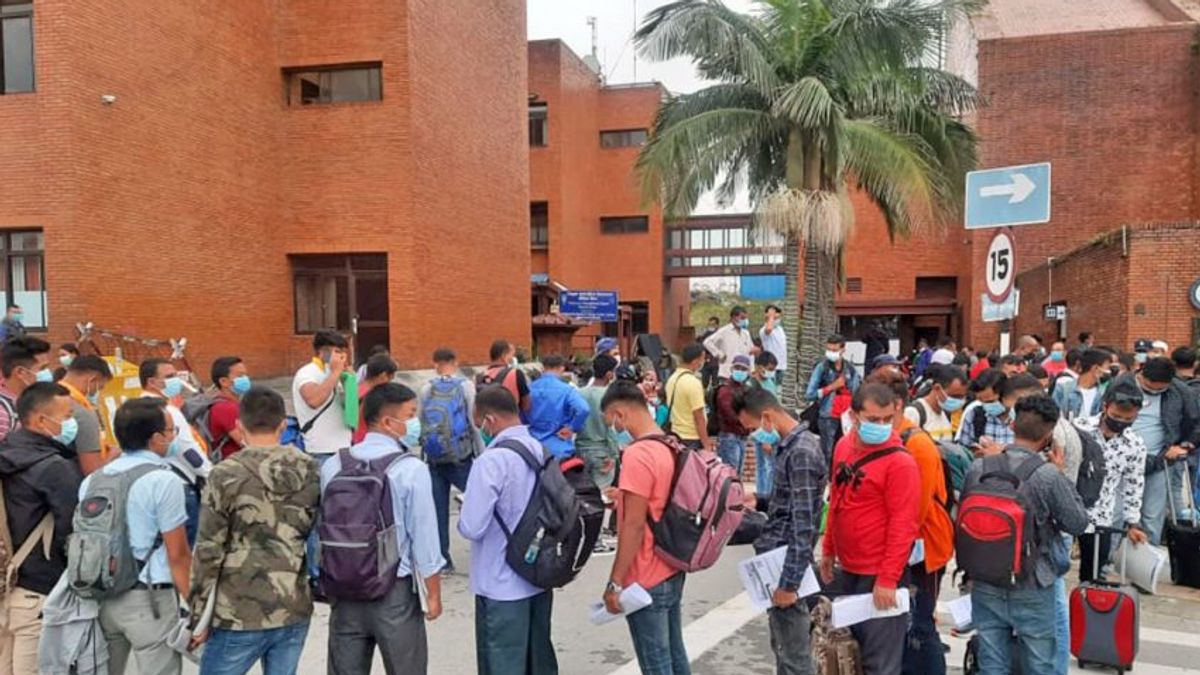
Additionally, there are approximately 175,000 Nepalis in Kuwait, 30,000 in Iraq, 28,000 in Bahrain, and 25,000 in Oman. Smaller populations reside in Cyprus (17,000), Israel (around 6,500), Lebanon (1,500), and Egypt (500).
The Government has suspended labor approvals, NOCs, and demand letter certifications for these countries. However, on Chaitra 4, the Ministry of Labor, Employment and Social Security decided to reopen approvals for seven Gulf countries.
The Nepali government has designated the safety of Nepalis abroad a high priority, closely monitoring ongoing developments.
The Ministry of Foreign Affairs formed an ‘Emergency Response Team’ (ERT) led by Secretary Amrit Bahadur Rai, including representatives from Home, Finance, Law, Culture and Tourism, Civil Aviation, Education, Labor, Foreign Employment, and other departments.
The ERT issues daily ‘Situation Analysis Reports’ to 10 embassies and missions in conflict zones. A 24-hour ‘Emergency Control Room’ has been established at the Ministry.
An online portal for Nepali citizens seeking relief and evacuation has been developed, with 81,100 registered as of Friday.
The government arranged evacuation routes via Saudi Arabia from Kuwait and Qatar, facilitating road transport to Saudi Arabia and air travel from Saudi Arabia to Nepal.
Embassies have been offering voluntary repatriation services at their own expense.
Currently, flights are suspended from Iraq, Kuwait, and Bahrain; Qatar and UAE flights are partially open, while Riyadh, Dammam, and Oman air routes are fully operational.
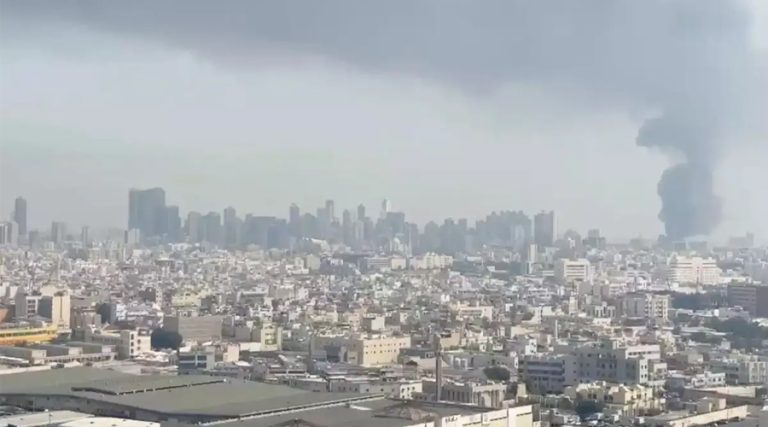
About 1,000 Nepalis have already returned home through various arrangements. Some received embassy assistance, while others were repatriated through government agency coordination.
Nepal Airlines Corporation and Himalaya Airlines have been instructed to seek permission to conduct rescue flights to affected countries; however, passengers are required to pay airfare.
‘Rapid Response Task Force’ has been established to coordinate emergency assistance among Nepali missions in West Asia and Africa, the Non-Resident Nepali Association, the National Coordination Council, and Nepali communities.
Foreign Minister Balananda Sharma emphasized that the government assigns the highest priority to Nepali citizen safety and is prepared to make all necessary efforts for evacuation, including chartering vessels if needed.


