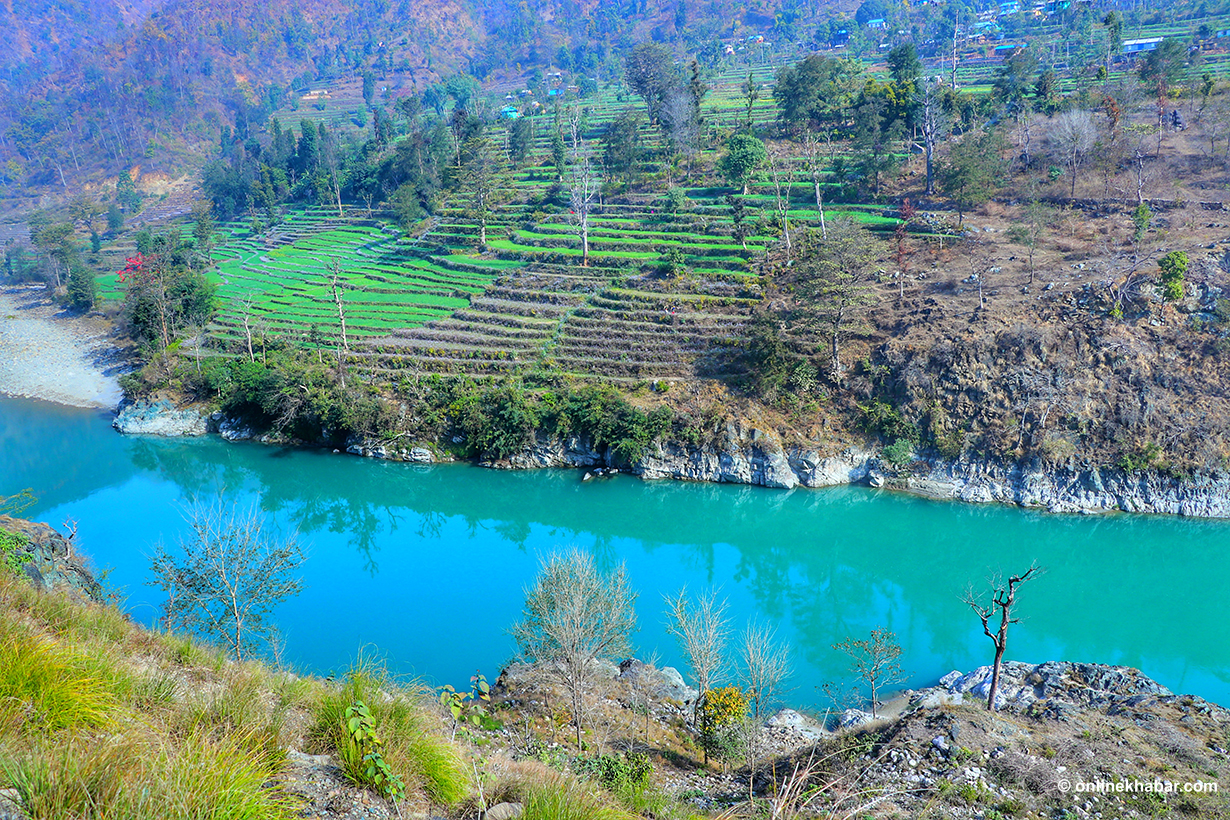
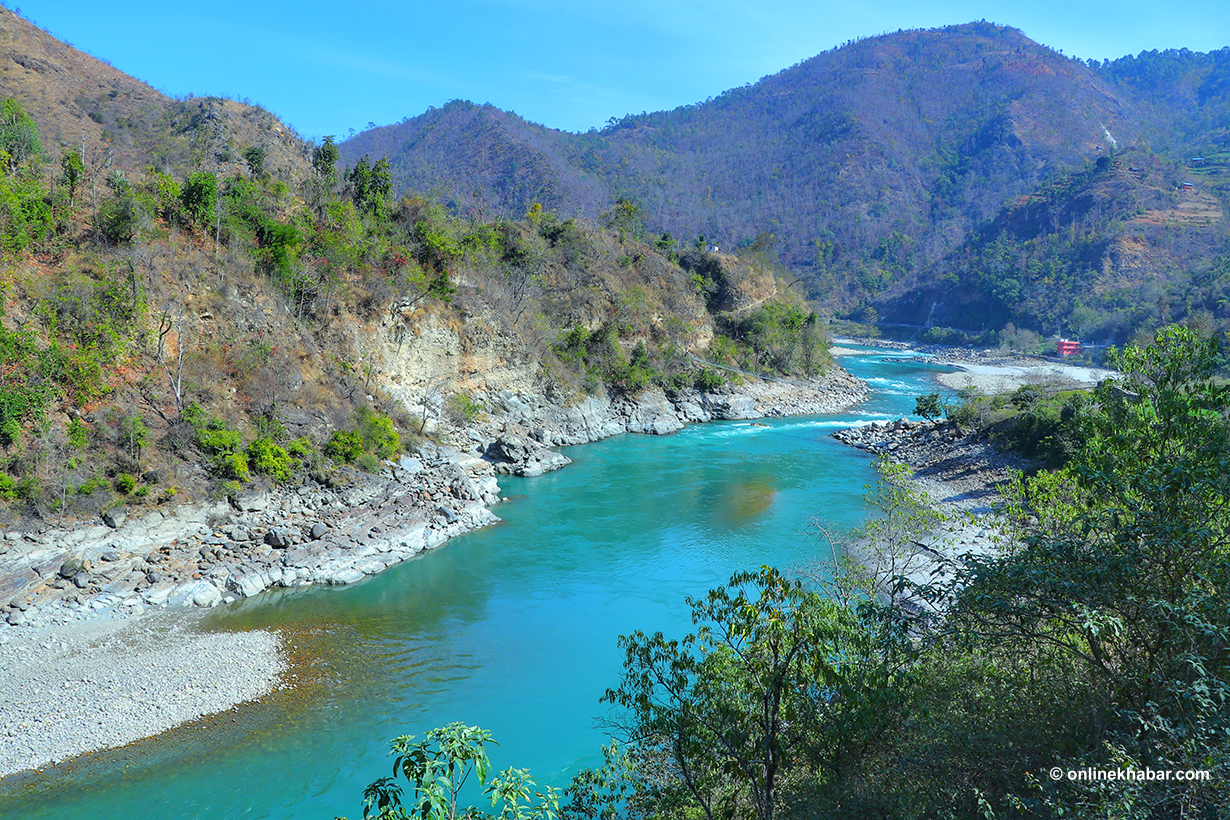
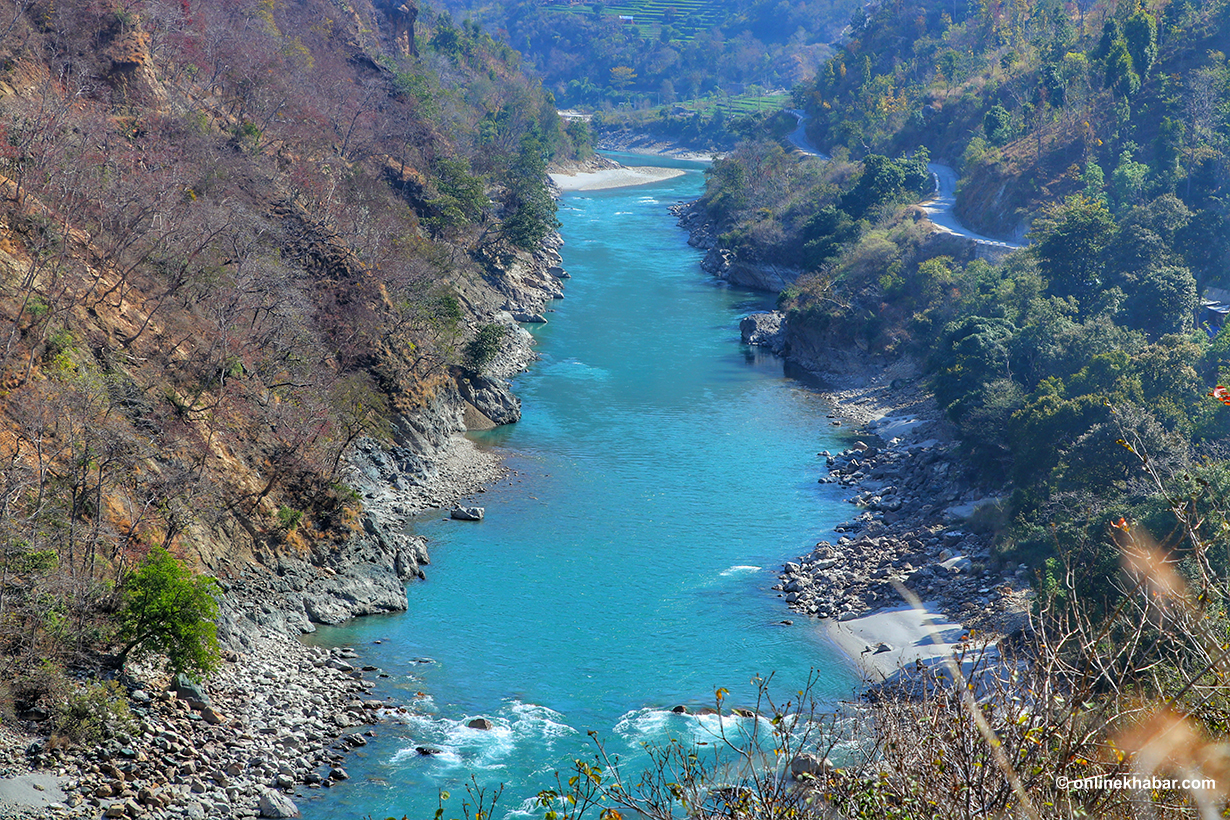
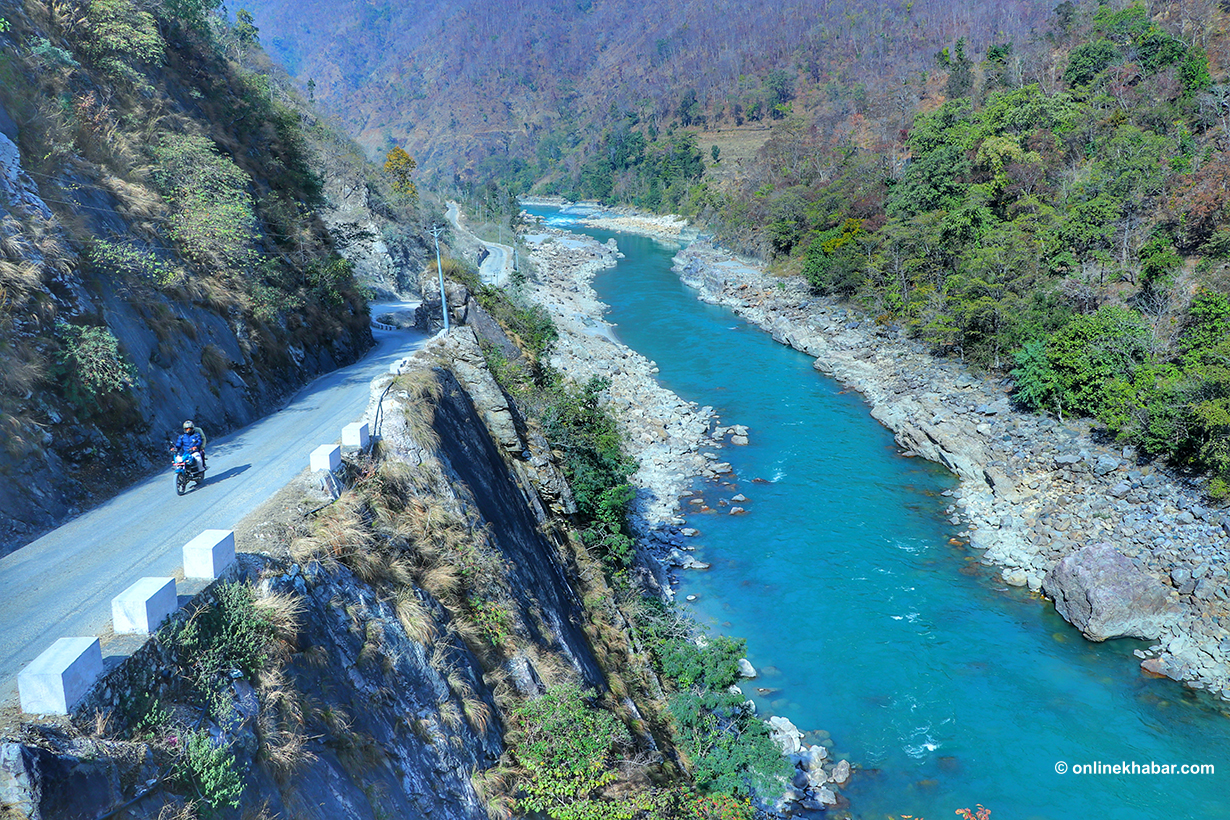
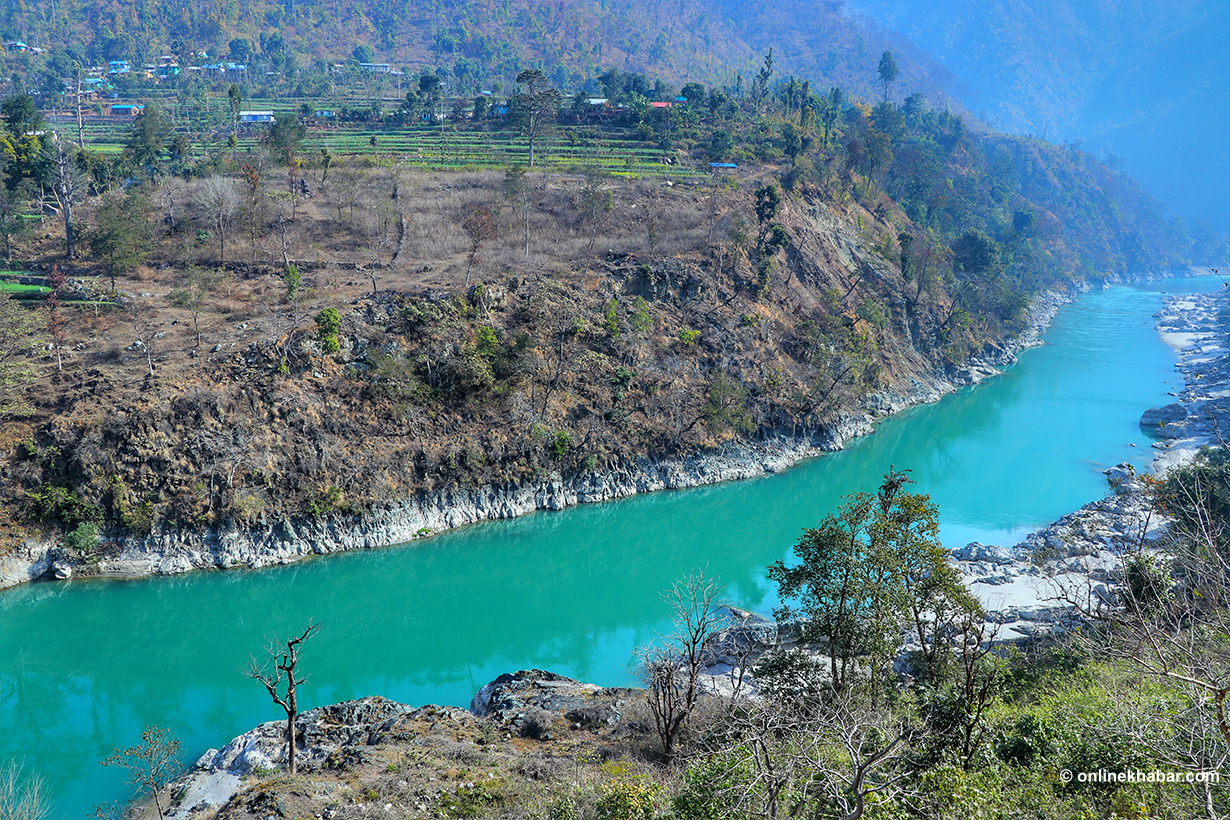
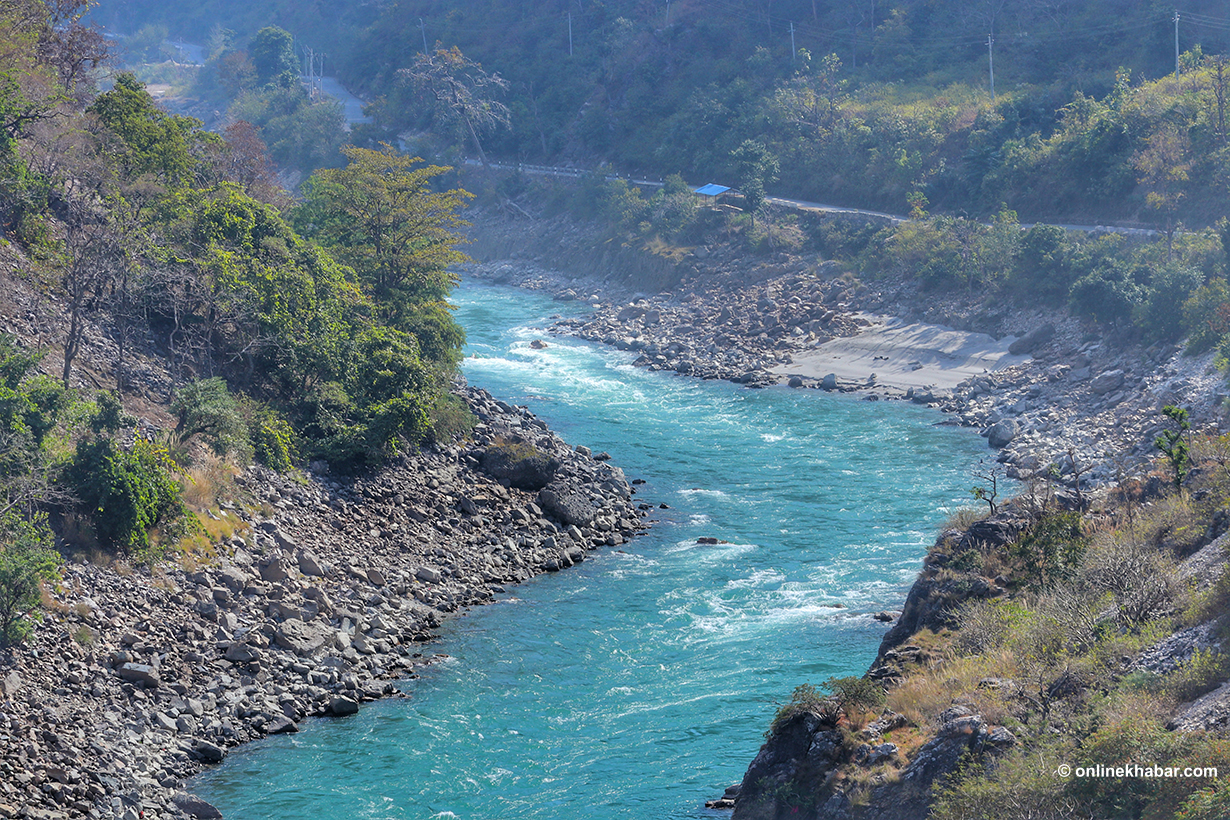
March 14, Salyan. The Bheri River, flowing through the picturesque landscapes of western Nepal, is a remarkable gift of nature. Its winding blue waters, sandy banks, and the lush green fields surrounding it are deeply intertwined with local life. Together, they portray a beautiful picture of rural livelihood and natural beauty.
A road along the riverbank connects remote mountain settlements, signaling development, while the fertile land reflects the daily lives of local farmers. The fields irrigated by the waters of the Bheri thrive with seasonal crops, turning green and abundant.
This combination of hills, river, and arable land forms the foundation of both natural splendor and livelihoods in the Bheri valley. Amidst the changing rural lives, the Bheri River continues to flow steadily in its own rhythm.
Originating in the Himalayan region of Karnali Province, the river traverses multiple districts before merging into the Karnali River.
On its journey, it touches diverse terrains in Dolpa, Jajarkot, Rukum West, Salyan, and Surkhet districts. The bond between the Bheri River and the settlements, farmlands, and natural surroundings in these areas is profoundly close.
The river’s water irrigates thousands of hectares of land, and it holds considerable potential for hydropower generation. Projects such as the Bheri Babai Diversion scheme aim to harness the river’s water for agriculture and energy production.
Naturally, the Bheri River is also known for its aesthetic appeal. The green mountain forests, flowing river, and nearby villages create stunning scenery. It offers promising opportunities for adventure tourism activities such as rafting.
Photographs captured along the border area of Banagad, Kupinde Municipality of Salyan and Gurbhakot Municipality of Surkhet: