




News Summary
Reviewed.
- Leaders of the Rastriya Swatantra Party (RSP) have emphasized that individuals appointed through political channels must take the lead.
- The RSP has committed to amending relevant laws to appoint competent and independent individuals to constitutional bodies.
- Supporters of Prime Minister Sushila Karki have criticized the appointment of Adarshkumar Shrestha as chairman of the National Nature Conservation Trust.
Following the youth-led JNG Movement against governance irregularities, the Rastriya Swatantra Party (RSP) has secured an unprecedented two-thirds majority mandate. This public mandate is not just about leadership change but aims to end deeply embedded corruption and launch good governance.
Good governance should be demonstrated not only through eloquent speeches but through purposeful actions. To initiate real change, it is essential to identify the weaknesses and operational styles of the current state machinery. Highlighting systemic irregularities and guiding the path towards good governance, the news and opinion series titled “Mandate for Good Governance” has been launched.
RSP leaders who are advancing the formation of the new government have begun urging those appointed through political placements to “clearly define the way forward.” One RSP leader revealed that a list is being compiled of appointments made by previous governments across various bodies.
According to this leader, skilled and competent professionals are being brought into the state machinery, and politically appointed personnel are being encouraged to resign.
The recent electoral manifesto of RSP pledges to amend relevant laws to facilitate appointments of qualified and independent individuals.
The manifesto states, “We will amend the Institutional Strengthening Act, Powers Act, Appointment Procedure and Staff Selection Commission Misuse Investigation Act 1991, Constitutional Council Act 2010, and Judicial Council Act 2017 to strengthen independent, capable, and accountable constitutional bodies and ensure good governance.”
As RSP prepares to amend laws and reshuffle thousands of posts in various agencies, past incidents may offer instructive lessons. One such example is the appointment of Adarshkumar Shrestha as chairman of the National Nature Conservation Trust (details here).
Amid Cabinet recommendations on Chaitra 1, appointments of National Assembly members, the report of the Review Commission, and approvals of climate change-related grants, the government publicly declined to confirm Chairman Shrestha’s appointment—likely due to hesitation from the government itself in making the decision public.

In fact, supporters of Prime Minister Sushila Karki—who herself was praised for conducting elections under challenging circumstances—have expressed their inability to defend this appointment, seeing it as improper.
First, the decision contradicts the new mandate. Former Secretary Sharad Prasad Trital stated, “It is ethically wrong tradition to make appointments for the next government following an election,” a concern also shared by Prime Minister Karki.
Second, from a subject-matter expertise perspective, Shrestha is not a suitable candidate for the role of chairman of the Nature Evaluation, Respect, and Conservation Trust.
He has previously served as an employee of the Supreme Court and as a personal assistant to the Chief Justice, with a background more oriented towards technology than environmental conservation. Former Secretary Dr. Dwarikanath Dhungel remarked, “Adarsh Shrestha lacked the necessary subject knowledge.”
Third, this appointment perpetuates the use of power and influence for personal gain. Dr. Dhungel described such appointments as conflicts of interest.
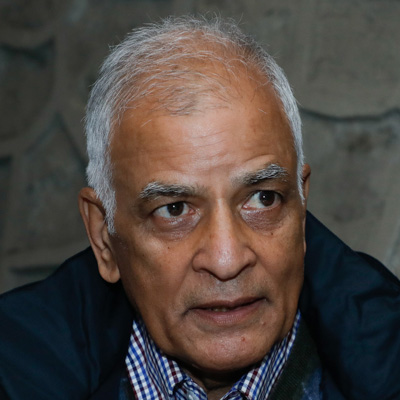
The situation with constitutional positions is similar. Dr. Dhungel stated that appointments are often made by the prime minister, opposition leaders, and parliamentary speakers based on personal or political priorities. “Appointments sometimes occur just to avoid scandals or corruption cases,” he noted.
Appointments Before the Desirable Retirement Age!
After Chief Secretary Shankardas Bairagi resigned in Jestha 2080 before completing his term, Bikuntha Aryal was appointed chief secretary within three days and was about to go on leave. Bairagi was transferred as National Security Advisor.
Similarly, in 2081, Auditor General Toym Raya, formerly Secretary of the Federal Statistics Office, was appointed. His name was recommended by the Constitutional Council and approved by the Parliamentary Hearing Committee.
Padmini Pradhanang, former Chairperson of Transparency International Nepal, highlighted a conflict of interest concerning Raya’s appointment while at the Statistics Office. “There should at least be a three-year cooling-off period,” she said.
In Chaitra 2075, when the Constitutional Council recommended Dinesh Thapaliya as Chief of the Election Commission, he was Secretary of the Ministry of Federal Affairs and General Administration and was about to be appointed to another position.
Previously, in Baisakh 2074, the Constitutional Council had recommended Tankamani Sharma, Secretary at the Prime Minister and Council of Ministers’ Office, for Auditor General at a time when he was serving as secretary in that office.
In 2074, Chief Secretary Dr. Somlal Suvedi resigned to take up a position at the Asian Development Bank (ADB). Although he formally held his post until Shrawan 2075, he had already been serving as Deputy Executive Director of the ADB in the Philippines since Shrawan 2074.
An incident during Asar-Shrawan last year demonstrated how senior officials can secure appointments before retirement. The Federal Service Bill sought to remove the “cooling-off period,” which these employees strongly opposed. The House of Representatives was also discovered to have quietly added the word “except” to grant special privileges for distinguished and first-class employees.
A parliamentary investigation committee held Ramhari Khatibda (Chair), Chief Secretary Eknarayan Aryal, and Secretary Suraj Kumar Dumai responsible for these irregularities.
While the committee made them ethically and politically accountable, leading Khatibda to resign as chairperson, Congress and the UML later reappointed him as chair of the Parliamentary Hearing Committee.
A deputy secretary of the federal parliament remarked, “RSP should learn not to repeat the mistakes of the old parties. Such actions insult the public and gave birth to the JNG Movement.”
Expecting Progress Amid Continuity
In countries with high unemployment, political appointments are often seen as employment opportunities. However, the primary responsibility of politicians is to create an environment where employment is generated for everyone.
Public administration expert Kashiraj Dahal stated that powerful leaders tend to prioritize relatives and supporters, negatively impacting the administration by denying opportunities to competent and honest individuals.
Undue influence and pressure in decision-making are major problems. Dahal noted, “Those making appointments often prioritize individuals unlikely to face corruption investigations.”
As chairman of the High-Level Administrative Reform Advisory Commission, Dahal directed that “to implement good governance, decision-making must be free from pressure and influence.”
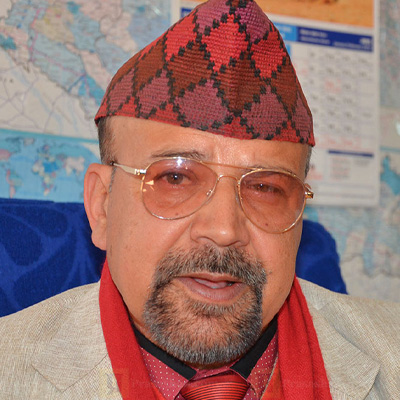
Appointments to constitutional bodies are often legally challenged in courts for being unconstitutional.
In 2077, the Supreme Court ended disputes over appointments of 52 officials to constitutional bodies that had lingered for half a decade.
Dahal suggested that such appointments should be prevented from reaching the courts. “If the government feels the service is unnecessary, officials should be allowed to depart easily; repeatedly filing cases is inappropriate,” he said.
Appointments to constitutional bodies should be of trustworthy individuals; however, the recommendation of controversial figures has become a cause for concern.
Former Secretary Trital advised the new government to move forward by improving the legal framework. “We had some theoretical and ethical negligence, so the solution lies within the law,” he said.
Although changes have occurred at the regular level, Dahal said corrupt practices have deepened the problem. “Legal measures to prevent conflicts of interest are necessary; parliamentary hearings are merely theatrical,” he added.
The New Government’s ‘Litmus Test’
On Chaitra 18, Chief Justice Prakash Man Singh Raut will retire upon reaching the age limit. Following his retirement, on Falgun 26, the Judicial Council will recommend names of six Supreme Court judges to the Constitutional Council to fill the Chief Justice vacancy.
The recommended judges are Sapana Pradhan Malla, Kumar Regmi, Hari Phuyal, Manojkumar Sharma, Nahakul Suvedi, and Til Prasad Shrestha. After parliamentary hearing approval, the president will constitutionally appoint the Chief Justice.
Analysts view the hearing for the Chief Justice appointment as the RSP’s first major test. Former Secretary Dr. Dhungel said, “Claiming to avoid politicization is one thing; implementing it in practice is another. The new government’s litmus test is whom they appoint.”
Dr. Dhungel emphasized that factional pacts in judicial appointments must end completely. “The judiciary cannot be strengthened without a proper appointment system like the Public Service Commission,” he stressed.
Previous governments lacked transparency and failed to establish good governance, which paved the way for the RSP’s two-thirds majority election victory. A mandate-winning party cannot repeat the mistakes of the past.
Mandate for Good Governance Series –


