




News Summary
- Nepali Congress secured victories in only 18 of the 165 constituencies, marking the weakest electoral performance in the party’s parliamentary history.
- The party’s Central Working Committee attributed internal conflicts as the primary reason for defeats in about 20 to 21 constituencies.
- Election Commission data shows Congress lost by margins of fewer than 5,000 votes in 20 constituencies across Koshi, Sudurpashchim, Bagmati, Karnali, Gandaki, Madhesh, and Lumbini provinces.
March 22, Kathmandu – Recently, the Nepali Congress has been more noted for its internal disputes than external competition. The factionalism within the party, which has a long political history, has increasingly damaged its reputation.
The competition between the party’s establishment and other groups has long existed, but now it appears to have shifted more towards factional power struggles than political debates.
During the elections, dissatisfied leaders have increasingly sided with independent candidacies or withheld campaign support, undermining the party’s success even when official candidates are fielded.
This trend was clearly visible in the House of Representatives election held on March 6, where Congress managed to win only 18 out of 165 constituencies.
This represents the weakest parliamentary outcome in the history of Nepali Congress. Following the results, the establishment and former leadership factions have been blaming each other for the defeat.
The Central Working Committee met for two days to review the election and concluded that internal party conflicts were responsible for losses in at least 21 constituencies.
Party spokesperson Devraj Chalise, discussing the findings, said that losses by less than 5,000 votes were primarily due to internal issues.
“Our assessment shows that losses by 3,000 to 5,000 votes were caused by problems within the party,” Chalise stated on Sunday, “these constituencies number around 20 to 21.”
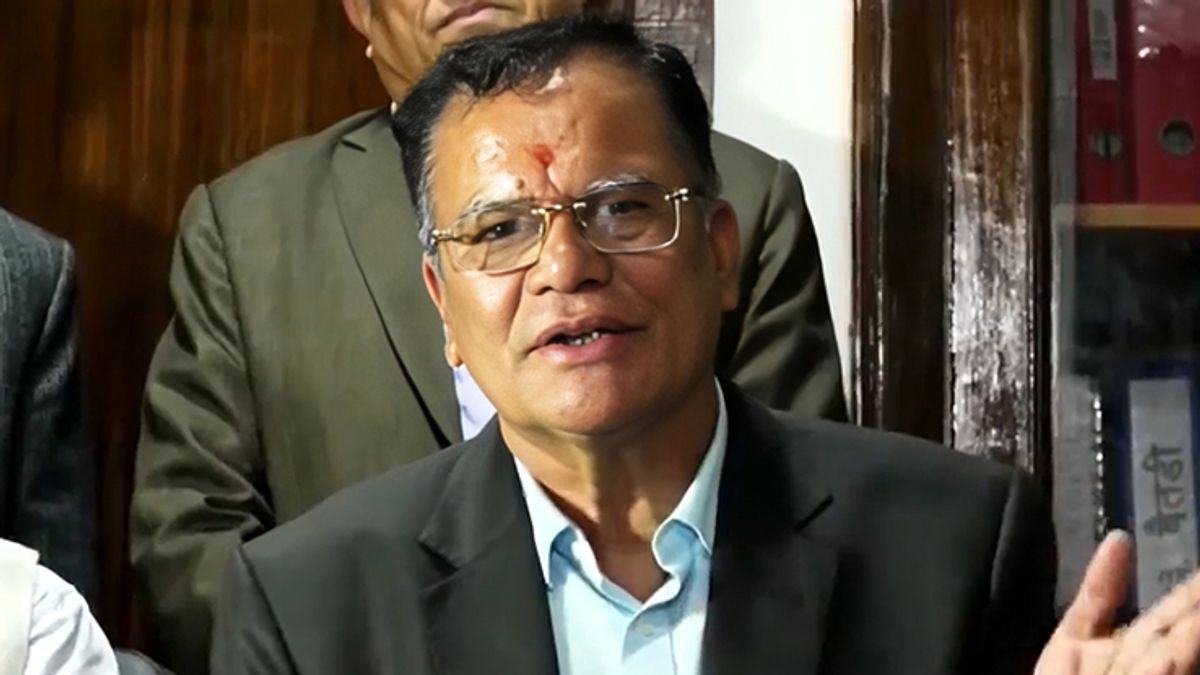
According to Chalise, analyzing the results shows Congress lost by less than 5,000 votes in five constituencies each in Koshi and Sudurpashchim provinces; three each in Bagmati and Karnali; two in Gandaki; and one each in Madhesh and Lumbini provinces.
Election Commission data indicates that in Koshi Province, Congress was narrowly defeated in Taplejung, Sankhuwasabha, Dhankuta, Khotang, and Okhaldhunga constituencies.
In Sudurpashchim Province, Congress candidates lost by less than 5,000 votes in Darchula, Bajhang, Baitadi, Achham-2, and Kailali-1.
Bagmati Province saw narrow defeats in Sindhuli-1, Nuwakot-1, and Sindhupalchok-2; Gandaki Province in Syangja-2 and Baglung-2; Karnali Province in Dolpa, Dailekh-2, and Western Rukum; Lumbini Province in Gulmi-2; and in Madhesh Province, Congress lost by a narrow margin in Dhanusha-1.
In Taplejung, Congress candidate Gajendra Prasad Tumyang Limbu lost to UML’s Khitij Thebe by 2,251 votes. Thebe won with 13,962 votes, while Limbu received 11,711.
In Sankhuwasabha, Congress candidate Dipan Kumar Shrestha was defeated by UML’s Arjun Kumar Karki by 2,365 votes. Karki secured 15,636 votes, with Shrestha obtaining 13,271.
In Dhankuta, Congress’ Dinesh Rai lost by 3,875 votes to UML’s Rajendra Kumar Rai. UML won with 18,132 votes; Congress received 14,257.
In Khotang, Congress candidate Bir Kaji Rai trailed Labour Culture Party’s Aren Rai by 4,655 votes. Aren secured 16,612 votes and was elected, while Bir Kaji received 11,957 votes, placing third.
In Okhaldhunga, Kumar Luitel of Congress narrowly lost to Rashtriya Swatantra Party (Rastriya Swatantra Party) candidate Bishwaraj Pokharel by just five votes. Pokharel won with 13,953 votes; Luitel had 13,948 votes.
In Madhesh Province’s 32 constituencies, Congress was narrowly defeated in Dhanusha-1, where candidate Rampalton Sah lost by 928 votes to Nepali Communist Party leader Matrika Prasad Yadav, who received 10,430 votes; Sah got 9,502 votes.
In Bagmati Province, in Sindhuli-1, Congress leader Ujjwal Prasad Baral lost by 1,089 votes to Rastriya Swatantra Party’s Dhanendra Karki, who won with 16,659 votes; Baral finished third with 15,570 votes.
In Nuwakot-1, Congress leader Dr. Prakash Sharan Mahat was defeated by 4,012 votes. Vikram Timilsina of Rastriya Swatantra Party won with 22,609 votes; Mahat received 18,597 votes.
In Sindhupalchok-2, Congress candidate Banshalal Tamang lost by more than 2,500 votes to Nepali Communist Party’s Yuvraj Dulal, who won with 21,699 votes; Tamang obtained 19,146 votes.
In Gandaki Province’s Syangja-2, Congress candidate Bhagwat Prakash Malla lost to Rastriya Swatantra Party’s Jhavilal Dumre by 4,500 votes. Dumre received 25,354 votes; Malla secured 20,840.
Baglung-2 also saw close competition, with Congress candidate Tekraj Paudel losing by 779 votes. Rastriya Swatantra Party’s Som Sharma won with 12,647 votes; Paudel had 11,868 votes.
In Lumbini Province’s Gulmi-2, Congress candidate Bhuvan Prasad Shrestha was defeated by 2,533 votes by Rastriya Swatantra Party’s Govind Panthi, who won with 16,967 votes; Shrestha placed third with 14,434 votes.
In Karnali Province’s Dolpa, Congress co-general secretary Karn Bahadur Budha lost by 3,855 votes. Nepali Communist Party’s Dhan Bahadur Budha won with 6,802 votes, while Karn Bahadur Budha received 2,947 votes, taking third place. The two candidates are brothers.
In Dailekh-2, Congress candidate Dikpal Kumar Shahi was defeated by UML’s Laxmi Prasad Pokharel by 4,337 votes. Pokharel was elected with 13,889 votes while Shahi was runner-up with 9,552 votes.
In Western Rukum of Karnali Province, Congress candidate Raju KC lost by nearly 5,000 votes. Nepali Communist Party’s Gopal Sharma was elected with 21,609 votes; KC garnered 16,661 votes.
In Sudurpashchim Province’s Darchula, Congress candidate Dharanand Joshi trailed UML’s Ganesh Singh Thagunna by 3,065 votes. Thagunna secured 18,891 votes; Joshi had 15,836 votes.
In Baitadi, Congress candidate Chatur Bahadur Chand lost by 2,940 votes. Rastriya Swatantra Party’s Harimohan Bhandari won with 22,134 votes; Chand earned 18,194 votes.
In Bajhang, Congress co-general secretary Prakash Rasaily ‘Snehi’ lost to UML’s Ain Singh Mahar by 2,239 votes. Mahar was elected with 18,543 votes; Rasaily received 16,304 votes.
In Achham-2, UML’s Yagn Bahadur Bogati defeated Congress candidate Pushpa Bahadur Shah by 472 votes. Bogati won with 9,518 votes; Shah had 9,046 votes.
According to the Election Commission, in Kailali-1, Congress candidate Jankaraj Chaudhary lost by 4,959 votes. Rastriya Swatantra Party’s Komal Gyawali won with 17,826 votes; Chaudhary received 12,867 votes.


