




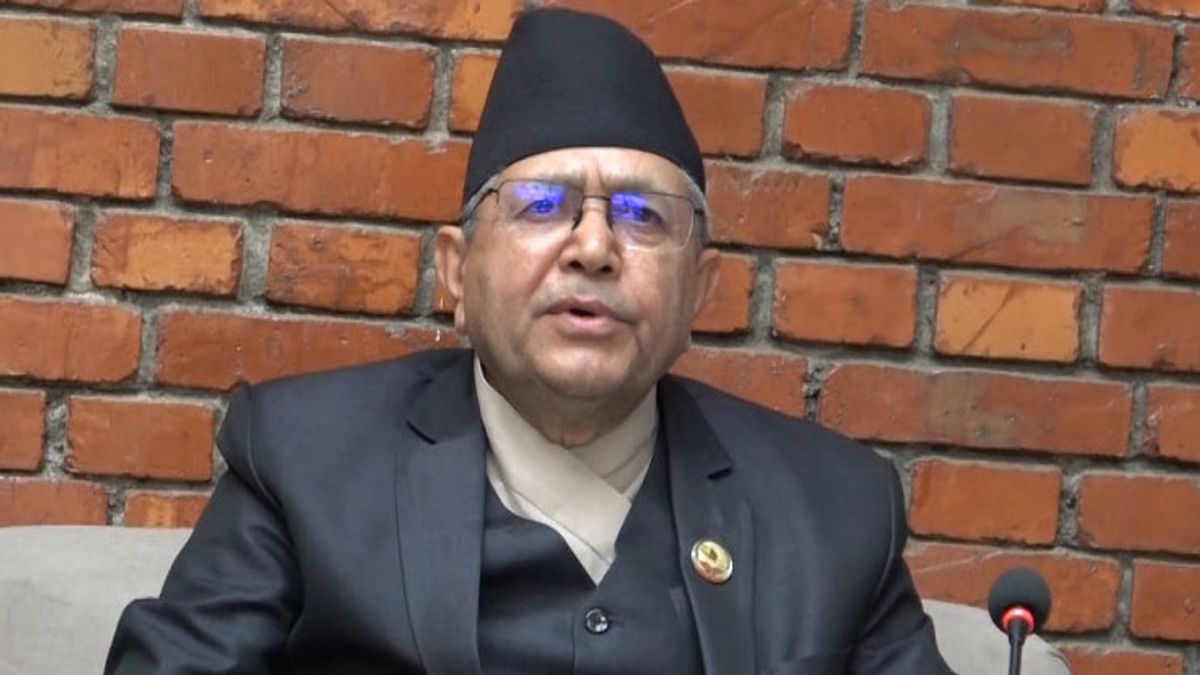
File Photo
News Summary
- Former Speaker of the dissolved House of Representatives, Devraj Ghimire, stated there is no legal provision allowing the Speaker to directly order the Prime Minister, Home Minister, or security forces to stop firing.
- Ghimire recommended deployment of the appropriate number of security personnel under a single command system based on a threat analysis with clear protocols to secure the Federal Parliament building.
- He also noted that the risk of the September 8-9 (Bhadra 23-24) protests was unforeseen and security preparedness was insufficient.
March 24, Kathmandu – Devraj Ghimire, Speaker of the dissolved House of Representatives, has stated that there is no legal authority for the Speaker to issue direct orders to the Prime Minister, Home Minister, or security agencies to halt gunfire.
Ghimire’s statement is included in the investigation commission’s report. During his testimony to the commission, he suggested that security for the Federal Parliament building should be managed through a single command system with threat analysis and clear protocols, involving deployment of an adequate number of security personnel.
During the protests organized by the Janajati rights group, the International Convention Center in New Baneshwor where the Federal Parliament was in session suffered vandalism and arson.
In his testimony, Ghimire said that on September 8 (Bhadra 23), he was occupied at the Federal Parliament Secretariat in Singha Durbar with oath-taking for the Parliamentary Hearing Committee chairperson and bill certification.
He stated that on September 9 (Bhadra 24), he was at his residence in Baluwatar, emphasizing that security of the Federal Parliament building falls under the jurisdiction of security agencies under the Home Ministry and the Speaker holds no legal authority in this regard.
He further revealed that no one anticipated the risks involved in the protests of September 8 and 9.
In his statement, Ghimire said, “Although there were some preliminary discussions before the session started, no one had anticipated the level of risk posed by the Janajati protests, and I personally had no special information about this.”
He noted that on September 8, some protesters successfully entered the Parliament premises, and the occurrence of protesters in greater numbers and different forms than predicted meant security preparations were insufficient.
He also highlighted ineffective coordination among security forces as a contributing factor.
“The walls, gates, and structural weaknesses of the Parliament building appear to have increased security challenges,” he said. “However, responsibility for such structural improvements and security infrastructure lies with the executive branch and the Home Ministry, so I had not previously made any special initiatives in my capacity as Speaker.”
Ghimire stated that information about gunfire at the Parliament premises on September 8 reached him in the afternoon, after which he directed necessary coordination with security agencies through the Parliament Secretariat’s Secretary General.
He praised the security forces’ attempts to protect state property, the Parliament building, and public assets in risky situations despite questions regarding the principles and order of using force.
He added that evaluating the principles of force, necessity, and justification of firing fall within the remit of relevant experts and agencies based on security policies, laws, and contemporary circumstances.
In conclusion, he said, “This matter does not fall directly under the Speaker’s jurisdiction. There is no legal provision allowing the Speaker to directly order the Prime Minister, Home Minister, or security forces to stop firing. Moving forward, to prevent recurrence of such incidents, I suggest implementing a system where security for the Federal Parliament building is managed by deploying the appropriate number of security personnel under a single command system with clear protocols based on threat analysis.”


