




Summary
Editorial review completed.
- Bird flu (H5N1) has been confirmed in Koshi Province districts of Morang, Sunsari, Jhapa, and Chitwan in Nepal, leading to the culling of approximately 65,000 chickens.
- In Kathmandu, bird flu has been detected only in wild crows, with over 100 dead crows disinfected in Kirtipur.
- Bird flu has also spread to various states in India, prompting heightened alert at the Nepal-India border; no human infections reported so far.
12 Chaitra, Kathmandu – Nepal is once again facing a serious crisis in public health and the poultry industry due to bird flu (avian influenza).
Initially reported in Koshi Province’s Morang, Sunsari, and Jhapa districts, the H5N1 infection has now also been confirmed in Chitwan, according to the Department of Livestock Services.
In recent days, the mortality rate among broiler and layer chickens has increased, prompting farmers to bring daily samples of dead birds to laboratories for testing.
Extent of Infection
The Animal Disease Research Laboratory in Biratnagar confirmed bird flu infection at five locations each in Morang and Sunsari, and one location in Jhapa, affecting a total of 11 farms.
Suspected samples are sent to the Central Animal Disease Research Laboratory in Kathmandu for final confirmation.
Infection has been found in Dahal Agricultural Farm in Biratnagar, Halesi Mahadev Agricultural Farm in Sundarharaicha-4, Athiyawari Agricultural Farm in Urlabari-8, and two farms in Katahari, Morang, as stated by Dr. Ajay Kumar Sah, Head of the Morang Livestock Service Center.
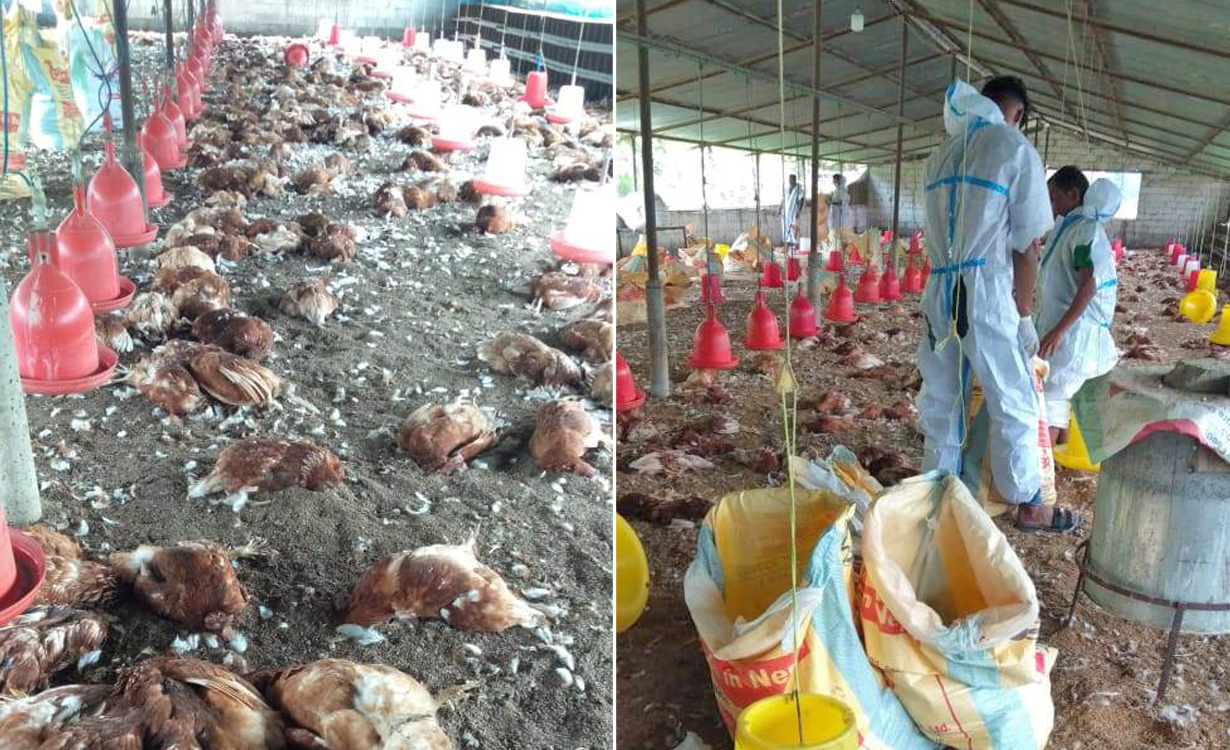
At Dahal Farm, out of 6,000 layer birds, 3,000 had died and the remaining 3,000 were culled.
Similarly, bird flu has been detected in Oko, Laxmi, Rani, and Alam agricultural farms in Itahari Sub-Metropolitan City, as well as the Sangeet Agricultural Farm in Gadhi Rural Municipality-5, Sunsari.
Oko Farm in Itahari-19 has seen the largest culling of poultry. Infection was also confirmed at Damak Agriculture farm in Damak Municipality-10, Jhapa.
Senior veterinary officer Dr. Mukul Upadhyay of the Department of Livestock Services also confirmed bird flu presence in Chitwan, though the exact location is kept confidential.
“To avoid unnecessary panic and ensure control measures are effective, the location is kept secret,” he explained. “Coordination is underway with the Chief District Officer’s office today to cull infected birds.”
Situation in Kathmandu: Wild Crows Infected, Commercial Farms Safe
In Kathmandu, bird flu has only been detected among wild crows and hasn’t affected commercial poultry farms.
Tests on dead crows found in the forest area of Tribhuvan University in Kirtipur confirmed the infection.
The Department of Livestock Services has instructed Kirtipur Municipality to safely manage and disinfect the dead crows.
According to Dr. Upadhyay, over 100 crows have died in the forest area of Kirtipur, and around 60 to more than 100 dead crows have been buried safely in pits.
Although infection has not been reported in broiler or layer chickens in Kathmandu Valley so far, strict monitoring is ongoing.
Control Measures and Heightened Vigilance
About 65,000 infected chickens have already been culled, Dr. Upadhyay shared.
Under the leadership of the Chief District Officer, coordinated efforts between local, provincial, and federal governments are underway to contain and destroy infected animals and materials.
In Chitwan too, disinfection and culling activities are being conducted in collaboration with the Chief District Officer’s office.
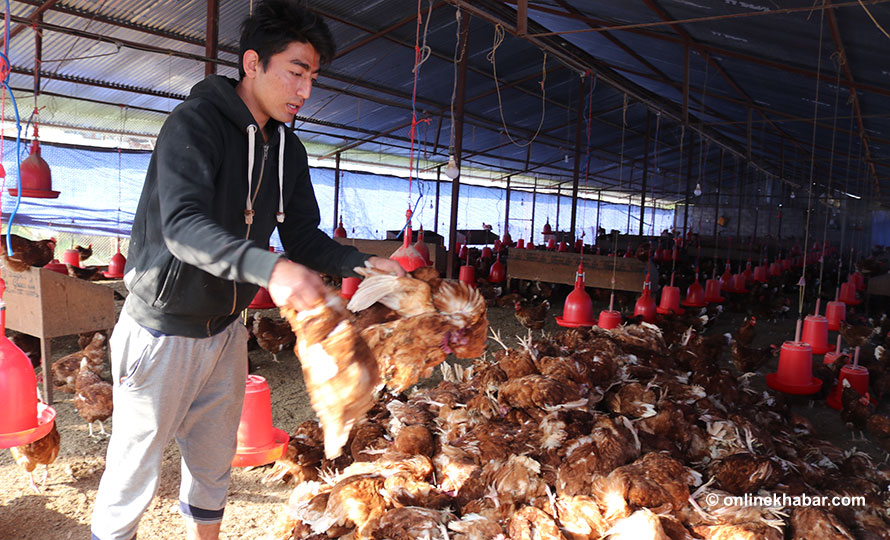
To prevent spread to other districts, high alert has been declared and movement of poultry from affected areas is completely banned.
Kirtipur Municipality has imposed a total ban on the transportation of eggs, meat, feed, and poultry products from affected zones.
Dr. Upadhyay stated that poultry farmers, hatcheries, and related producer organizations are being alerted about the situation.
Issuance of veterinary certificates for transport from infected zones has been suspended as well.
With support from police and security agencies, illegal transportation is blocked, and quarantine checkpoints remain on high alert.
Livestock Department Appeals for Biosecurity Measures
The Department of Livestock Services has urged farmers and poultry businesses to remain calm but implement strict biosecurity precautions.
They are advised to restrict unnecessary personnel and vehicles from entering farms and to disinfect those who must enter.
Workers should not move between different farms, and strict monitoring of their comings and goings is recommended.
Installation of foot baths for disinfecting footwear before entry is mandated, along with use of dedicated boots and aprons inside the farm.
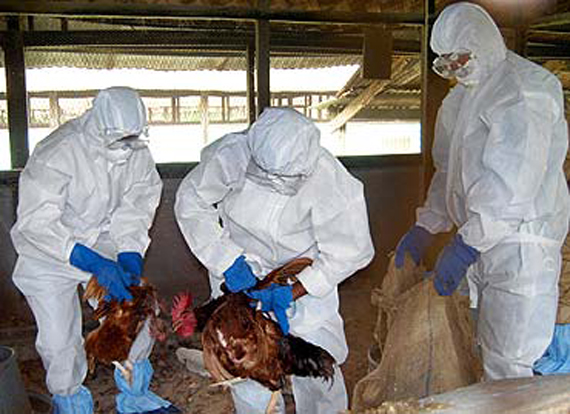
Daily disinfection inside and outside farms is required, with secure fencing to prevent access by dogs, cats, and rodents.
Reuse of egg cartons is discouraged.
Transportation of birds and poultry products must comply strictly with veterinary certification regulations.
Farm workers are advised to maintain personal hygiene, wash hands regularly, and report any health problems immediately to medical facilities.
Dead or sick birds should not be discarded casually but buried safely with immediate reporting to authorities.
Identifying and reporting dead birds quickly is critical to controlling the spread.
Bird Flu Situation in India and Heightened Alert at Nepal-India Border
Neighboring India has witnessed rapid spread of bird flu across several states.
Since March, outbreaks in states such as Chhattisgarh, Maharashtra, and Kerala have led to destruction of thousands of poultry and eggs.
In Bilaspur, Chhattisgarh, following the death of over 4,000 chickens, more than 22,000 birds, 25,000 eggs, and 79 quintals of feed were destroyed, and poultry sales banned for 21 days to halt the spread.
At a government hatchery in Nagpur, Maharashtra, the virus was detected, prompting culling of 1,000 chickens and destruction of 14,000 eggs.
Kerala ordered the culling of 20,000 birds after infections in Kozhikode and Alappuzha, and closed a park in Chennai after multiple bird deaths.
The Indian administration has raised security and vigilance along border checkpoints with Nepal.
Monitoring for Human Infection
No confirmed human infections with bird flu virus have been reported to date.
Experts warn that the new mutations of H5N1 could be potentially more lethal than the coronavirus.
The virus was previously limited to birds but now carries increasing risk of transmission to humans.
Infectious disease specialist Dr. Sher Bahadur Pun stated that bird flu is a highly infectious and lethal virus, necessitating strict vigilance.
However, properly cooked meat and eggs do not pose a risk to consumers.
Dr. Pun noted that if H5N1 infects humans, the fatality rate could reach 50 percent, meaning one in two infected individuals might die.
He recalled a 21-year-old man’s death from bird flu in Nepal in 2019, emphasizing that the disease should not be taken lightly and early awareness is critical.
The virus does not easily spread between humans but poses high risk to those in direct contact with infected birds.
Transmission can occur through contact with dead birds, meat, feathers, or secretions.
Poultry farmers, transporters, and slaughterhouse workers should adhere to strict biosecurity protocols.
With bird flu detected in crows around Kathmandu, there is heightened concern of spread due to their movement across locations.
Those at risk are advised to maintain personal hygiene and get seasonal flu vaccinations.
Antiviral drugs like Oseltamivir can be used if infections increase, but prevention remains the best strategy.
Relevant authorities should intensify awareness programs targeting high-risk groups.
State of Nepal’s Poultry Industry
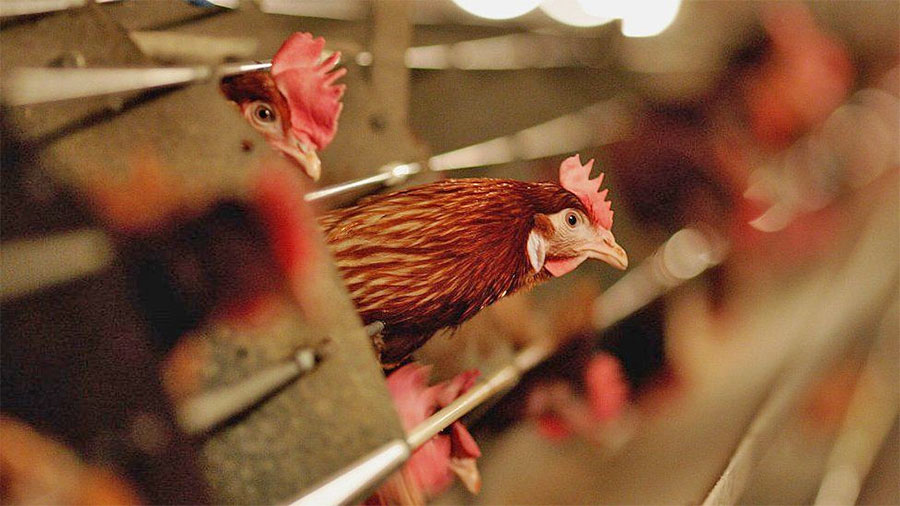
According to the National Statistical Office’s Nepal Commercial Poultry Farming Survey 2081/82, commercial poultry farming is conducted at 22,928 farms nationwide.
Of these, 21,114 farms focus on meat production, 1,706 on egg production, and 118 on chick rearing.
Only 63.7 percent of these farms are registered, with 79.5 percent operated by men and 20.5 percent by women. Ninety-eight percent of farms are privately owned.
Annual production and sales from the poultry sector in Nepal amount to NPR 6.096 billion in meat, NPR 1.482 billion in eggs, NPR 1.022 billion in chicks, and NPR 100 million in poultry manure.


