




March 26, Kathmandu – After the government elected by the then parliament was overturned following the Janjagran (Janjati General) movement, Nepal’s constitutional process, which had been derailed, has been restored to its original path starting Wednesday.
The newly elected members of parliament took their oath on Wednesday, marking the formation of a new House of Representatives that is fully elected by the people. According to Nepal’s Constitution, the parliamentary system is now set to move forward along the proper track.
Following the youth movement against government disorder and corruption on September 8 and 9 last year, the ruling political parties collapsed, and the country fell into near administrative crisis.
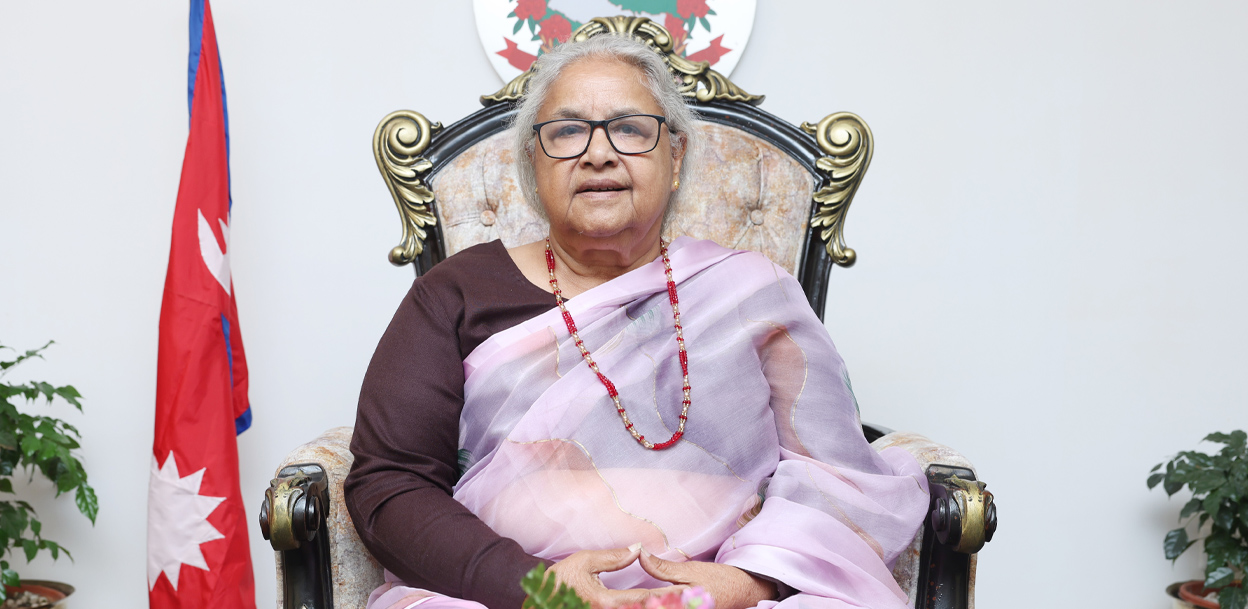
In this difficult scenario, President Ramchandra Paudel appointed former Chief Justice Sushila Karki as the head of an interim government on September 11. After taking her oath, Prime Minister Karki recommended dissolving the House of Representatives, a recommendation that the President accepted and dissolved the parliament accordingly.
The decisions to appoint a prime minister from outside parliament and dissolve the House of Representatives were outside the framework envisioned by the 2015 Constitution of Nepal. However, those breaks in constitutional order have now been restored to normalcy.
Tomorrow, Balendra Shah, a member of the newly formed House of Representatives, will be sworn in as Prime Minister following constitutional provisions. Under Article 76(1) of the Constitution, the parliamentary party with a majority in the House is to have its parliamentary leader appointed as Prime Minister—hence Shah’s appointment.
Senior advocate and former parliamentarian Radheshyam Adhikari stated, “The government was formed to hold elections under special circumstances. There were challenges raised in the courts regarding this. Now, with the new House of Representatives formed through elections, the constitution has returned to its proper track.”
After the Janjagran movement intensified, then Prime Minister KP Sharma Oli resigned on September 10. Subsequently, the country experienced widespread arson and chaos, leading to a state of lawlessness and severe public distress.
Political parties were unwilling to engage in dialogue with the protestors, and the prospect of forming a new government from parliament appeared bleak. However, political parties had requested a political solution through the then House of Representatives.
With the protesters challenging the validity of the then parliament, a resolution towards political settlement diminished.
Despite constitutional difficulties in government formation, President Paudel appointed former Chief Justice Karki as interim Prime Minister under Article 61(4) of the Constitution.
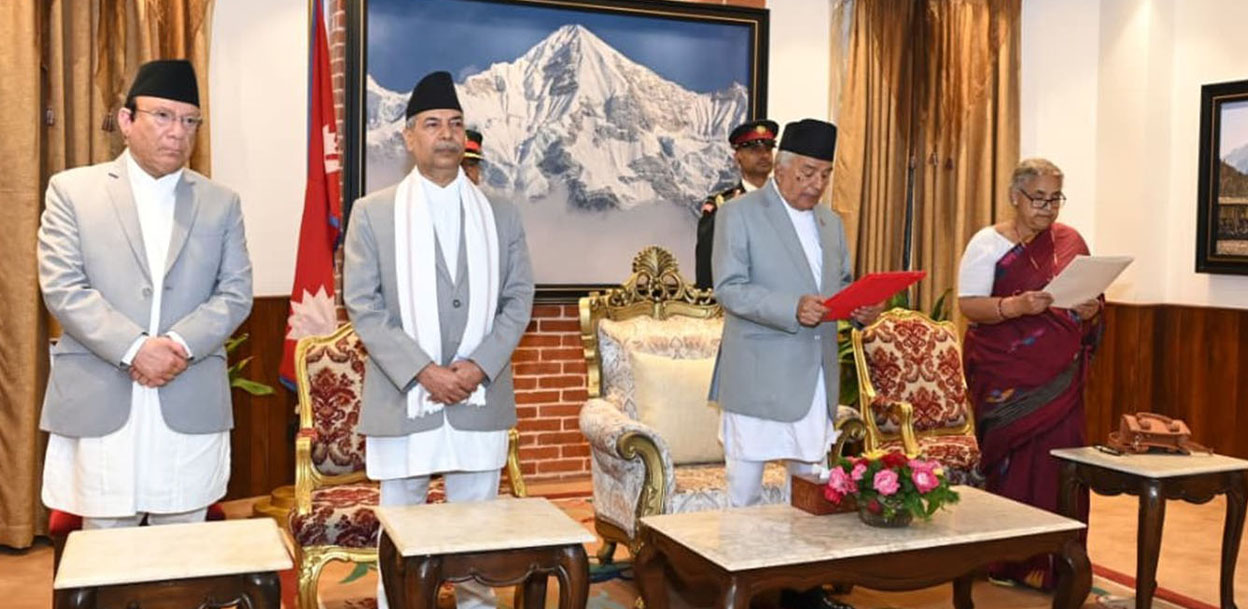
The 2015 Constitution lacks provisions to appoint a prime minister from outside parliament, which led to the unusual appointment of a former Chief Justice as Prime Minister.
Constitutional expert Bipin Adhikari commented, “Despite enormous challenges, a widely acceptable government was formed even if it strained the constitution. With the elections carried out by that government, representative democracy has returned to its track. The country is now back on a straightforward constitutional path.”
Former CPN-UML and Nepali Congress MPs had filed writ petitions at the Supreme Court challenging the appointment of a former Chief Justice as Prime Minister and the dissolution of parliament.
While the court was still considering these petitions, elections took place on February 21, and the new parliament has now been formed.
Constitutional scholars anticipate that past constitutional and legal questions will now be resolved automatically since transitional decisions have received public legitimacy through elections.
According to senior advocate Adhikari, “The constitutional and legal issues have been settled.”
After the Janjagran movement, Nepal was at risk of constitutional crisis and prolonged political transition. However, political parties and protestors managed the situation constructively, paving the way for elections.
Adhikari noted, “Democracy had been in deficit. Without elections, government would have remained mired in constitutional ambiguity.”
The main demand of the September 8-9 movement was government reform, a responsibility now transferred to the new House of Representatives. This new parliamentary body will be tasked with government formation, lawmaking, and keeping the executive accountable and balanced.
Constitutional expert Adhikari emphasizes that the House of Representatives must perform its duties with maturity.
This time around, the possibility of the House becoming a battleground for power struggles is reduced, as one party, the Rastriya Swatantra Party (RSP), holds nearly two-thirds of the seats.
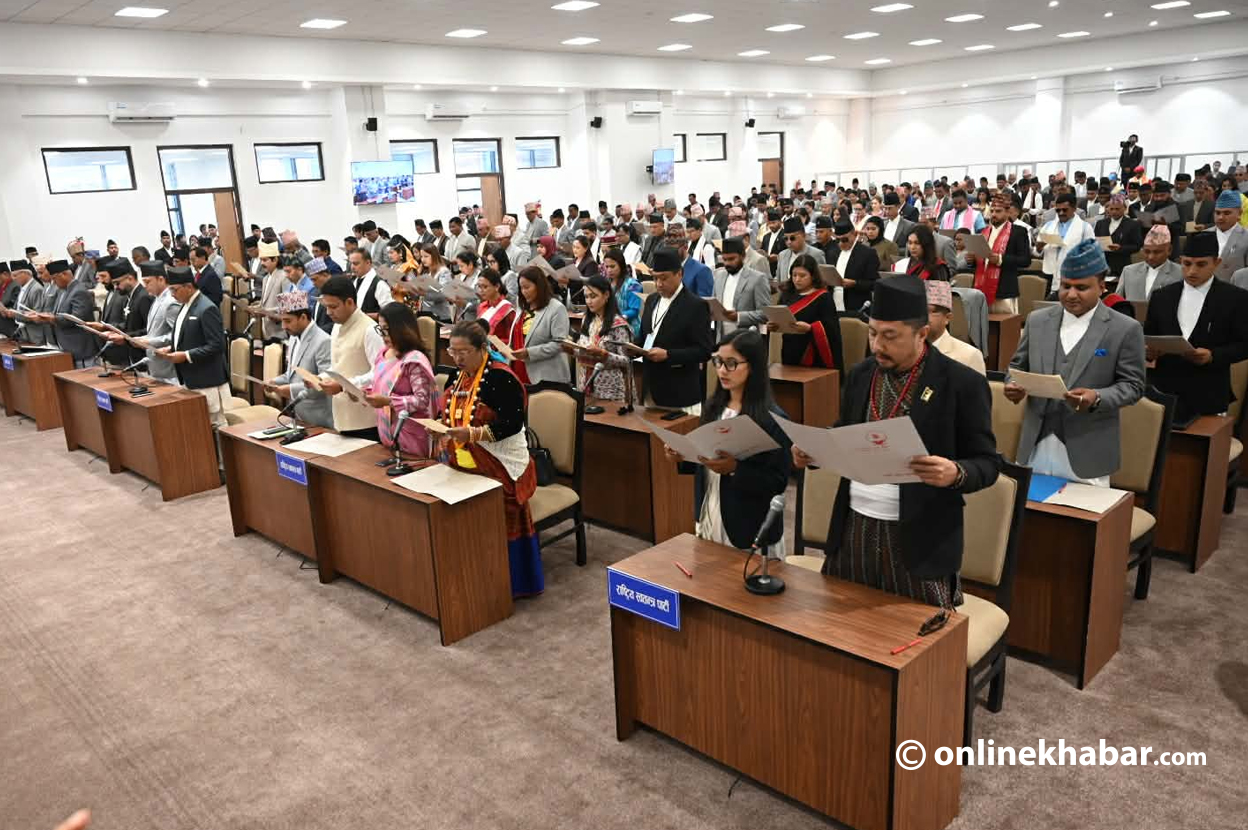
With 275 members, the parliament has 182 seats held by RSP, marking the first time since 1990 that a single party has secured such a strong majority in the House of Representatives.
This majority enables the party to efficiently pass desired legislation and remove obstacles in governance.
However, there is a risk that the party’s overwhelming public support might breed arrogance, and the weak opposition could reduce effective oversight and critical voices. The Nepali Congress and CPN-UML have only 38 and 25 seats, respectively, in the House.
The current House also represents a large generational shift, with only about a dozen members being veterans of parliamentary politics while the majority are young newcomers.
Due to the potential lack of experience, constitutional expert Adhikari stresses the need for mature and skilled leadership to manage parliamentary proceedings.
He says, “Effective individuals must be chosen to lead parliamentary committees and to conduct sessions properly.”


