




Summary
Editorial Review Completed.
- The government has decided to grant a 50 percent reduction in customs duties and infrastructure development tax on petroleum products.
- The tax burden on petrol will reduce by NPR 17 and on diesel by NPR 11 per litre, though the corporation will continue to incur losses.
- The government’s tax relief will provide Nepal Oil Corporation with NPR 149 crore in support, but immediate price adjustments are unlikely.
24 Chaitra, Kathmandu – To mitigate the impact of rising petroleum prices on the public, the government has approved a 50 percent reduction in customs duties and infrastructure development tax on imported petroleum products.
Announcing the decision from Tuesday’s Cabinet meeting, Minister for Federal Affairs and General Administration Pratibha Rawal informed that the government has taken significant measures—from tax cuts to consumption control—to manage the increasing deficit and crisis in the fuel sector.
Minister Rawal also highlighted that the government has been incurring substantial financial losses from fuel imports. Currently, under the existing pricing structure, Nepal Oil Corporation (NOC) has suffered a loss of NPR 1.172 billion within just 15 days of fuel sales.
“This is not a small amount,” Minister Rawal stated. “Therefore, the issue is not only about prices but a combined challenge related to supply chains, taxes, costs, consumption, and management, which the government is addressing with several decisions.”
In the past 15 days, minimum consumption volumes were approximately 34,000 kilolitres of petrol, 83,000 kilolitres of diesel, 865 kilolitres of kerosene, 2,615 kilolitres of domestic aviation fuel, 5,892 kilolitres of international aviation fuel, and 1,522,444 cylinders of LPG sold, the minister provided with detailed data.
Will Consumers Get Cheaper Fuel?
Following the government’s decision to cut fuel import taxes by half, interest has increased regarding the scale of tax reductions on different types of fuel.
With Cabinet approval, the infrastructure development tax of NPR 10 per litre on petrol and diesel will be reduced to NPR 5 per litre, lowering the tax burden by NPR 5 per litre.
Additionally, the government has granted a 50 percent concession on customs duties at the point of entry. Currently, customs duties are NPR 25 per litre for petrol and NPR 12 per litre for diesel.
Import taxes on cooking LPG cylinders will also decrease from NPR 90 to NPR 45 per cylinder.
How Much Tax Will Be Reduced on Each Fuel?
Once the new arrangement is implemented, total tax on petrol will decrease by NPR 17 per litre (NPR 12 customs and NPR 5 infrastructure tax).
Diesel will see a reduction of NPR 11 per litre in total tax (NPR 6 customs and NPR 5 infrastructure tax). LPG import duty will drop to NPR 45 per cylinder from NPR 90.
However, these decisions have not yet been put into effect. Nepal Oil Corporation spokesman Manoj Thakur said, “Details of the tax reductions will be officially released only after the Cabinet decisions are published in the government gazette and instructions are issued.”
“We have heard about the government’s tax relief decision through the news but have not yet received official information on which items will receive what reductions or when the changes will take effect,” he added.
What Impact Will This Have on Market Prices?
Despite the significant tax reductions, consumers are unlikely to see immediate fuel price decreases. According to the corporation, global market price increases and other factors currently cause losses of NPR 34 per litre on petrol and NPR 120 per litre on diesel.
Following government tax relief, NOC is still projected to face losses of NPR 17 per litre on petrol and NPR 109 per litre on diesel. LPG losses amount to NPR 416 per cylinder, meaning tax cuts alone cannot make the corporation profitable.
An official from NOC noted that while some relief is expected, conditions are still difficult for immediate price adjustments.
“Due to the depth of the losses, prices cannot be reduced immediately after tax cuts,” the official said. “However, fuel may be offered at lower prices if the corporation’s board or the prime minister and supply secretary give direct orders.”
How Much Relief Will the Corporation Receive?
The government’s 50 percent concession on customs and infrastructure tax will provide the Nepal Oil Corporation approximately NPR 149 crore in relief. However, total losses will still exceed NPR 1.023 billion.
Despite heavy losses, the corporation has ensured smooth supply of petroleum products. Spokesman Thakur confirmed there are no supply issues.
“We are regularly receiving the necessary quantities of fuel,” Thakur stated. “Despite losses, we have succeeded in accelerating the supply momentum.”
The government has adjusted taxes to ease the crisis caused by rising crude oil prices internationally, but for a long-term solution, reduced consumption and economic use remain the best options, said the corporation.
Fuel Tax Cut Welcomed; Benefits Should Be Passed Quickly to Consumers
Consumer rights activist Madhav Timalsina welcomed the tax cut on petroleum products and urged the government to immediately transfer the benefits to consumers.
He emphasized that the corporation should not delay price reductions by using losses as an excuse and insisted that the Cabinet decision must be implemented without delay.
“The government has fulfilled the long-standing demand of consumers. Excessive customs and tax impositions previously caused unnatural price surges,” Timalsina said. “Following the government’s decision, the corporation must promptly reduce diesel and petrol prices to provide relief.”
“Though the corporation may delay citing losses, it will be compelled to follow government decisions,” he added.
“Cabinet decisions are final and should be published in the gazette and implemented immediately,” Timalsina stressed.
How Will the Government’s Tax Break Help Curb Price Increases?
Former Commerce Secretary Purushottam Ojha called the government’s tax reduction a positive step. While immediate price decreases are unlikely, he said this measure will help stabilize prices and provide relief to the corporation.
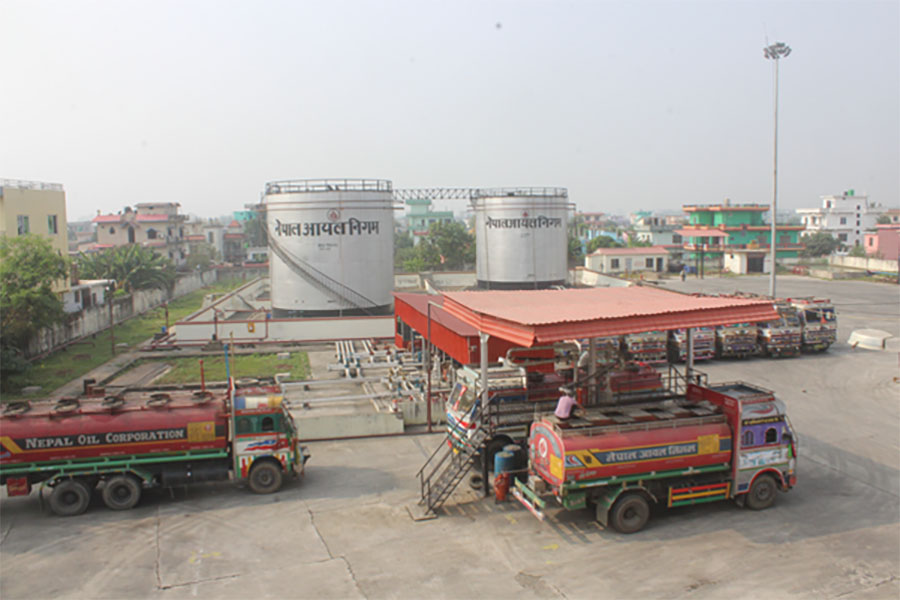
According to his analysis, with global crude oil prices constantly rising, the corporation is selling fuel at a loss. Nonetheless, the government’s tax relief will help prevent further price hikes and provide some financial respite to the corporation.
“Since the corporation is still facing heavy losses, the tax cut is unlikely to immediately reduce prices but will help offset the deficit,” Ojha explained. “Thus, expecting instant price drops is unrealistic, but it will assist in stabilizing prices.”
He reiterated that the government’s move is a positive effort aimed at preventing additional burdens on consumers and should be viewed constructively.
Current Tax Paid by Consumers
Currently, consumers pay approximately NPR 66.98 in various taxes per litre of petrol, including customs, road maintenance, pollution control, infrastructure development, and value-added tax (VAT).
Similarly, diesel carries a tax burden of about NPR 49.28 per litre.
The government has clearly stated the necessity for price adjustments. Minister Rawal remarked, “There is an obligation to adjust prices, and the government will not conceal this.”
Minister Rawal emphasized that the government is seeking public support during this fuel crisis.
“The government wants everyone to know that it is transparent and does not hide the truth, yet understands the public’s hardships,” she said. “Let’s save energy, be prudent, and stand together.”


