




News Summary
Editorially reviewed.
- In April 2026, during the West Asia war crisis, Pakistan played a decisive role in brokering a ceasefire after India failed to mediate.
- Prime Minister Modi’s visit to Israel and closer India–Israel ties weakened India’s neutrality and its credibility as a mediator.
- Foreign Minister S. Jaishankar’s use of the term “broker” for Pakistan’s mediation stirred controversy, highlighting ambiguity in India’s diplomatic policy.
26 Chaitra, Kathmandu – The diplomatic maturity of any nation is measured not merely by written principles but by concrete decisions and active engagement during crises. April 2026 served as a tough test for India’s diplomatic capability, where India was comparatively unsuccessful.
At that time, West Asia was on the brink of a large-scale war. US President Donald Trump threatened military strikes against Iran, vowing to obliterate the millennia-old Persian civilization.
When Iran closed the Strait of Hormuz—the key oil route—the international oil market plunged into chaos. This crisis raised questions about global energy security and called for an urgent mediatory role by a nation.
For India, this was a golden opportunity to showcase its influence on the world stage. With deep strategic partnerships with the US and friendly relations with Iran, India had high-level access for dialogue.
As the world’s largest democracy and self-styled leader of the Global South, India was expected to take a decisive role. However, the opportunity was missed, casting doubts on India’s presence.
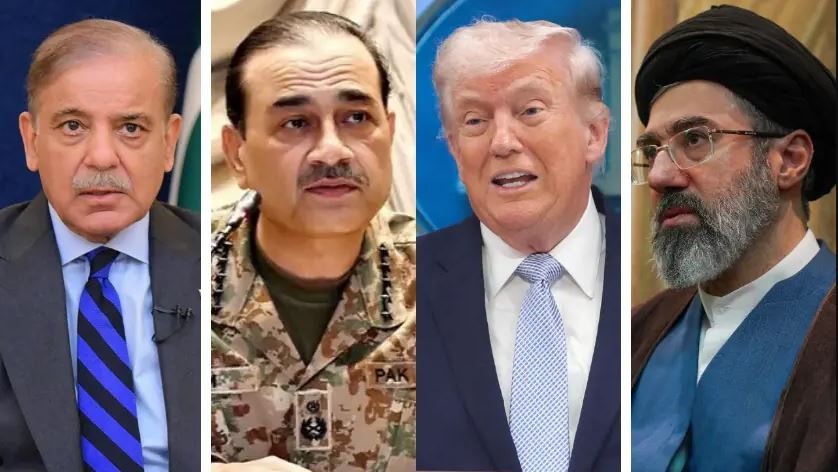
Pakistan skillfully capitalized on this opportunity despite its severe economic turmoil, political instability, and internal challenges. Prime Minister Shahbaz Sharif and Army Chief Field Marshal Asim Munir led energetic diplomatic efforts.
They persuaded President Trump to halt his planned attacks and engaged Iran to reduce tensions. This effort resulted in a two-week ceasefire, which Trump publicly credited to Pakistan.
This episode raised serious questions about India’s foreign policy, revealing a wide gap between its proclaimed role as a “world teacher” and diplomatic reality. Unable to confront the crisis, India’s claims amounted to mere rhetoric.
India’s ‘multi-alignment’ policy came under scrutiny. Though it claimed relations with all sides, it faced accusations of opportunism and lack of principles. Pakistan’s diplomatic success contrasted with India’s passive stance, posing questions about India’s global standing and regional influence.
Background
From late 2025, under US and Israeli pressure, the situation escalated to full war readiness by February 2026. Iran’s closure of the vital Strait of Hormuz heavily impacted global oil supply.
Despite persistent US pressure, Iran remained steadfast. Lebanon also saw active hostilities between Hezbollah and Israel, risking a broader energy crisis and potential world war.
On April 7, 2026, Trump warned on social media, “Tonight will mark the end of a civilization,” suggesting a wipeout of an entire nation overnight—a threat signaling destruction of ancient Persian civilization. The world condemned the threat, but Trump stood firm.
In this dire situation, a neutral country’s mediation was essential to avert a global catastrophe. India was widely regarded as the most suitable mediator at the time.
Why India?
Several solid reasons established India as the premier mediator:
Communications with America and the West: India’s elevated position in alliances like ‘Quad’ and ITU granted it direct access to US decision-makers, giving India influence over the US president.
Friendship with Iran: Decades-old energy, trade, and cultural ties, along with significant investment in the Chabahar port, positioned India as a reliable partner in Iran.
Global South leadership and economic might: After successful G20 presidency and as the world’s fifth-largest economy, India held considerable sway.
International endorsements: Even Finland’s President Alexander Stubb and officials from Israel recommended India as a potential mediator.
However, as India awaited action, media outlets including ‘Asia Times’ questioned, “Why did India vanish from Iran’s war mediation platform?”
India’s Diplomatic Missteps
India lost this opportunity largely due to an unnatural closeness with Israel that compromised its neutrality.
Prime Minister Modi’s visit to Israel on February 25–26, 2026, and the bilateral agreement on February 27 upgrading India–Israel ties to a ‘Special Strategic Partnership’ clearly demonstrated India’s tilt toward Israel and the US. Modi’s public pledge of full support for Israel in the Knesset came just 48 hours before war broke out, revealing India’s bias.
Foreign Minister S. Jaishankar reiterated India’s ‘zero tolerance for terrorism,’ neglecting humanitarian sensitivities. Consequently, India distanced itself from the mediator role in the Iran–Israel conflict.
International media criticized this as a diplomatic failure. ‘The Diplomat’ noted Modi’s clear alignment with Israel–America. ‘Bloomberg’ argued India’s silence and Modi’s Israel visit conveyed ‘informal support.’ ‘The Federal’ asserted that India’s closeness with the US and Israel complicated its neutrality. Expert Aftab Kamal Pasha stated, “India lost the opportunity and no longer commands credibility.”
While Modi’s pro-Israel policy clarified strategic priorities, the high cost was losing neutrality, a prerequisite for mediation in diplomacy.
Jaishankar’s Controversial ‘Broker’ Remark
Foreign Minister Jaishankar’s contentious remark is considered India’s second major diplomatic weakness. At a March 25, 2026 all-party meeting, when asked about Pakistan’s mediation efforts, he stated, “We do not do brokerage. India is not a broker nation.”
This statement stirred widespread controversy and criticism. The opposition Congress labeled it “a shame for the self-proclaimed world teacher.” ‘The Hindu’ editorialized that “India’s failure made Pakistan the mediator.”
Jaishankar’s branding of Pakistan as ‘broker’ contrasted ironically with Pakistan’s globally acclaimed mediation role, exposing the comment as a diplomatic misstep.
India’s Ambiguous Policy
India’s political failure also stemmed from its ‘multi-alignment’ policy—claiming to maintain ties with all sides but failing to show neutrality in practice.
Despite being active in the US-led Quad, Israel-inclusive ITU, and Russia-China dominated SCO, India appeared non-committal during the crisis, eroding its credibility.
International media has severely criticized India’s role. ‘The Diplomat’ analyst Bharat Bhushan remarked that India’s support for Israel diminished its stature and raised questions about its leadership capacity.
Lack of Proactive Diplomacy
A primary weakness was India’s absence of proactive diplomatic initiatives. Pakistan launched diplomatic campaigns from March 2026 onwards, while India appeared passive.
Pakistan hosted meetings with foreign ministers from Egypt, Saudi Arabia, and Turkey in Islamabad, finalizing the ‘Islamism Accord.’ Army Chief Munir maintained contacts with both sides.
In contrast, India only managed a routine phone call with President Trump during the crisis—a strategic blunder borne from an assumption that Pakistan would fail, causing India to lose influence and opportunity.
Strained Relations with Iran
Modi’s Israel visit not only strained India–Iran relations but fractured decades of diplomatic trust.
Under US pressure, India reduced Iranian oil imports and in April 2025 announced alternative supply plans, economically and diplomatically isolating Iran.
Iranian Foreign Minister Javad Zarif’s visit to Pakistan introduced a new dynamic in South Asian diplomacy. He proposed linking India’s Chabahar port with Pakistan’s Gwadar port, a major blow to India.
India’s ambiguous policy pushed Iran toward Pakistan, raising questions on India’s strategic independence and regional influence.
Declining Diplomatic Relevance
Claiming to be the voice for developing countries, India’s refusal to remain neutral and its pro-Israel stance damaged its image across the Global South during the West Asia crisis.
Following the death of Iran’s Supreme Leader Ayatollah Khamenei, India delayed condolence by five days, inviting criticism even from neighboring states.
India is increasingly feeling isolated on the global stage, impacting groups like BRICS and SCO. By not condemning attacks on Israel, Arab and African nations questioned India’s moral leadership.
While Foreign Minister Jaishankar advocates friendship with all, India’s practice now appears more like ‘commercial isolation,’ reflecting diminishing diplomatic relevance.


