




News Summary
Prepared after editorial review.
- The Nepali Congress plans to conduct a ‘One Month to the Roots’ campaign starting from 1st Baisakh to update memberships across all 77 districts.
- General Secretary Pradeep Paudel has emphasized that all active members must renew their memberships in their local wards; a digital ‘Congress ID’ will be mandatory.
- The party will implement a digital membership system, requiring collection of phone numbers and photos, with Chairperson Gagan Thapa initiating the membership renewal process.
26 Chaitra, Kathmandu – After suffering an unexpected defeat in the House of Representatives elections held on 21st Falgun, the Nepali Congress is currently grappling with internal disputes.
Following the political unrest that began after the Genjiayan movement on 23rd and 24th Bhadra, the special general convention held at the end of Poush intensified internal factionalism, which has weakened the very roots of the Congress party. Although the Congress appears vibrant as the main opposition party in the House of Representatives, its foundation resembles a tree whose soil has dried up and lacks nourishment.
Amid internal strife, the Congress, preparing for its 15th general convention, has acknowledged the situation and adopted the ‘One Month to the Roots’ campaign as its core strategy to strengthen the party organization.
“Since our party’s election symbol is the tree, it is natural for us to feel close to the term ‘roots’,” stated General Secretary Pradeep Paudel about the campaign. “Currently, the tree looks somewhat desolate, with leaves fallen and appearing bare. Hence, we intend to apply fertilizer, water, and rejuvenate the tree through this campaign.”
Physical Presence Required for Membership Renewal
The Nepali Congress has appointed central representatives in all 77 districts. These representatives have been instructed to work directly within local levels. Preparatory orientation programs for the central representatives, who will take part in the month-long campaign starting from 1st Baisakh, have already been conducted.
“We have deployed representatives across 77 districts and have prepared their terms of reference (TOR),” explained General Secretary Paudel. “An official directive has also been issued.”
The central representatives will work in accordance with this directive. Through the ‘One Month to the Roots’ campaign, the Congress aims to make the digital ‘Congress ID’ mandatory, ensuring that all active members renew their memberships at the ward level, issue new memberships, and engage in dialogue with citizens.
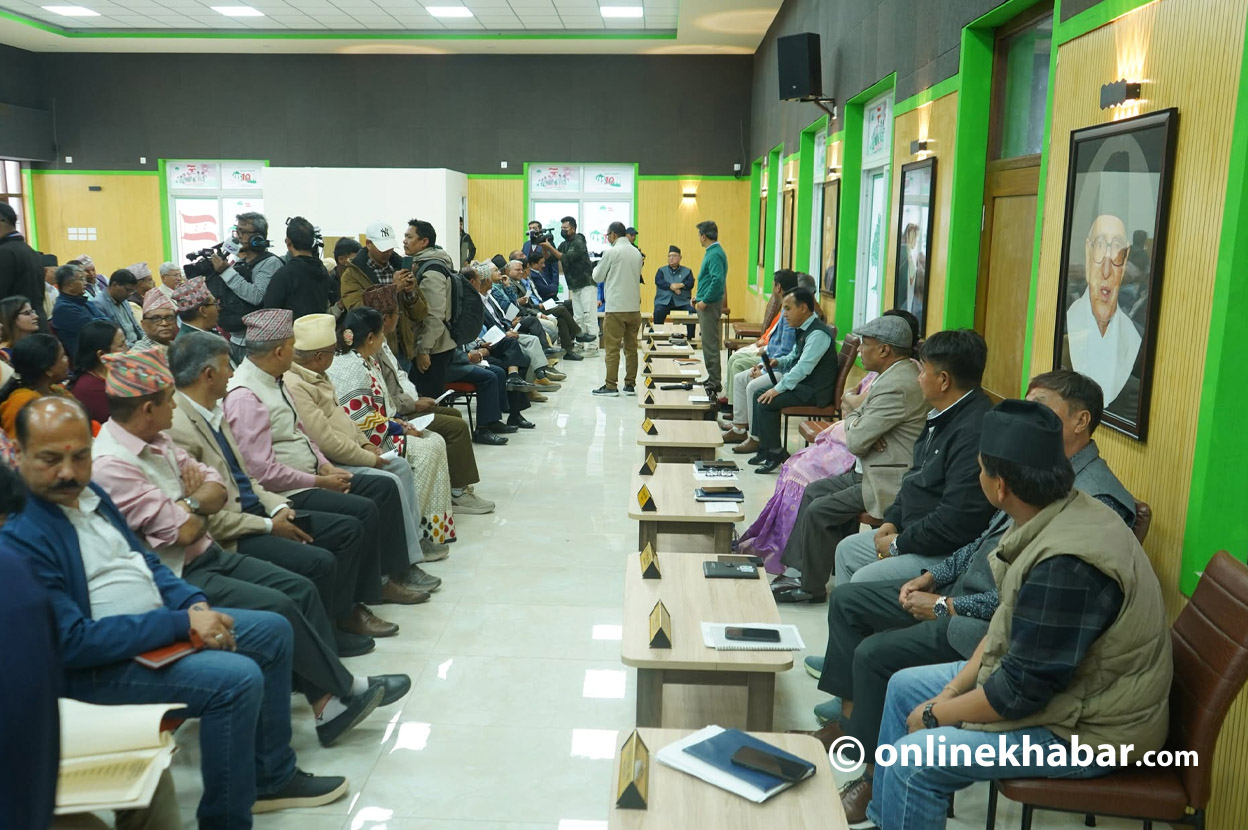
“This campaign urges every member to renew their membership where they originally registered,” Paudel detailed. He also clarified that active members from the 14th general convention (except those under disciplinary action) will be eligible to renew their memberships.
“According to the party constitution, members not subject to disciplinary action can renew their active memberships,” he added. “There is no prohibition on members who do not wish to participate in this process.”
The party has established a clear guideline for the membership updating process. “Members must visit their local ward and express their intention to renew,” said Paudel. “After that, they will receive a One-Time Password (OTP) number which they will use to complete the renewal.”
All Renewing Members to Receive a ‘Congress ID’
The Congress is preparing to require forms to be filled out and photos taken for active members renewing their membership. The collection of phone numbers and photographs will be mandatory to gather comprehensive personal details of all active members.
Among the 866,000 active members from the 14th general convention, about 100,000 phone numbers and 25,000 to 30,000 photographs are missing from party records.
The party intends to mandate phone number collection from members to improve communication, coordination with the party structure, and information sharing.
“To digitalize Nepali Congress, accurate phone numbers and photographs are essential to correctly identify members,” Paudel stated. “The party has taken responsibility to update member records.”
After renewing active memberships, the party will send an OTP to the member’s mobile number, which will then enable issuance of the ‘Congress ID’.
“The OTP will be sent to the mobile number registered on the form, and the ‘Congress ID’ will be issued accordingly,” Paudel said. “Only those with a ‘Congress ID’ will be considered active members eligible to participate in ward-level conventions.”
Challenges from Active Members Not Voting
Longstanding factionalism and internal betrayal have weakened the Congress. The internal divisions appear linked to structural problems within the party, as evidenced by some active members failing to vote in recent elections.
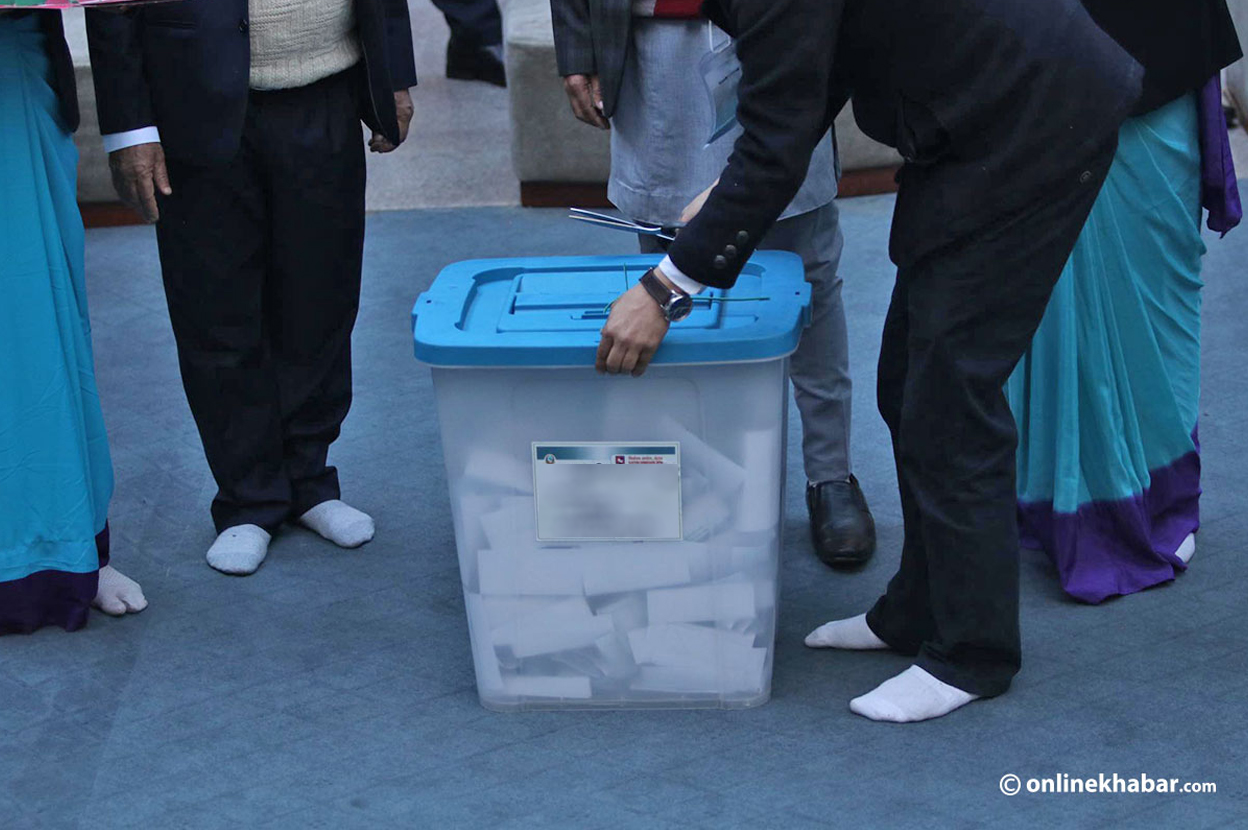
Preliminary data shows that in 17 constituencies, candidates from the Congress received fewer votes than the number of active members, highlighting a serious challenge for the party.
“We need to review why members refrain from identifying themselves as party members socially or do not vote for party candidates,” said General Secretary Paudel.
Mandatory Member Participation in Shaping Party Vision
The Congress is focusing on boosting active member participation in forming the party’s vision while advancing digitalization efforts. This will facilitate members in contributing ideas and agendas more easily.
“We plan to select candidates through primary elections, which increases member responsibility,” Paudel explained. “Therefore, renewing active membership is necessary.”
The party is also preparing to distribute new memberships and establish a digital membership system.
“Central representatives have been informed at district and ward levels,” Paudel noted. “Additionally, technical assistants within the party structure are being engaged to progress this effort.”
From 1st Baisakh, the ‘One Month to the Roots’ campaign will mandate OTP acquisition and photo taking for membership renewal.
Chairperson Thapa to Lead Membership Renewal
Chairperson Gagan Kumar Thapa will initiate the active membership renewal process. On the first day of the campaign, 1st Baisakh, he will visit his electoral ward to renew his membership.
According to Chairperson Thapa, he holds active membership in Kathmandu Metropolitan City-29. All office bearers, former office bearers, and central committee members are required to renew their memberships within their wards by the end of Baisakh.
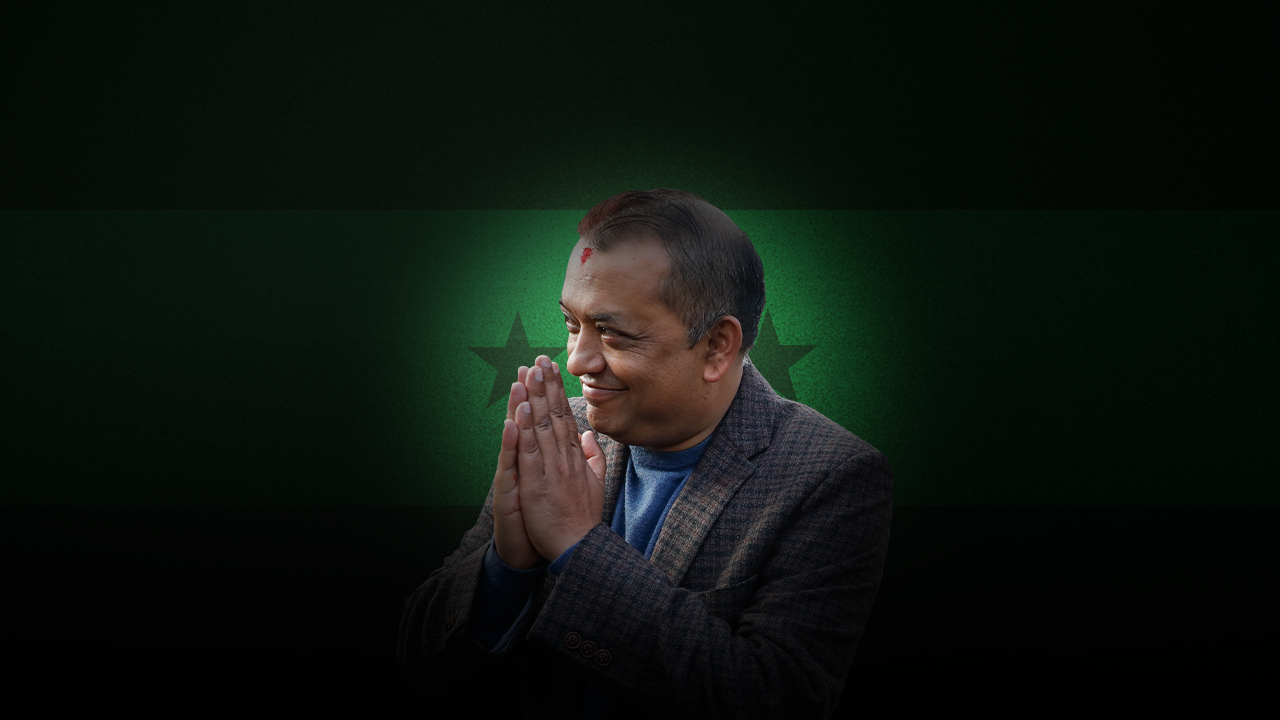
A statement released on 21st Chaitra reads, “All party members at every level must personally visit their respective wards to renew memberships by Baisakh. Only those with updated membership will receive the Congress ID and be eligible to participate in the 15th general convention.”
Additional Organizational Aspects of the Campaign
Alongside membership renewal, the Congress will carry out organizational activities, dialogue with the public and youth, and election review programs involving external well-wishers during the campaign.
Central representatives have been tasked with analyzing and reporting on party and affiliated organizations’ activities from district to ward level.
“Representatives must report whether meetings at various levels of committees are held regularly and assess conditions of sister organizations,” Paudel explained.
They are also responsible for election review discussions with citizens, facilitating direct dialogue between the party and the public, distinct from internal member interactions.
“In several districts, representatives will consult intellectuals, professionals, and youth on why Congress has weakened and seek suggestions for party strengthening,” Paudel elaborated.
Although intellectuals and professionals trusted the party in past years, such positive feedback has been absent this time.
Plans to Engage Party in Social Activities
The Congress plans to run social and creative campaigns in collaboration with local governments, and to provide recommendations for upcoming budgets.
According to General Secretary Paudel, central representatives have been assigned to serve as liaisons between the party and local governments.
“This is the local government’s final budget, and facilitating how to make it citizen-friendly is included in the terms of reference,” he said.
As part of the plan to integrate the party’s organization into social campaigns, district to ward committees will be encouraged to develop annual calendars detailing these efforts.
“Campaigns at the ward level will address climate change, social inequality, informal sector workers, dialogue with youth returning from abroad, anti-drug efforts, women’s empowerment, cultural preservation, and other social issues,” the plan states.
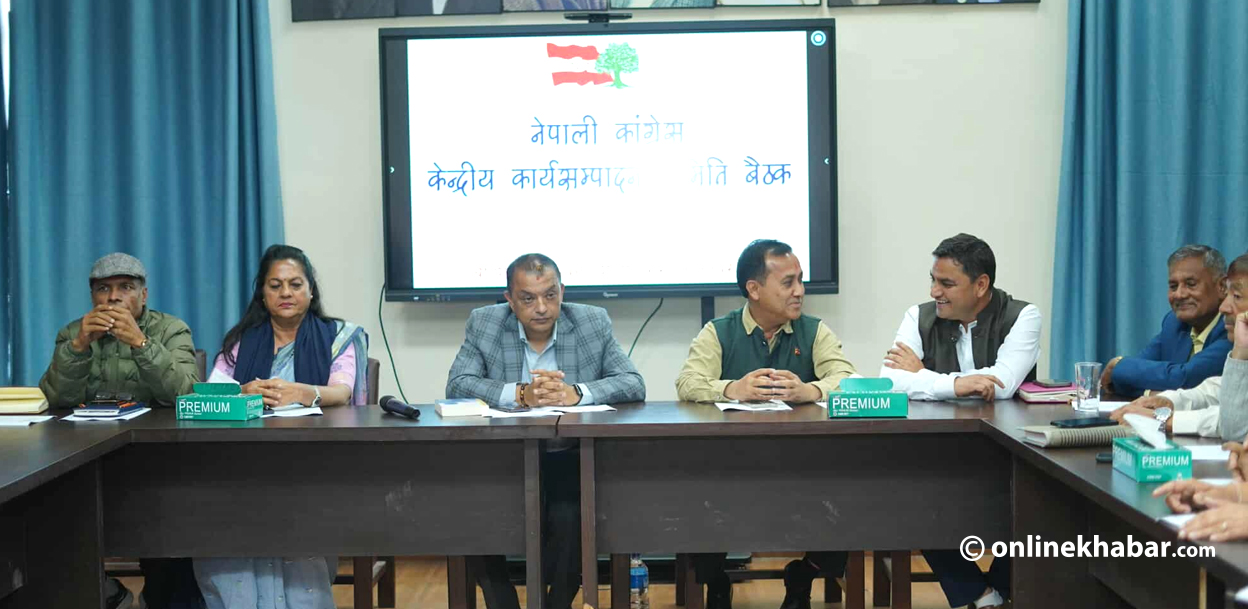
Procedures include consulting district and regional chairpersons for briefing members about the campaign and appointing representatives in every ward.
When appointing new representatives, delegates from the general convention and the central committee will also be included.
The Nepali Congress is the oldest democratic and socialist party in Nepal. It was established in 1949 by merging the Nepali National Congress and the Nepal Democratic Congress.
Born out of the struggle against the Rana regime, the Congress played a decisive role in the 1951 revolution. In the 1959 first general election, it secured the majority and formed Nepal’s first democratically elected government led by BP Koirala.
Throughout the Panchayat era, the Congress continuously struggled for democracy, leading significant movements such as the 1979 student protests, the 1990 People’s Movement, and the 2006 People’s Movement II.
At the heart of the democratic movement, the Congress considers itself not merely a political party but a champion of democracy, civil liberties, and social justice. Despite experiencing crises, splits, and revivals over time, the legacy of founding leaders like BP Koirala and Ganeshman Singh continues to influence the party.


