Nepal Electricity Authority Corresponds to Recover Installments Contrary to Supreme Court Order





News Summary
AI generated. Editorially reviewed.
- Nepal Electricity Authority has corresponded with industrialists to pay installments related to the Dedicated and Trunk Line disputes, defying the Supreme Court’s order.
- The Supreme Court, on December 7, 2025 (22 Mangsir 2082 BS), had ordered implementation of administrative review directed by the Prime Minister’s Office.
- Ignoring the court’s directive, the Authority instructed distribution centers to disconnect industrialists’ connections to recover dues.
29 Chaitra, Kathmandu – Nepal Electricity Authority (NEA) has corresponded with industrialists to pay the dues related to the “Dedicated” and “Trunk Line” disputes, disregarding the Supreme Court’s order.
The Supreme Court on December 7, 2025 (22 Mangsir 2082 BS) had clearly stated that the administrative review directed by the Prime Minister and Cabinet’s office regarding the Dedicated dispute must be implemented.
On November 6, the Prime Minister’s Office had issued a letter to the Ministry of Energy and NEA instructing them to simplify the payment of Dedicated and Trunk Line charges and arrange for the administrative review hearing.
However, the then Energy Minister, Kulman Ghising, who was also the Chairman of the NEA Board of Directors, did not implement this directive.
Due to the non-implementation of the Prime Minister’s Office directive, industrialists filed a writ petition in the Supreme Court, which was heard by Justices Vinod Sharma and Sunil Kumar Pokhrel on December 7. The court noted that the Prime Minister and Cabinet’s Office had arranged for the administrative review hearing regarding the dispute and issued an order accordingly.
The court had also reminded then Energy Minister Ghising about legal and constitutional provisions, ordering that administrative review must be conducted concerning the identified inconsistencies.
Nevertheless, Ghising failed to initiate the administrative review process and the NEA management has not taken any steps in this regard.
Instead of complying with the court order, the NEA sent letters on Friday to various distribution centers directing them to recover dues and take action against those who fail to pay.
A letter from Dheerayukumar Shrestha, Chief of Distribution and Customer Service Directorate at NEA, mentioned concern that although industries had started to use the monthly installment facility following the notice published on September 29, 2025 (12 Asoj 2082), installment payments have been halted and only regular charges are being paid.
Distribution centers were instructed to ensure all consumers, whether using the installment facility or not, pay regular installments. The letter specified that failure to pay dues within the designated time frame would result in penalties, and directives were given to enforce this process on all consumers.
Meanwhile, two industries had filed applications with the Electricity Regulatory Commission (ERC) to resolve the dues dispute, but the commission ruled their claims as insufficient.
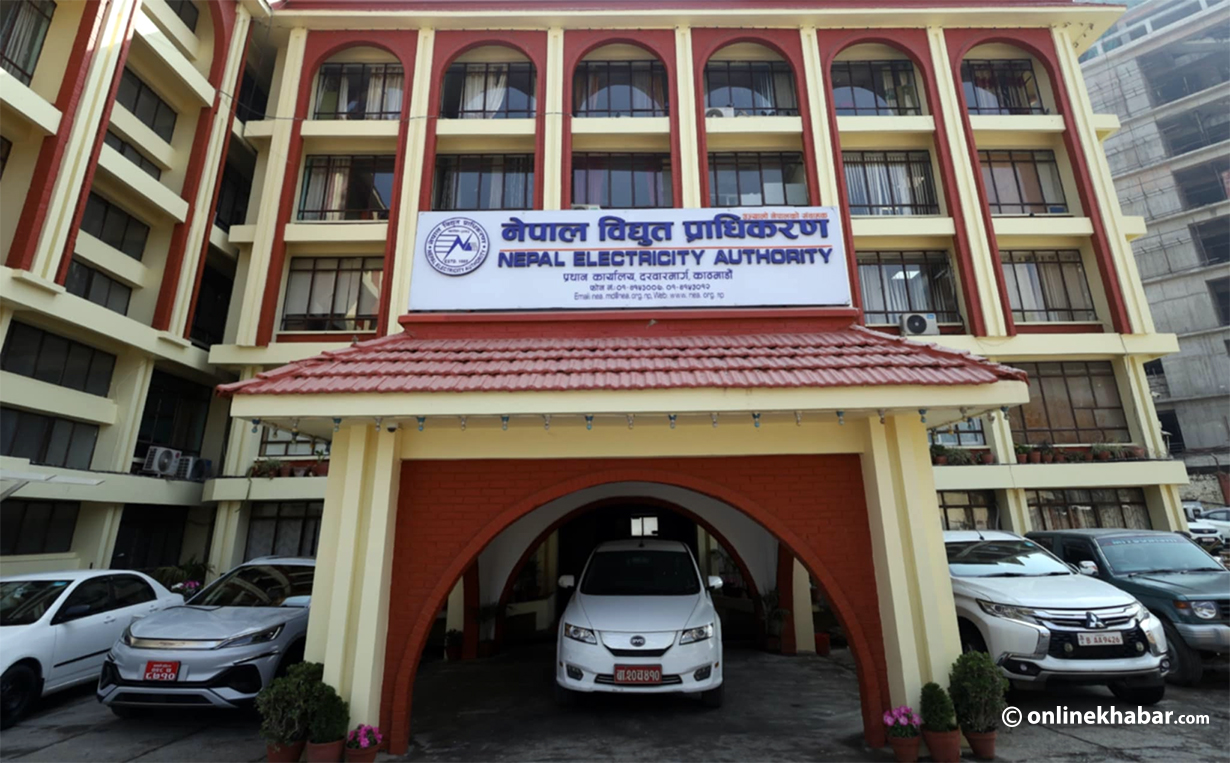
Following the ERC’s decision, NEA Executive Director Hitendra Dev Shakya revealed that the authority has sent correspondence to those industries and others to recover the dues.
He stated, “Currently, the Authority has requested payment of dues. Any decision on what actions might be taken if industrialists do not pay will be made after seeking legal advice. Without legal opinion, no industrialist line will be disconnected under pressure.”
He also confirmed that the NEA Board of Directors had previously decided to study the Supreme Court order dated December 7 and obtain legal counsel but has yet to receive that advice.
“Hence, the interim order by the court to prevent collection of dues was meant only for the industrialists, and correspondence for payment was sent to consumers other than them,” Shakya explained.
What is the dispute?
The Dedicated and Trunk Line dispute, ongoing since 2018 (2075 BS), remains unresolved. In January 2024 (24 Poush 2080 BS), the government formed an investigative commission chaired by former Supreme Court Justice Girish Chandra Lal.
The commission submitted its report to the government on May 6, 2024 (23 Baisakh 2081 BS), and the government decided to implement its recommendations.
However, these recommendations have not yet been implemented by the government.
After former NEA Executive Director Kulman Ghising became Energy Minister in November 2025 (Kartik 2082), a decision to disconnect lines reignited the dispute.
NEA had initiated an administrative review process with bank guarantees on April 11, 2025 (29 Chaitra 2081 BS), and all disputed industries had applied for the review.
However, after Ghising’s appointment as Energy Minister, NEA canceled the review process on September 26, 2025 (10 Asoj 2082) and issued letters demanding dues and threatening disconnection. By November 11, 2025 (4 Kartik), lines of 25 industries had been cut.
After prolonged inability to reconnect the disconnected lines, a consensus to negotiate with the private sector was reached at the initiative of then Prime Minister Sushila Karki.
On November 3, 2025 (17 Kartik), Prime Minister Karki, Energy Minister Ghising, and Nepal Chamber of Commerce Chairman Chandra Prasad Dhakal agreed that industrialists would deposit dues as security and the administrative review process would commence.
According to NEA, industrialists deposited one installment’s worth of security from 28 installments of dues but the Ministry of Energy and NEA have not started the administrative review.
Although the agreement was reached on November 3, 2025 (17 Kartik), the Prime Minister’s Office sent a letter to the Energy Ministry only on November 7 (21 Kartik) directing implementation.
The letter, signed by Secretary Phanindra Gautam of the Prime Minister’s Office, instructed to “simplify payment of Dedicated and Trunk Line charges and arrange for the administrative review hearing.”
“On November 3, 2025 (17 Kartik), during discussions in the presence of the Prime Minister and ministers of finance, energy, and chief secretary, agreement was reached to simplify payments of Dedicated and Trunk Line charges and arrange for review hearings,” the letter stated.
However, after the Prime Minister and Energy Minister reached this agreement and the Cabinet’s directive, then Minister Ghising disobeyed it, leading the Supreme Court to issue an order prohibiting such disobedience.
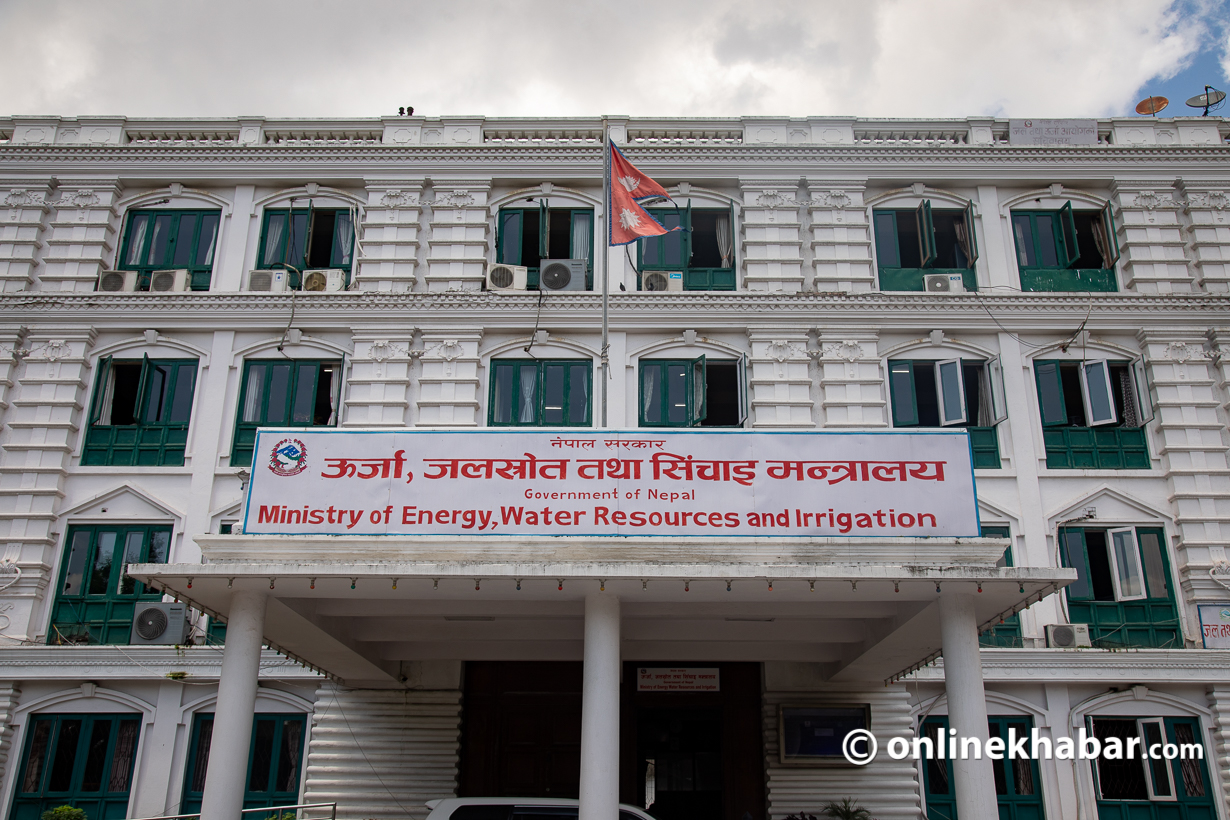
The Supreme Court reasoned that under Nepal’s constitutionally recognized prime ministerial system, decisions, orders, and directives from the Prime Minister and Cabinet Office are binding on the relevant ministries.
“According to the constitution and law, considering the organizational structure of the respondents (Energy Ministry and NEA), NEA remains government-owned and under the Energy Ministry, which itself is under the Prime Minister and Cabinet Office,” the court order noted.
The Supreme Court reminded that executive authority lies with the Cabinet as per the Constitution, and ministers and ministries must comply with Cabinet decisions and directives.
Therefore, the industrialists’ demand has been instructed for implementation by the Prime Minister’s Office, meaning the interim order to restrain dues collection need not be maintained.
“According to Article 75 of the Constitution, executive power resides with the Cabinet, and under Article 76(1), ministers are personally responsible to the Prime Minister and Federal Parliament for their ministry’s work. This prime ministerial system, recognized by the Constitution, means decisions from the Prime Minister and Cabinet Office are binding for all ministries,” the Supreme Court said.
Despite the Supreme Court’s order, NEA has yet to initiate the administrative review process.
Sources indicate that the new Energy Minister Biraj Bhakt Shrestha has verbally instructed dues recovery, prompting NEA to correspond with industrialists accordingly.


