




News Summary
Reviewed and editorial analysis.
- The government led by Rastriya Swatantra Party and Senior Leader Balendra Shah has declared the discrimination against Dalits a ‘systematic crime,’ pledging formal apologies and a reform package.
- Despite aiming to house 55,970 families under the Public Housing Program, 19,645 homes remain entirely stalled after 16 years, and 25,000 houses are incomplete.
- The Office of the Auditor General has highlighted institutionalized ethnic discrimination, noting a disparity of 210,000 NPR in housing grants between Dalits and non-Dalits in Madhesh Province.
A new and powerful voice calling for ‘the state’s apology for historical injustice’ has recently emerged in Nepali politics.
The government led by the Rastriya Swatantra Party, which secured nearly a two-thirds majority in the February 21 election, and senior leader Balendra Shah (Balen) has declared centuries-old discrimination against Dalits a ‘systematic crime,’ announcing plans for formal apologies and a reform package.
This announcement has raised hopes in Dalit communities, but many question whether mere apologies can erase the suffering of thousands of Musahar, Dom, and Chamar families. These families have endured sixteen years of open-air living after their huts were demolished during state housing initiatives promising permanent homes. Is an apology alone sufficient to deliver justice for them?
The ‘Public Housing Program,’ running for 16 years, reflects the government’s sluggish administration and policy corruption. Initiated grandly in 2066/67 BS (2009/10), the program aimed to provide housing to 55,970 families. However, nearly 25,000 houses remain incomplete, and 19,645 houses are completely stalled. Data from the Economic Survey 2081/82 (2024/25) show that about 35 percent of the target remains unfulfilled. Although federalism has extended authority to local levels, honest service has yet to reach the poor.
Gap Between Housing Ownership and Constitutional Rights
Data concerning homeownership—the primary indicator of housing status—show very slow progress in Nepal over the past decade. The 2068 BS (2011) census indicated 85.26 percent of families lived in their own homes; by 2078 BS (2021), this had only increased to 86 percent. This translates to less than 1 percent growth in ownership over ten years. Furthermore, around 12.8 percent of families rent their homes, excluding them from owning housing rights.
The program launched in 2066/67 BS targeted housing for 55,970 families, but after 16 years, 25,000 homes remain incomplete and 19,645 entirely stalled.
Despite the government’s ambition to provide secure housing for all Nepalis by 2080 BS (2023/24), nearly 2 million houses still require construction two years past the deadline. Due to delays and decades-old incomplete projects, this goal remains distant.
According to the 2078 BS national census, clear ethnic and regional disparities exist in housing. Non-Dalits have 40.4 percent access to cement-plastered homes, a key indicator of secure housing, whereas Dalits only have 20 percent access. Conditions are especially dire for Dalits in the Terai region.
The census reveals that nearly 41.3 percent of Dalit families in Terai still live in huts, regularly exposed to frostbite, fire hazards, and other risks. The stalled housing initiatives over 16 years have further worsened their living conditions.
Sixteen Years of Unfulfilled Dreams
Although the Constitution of Nepal guarantees housing as a fundamental right, the 16-year history of the Public Housing Program attests to the state’s sluggishness and indifference toward the poor.
Economic Survey data from 2081/82 reveal thousands of Dalits and marginalized people remain homeless despite the demolition of their makeshift shelters.
Significant Gap Between Targets and Progress
According to the Economic Survey 2081/82, progress since the program’s inception is as follows:
Table 1: Overall Status of the Public Housing Program (From 2066/67 to Falgun 2081)
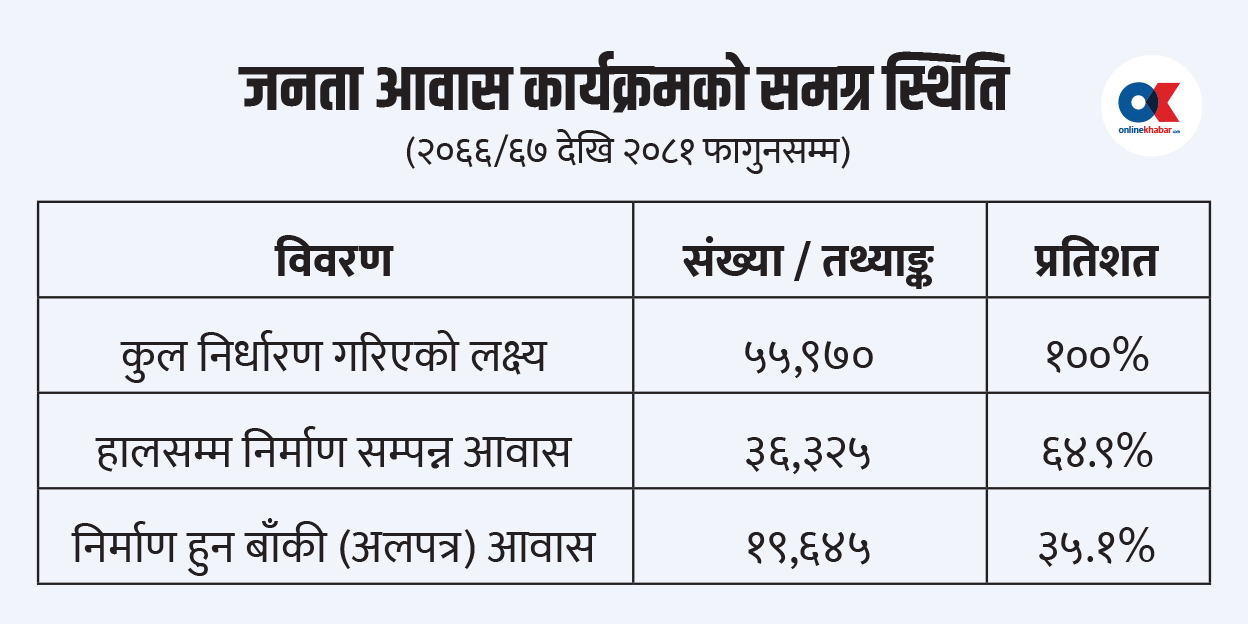
This table shows that in sixteen years, the state has only fulfilled approximately 35 percent of its housing targets. The 19,645 stalled houses are not mere statistics but represent the suffering of Musahar, Dom, and Chamar families who for over a decade have endured harsh weather sleeping with no protective roofs.
Accountability Lapses in Federal and Provincial Governments
Comparing the program’s implementation during federal and provincial government tenures reveals the state’s slow pace more clearly:
Table 2: Comparison of Performance Between Federal and Provincial Governments
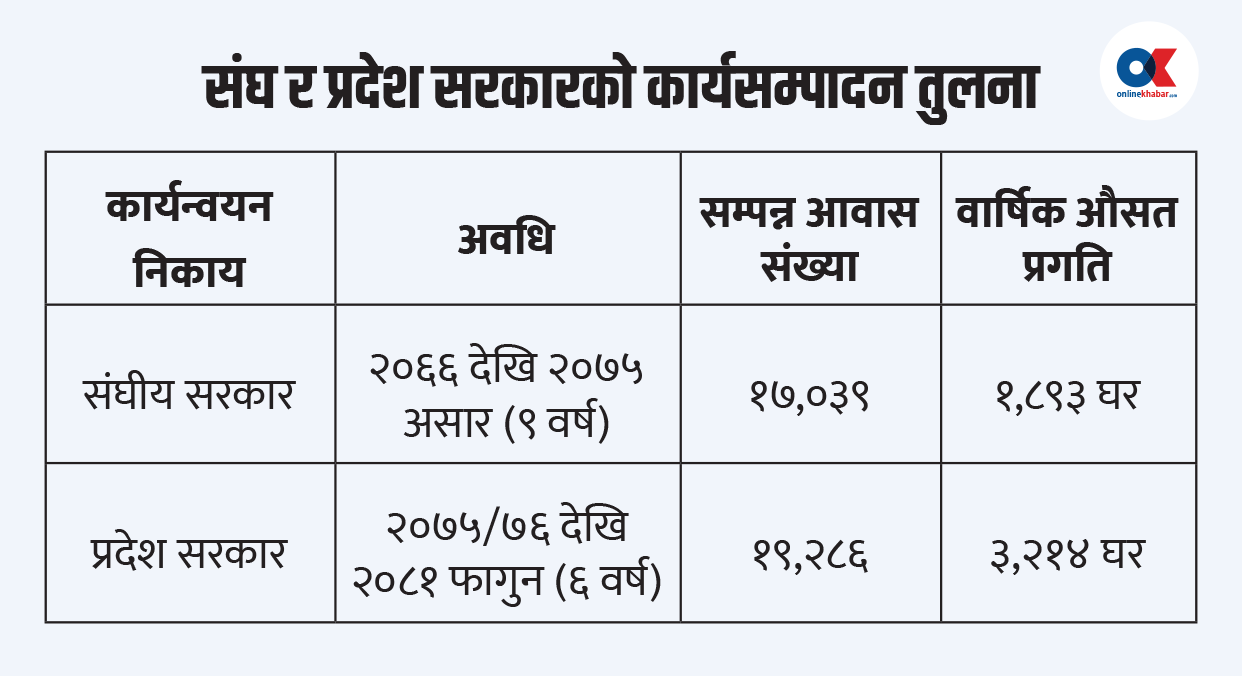
When the federal government handed over the program to provincial governments in 2075/76 BS (2018/19), 38,884 houses were incomplete. Although provinces have worked somewhat faster than the federal government, nearly 20,000 houses remain stalled, raising serious questions about federalism’s effectiveness.
State of Public Housing by Province:
The Office of the Auditor General’s report shows provincial housing construction status varies but challenges are consistent. Notably, Madhesh Province exhibits ethnic discrimination in housing grants while other provinces display incomplete targets highlighting the struggles of impoverished families.
Table 3: Housing Progress and Incomplete Houses by Province (Up to 2080/81)
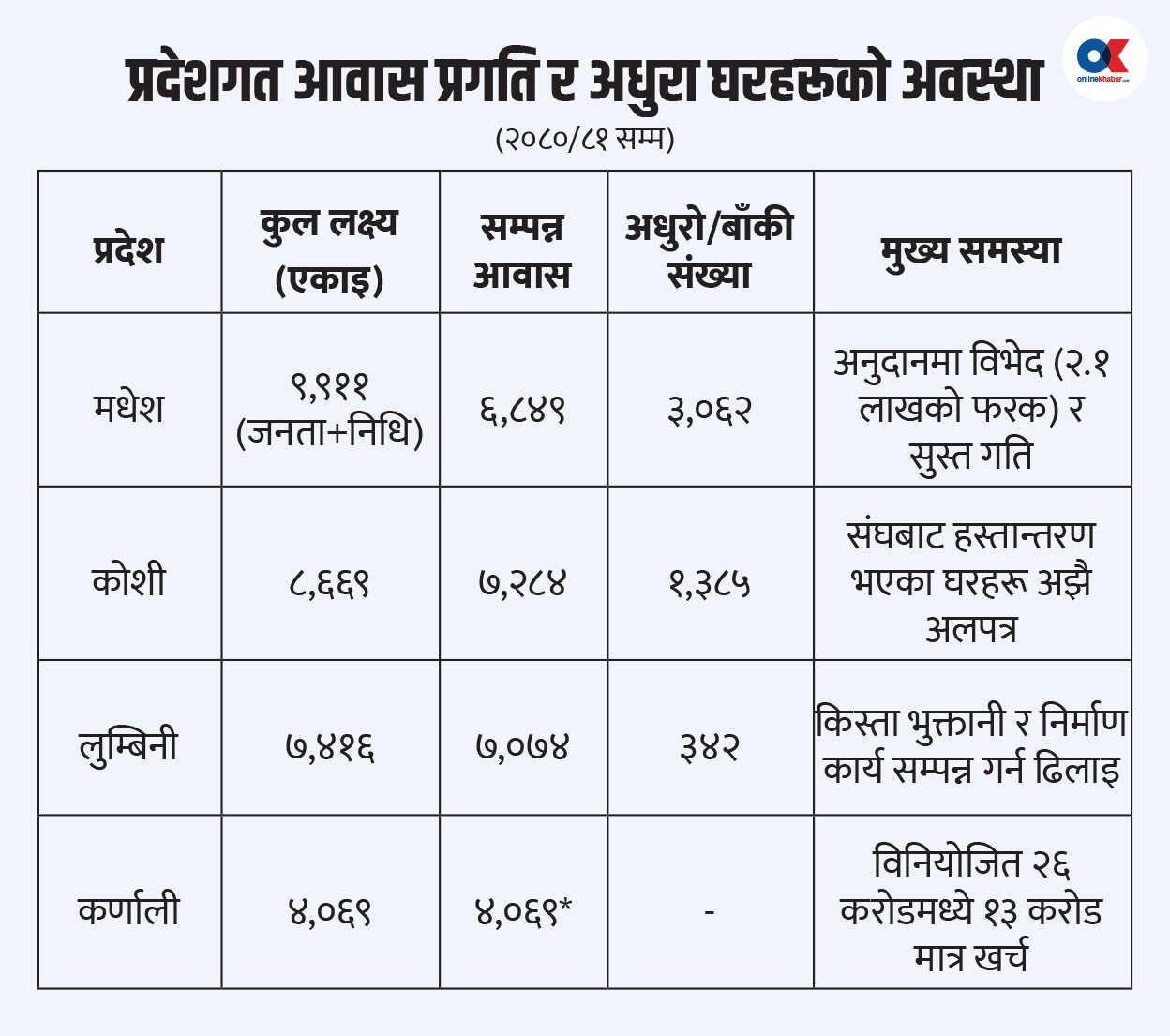
*Note: For Karnali Province, the report reflects total completed houses but notes the current year’s targets remain unmet, and a 9 million NPR plan has not been implemented.
Internal Provincial Disparities
The latest audit report clearly highlights delays and policy inconsistencies among provinces. Although federalism was meant to bring the state closer to citizens’ doorsteps, data reveals provincial governments remain mired in administrative inefficiency, failing the poor population.
Dual Justice and Structural Discrimination: The housing challenges in Madhesh Province are particularly contradictory and unjust. Despite enacting a Dalit Empowerment Act proclaiming their rights, the province has discriminated ethnically in housing subsidies. While non-Dalits receive 560,000 NPR for Mahendranarayan Nidhi housing, Dalits receive only 350,000 NPR under the Public Housing Program.
This 210,000 NPR disparity in the same geographical region with identical market values is not only political but also reflects the state’s insensitivity and institutionalized ethnic injustice.
This disparity is rooted in ethnic supremacy embedded in the state’s mindset. The ongoing presence of 3,062 incomplete housing units in Madhesh confirms that vulnerable communities such as Musahar, Sada, and Dom still live in huts.
Madhesh Province allocates 560,000 NPR per house for non-Dalit/vulnerable groups under Mahendranarayan Nidhi housing, whereas only 350,000 NPR is assigned to Dalits in Public Housing.
The situation is difficult in Koshi Province as well, where over 15 percent of houses remain incomplete, and 984 houses transferred from the federal government have been stalled for extended periods.
As the federal government attempts to relinquish responsibility, provincial governments have yet to assume full ownership, revealing coordination failures and administrative weaknesses.
In Lumbini and Karnali provinces, budgets exist, but housing construction lags. Lumbini has 342 incomplete houses, while Karnali’s situation is even worse. Failing to execute the 9.31 million NPR plan in Karnali signals the state’s insensitivity toward the poor.
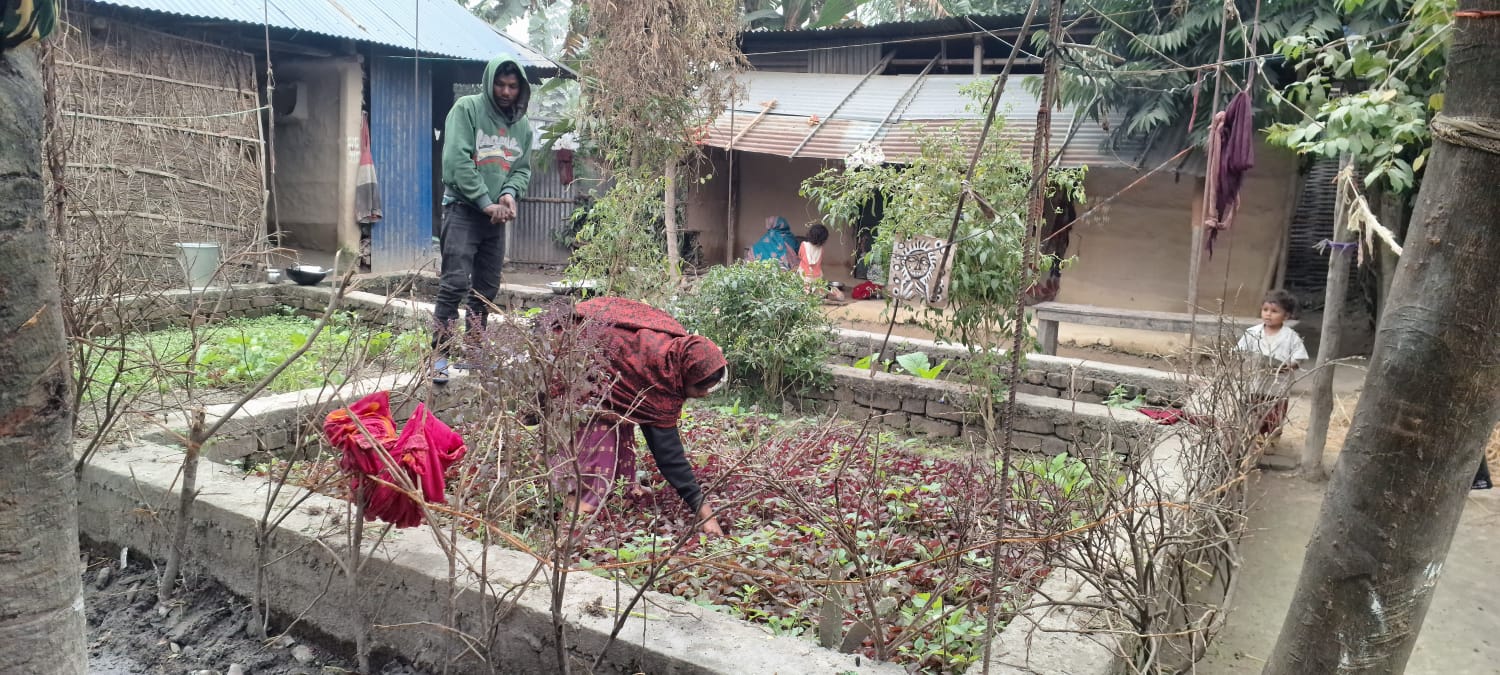
The Auditor General has advised all provinces to provide housing to targeted groups on time and maintain transparency through beneficiary registration. This stark reality shows that despite houses being recorded on paper, many settlements still have leaking roofs and broken floors. This is not just an administrative failure but a profound violation of citizens’ rights by the state.
Middlemen Manipulation and Ignoring Market Prices
The Public Housing Program, as explained by the Auditor General, has often benefited intermediaries rather than the poor. Even though 85% of the budget was expended during federal government implementation, 25,000 houses remain unfinished, indicating that funds were likely diverted to commissions rather than construction.
Intermediaries have supplied construction materials instead of direct subsidies to beneficiaries, resulting in substantial exploitation.
The federal government has pledged to announce a reform package within 15 days, which must go beyond promises. This should include forming a high-level investigation committee to prepare technical cost estimates for stalled houses and legally pursue corrupt actors.
Currently, the biggest challenge lies in budgeting based on decade-old cost estimates. With prices of materials and labor having doubled, the state clinging to outdated budgets necessitates reevaluation, increasing grant amounts, and procedural reforms.
Challenges Beyond Apology: The Road Ahead
Balendra Shah, a son of Madhesh, understands the plight of Dalits forced to live under open skies in extreme cold. A reform package must be announced within fifteen days—not as a political show but with substance: establishing a high-level inquiry panel, technical cost assessments of incomplete houses, and strict legal action against corruption.
An apology in parliament will have meaning only when children of Dom and Musahar families in Madhesh no longer sleep on the streets during the rainy season but in safe houses. Fulfilling this responsibility is a historic task for the Balen government. If houses remain incomplete and budgets stay outdated, the apology risks becoming mere political theater and a further mockery of Dalit poverty.


