




Though he is no longer with us today, the courage, struggle, and dedication of Dr. Dineshnath Gongal, who laid the foundation of modern surgical practice in Nepal, will forever shine brightly in the country’s medical history.
News Summary
Reviewed content.
- Dr. Dineshnath Gongal pioneered neurosurgery in Nepal and laid the foundation for modern surgical medicine.
- He performed over 40,000 surgeries and played a significant role in establishing the neurosurgery department at Bir Hospital.
- He facilitated training of skilled neurosurgeons by sending Dr. Upendra Devkota to the UK for advanced education.
On the fifth floor of Bir Hospital is an operating theater named the Gongal Theater.
Why was the neurosurgery theater named after an individual?
This question leads us to explore the history of neurosurgery in Nepal and also the life story of a dedicated surgeon.
Named two years ago, the theater’s significance has grown as Dr. Dineshnath Gongal, known as the father of neurosurgery in Nepal, is no longer with us.
Dr. Rajiv Jha, head of neurosurgery at Bir Hospital, reflects, ‘Every morning when we enter the operating theater, his name on the door reminds us that the knowledge we have in neurosurgery is rooted in his legacy.’
The First Surgeon to Open a Patient’s Skull in Nepal
At a time when Nepal lacked CT scans and modern equipment, Dr. Gongal took the risk to open patients’ skulls and began performing complex surgeries despite challenging conditions.
This bold decision laid the foundational groundwork for neurosurgery in Nepal.
In 1961 (2018 BS), Dr. Gongal performed Nepal’s first neurosurgery on a patient injured in a road accident by opening the skull. Unfortunately, the patient did not survive.
Despite the initial failure, he did not lose heart. A year later, in 1962 (2019 BS), he successfully operated on a brain tumor. The risk was so high that he personally cared for the patient’s treatment for 48 hours due to the lack of reliable equipment, ICU facilities, and adequate nursing support.
The surgeries done based on simple X-rays astonish even today’s doctors.
According to Dr. Jha, Dr. Gongal was the first in Nepal to operate on a pituitary gland tumor. ‘There was no modern technology at the time,’ Jha recalled, ‘but his courage and skill make those operations incredible even today.’
Importing Equipment Himself
Surgical equipment was not readily available in Nepal. Often, Dr. Gongal traveled abroad to personally purchase necessary instruments. He also arranged for production of some items locally in Kathmandu.
This resourcefulness has led many physicians to remember him as the founder of modern surgical medicine in Nepal.
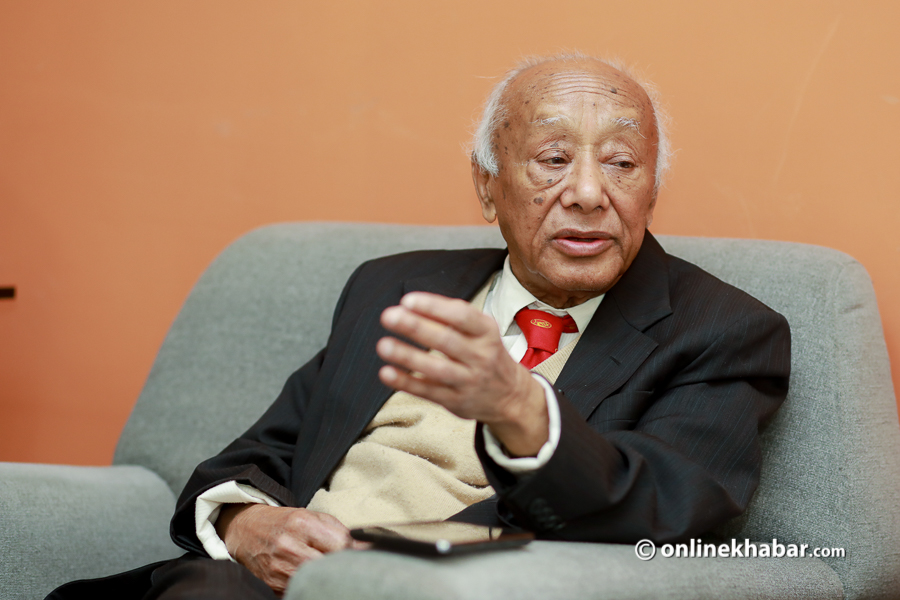
During his lifetime, Dr. Gongal performed over 40,000 surgeries. Alongside neurosurgery, he was the first in Nepal to conduct operations such as pituitary tumor surgery, laminectomy for spinal injuries, pneumonectomy for lung surgery, mitral valvotomy for the heart, and complex abdominal surgeries.
A Life Dedicated to Bir Hospital
Born in 1932 (1989 BS) in Kathmandu, Dr. Gongal’s ancestral home was in Palpa Tansen.
He completed his BSc from Tri-Chandra College, earned his MBBS from Darbhanga Medical College in India, and his MS from Grant Medical College, Mumbai.
After his studies in India, he joined government service in 1956 (2013 BS).
He spent most of his medical career at Bir Hospital, where he began his surgical practice and trained a new generation of physicians. Later, he also served as the founding vice chancellor of the National Academy of Medical Sciences (NAMS). He is survived by three sons and a daughter.
Facilitating Advanced Training Abroad
Dr. Gongal actively facilitated sending young doctors abroad for training to develop skilled specialists in Nepal.
Though he held administrative roles, he remained close to both doctors and students.
Dr. Jha recalls, ‘I was a medical officer in the neurosurgery department when Dr. Upendra Devkota was the head. Dr. Gongal regularly attended the weekly interdisciplinary meetings. He didn’t speak much but listened attentively and made corrections only when necessary.’
‘He was a teacher who spoke little and listened more,’ said Jha, ‘and that style taught us a lot.’
Under his guidance, Nepal’s neurosurgery emerged strong with pioneers like senior neurosurgeon Dr. Prakash Vist and the late Dr. Devkota gaining crucial experience working alongside Dr. Gongal. Dr. Gongal played a major role in supporting Devkota’s development.
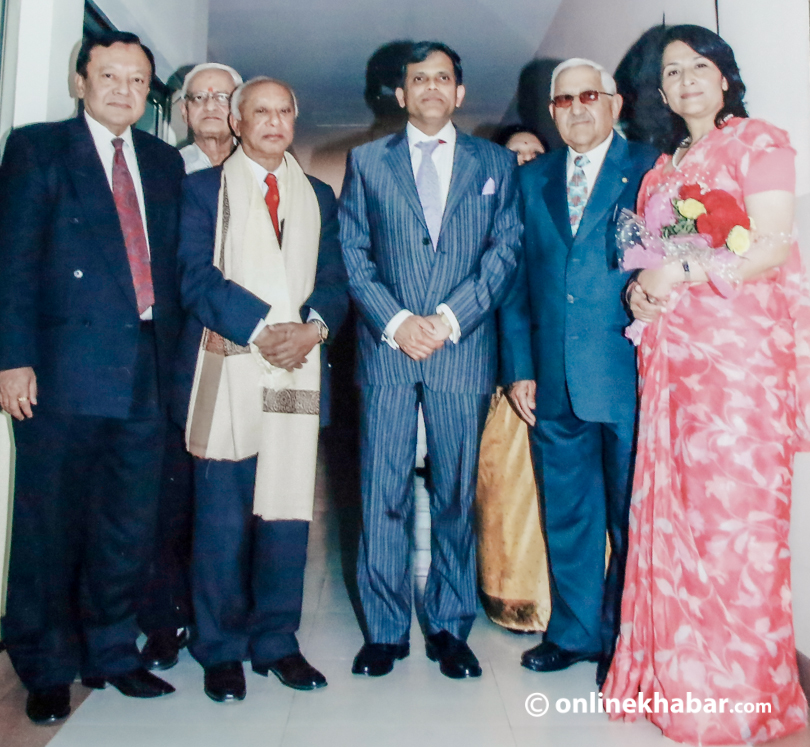
The mentor-disciple relationship was vital in establishing neurosurgery in Nepal. By sending internationally renowned Dr. Devkota abroad, Dr. Gongal opened pathways for professional neurosurgery.
Formal neurosurgical services had not yet started at Bir Hospital then, but the number of patients with serious neurological problems was increasing. Many had to travel abroad at great expense for operations unavailable in Nepal, which deeply concerned Dr. Gongal.
He realized neurosurgery had to start in Nepal, but skilled manpower was lacking.
So he planned to send some hospital doctors abroad for training despite initial hesitation from others, who worried about insufficient cases for practice.
At that moment, a young doctor named Upendra stepped forward.
For Dr. Gongal, this was a pivotal moment. With a talented doctor from his own hospital willing to go abroad, he was optimistic about neurosurgery’s future.
In 1982, Dr. Gongal visited the UK on a two-week invitation from the British government, forging connections with British physicians, including renowned neurosurgeon Dr. Graham Teasdale at the University of Glasgow.
He clearly requested, ‘Nepal needs a trained neurosurgeon. Please assist in training one.’
At the time, the University of Glasgow was a global leader in neurosurgery and research. Professor Teasdale accepted the proposal. A formal letter soon arrived, and in 1983, with coordination from the British Council, Dr. Devkota was sent to the UK.
The initial six-month training at Glasgow extended into a three-year scholarship. While abroad, Dr. Devkota demonstrated exceptional capability by passing the rigorous FRCS examination, which only 15 to 20 percent of candidates passed.
After extensive training, he returned to Nepal in 1989 to resume his work at Bir Hospital.
At that time, the hospital was still in its old condition. Devkota’s return marked a turning point that greatly relieved Dr. Gongal, who felt the heavy burden he had carried was finally lightened.
From then on, neurosurgery at Bir Hospital advanced toward a modern form. The government assisted in acquiring new equipment, sanctioned necessary positions, and established a dedicated neurosurgery department.
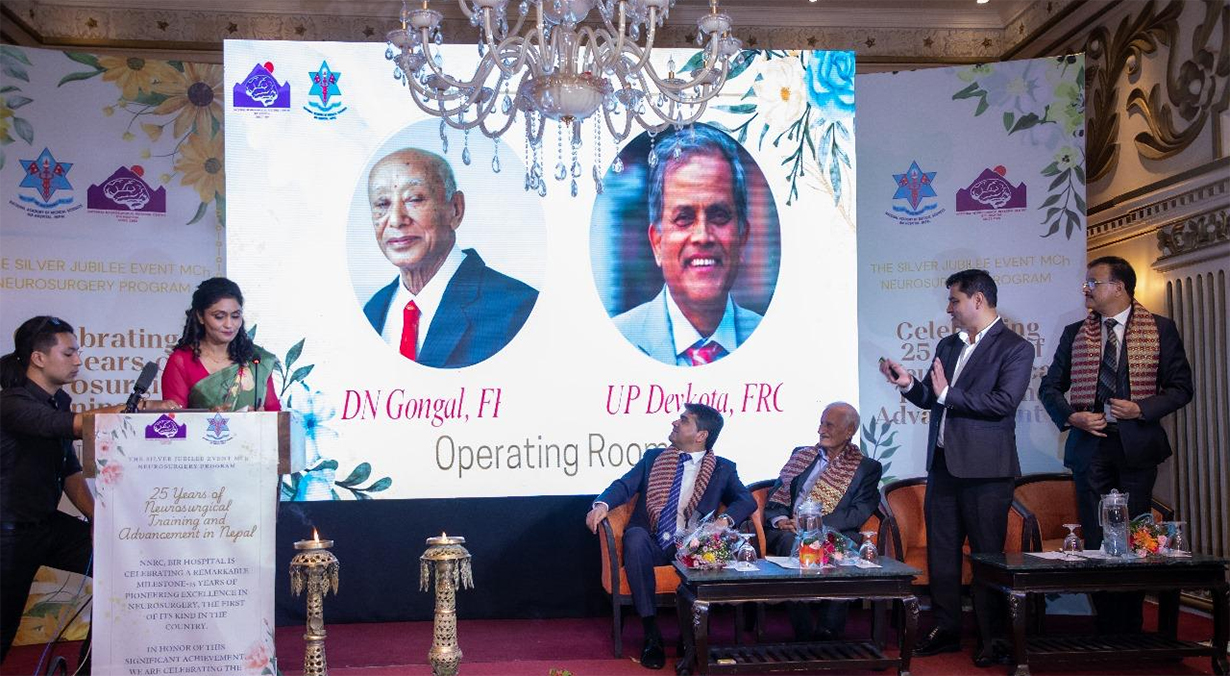
Bir Hospital now has two neurosurgery operating theaters, one named after Dr. Gongal and the other after Dr. Devkota.
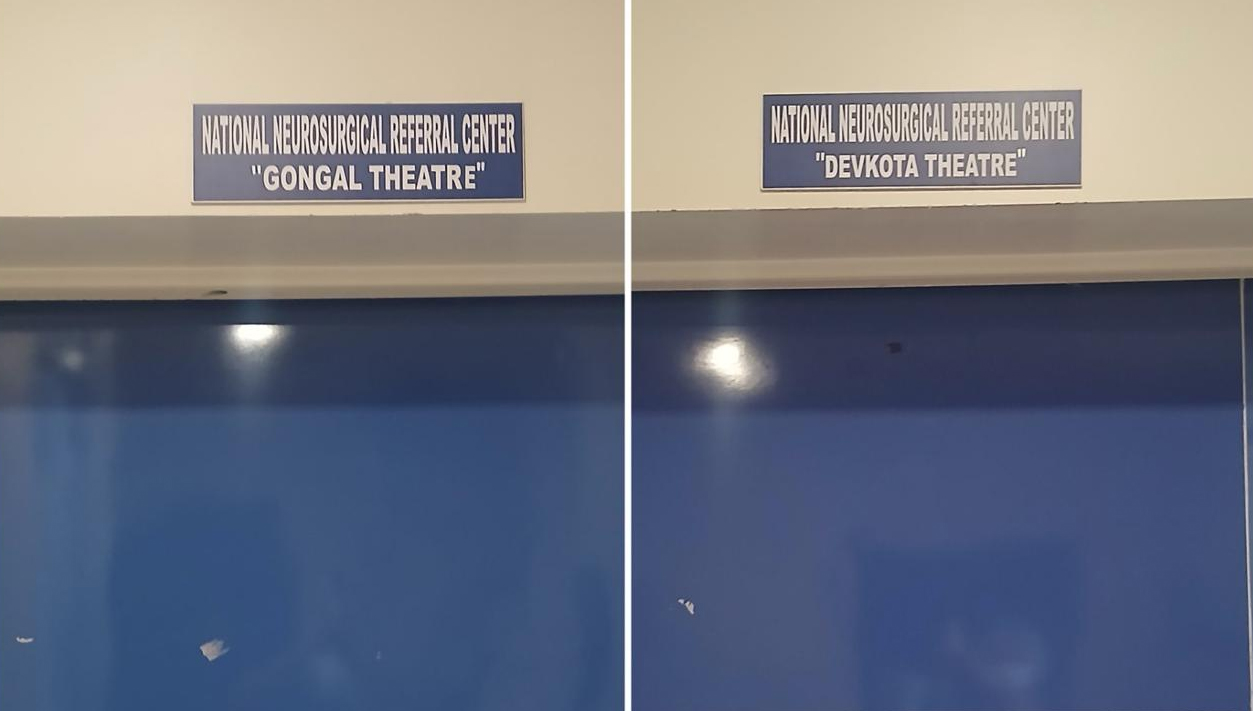
Dr. Jha says, ‘Although both are no longer with us, when we enter the operating theaters, their names remind us of their indelible legacy.’
Senior physician Dhundiraj Paudel refers to Dr. Gongal as ‘a living history of Nepalese surgery.’
‘A history of Nepalese surgery who astounded the world by successfully performing complex brain surgeries without even having CT scans,’ Dr. Paudel said, ‘who assisted doctors in difficult surgeries from head to toe.’
Paudel remembers Dr. Gongal as a surgical craftsman with a stern voice but extraordinary kindness in his heart, avoiding flattery and sycophancy.
In recognition of his contributions to Nepalese medicine, Dr. Gongal was honored with numerous medals and awards including the prestigious Suprabal Jyotirmaya Trishakti Patta, multiple Gorkha Dakshina Bahu awards (from first to fourth class), and the Mahendra Bidhya Bhushan.
He often likened his life to ‘the sun on the mountain.’
Even as his life waned like a setting sun, he never ceased dreaming. “It’s not just my personal dream,” Dr. Gongal said six years ago, “I wish to see Nepal prosperous during my lifetime.”
Today, though he is no longer on this earth, his bravery, struggle, and devotion that created the foundation of modern surgery in Nepal will always remain bright in the annals of medical history.


