Lack of Leadership and Financial Challenges Plunge Health Insurance Board into Crisis





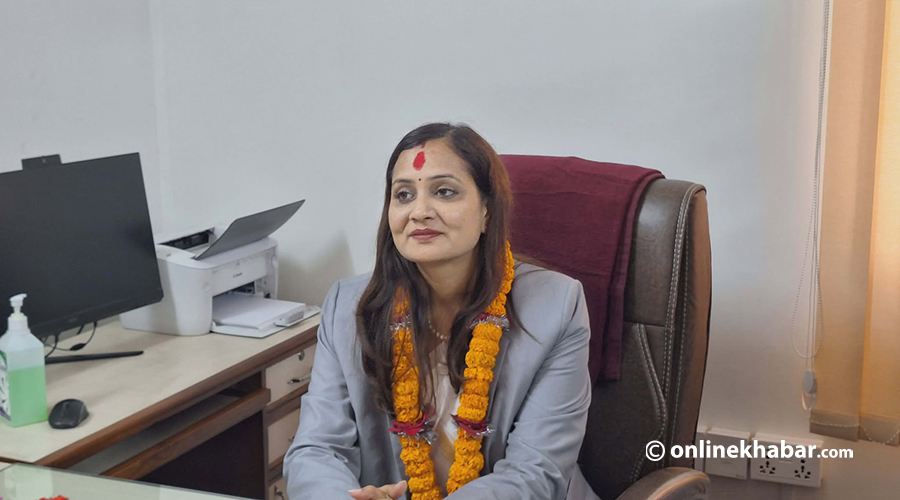
April 22, Kathmandu – The Health Insurance Board, already burdened by financial turmoil, is now facing a leadership vacuum. Following a ministerial decision by Health and Population Minister Nisha Mehta to transfer acting Executive Director Dr. Krishna Paudel back to Gajendranarayan Singh Hospital, the board has been left without leadership.
With no clear indication about who will take charge immediately, the board is currently in disarray. Due to the absence of explicit directives, Dr. Paudel is preparing to return to Gajendranarayan Hospital.
Earlier, on January 18, the former Executive Director Dr. Raghuraj Kafle resigned, citing his inability to continue in the post. Then Health Minister Dr. Sudha Sharma Gautam had appointed Dr. Paudel, Chief of the Ministry’s Policy, Planning and Monitoring Division, as acting executive director.
For the past three months, the board has remained without formal leadership. The government has yet to initiate the necessary procedures for appointing a new director. According to officials from the Ministry of Health, the executive director position must be filled through an open competition conducted by the Public Service Commission, which would take approximately two months after advertisement.
Responding to the transfer letter, Dr. Paudel stated that he has not received clear instructions to continue the health insurance operations.
“I am being transferred as an administrative deployment; I will leave once relieved,” Dr. Paudel said. “My transfer letter only mentions the transfer. As a government employee, I must go wherever assigned.”
After taking over the ministry, Minister Mehta had engaged in discussions with representatives of the insurance board. During the talks, board officials reported that delays in claim payments to service provider hospitals have forced some hospitals to suspend insurance services.
Minister Mehta had also assured that the insurance program’s crisis would be resolved. However, with the board now leaderless, the situation has worsened.
With service provider hospitals awaiting billions in unpaid claims, the program is becoming ineffective. Some major hospitals have already discontinued services. The insurance program, which covers nearly 10 million citizens in Nepal, is on the brink of collapse due to failure to disburse billions to hospitals.
According to the latest Health Insurance Board report, the amount owed to service provider health institutions has exceeded 1.6 billion Nepalese rupees.
Daily insurance claims amount to roughly 80 million rupees. The board is under an additional financial burden averaging about 250 million rupees per month. To operate the program regularly, an annual budget of 2.5 to 2.6 billion rupees is required.
However, the gap between income and expenditure is stark. Annual premium collections from insured citizens stand at approximately 400 million rupees only. Even when combined with an annual government subsidy of 1 billion rupees, the total falls short of half the required expenditure.
According to Vivek Malla, the Information Officer of the insurance board, claims worth around 600 million rupees have been reviewed and payment approval documents forwarded from the Ministry of Health to the Ministry of Finance.
Claims worth about 1 billion rupees are still pending review. Malla stated that payments exceeding 1.6 billion rupees to service providers remain withheld.
He also disclosed that the funds in the board’s account have already been exhausted on prior payments.
“Currently, the board has no additional payment source,” Malla said. “It is difficult to provide a reliable timeline for when payments will be made.”
In the nearly ten years since the program began, interest in health insurance has grown. However, the number of those not renewing their insurance has risen sharply. To date, 9,874,415 citizens are enrolled, but only about 5,970,000 remain active. Out of all insured individuals, only roughly 60 percent remain active. Nearly 40 percent not renewing raises concerns about the program’s sustainability.
The insurance board warns that failure to address the financial crisis immediately could create more complex challenges. Due to non-payment, services are affected, leading to increased public dissatisfaction and declining renewal rates.
“Previously, the renewal rates ranged from 60 to 80 percent, but with services impacted, there is concern it could fall below 50 percent,” an official from the board said.
Across the country, over 505 health institutions provide services daily to 50,000 insured members. The rapid increase in claim submissions and the shortage of staff for claim reviews have created management challenges, according to the board.
Service usage rates are high. Approximately 93 percent of insured individuals have utilized some form of health service. In the fiscal year 2022/23, 89.1 percent utilized services, increasing to 92.4 percent in 2023/24 and 92.8 percent in 2024/25, according to the data.
A weak revenue base combined with rising claims has caused severe financial imbalance in the program, raising concerns over the long-term viability of health insurance.
One board employee described the current situation as extremely sensitive.
“Health insurance is in a critical condition. The board’s directors have not completed their tenure,” the employee said. “Without financial support from the government, the insurance program risks shutting down.”
On January 4, former Health Minister Dr. Sudha Sharma had complained to Prime Minister Sushila Karki about the Ministry of Finance’s lack of support.
Dr. Sharma expressed frustration about not receiving necessary assistance from the Finance Ministry despite her dedicated efforts.
“I earnestly request again before everyone: if financial grants are not provided, the insurance program will shut down,” Dr. Sharma warned. “In such a case, allow hospitals under the Health Ministry to close as well.”
Disputes had also arisen between Finance Secretary Ghanshyam Upadhyay and Minister Sharma. Upadhyay stated that the ongoing insurance program is not based on an ideal model and that the Finance Ministry cannot allocate additional budget. With the board’s leadership positions empty amid financial crisis, the insurance program faces increasing uncertainty.


