




Summary of Key Points
Editorially reviewed.
- The National Statistical Office has projected Nepal’s annual economic growth rate at 3.85% for the current fiscal year 2082/83.
- The electricity and gas sector is expected to contribute the highest growth rate at 20.93%, according to the office.
- Per capita income remains steady at US$1,535, while the government’s growth projections surpass those of the World Bank and Asian Development Bank.
15 Baisakh, Kathmandu – The Gross Domestic Product (GDP) annual growth rate based on the consumer price index for the current fiscal year 2082/83 is estimated at 3.85%, according to the National Statistical Office (NSO).
This figure was released on Tuesday as part of the NSO’s annual national accounts estimate. It is lower than both the revised estimate of the previous fiscal year 2081/82, which was 4.43%, and the government’s growth target for the current year.
While the government had set an approximate target of 6% growth for this year, the real growth rate based on basic prices is projected to be 3.68%.
According to Deputy Chief Statistical Officer Dhundiraj Lamichhane, the annual economic growth rate is calculated using actual data from the first 6 to 8 months and estimates for the remaining months. Looking at growth rates by industrial classification, the electricity and gas sector is expected to record the highest increase this year.
The office notes that this sector accounts for only 2.08% of the total economy among 18 sectors but is expected to grow by 20.93%.
Significant growth in this sector is attributed to increased electricity production via new projects, expanded production capacity, extension of transmission infrastructure, and increased consumption. The sector grew by 12.71% last year.
The financial and insurance sector ranks second in growth, with a rate of 9.16%, contributing 6.79% to the economy.
Growth in this sector is driven by increases in bank deposits and lending, higher premiums collected from life and non-life insurance, and income growth from entities such as the Social Security Fund, Provident Fund, Citizen Investment Trust, securities transactions, and merchant banking.
Slowdown in Most Other Sectors
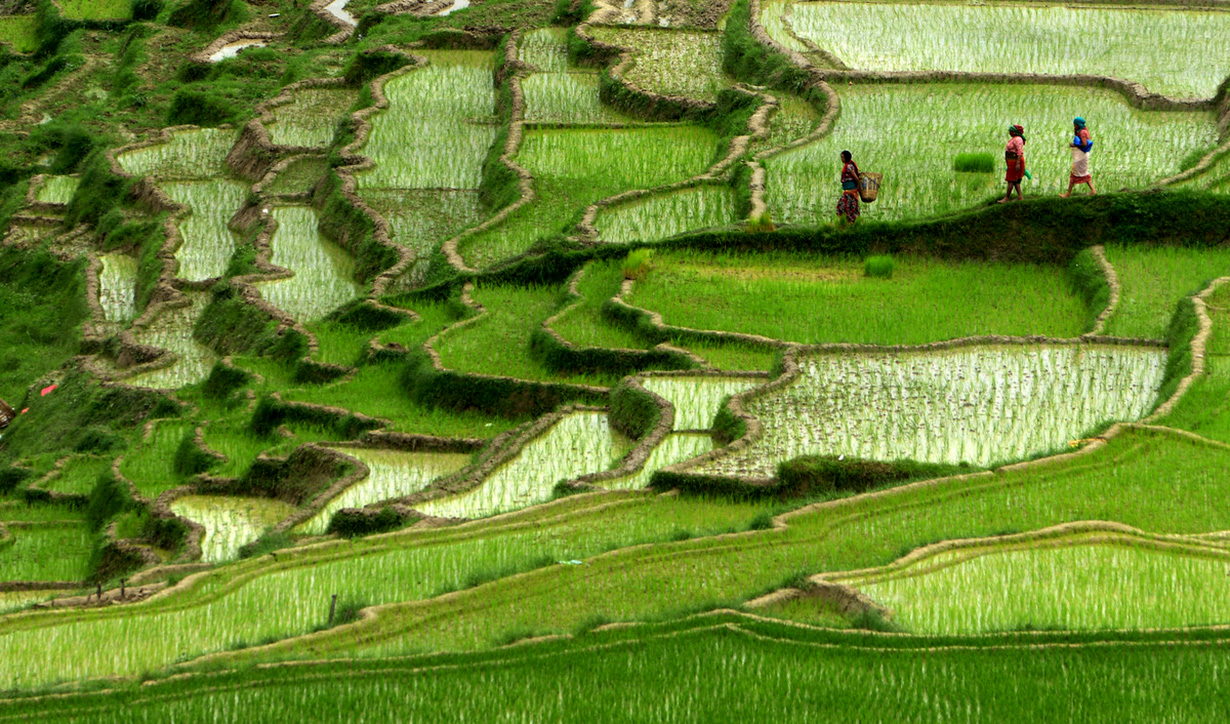
Agriculture holds the largest share of the economy, contributing 24.02%. However, its growth rate is projected at a modest 1.58% this year.
The office’s data indicates a 4.16% decline in rice production, with slight increases in maize, wheat, millet, pulses, and industrial crops. The previous fiscal year’s agricultural growth was 3.05%.
The mining and quarrying sector is estimated to contribute 0.43% to GDP, with a growth rate of 3.52%. The construction sector remains positive, supported by improved royalties from mining and quarrying. The industrial sector contributes 5.72% to the economy.
Growth in this sector, estimated at 2.83%, is supported by increased production of cement, vegetable ghee, concrete, raw soybean, iron rods, khoto (a type of tobacco product), tobacco products, wiring materials, jute, and beer.
Water supply, sewerage, waste management, and recycling activities contribute 0.40% to the economy and are expected to grow by 1.99%.
The construction sector contributes 5.52%, with a growth rate near 2.21%. The sector’s growth has slowed due to limited capital expenditure increases.
Wholesale and retail trade, along with vehicle and motorcycle repair services, contribute 14.09% to the economy and are expected to grow 4.51%. The transport and storage sector contributes 7.23% with a 5.79% growth rate.
Accommodation and food services contribute 2.44% to GDP, expected to grow by 3.12%. The information and communication sector accounts for 1.93% and is projected to grow 5.53%.
Real estate contributes 8.07% to the economy with an expected growth of 2.69%. Professional scientific and technical activities contribute 0.95%, with growth projected at 3.22%.
Administrative and support services contribute 0.74% and are expected to grow by 4.52%.
Public administration accounts for 7.92% of GDP, growing marginally at 0.23%. Education contributes 9.22% with an anticipated growth of 1.50%.
Health and social work contribute 1.78% with growth near 4.04%, while other service activities represent 0.72% of GDP, growing by 2.65%.
Agricultural sector growth is set at 1.58% this year, while non-agricultural sectors are projected to grow 4.54%. Primary sector growth is estimated at 1.63%, the secondary sector 5.77%, and services sector 4.21% approximately.
Economy Size Expected to Reach NPR 66 Trillion
Based on consumer price index measurements, the total size of the economy is projected to reach NPR 66 trillion. Last year, it was NPR 61.99 trillion.
Annual Economic Growth Rates Over the Past Decade (Based on Consumer Prices)
2073/74: 8.98%
2074/75: 7.62%
2075/76: 6.66%
2076/77: -2.37%
2077/78: 4.48%
2078/79: 5.63%
2079/80: 1.98%
2080/81: 3.68%
2081/82: 4.43%
2082/83: 3.85% (Preliminary)
No Improvement in Per Capita Income
Per capita gross national income has not improved this year and remains steady at US$1,535. Due to exchange rate appreciation of the US dollar, this level is expected to persist for about two more years.
Assessment of Economic Growth Rate
This year, the World Bank projected a growth rate of 2.3%, and the Asian Development Bank (ADB) around 2.7%. According to Chief Statistical Officer Dr. Kamal Prasad Pokhrel, the NSO follows international methodologies and standards in publishing national accounts estimates.
The key reason for the differences between government estimates and those of multinational bodies such as the World Bank, ADB, and International Monetary Fund lies in the different calculation methods used.
The NSO expects that its estimates will help policymakers understand the economic state better and formulate improvement plans accordingly.
Executive Director of Nepal Rastra Bank, Dr. Ramsharan Kharel, called the achievements satisfactory given the setbacks from natural disasters, the Janajati movement, and weak private sector morale. He noted, “Though the movement lasted only two days, it harmed private sector performance and the business environment.” He also acknowledged the efforts of the former government and then Finance Minister Rameshwar Khanal in addressing these challenges.
However, he cautioned that the growth rate could be at risk if the conflict in the Gulf region escalates further. Escalation could lead to higher fuel prices, adverse impacts on chemical fertilizer imports, reduced tourist arrivals, and disruptions in air transport activities.
Dr. Kharel expressed confidence that improvements in governance, service delivery, and prioritization of major projects by the current government will provide opportunities to sustain economic growth.


