




19 Vaisakh, Kathmandu – West Bengal in Indian politics serves as a unique laboratory where ideological and personal clashes consistently give rise to new chapters in history. A single determined woman brought down the communist regime that had deep roots for over three decades. She is Mamata Banerjee.
Today, the term ‘Didi’ (elder sister) in West Bengal politics is not just a form of address but synonymous with Mamata’s empire.
Her journey began with simple college protests and student politics, leading her through important central ministry positions to becoming the Chief Minister of the state.
Having overthrown the leftist stronghold in 2011, Mamata has since led the state through three consecutive terms. Currently, she stands in the electoral battlefield aiming for a fourth consecutive term.
The Turning Point: Fall of a 34-Year Leftist Stronghold
The left front government under the Communist Party of India (Marxist), led by Jyoti Basu, ruled West Bengal continuously for an unprecedented 34 years from 1977 to 2011, setting a record for India’s longest unbroken single-ideology governance.
Early on, the administration gained an unmatched grip on rural areas through land reforms and Panchayati Raj, turning thousands of landless farmers into landowners while awakening political consciousness.
However, as the rule extended, the regime showed rigidity and contradictions. Direct interference and control by local party offices over schools, hospitals, and government administration became a norm.
Opaque relationships between landowners and party leaders cultivated a culture of corruption, entrapping influential figures like former minister Ashok Bhattacharya. Rising unemployment and lack of opportunities forced educated youth to migrate out of the state. Electoral manipulation under political protection and a climate of fear intensified public simmering resentment.
The 2011 assembly elections marked a decisive moment for Bengal’s change. After decades of silence, the people freely exercised their franchise. The once invincible 34-year red fortress crumbled, and under Mamata Banerjee’s leadership, Bengal embraced a new political direction.
Rise of ‘Didi’ from Singur and Nandigram
Two critical foundations established Mamata Banerjee as a “powerful rebel” in West Bengal’s political history—the land movements in Singur and Nandigram.
In 2006, then-leftist Chief Minister Buddhadeb Bhattacharjee initiated land acquisition in Singur, Hooghly district, to set up Tata Motors’ ‘Nano’ car factory under the industrialization drive. Farmers fearing loss of their livelihood stood up, with Mamata becoming a strong pillar of support.
The protest at Singur evolved beyond demonstrations and sit-ins. Despite police baton charges and political pressure, Mamata maintained the movement. The intense opposition forced Tata Motors on October 3, 2008, to announce shifting its project from Bengal to Gujarat, marking a major political victory for Mamata and moral defeat for the left government.
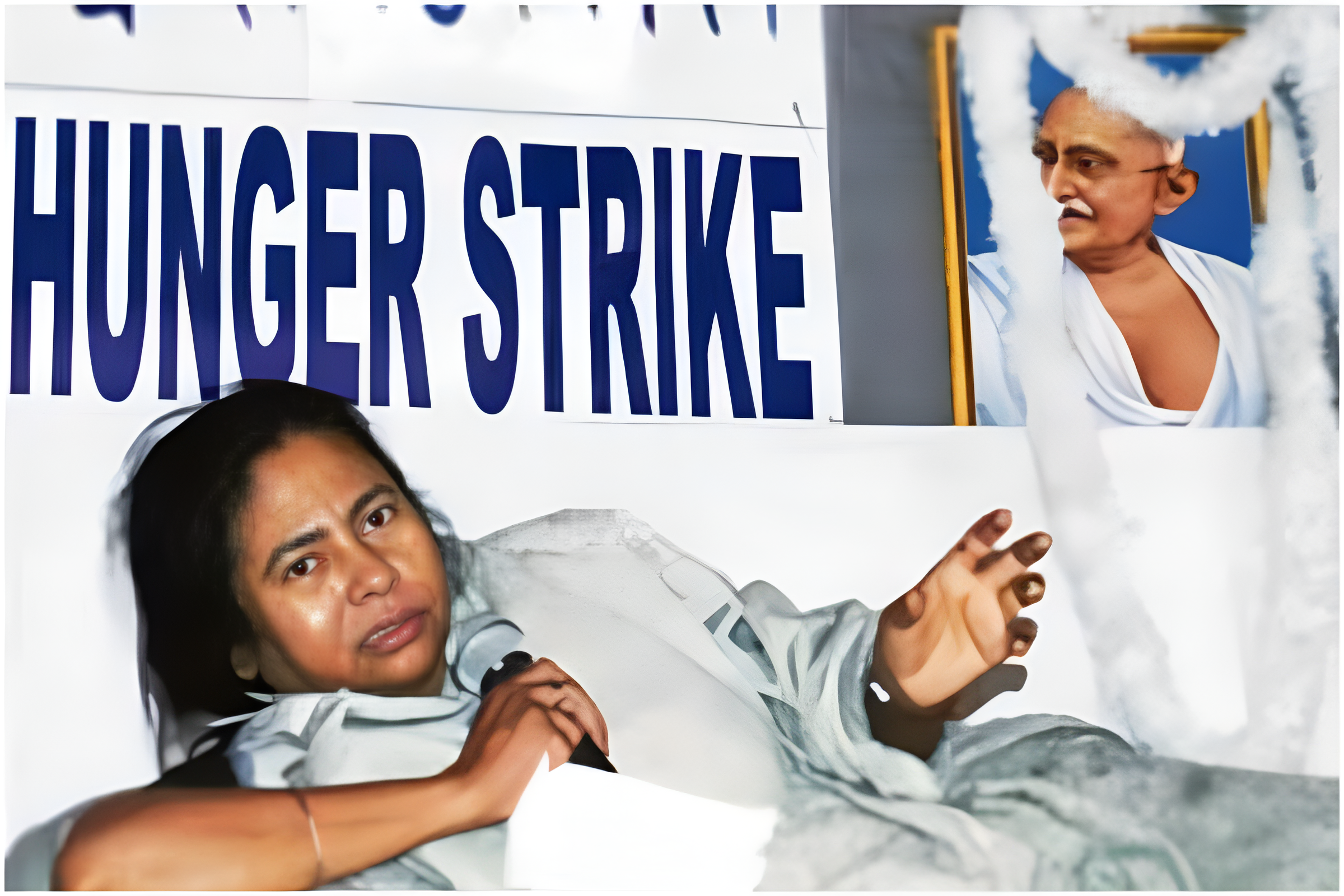
An even more decisive turn came with the Nandigram incident. In East Midnapore’s Nandigram, rural residents protested against government plans to acquire land for a chemical hub. On March 14, 2007, police shooting on protesters killed 14 people, including two women, stunning Bengal and amplifying Mamata’s rallying cry across villages: “Jami Amra Chharbuni” (We will not leave our land).
The movements in Singur and Nandigram united popular sentiment against left rule with a shared political language. Riding this wave of rebellion, Mamata Banerjee achieved historic success in 2011.
From ‘Giant Killer’ to First Female Chief Minister
Born in 1955 into a middle-class Kolkata family, Mamata Banerjee’s political journey began in student politics.
Graduating in law from the University of Kolkata, she identified herself with street movements addressing local grievances.
Her first significant breakthrough came in 1984 when, at the age of 29, she defeated the left’s stalwart Somnath Chatterjee in Jadavpur Lok Sabha constituency, earning the title ‘Giant Killer’ and taking the national political scene by storm.
Rising as a prominent young face in the Indian National Congress, Mamata’s assertive nature and staunch opposition to leftist rule led to an eventual split; she founded the All India Trinamool Congress (AITC) in 1998, charting her own political course. She gained national experience serving as Railways Minister under Atal Bihari Vajpayee and later as a minister in Manmohan Singh’s government.
The 2011 assembly elections marked the end of one era and the beginning of another in Bengal’s history. Contesting in alliance with the Congress, Trinamool Congress won 184 seats alone, and the alliance secured 227 seats, ending the 34-year left reign. Mamata became West Bengal’s first female Chief Minister.
This victory reflected more than rejection of the left; it was an endorsement of Mamata’s agenda of ‘Mati, Manush, o Manush’ (Soil, People, and Humanity). She united farmers, tribal and minority communities under one banner, replacing the left’s ideological complexities with a human touch and direct public engagement.
Within three months of forming the government, she expelled Congress from the administration, signaling her sole leadership of Bengal.
An Unstoppable Reign from 2016 to 2024
Post-2011, Mamata Banerjee’s grip on West Bengal politics only strengthened. The 2016 assembly elections tested her personal appeal and solo power. Despite opposition predictions of a regime change, Trinamool won decisively with 211 seats out of 294. The alliance of leftists and Congress managed only 77 seats, and CPI(M)’s vote share slid to 19.7 percent. Mamata hailed the result as the people’s verdict against an ‘unholy alliance,’ reinforcing her political stature.
The 2021 elections became one of India’s biggest political battlegrounds. Despite BJP’s full-central machinery backing its slogan for ‘change,’ Mamata’s ‘Daughter of Bengal’ card overshadowed BJP’s efforts.
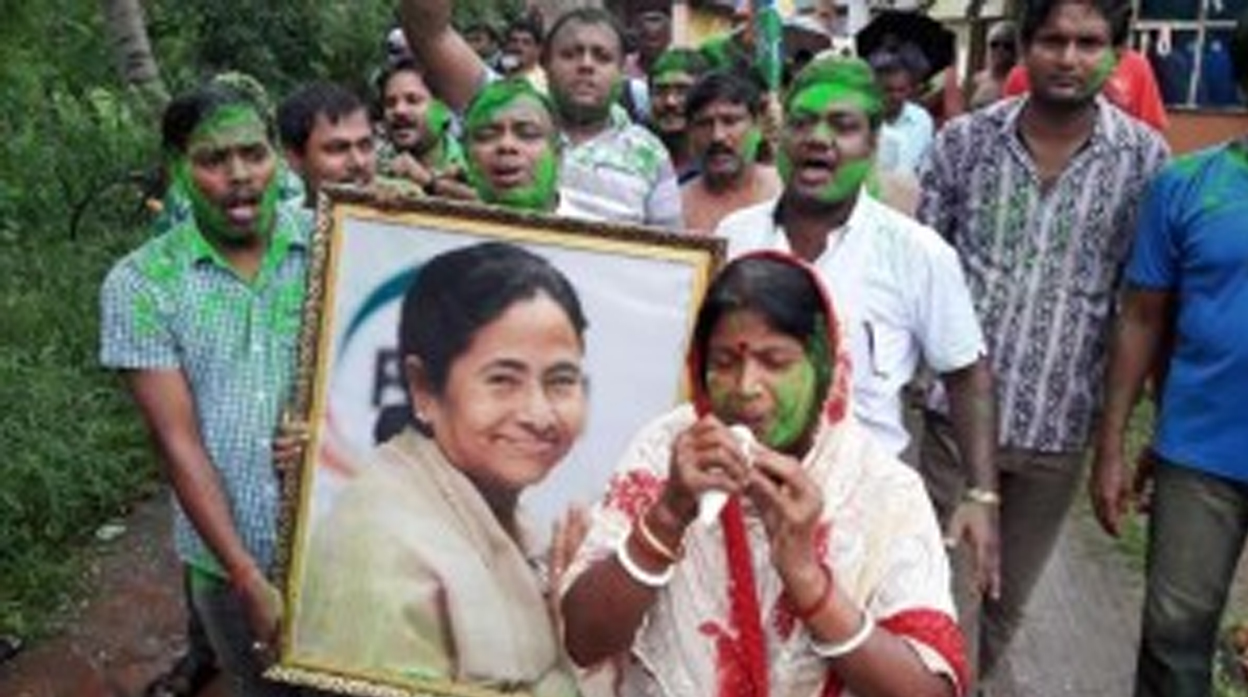
However, in the personal contest at Nandigram, Mamata lost to her former ally Suvendu Adhikari. Despite this, her party won an overwhelming majority with 215 seats. In 21 subsequent bye-elections, Trinamool clinched 20 victories, underscoring that no alternative to ‘Didi’ has yet emerged in the state.
The 2024 Lok Sabha election results stunned national politics: Trinamool won 29 of 42 seats, limiting BJP to just 12. Despite the aggressive campaigning by Prime Minister Narendra Modi, Mamata secured the Bengali electorate, notably winning the support of 53 percent of female voters—a key factor in her success.
Foundations of Welfare Governance
Mamata Banerjee’s strongest governance asset lies in her popular and welfare-oriented schemes. These programs have had a tangible impact not only on government files but on the daily lives of Bengal’s rural and urban populations. Over a dozen social security initiatives launched during her tenure have become the backbone of her public support.
Her strides in women’s empowerment are considered exemplary in Indian politics. The ‘Kanyashree’ scheme has been a milestone, helping nearly ten million girls stay in school and preventing child marriage by offering Rs 25,000 to girls who remain unmarried until age 18 and complete their education.
The ‘Lakshmi and Bhandar’ program has emerged as a genuine political game-changer, ensuring a monthly income for approximately 7.1 million women ranging from Rs 500 to Rs 1,000. This initiative has bolstered their economic independence and decision-making within households.
Through the ‘Rupashree’ project, the government has provided a one-time Rs 25,000 financial aid for the marriages of daughters from poor families, lightening the social and economic burdens for over 22 lakh families.

For farmers, schemes like ‘Krishak Bandhu’ and fully subsidized ‘Bangla Crop Insurance’ offer a protective shield during agricultural crises. The ‘Duare Sarkar’ (Government at the Doorstep) campaign delivers government services directly to people’s homes, challenging bureaucratic sluggishness. Through the ‘Khadyasathi’ program, about 95 million citizens benefit from food security.
Mamata’s simple cotton sarees, slippers, and rebellious street persona create a kinship with ordinary Bengali women. She presents herself more as the ‘Daughter of Bengal’ than just the Chief Minister. This trust was evident in the 2024 elections when all 11 women candidates fielded by Trinamool won, buoyed by the support of 53 percent female voters.
Governance Challenges: Industry, Employment, and Infrastructure
While welfare schemes have expanded extensively under Mamata’s tenure, a serious gap remains in industrialization.
The legacy of land protests in Singur and Nandigram, while propelling Mamata to power, is often blamed for her reluctance to take risks needed to attract large industries and create an industrial-friendly environment in the state.
Capital flight from the state, lack of new factories, and diminishing employment opportunities for educated youth pose major contemporary challenges for Bengal.
This political paradox is evident in Singur, where many men express concern over lost industrial opportunities, while women remain steadfast supporters of ‘Didi,’ benefiting from her welfare programs. Although positive steps have been taken towards infrastructure like Kolkata Metro, road networks, and healthcare centers, statewide imbalances in education and health persist.
Controversies Surrounding Mamata
As much as Mamata Banerjee’s administration is praised for its welfare initiatives, it is equally marred by serious corruption scandals and incidents of political violence.
From the 2013 Saradha chit fund scam to the Narada sting operation, serious questions surfaced about the image of Trinamool’s top leaders.
Post-2021, the teacher recruitment scam caused significant political tremors with the arrest of powerful minister Partha Chatterjee and the recovery of crores in cash from his aide’s residence. Agencies have also carried out stringent probes into ration distribution and animal smuggling cases.
More recently, in 2026, the Enforcement Directorate revealed unauthorized channels moved approximately Rs 2,700 crore in a coal smuggling case, presenting detailed evidence in the Supreme Court along with accusations of attempts to destroy proof, escalating political tensions.
Apart from corruption, political violence is a major criticism of Mamata’s tenure. Compared to other Indian states, West Bengal has seen a disturbing rise in election and political violence incidents.
A 61 percent surge in violent events between the 2016 and 2021 elections, and hundreds of workers fleeing to neighboring Assam post-elections, raise serious concerns about law and order. Immediately after her third inauguration, Mamata reinstated officials removed by the Election Commission, escalating constitutional tensions between the central and state governments.
In sensitive cases like the 2025 Durgapur incident, some of Mamata’s controversial remarks have drawn widespread criticism. Activists and opposition accused her of further harming victims by suggesting women should not roam at night following a mass molestation on a medical student.
These dark chapters of corruption and violence under the welfare facade pose the biggest challenge to Mamata in the 2026 elections and serve as key weapons for the BJP’s campaign.
The 2026 Election Test
The 2026 assembly election marks the toughest and most complex test for Mamata Banerjee yet. She faces serious corruption allegations, intensified scrutiny from central agencies, controversies over voter lists, and a combative battle against BJP’s aggressive Hindu nationalist agenda.
The voter list controversy has become the major flashpoint. Under the Election Commission’s special intensive review (SIR), around 9.1 million names were dropped, which Mamata decried as a ‘BJP conspiracy’ targeting minorities and marginalized communities.
Alleging mass deletion of Muslim voters’ names in areas like Bhabanipur, she has taken the matter to the Supreme Court. Furthermore, after the Commission transferred over 500 senior officials, including the Chief Secretary, Home Secretary, and police chiefs, Mamata described the move as a ‘Delhi plan to capture Bengal.’
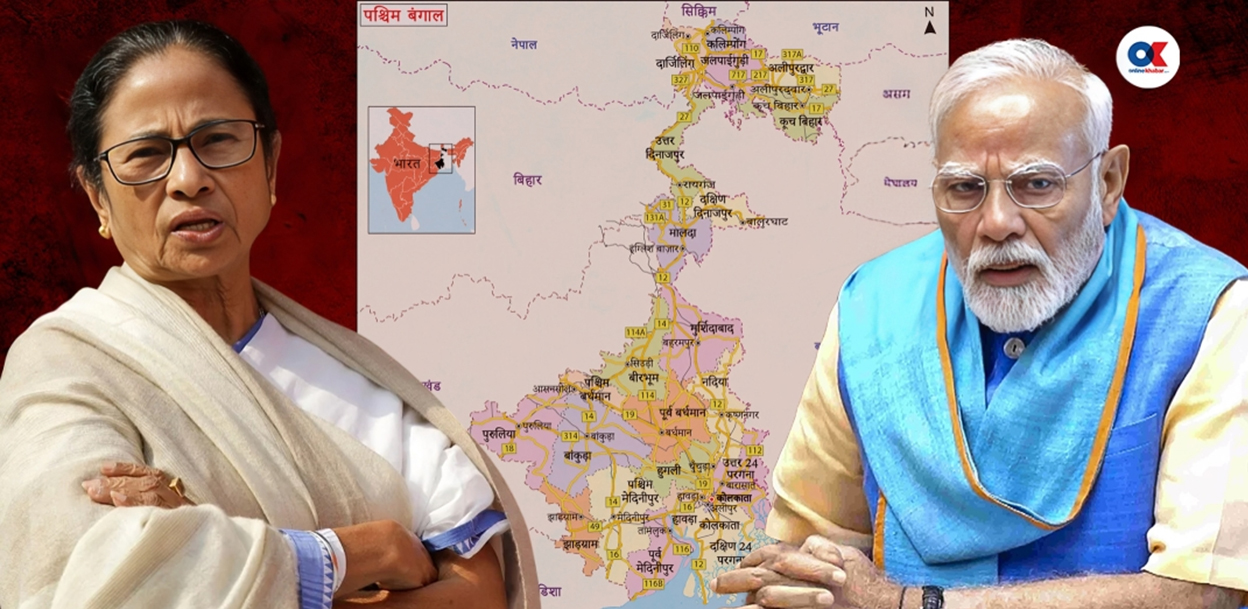
The BJP has made Hindu-Muslim polarization and ‘illegal immigration’ central campaign themes, threatening demographic changes and aiming to cross the ‘magic number’ of 153 seats representing a majority. In response, Mamata announced her ’10 Pledges,’ including increasing monthly ‘Lakshmi Bhandar’ benefits (Rs 1,500 for general and Rs 1,700 for SC/ST), monthly allowances for unemployed youth, and doorstep healthcare initiatives.
Post-voting exit polls paint a contradictory and uncertain political picture for Bengal’s future. Some surveys predict a BJP ‘tsunami’ with 180–190 seats, while others forecast a tight contest between Trinamool and BJP.
Mamata has dismissed these exit polls as ‘directed from BJP offices,’ and day before counting, she herself guarded the ‘strong room,’ ensuring strict monitoring of EVM security. With a historic 92 percent turnout and this exit poll rivalry, the May 4 results promise an exciting and decisive outcome.
Bhabanipur: The Battle for Honor and Future
The most prominent electoral battleground in West Bengal’s 2026 elections is Bhabanipur—a contest beyond a mere assembly seat, symbolizing the personal and political clash between Mamata Banerjee and BJP’s Suvendu Adhikari.
Seeking revenge for her Nandigram defeat and to reaffirm her political stature, Mamata contests from Bhabanipur. Voter list deletions, organized clashes between workers, and police baton charges have heightened tensions in the constituency.
While Suvendu claims polarization of Hindu votes, Mamata fiercely protests ‘central security force oppression.’ The result in this seat will decisively shape Mamata’s political future.


