Proposal to Station Armed Police Representatives at Nepalese Embassies in India and China





Article Summary
- The Armed Police Force has submitted a proposal to the Ministry of Home Affairs to station its representatives at Nepalese embassies in India and China.
- Newly appointed IGP Narayan Datt Paudel has adopted a new policy to deploy Border Interaction Teams (BIT) along the Nepal–India border to enhance security and service delivery.
- For the past 26 years, the Nepal Police has been advocating for the deployment of police attachés in various countries, but this proposal has yet to be implemented.
22 Baisakh, Kathmandu — A proposal has been advanced to station representatives from the Armed Police Force, Nepal, at the country’s embassies in India and China.
The Armed Police Force, responsible for border security, has submitted this proposal to the Ministry of Home Affairs, suggesting the need for its presence in the embassies of these two neighboring countries. The proposal was initially advanced during the tenure of Inspector General Rajoo Aryal.
During Aryal’s tenure, which ended on 18 Baisakh, this proposal was put forward as part of efforts to resolve border-related issues. The Armed Police Headquarters at Halchok officially forwarded the plan to the Ministry of Home Affairs.
Among the key achievements and future plans during Aryal’s term was the inclusion of the idea to station Armed Police representatives at these embassies.
The newly appointed IGP Narayan Datt Paudel has introduced a new policy to deploy Border Interaction Teams (BIT) along the Nepal–India border region to make security and service delivery more effective.
Although the Armed Police has submitted the proposal to the Ministry, its implementation remains pending and it is currently in the proposal pipeline. Deputy Inspector General and spokesperson for the Armed Police, Bishnu Prasad Bhatt, explained that since border security is under the responsibility of the Armed Police, it is essential to station its representatives to address border issues.
Due to open borders, border-related issues continuously arise, along with crimes and incidents that require coordination. Consequently, the Armed Police concluded the need for representation to facilitate close cooperation between Nepal and neighboring countries.
The presence of Armed Police representatives at the embassies will foster mutual coordination, synchronize efforts with India’s Armed Border Force (SSB), and jointly facilitate security operations, which is a key reason for this proposal by the headquarters.
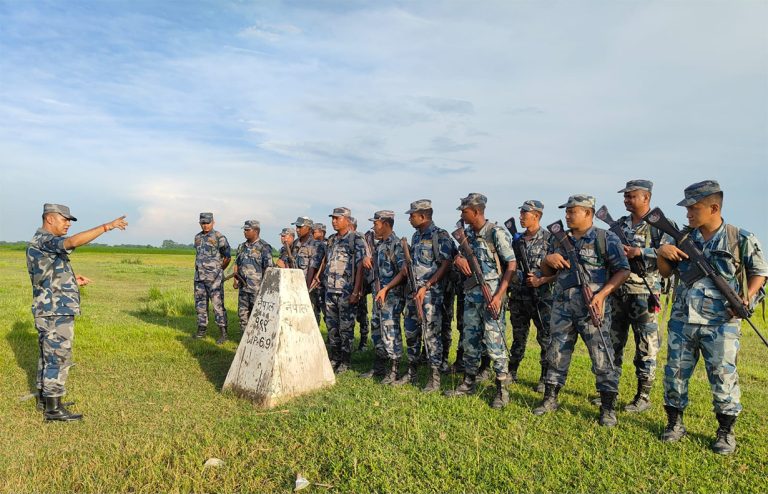
Similarly, given the open border with China, there is also a case for Armed Police presence at the Nepalese embassy in China to address border security issues, cross-border crimes, and coordination with Chinese authorities.
Along the China border, there are 11 Border Out Posts (BOPs) of the Armed Police, while the India border has 249, totaling 260 BOPs actively engaged in border security operations.
Currently, the Nepalese embassy in India hosts representatives from the Nepal Army, Nepal Police, and National Investigation Department (NID). Meanwhile, the Nepal Police has long campaigned for the appointment of police attachés across diverse regions from the Gulf countries to Europe and America.
Since the formation of the government led by Balendra Shah, there has been a directive to increase manpower along the border.
However, the police proposal has yet to receive approval. While the Armed Police have also proposed posting their representatives in India and China, actual implementation appears complex at this stage.
Currently, 182 survey-based strip maps of the Nepal–India border have been procured from the Survey Department, leading to the establishment of the Border Resource and Research Center (BRRC). Border monitoring is actively conducted with 338 CCTV cameras installed across 110 locations.
Newly appointed IGP Paudel has adopted the Border Interaction Team (BIT) initiative to enhance security and public service around the Nepal–India border.
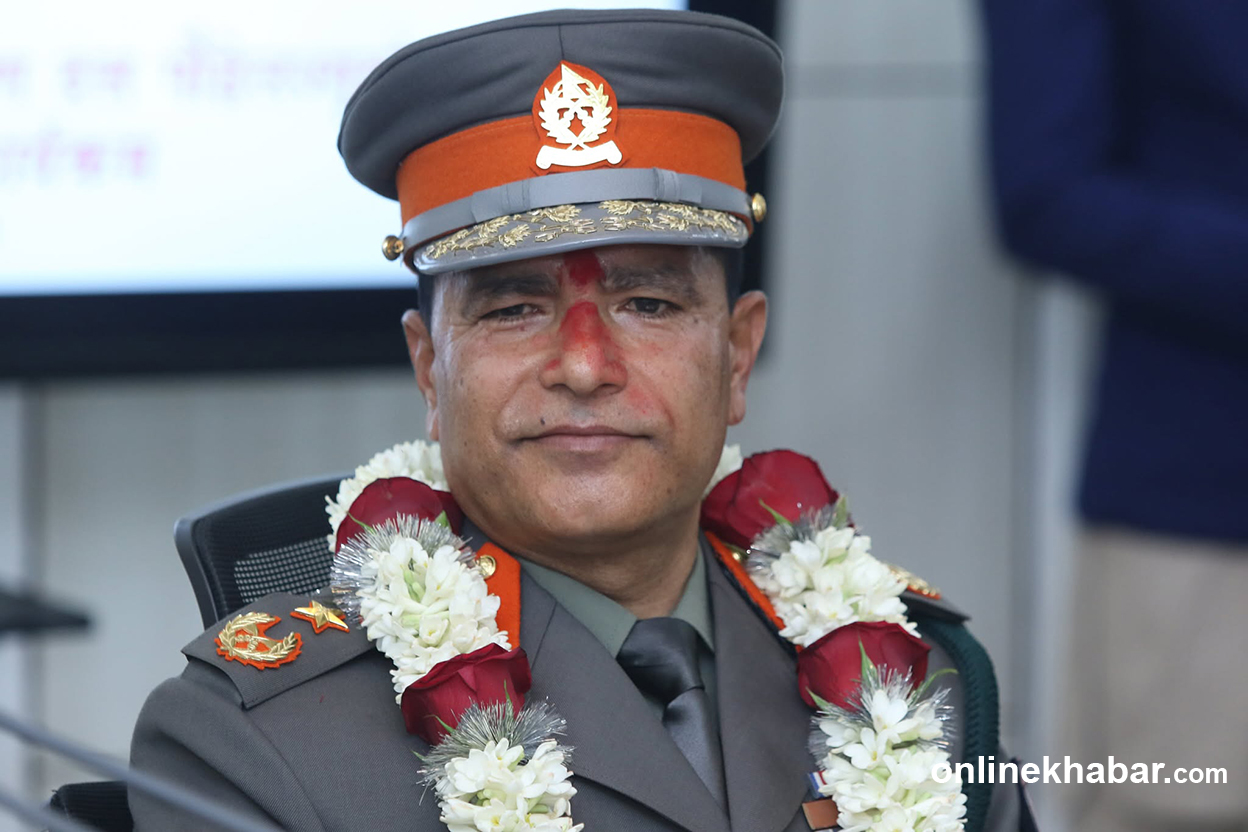
These teams, starting from key border crossings, are designed to facilitate smoother transit for the public, strengthen coordination with local communities, promote organized information exchange, and actively monitor and curb transborder crimes.
This approach aims to foster an environment of trust at the borders and help identify and manage security challenges at an early stage.
Alongside the proposal to place Armed Police representatives at embassies, there are plans to establish a Border Management Authority. Earlier, the disbanded Border Department was revived, and the number of Assistant Inspector General (AIG) posts was increased.
Following the government formation led by Balendra Shah, directives were issued to deploy additional personnel along the border. As per this plan, the Armed Police have dispatched manpower from hilly districts to border areas with a view to deploying around three thousand personnel in total.
Another significant initiative is the Digital Border concept developed by the Armed Police. This concept, proposed at the ministerial level during Rajoo Aryal’s tenure, would enable digital monitoring of border activities directly from Kathmandu and is considered an important project.
26 Years of Unsuccessful Police Attaché Efforts
Similar to the Armed Police Force’s current proposal to deploy representatives in India and China, the Nepal Police has sought to assign police attachés in various countries for the past 26 years without success.
During the tenure of IGP Achyut Krishna Kharel in 1999 (2056 BS), a proposal was made to station police attachés in India, Pakistan, Sri Lanka, Bangladesh, the United States, Hong Kong, Singapore, and Thailand. However, except for India, no police attachés were ever assigned abroad.
Over the course of 18 IGPs succeeding Kharel, the proposal for police attachés has repeatedly failed approval. The Ministry of Foreign Affairs staff have often been blamed for obstructing the implementation.
While military attachés exist in most embassies where police attachés are proposed, they are typically not recognized as police attachés, creating barriers to implementation, according to a former IGP.
“The Ministry of Foreign Affairs fears loss of control and weakened authority if police attachés are appointed, which has prevented implementation,” he said.
Additionally, financial concerns have been cited by police officials as deliberate attempts to derail the police attaché program.
During Kharel’s tenure, the plan was to post police attachés in eight countries including India, but this did not materialize. Later, under IGP Pradip Shamsher Jabara in 2001 (2058 BS), a police attaché was posted in Delhi.
The primary justification for posting a police attaché in Delhi was the Maoist insurgency connection. Due to open borders, former Maoist leaders were reported to be using India as a safe haven, prompting the government to assign a police attaché. Since then, the Nepalese embassy in Delhi has maintained a Superintendent of Police (SSP) rank police attaché.


