




News Summary
Reviewed editorially.
- Prime Minister Balen Shah instructed security agencies last Wednesday evening to remove the squatter settlements.
- Police raided the squatter settlements in Thapathali and Shantinagar at night, then announced through loudspeakers to vacate the settlements within one day.
- The demolition of the settlements by government bulldozers caused distress among locals, while police denied media entry, preventing full visibility of the victims’ conditions.
April 22, Kathmandu – Prime Minister Balen Shah summoned the heads of security agencies last Wednesday night and directed them to clear out the squatter settlements. At 10 pm that night, a team under the command of a Deputy Superintendent of Police entered the squatter settlement along the Bagmati River in Thapathali.
Police raided the settlement while children were studying and eating. The operation involved forceful pushing and disregard for the dignity of these marginalized individuals, showing a lack of humanity.
When questioned about the raid, police claimed they acted following information about a criminal hiding there; otherwise, there was no other reason.
The next day, a shopkeeper in the settlement, Geeta Lama, expressed her grievance to journalists, asking, “Are we poor people criminals?”
That same night, police also raided settlements in Thapathali and Shantinagar. The following Thursday morning, they used loudspeakers to announce that residents must vacate within one day. Squatters conveyed that police were trying to learn if they were preparing armed resistance.
The police raids and loudspeaker announcements heightened fear and distress among the squatters. Krishna Bihari Tandukar from Thapathali expressed dissatisfaction, saying, “At least a week’s time should have been given.” She is 70 years old and has been running a small shop there for 23 years.
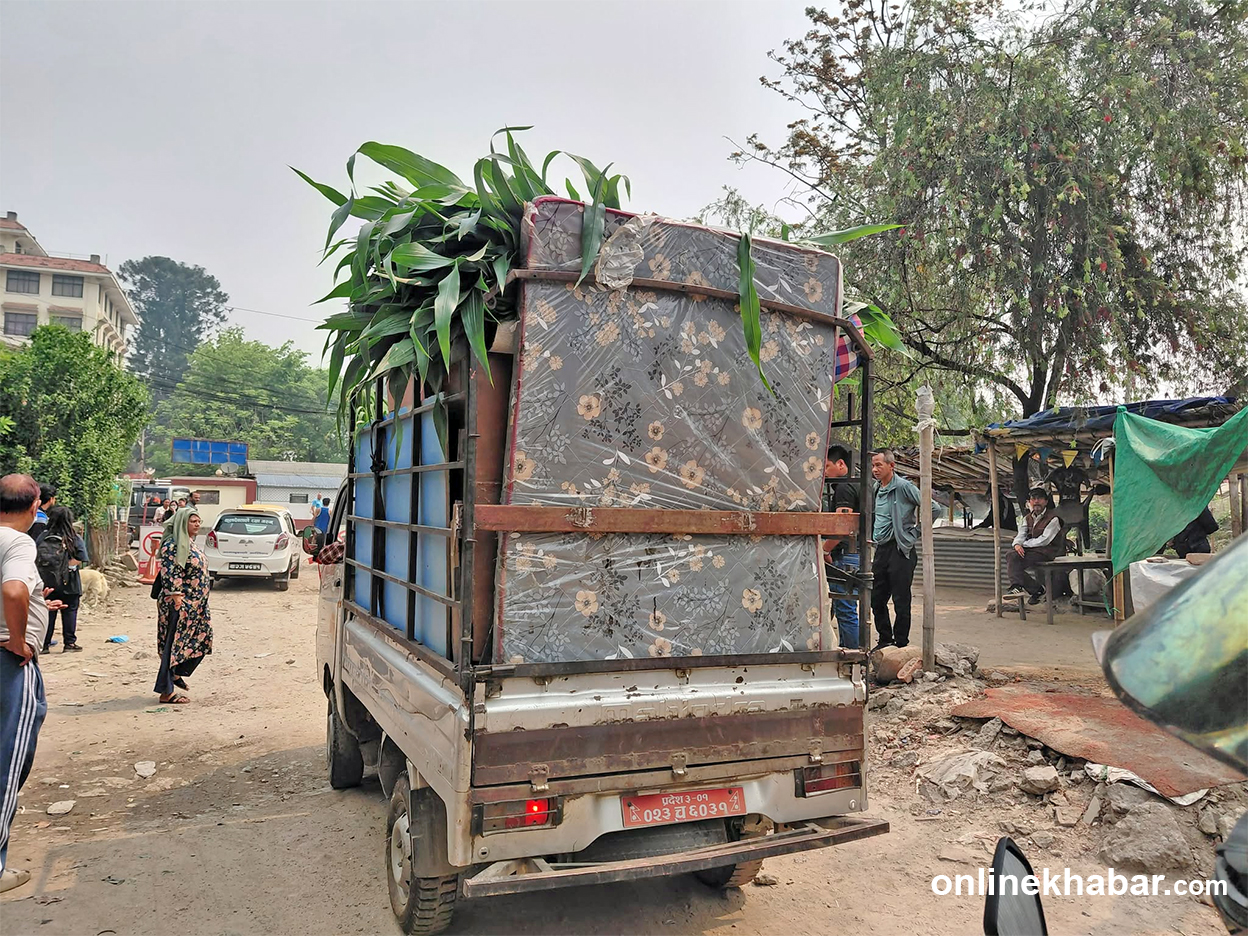
She conveyed feelings of humiliation: “Everyone recorded videos. They verbally abused us on phones. Are we supposed to be made a joke of?”
The government’s approach to clearing the squatter settlements was inappropriate. A clear lack of dialogue between stakeholders was evident. Despite instructions reaching security chiefs, the situation was unclear, resulting in the police citing unrelated reasons for withdrawal.
The one-day deadline to remove possessions announced by loudspeaker was widely criticized and voiced as inadequate on social media.
According to journalist Narayan Gaule, such issues arise from governmental disorganization, ambiguous information, haste, and absence of compassion.
This government action has been labeled “bulldozer terror.” While the bulldozer destroyed the settlements, the local residents mourned in distress and anger. Police did not allow media inside the settlements, making it impossible to capture the victims’ situations fully. For the first time, a “media zone” was established on the street itself.
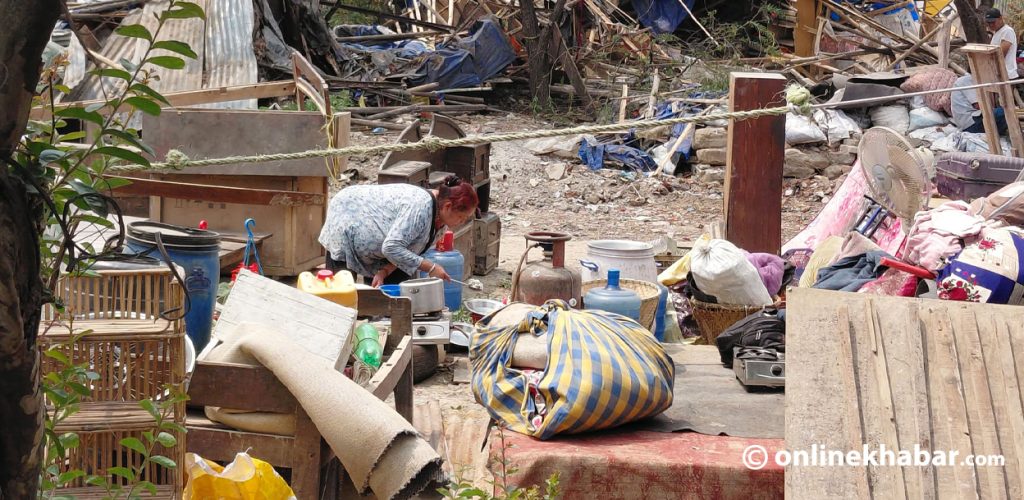
Helpless before armed security forces, squatters could do nothing but remove their belongings. The government called this “assistance.” After running the bulldozer, police shared pictures of cooperation on their Facebook page.
While residents wept inside the settlements, security forces encircled the main roads outside, restricting media access.
Police prevented media from entering but released staged images, neglecting to share ordinary residents’ stories. Some squatters had come out onto the streets themselves.
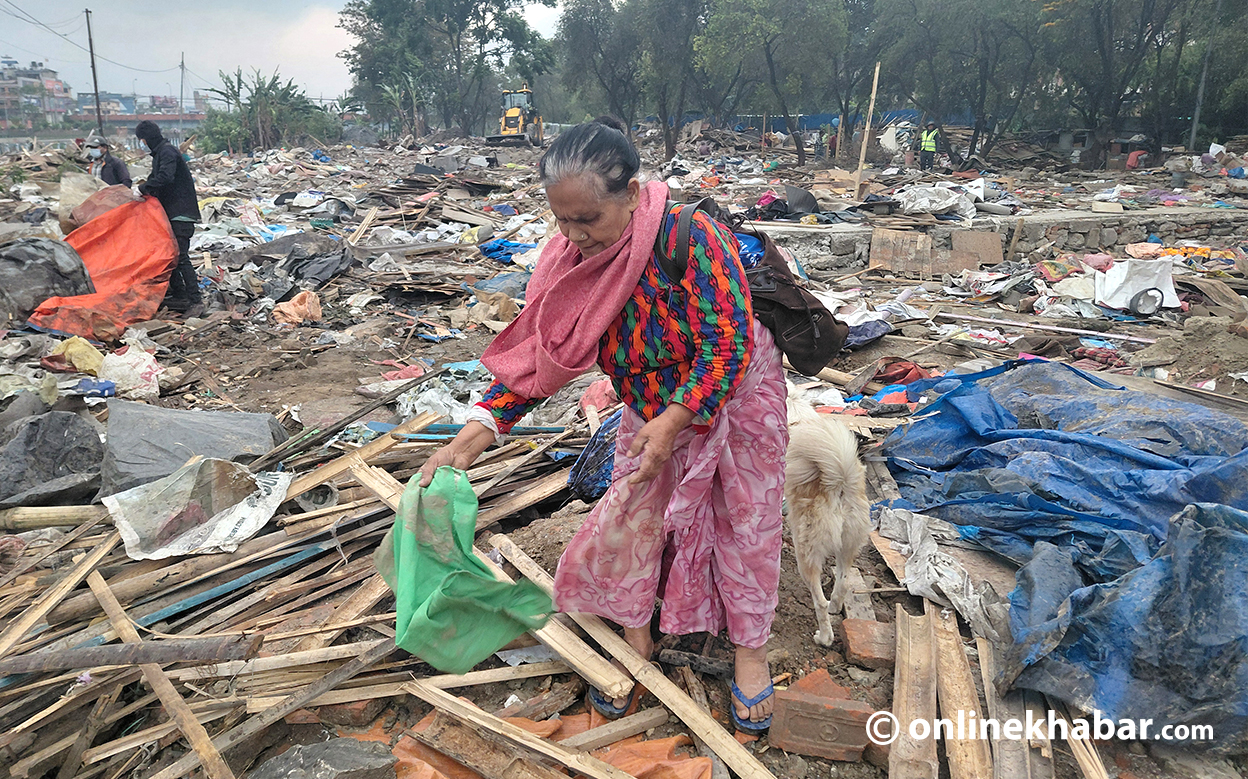
Some mothers carried children in slings or shed tears while clearing belongings. Stores were bulldozed before morning meals were served. Others were seen cooking rice outdoors under open skies. Plans by journalists eventually helped expose the suffering of squatters.
Among them was 55-year-old Kanchhimaya Praja, found Saturday while bulldozers demolished the settlement. She complained that the government had given no clear plan or assistance for relocation, leading to a chaotic situation. She and her family were searching for shelter in Kupandol after removing household items, with no guidance from authorities.
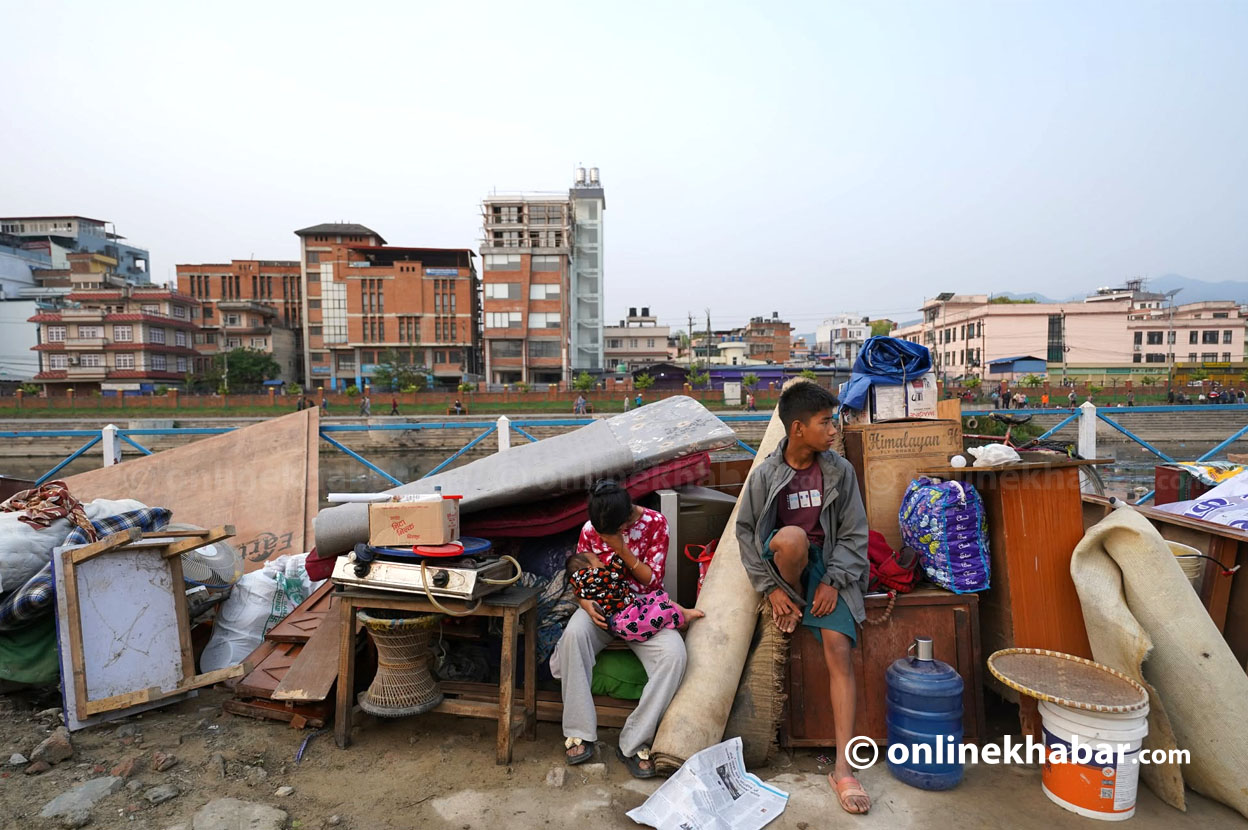
Twenty years ago, after floods destroyed ancestral property in Dhading, Kanchhimaya had moved to the Thapathali squatter settlement. She said, “I have no home, no land, and no idea how to pay rent or sustain my family.”
At Shankhamul and near the maternity hospital, bulldozers destroyed shacks, causing heartbreaking scenes as residents lost their shelters and possessions. Anjali Paswan, who cradled her four-month-old son in a sling, expressed worry.
She said, “They demolished the settlement without giving us any time at all. They say arrangements will be made, but we don’t know where we will be taken.”
After demolishing squatter roofs in Thapathali and Gairigaun on Saturday, bulldozers also operated in Manohara. The government’s claim of a peaceful operation was contradicted as police clashed with locals, injuring dozens, and delaying work to Sunday.
Some residents in Manohara who had permanent houses were mocked on social media as “hukumbasi” (command settlers). Those individuals had built their homes with remittances sent from abroad.
Gopal Nepali’s son worked in Saudi Arabia for two years, earning money to build a home. After returning for vacation and completing the house, the son left abroad, and the house collapsed. To Gopal, the home was not just a physical structure but also a memory and safe place.
Supported by former political party leaders and activists, Gopal built the house but now the government has refused even to give him a chance to remove belongings. He criticized the lack of minimal sensitivity by both political and new governments.
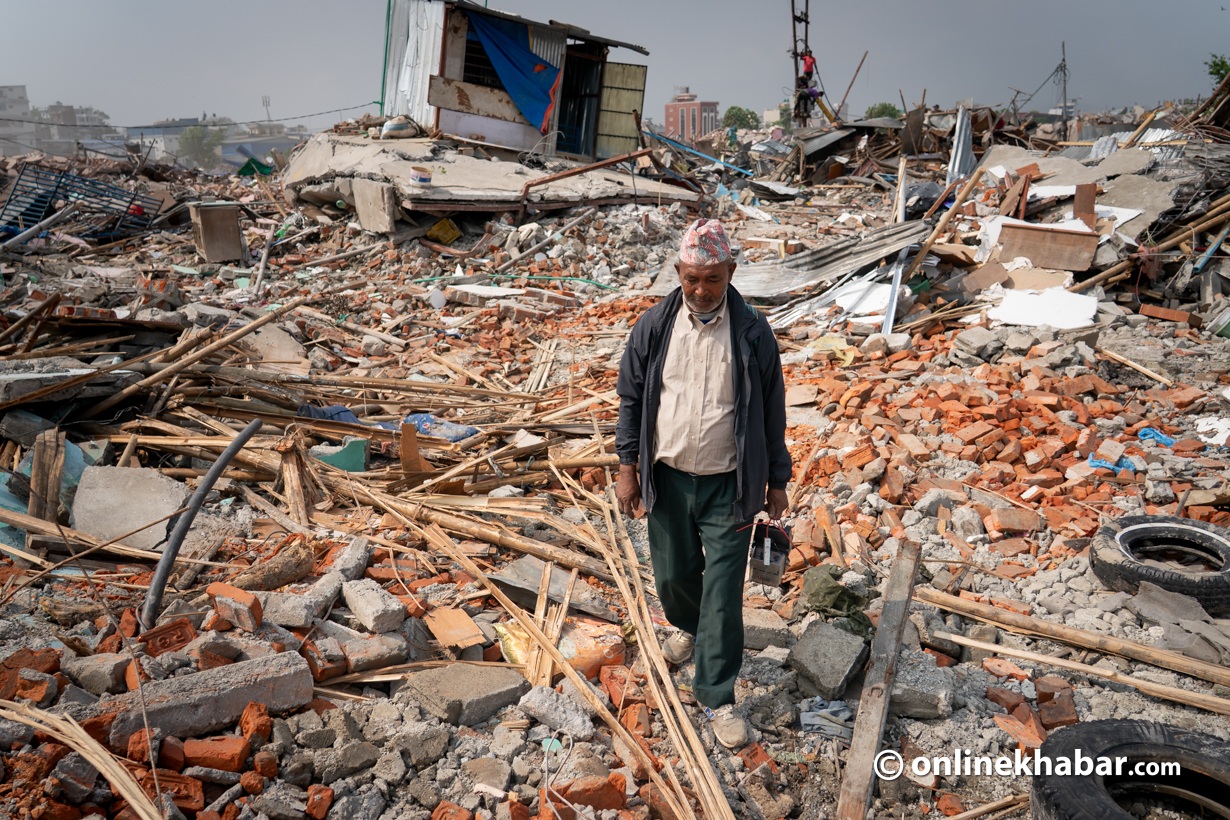
According to Gopal, no previous government official stopped them from building houses. Now, however, the government demands, “Remove your belongings timely; we will manage.” Without sensitivity, the same bulldozer treatment was meted to everyone.
He questioned again, “There were many memories and valuable possessions. The government insulted us. Should we have tolerated this humiliation?”
About 22 years ago, Sombahadur Bik became landless due to a road construction project in Nuwakot. He arrived on the Manohara riverbank, reminiscing about past floods that destroyed his home.
Injured while removing belongings, he wandered on the roads with untreated wounds amid hunger and poverty. He sharply criticized the previous government’s failure to provide effective arrangements.
Their stories reflect structural injustice and reveal that they belong to Dalit, impoverished, and marginalized communities. Sombahadur said, “Being both poor and Dalit, I have endured much humiliation.”
The government’s haste and poor management worsened depression. Conditions were miserable even for vulnerable groups like pregnant women and schoolchildren.
A 12th-grade student, who had just completed her exams, shared her feelings, unable to speak openly due to fear imposed by the government. Children were terrified.
Indrabahadur Rai panicked when he learned about the bulldozer demolition inside the settlement. Refusing to see his home demolished in the morning, he left but was found dead by afternoon. His wife Sarita also expressed anguish over the destruction.
“He was walking alone and weeping until morning; now, this is what I find,” Sarita said.
Before Indrabahadur’s death, Ravin Tamang also passed away. These tragic cases highlight that proper information and management could have saved lives.
Mina Kumari Basnet, over 70 years old, spent days searching through the ruins of her shack. Unable to obtain citizenship, she was denied government aid.
“Not just citizenship, but I couldn’t even remove my clothes. Twenty years of residence all gone. Are we not human? Did we do something wrong?” she lamented.
After bulldozers operated all day at Shankhamul, residents were left in distress at night. Some families, unable to find rooms, were forced to sleep in temples. Even though the government told them to “come back tomorrow,” no arrangements were made.

These events demonstrate that the state acted impulsively with poor management. Social media expressed relief that the era of “hukumbasi” (illegal squatters) is over, but the real issue is different. While some benefited from instilling terror on squatters, it is the poor and vulnerable who suffered under this harsh process.
Writer Indra Adhikari argued, “Brokers who exploited the name of squatters were saved, while the marginalized poor suffered as problems increased.”
Poet Binod Bikram KC wrote regarding the plight of the squatters:
After I was born on this earth, I too have a share
Of a handful of soil,
Listen,
I too have a part in this world.
No matter the bulldozers tearing at my roots
My existence has a story.


