India’s New Regulations Halt Nepalese Tea Exports, Traders Face Delays and Increased Costs





News Summary
Editorial review completed.
- India has mandated separate laboratory testing for each truckload of tea exported from Nepal through a newly implemented SOP.
- Nepalese tea exporters have expressed grievances calling India’s new regulation an ‘undeclared blockade,’ resulting in halted exports.
- The National Tea and Coffee Development Board is engaging in diplomatic talks with India to seek resolution.
April 24, Kathmandu – Following India’s implementation of stricter provisions on tea imports from Nepal, the Nepalese tea industry faces fresh challenges.
After years of consistent export procedures, the Indian Tea Board issued a new ‘Standard Operating Procedure’ (SOP) effective May 1 (Baisakh 18), which entrepreneurs say has effectively brought Nepalese tea exports to a halt.
Under the new regulation, every truck and shipment entering India from Nepal must undergo separate laboratory testing.
This comes amid growing volumes of tea imported into India, which has heightened concerns about adulteration risks, prompting the parliamentary committee there to recommend strict oversight.
The Tea Board of India stated this new measure aims to protect the reputation of Indian tea, ensure foreign tea quality, and safeguard consumer health.
Previously, a single sample test report was accepted for up to 15 days or for 10 truckloads, but now each truckload requires a testing fee of INR 11,120 and a minimum two-week wait for results, an impractical arrangement according to exporters.
Samples of tea entering India will be sent to a nationally accredited laboratory, with reports mandated to be uploaded online within 14 days of receipt.
Importers cannot market or re-export the tea until they receive a clearance certificate, and the tea must be stored securely in a designated warehouse.
If the tea fails testing, no clearance will be granted, and importers will immediately receive an alert message.
For previously failed cases, a re-test is allowed from a reserved sample, which is costly and requires online application within 48 hours.
All re-testing costs, including INR 15,000 per sample (about NPR 24,000) plus GST, must be borne by the importer.
Nepal annually exports large quantities of CTC and orthodox teas to India. Nepalese producers now face increased challenges to comply strictly with Indian food safety standards.
Traders Describe India’s Move as an Undeclared Blockade
Shivkumar Gupta, Senior Vice President of the Nepal Tea Producers Association, said that though India has not officially announced a tea export ban, the new regulations make exports practically impossible. He called it an “undeclared blockade.”
“Though exports haven’t officially stopped, under India’s new Tea Board rules, no one is able to load goods currently,” Gupta explained, adding, “Exports continued until April 30, but problems began when the new SOP took effect on May 1.”

He noted that mandatory testing for each truck adds complexity.
“Every vehicle’s sample needs to be taken, and then there’s a wait of 7 to 14 days for the report,” he said. “Each test charges about NPR 18,000.”
Gupta also criticized delays at Indian customs in Panitanki, where tea-laden trucks are held for up to 10 days due to space shortages.
“Keeping tea out in the open or inside trucks risks quality degradation,” he added. “At such conditions, neither can we send the tea, nor are Indian buyers willing to purchase.”
The new rules have also discouraged Indian buyers. “Indian importers are currently hesitant, withholding payment until their reports arrive; if tests fail, the tea risks return or destruction, deterring purchasers,” Gupta noted.
He mentioned that the export halt has affected Nepalese tea prices, which now range between INR 100 and INR 105 for the Indian market.
In Nepal’s domestic market, tea sells between NPR 200 and NPR 250 depending on quality. Higher-end ‘Second Flush’ tea has yet to be exported.
Diplomatic Efforts Needed
The National Tea and Coffee Development Board reported it has submitted a written report on the impact of India’s new regulations to relevant ministries after consultations with stakeholders.
Indraprasad Adhikari, Agricultural Development Officer at the Board, stated this is not merely a technical or administrative issue but a serious matter requiring government-level (GTG) dialogue between the two countries.
“We have forwarded all information to the ministry; this is a government-to-government matter, and diplomatic initiatives are underway,” he said. “This problem needs swift resolution through diplomatic talks.”
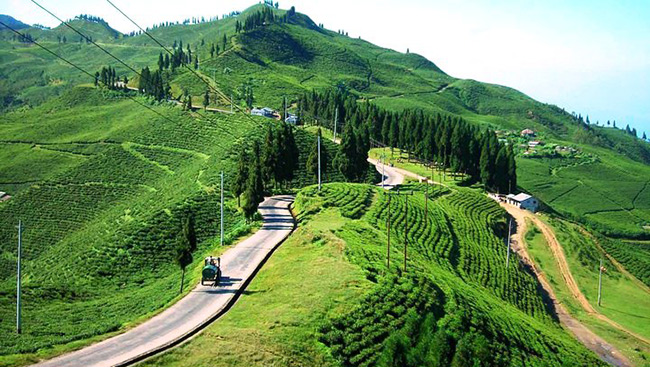
Adhikari highlighted that detaining tea on Indian soil awaiting test reports increases costs considerably.
“The biggest risk is dumping; expensive tests followed by failure could lead India to destroy the tea,” he explained. “Hence, since May 1, entrepreneurs have been unable to send truckloads close to the border.”
Recurring Challenges from India’s Policies
This is not the first time India has hindered Nepalese tea exports. Traders say that under the guise of ‘quality’ and ‘branding,’ India has repeatedly created obstacles.
In 2020, during the COVID lockdown, India halted exports citing tea as a non-essential product. In November 2021, the Indian Tea Board stopped trucks at Panitanki citing poor Nepalese tea quality.
In April 2024, the West Bengal Agriculture Directorate, under government orders, detained numerous Nepalese tea trucks at customs until Nepalese diplomatic pressure led to their release.
Exporters attribute these barriers largely to pressures from West Bengal and Darjeeling tea producers.
Nepal’s orthodox tea has begun competing in the global market with Darjeeling tea, causing concern among Indian producers.
Various Indian tea associations, members of parliament, and West Bengal Chief Minister Mamata Banerjee have pressured the central government to impose import bans or hike customs duties on Nepalese tea by up to 40%, influencing the current stringent regulations.
Market Dependence and Alternatives
India remains Nepal’s largest tea export destination. Two years ago, about 150,000 kilograms of tea were exported to Pakistan through diplomatic coordination with the Pakistani Embassy. Chinese buyers showed interest but that effort stalled later.
Exports to third countries remain unsatisfactory.
Officials from the Tea and Coffee Development Board noted near stoppage of exports to the Middle East due to regional conflicts.
Thus, Nepal’s Ministry of Foreign Affairs and Ministry of Industry, Commerce, and Supplies must urgently coordinate with Indian counterparts to facilitate smoother tea exports.
About 90% of Nepal’s orthodox tea and 50% of CTC tea markets are in India. Attempts to enter China and Pakistan face challenges: China is itself a major exporter preventing Nepalese CTC tea sales, while strained ties with Pakistan close land routes; sea routes are prohibitively expensive.
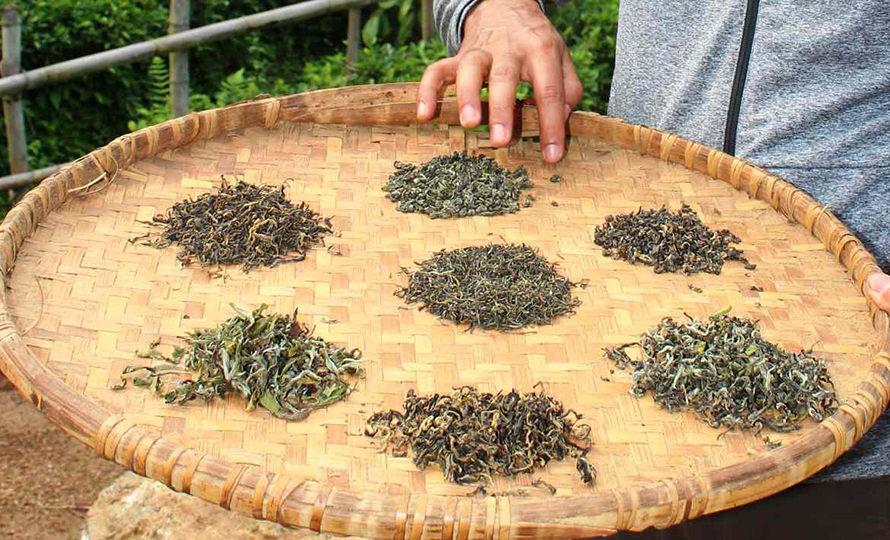
Gupta stressed that producers are not opposed to quality testing but demand a streamlined process. “We are not afraid of testing; Nepalese tea is of high quality. But waiting weeks at the border for reports is impractical. Recognition of Nepalese laboratory reports or acceptance of a single report for a fixed period is necessary.”
Production and Export Scenario
Currently, Nepal exports tea worth roughly NPR 400 crore annually. Data from fiscal year 2078/79 shows tea plantations cover 20,602 hectares nationwide, producing about 26,123,111 kilograms of made tea annually.
About 15,132 small-scale farmers are directly involved, alongside 170 large plantations and 120 small to medium processing units operating across the country.
Approximately 60,000 individuals have direct employment in the tea industry, from plantations to processing.
The main tea producing region is Koshi Province, particularly Jhapa district, with 10,340 hectares producing roughly 19,566,795 kilograms of tea, largely CTC variety.
Ilam is renowned for quality orthodox and green teas, with 7,309 hectares cultivating about 6,291,373 kilograms.
Hilly districts such as Panchthar, Dhankuta, Tehrathum, and Taplejung have strengthened their identity in orthodox tea production, while commercial cultivation is expanding in Bhojpur, Dolakha, Nuwakot, and Kaski.
In fiscal year 2078/79 alone, Nepal exported 15,598,660 kilograms of tea, earning foreign exchange of NPR 459,080,560. During the same period, imports totaled 113,372 kilograms worth NPR 9,202,900.


