




News Summary
- On Wednesday, the Lower House aimed to discuss and approve the policy and program presented by the President, but all three scheduled sessions were disrupted due to opposition protests.
- Although legal provisions allow the meeting to proceed in Prime Minister Balendra Shah’s absence, the opposition raised questions regarding his non-attendance in Parliament.
- According to Rule 38 of the House regulations, a designated minister can respond if the Prime Minister is absent, but the opposition insists the Prime Minister himself should answer.
April 30, Kathmandu – The Lower House held three sessions on Wednesday intending to deliberate and approve the policy and program presented by the President. However, all three sessions were disrupted due to opposition protests.
The session scheduled for 11 am started a bit late but failed to advance the agenda. The meeting was adjourned twice, with the third adjournment occurring at 5:30 pm.
There was an extended debate on whether the sessions could move forward in the absence of Prime Minister Balendra Shah. Ultimately, no discussion on the policy and program began.
Given the parliament building’s proximity to the Prime Minister and Cabinet Secretariat, it was unlikely that Prime Minister Balendra was unaware of the ongoing parliamentary situation.
Despite knowing that Parliament was seeking him, the Prime Minister gave no indication of attending. Consequently, the National Independent Party relied on legal provisions which permit sessions in Parliament even without the Prime Minister.
Opposition MPs were insistent on holding the Prime Minister accountable in Parliament, questioning who else would be responsible if the PM did not respond.
Both sides presented serious arguments, but the inability to resolve these differences hampered the parliamentary agenda.
Thus, the government’s policy and program for the upcoming fiscal year could not be debated in Parliament, leaving public needs and agendas unaddressed within the house.
Opposition Denied Prior Notice
It is customary for the Lower House to release the probable agenda a day before a session. The agenda published on Tuesday stated that on Wednesday, the President’s representative, the Prime Minister Balendra, would initiate discussion on the policy and program, a claim the opposition parties had accepted with confidence.
However, during the meeting of the Procedural Consultation Committee held before the session, the PM’s attendance or absence was not discussed, and an agreement was made for urgent and zero hour discussions. It was believed that the agenda would proceed accordingly.
Shortly before the meeting, however, news emerged that the Prime Minister would not attend Parliament. Following this, the agreed-upon urgent and zero hour sessions continued.
When Speaker Dol Prasad Aryal attempted to advance the agenda, opposition parties objected, reminding him that the agenda included the Prime Minister presenting the policy and program for discussion.
Speaker Aryal cited Rule 38 of the House regulations, which allows a designated minister to respond in the Prime Minister’s absence.
This led to a debate over whether the Prime Minister’s presence was mandatory. Nepali Congress MP Arjun Narasingh KC recalled the previous day’s events.
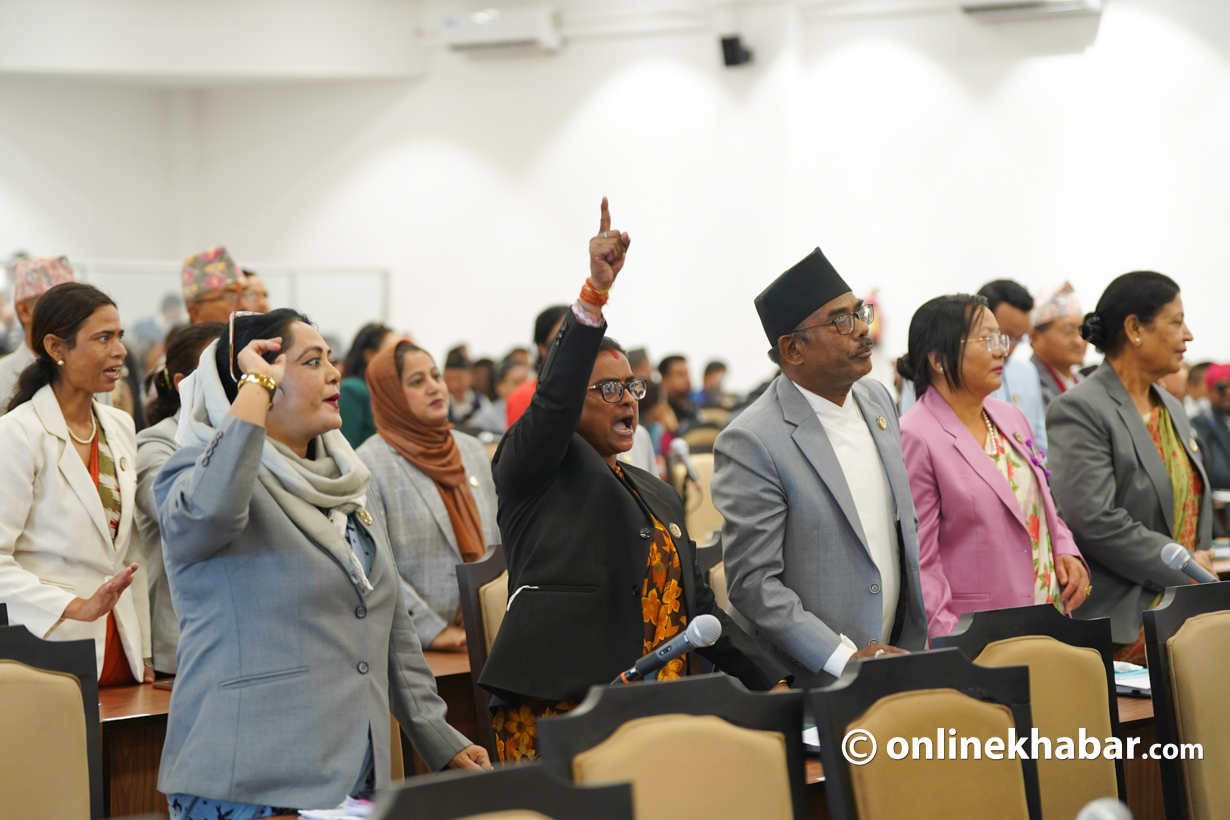
‘Yesterday when the President read out the policy and program, the Prime Minister stood up and left the session. Yet today, for the government’s own policy discussion, the Prime Minister neither attends nor responds?’ MP KC questioned the Prime Minister’s intentions.
The opposition warned they would boycott the session if it proceeded without the Prime Minister’s attendance.
‘We have no objection to starting the debate, but if the Prime Minister is absent during responses, we must boycott the session,’ KC stated.
Conversely, parliamentary party leader of the National Independent Party, Gyan Bahadur Shahi, insisted the Prime Minister’s presence was necessary.
‘It’s not merely about the Speaker’s authority but concerns our parliamentary party’s 181 MPs. We have opposed this in previous terms as well,’ he said.
CPN-UML’s Chief Whip Ain Bahadur Mahara questioned the PM’s responsibility and accountability to the Parliament due to his absence.
‘When will the Prime Minister respond in Parliament? He did not speak during the last session and is absent again this time when he should be here,’ he remarked.
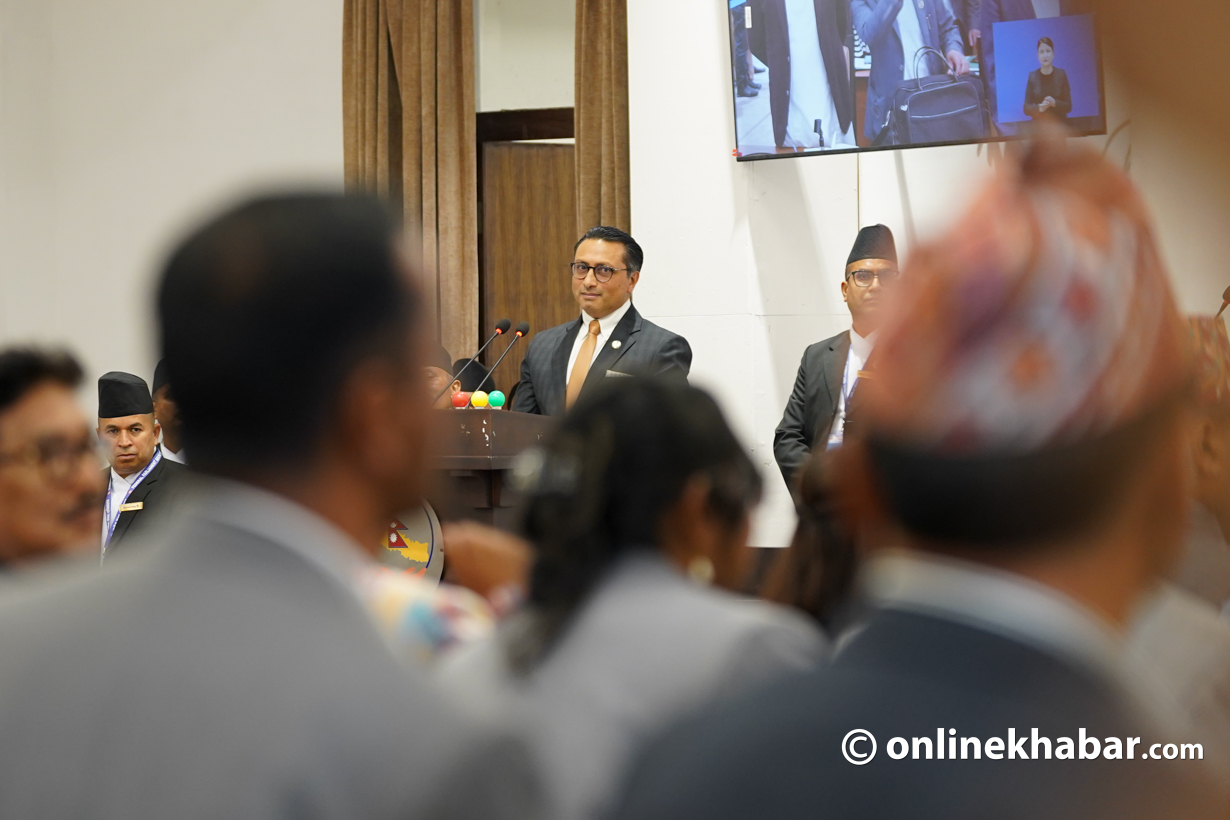
When the opposition’s firm questioning intensified, National Independent Party’s Chief Whip Kabindra Burlakoti referred to Rule 38(3) of the House regulations.
The rule states that when the Prime Minister is absent, a designated minister may respond to questions raised during policy discussions.
‘The Prime Minister has assigned the Finance Minister to answer questions during the debate,’ he explained.
Countering this, CPN Chief Whip Yubaraj Dulal asked, ‘For five years, we have heard no voice from the Prime Minister citing Rule 38. Is this acceptable?’
As tensions grew, CPN-UML MP Guru Prasad Baral urged the opposition not to blame the government unfairly for parliament’s disruption.
‘It is wrong to worsen the parliamentary situation without addressing opposition’s concerns,’ he said.
Nepali Congress parliamentary leader Bhishma Raj Angdembe proposed adjourning the meeting to find consensus.
‘Let’s suspend for 10-15 minutes and seek a solution,’ he suggested, and the Speaker agreed to the adjournment.
Unclear Agreement Causes Confusion
Following the first adjournment, top leaders began discussions.
The procedural consultation committee room adjacent to the assembly hall was attended by Speaker Aryal, Deputy Speaker Ruby Thakur, and others.
National Independent Party members including Chairperson Ravi Lamichhane, deputy leader Ganesh Parajuli, Chief Whip Kabindra Burlakoti, and others participated, along with Finance Minister Swarnim Wagle.
Nepali Congress’s leaders Bhishma Raj Angdembe, Chief Whip Basana Thapa, and MP Arjun Narasingh KC were also present.
From CPN-UML came Parliamentary leader Ram Bahadur Thapa Badal, deputy Padma Aryal, and Chief Whip Ain Bahadur Mahara.
CPN representatives included Chief Whip Yubaraj Dulal and MP Pramesh Hamal; Labour Culture Party’s Aren Rai and National Democratic Party’s Khushbu Oli also attended.
During the session seeking consensus, the Speaker proposed initial solutions before MP Arjun Narasingh KC addressed the room.
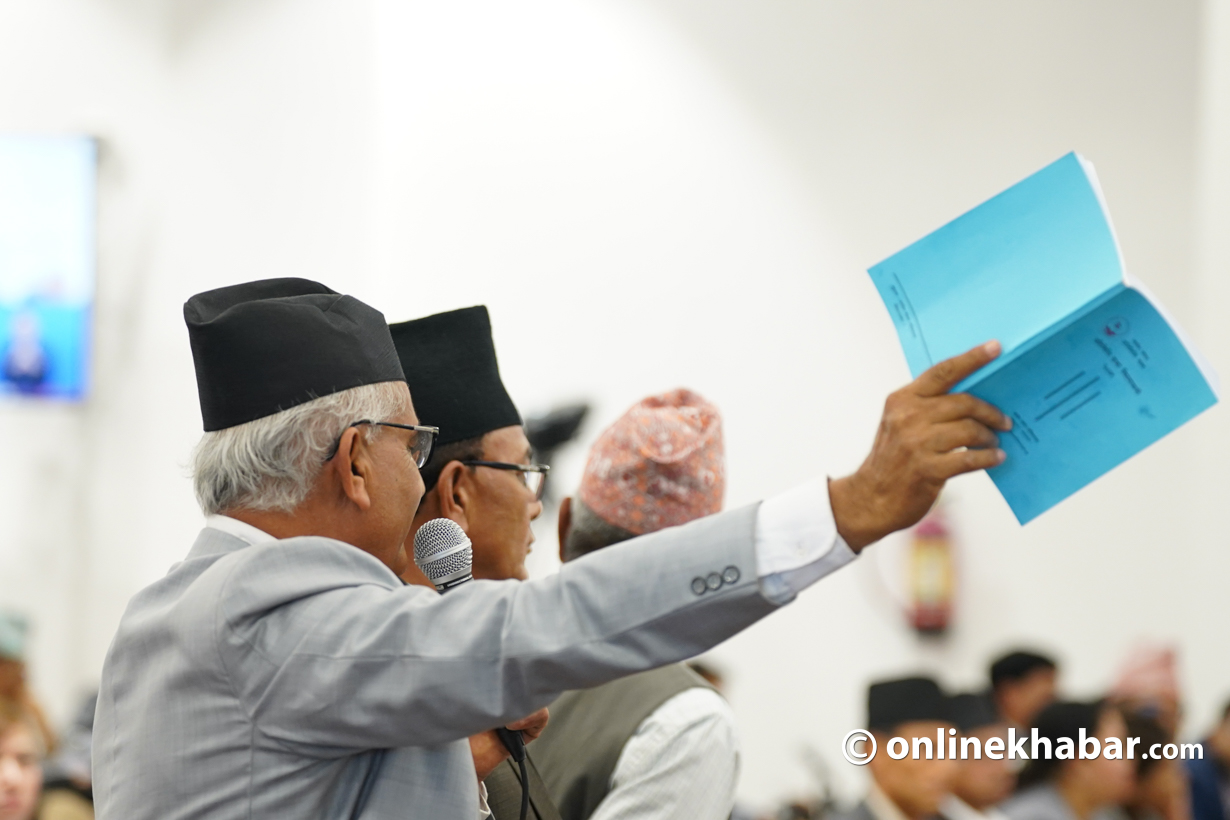
‘We must understand the core of the opposition’s concerns. Not everything is in writing; rules exist to remove obstacles,’ KC explained.
Congress leader Angdembe emphasized the need for the Prime Minister’s presence, stating, ‘Everyone agrees on the Prime Minister’s attendance. Why can’t the Prime Minister be called to Parliament? The Parliament seeks his response and he must at least attend.’
Finance Minister Wagle presented a letter from the Prime Minister designating him as representative.
He noted that according to House Rule 38, the Prime Minister’s appointment of a representative is valid and was previously accepted by both the former and the new Parliament, a position confirmed by Speaker Aryal.
‘I am not here to debate arithmetic. The world is watching: let’s continue today’s session and discuss again next time. I will coordinate with the Prime Minister,’ Aryal said.
CPN-UML leader Badal remained silent, while Chief Whip Ain Mahara urged understanding the opposition’s concerns beyond mere regulatory interpretation, emphasizing the Prime Minister’s parliamentary accountability.
Efforts were ongoing to find mutual acceptance.
On the same day, Finance Minister Wagle proposed starting the discussion, while MP KC maintained that the Prime Minister’s presence during responses was necessary, attempting to persuade the National Independent Party.
‘It is customary and necessary for the Prime Minister himself to answer questions in the policy and program session. In the past, Prime Ministers attended Parliament for this purpose,’ KC pointed out.
After deciding that answers would not come on Wednesday, Speaker Aryal promised to converse with the Prime Minister in the evening.
Subsequently, all parties consented to resume the adjourned meeting.
The session recommenced with Finance Minister Wagle proposing to begin discussion on the policy and program.
Congress leader Angdembe quickly raised a call to ensure questions raised during the discussion would be answered by the Prime Minister and insisted the Prime Minister attend and listen to the debate.
The National Independent Party interpreted this demand as a breach of agreement, and Chief Whip Burlakoti challenged the opposition.
Other opposition parties also echoed demands that the Prime Minister provide answers to all questions raised.
According to leaders, the ambiguous agreement among top leaders created confusion, and the opposition did not clarify whether answers would come the next day.
Following the session, doubts persisted among the opposition concerning Finance Minister Wagle’s ability to provide responses, while accusations exchanged between government and opposition continued. The opposition protested for being unable to raise people’s agendas, while the ruling party insisted the Prime Minister must be accountable to Parliament.
No further proceedings took place; the Lower House’s second session was adjourned.
Two Divided Views Within Congress
After the second session was adjourned, top leaders resumed discussions. The National Independent Party accused the opposition of violating agreements.
Leaders from Congress, UML, and CPN maintained that the Prime Minister must appear to answer and urged the Speaker to make a ruling. Deputy Speaker Padma Aryal emphasized this point.
However, within Congress, two opposing positions regarding the ruling emerged.
Congress MP KC asserted, ‘Parliament cannot stop; let us proceed. The Prime Minister is expected to come tomorrow. Regarding the Speaker’s ruling, it pertains to checks and balances among the three state bodies.’
Meanwhile, Congress parliamentary leader Angdembe stated, ‘It is clear party policy that the Prime Minister must attend and answer questions; this will enable smooth parliamentary functioning, otherwise difficulties arise.’
According to sources, Angdembe was in continuous dialogue with Congress President Gagan Thapa and conveyed these points accordingly.
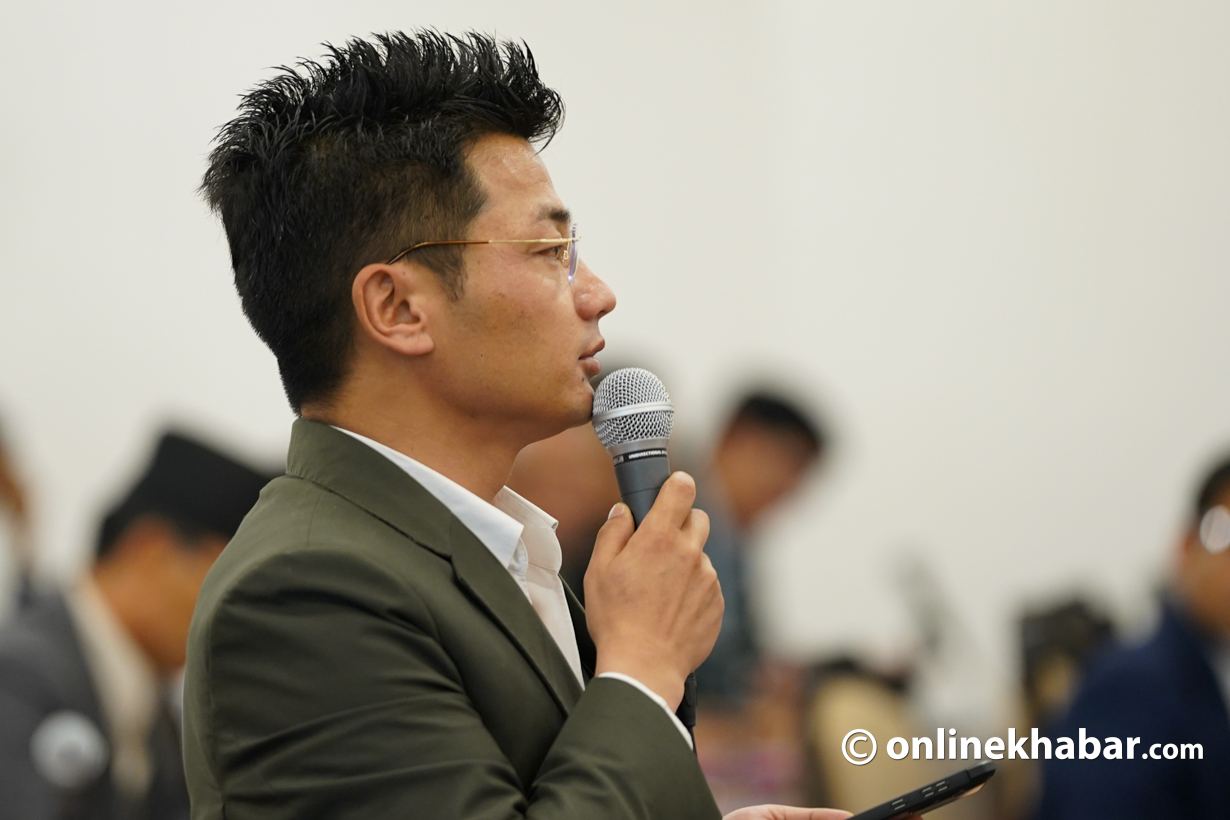
CPN Chief Whip Yubaraj Dulal underscored the necessity of the Prime Minister’s address.
‘Everyone understands the Prime Minister must address Parliament. This is not merely a regulatory matter,’ he said. ‘The Constitution clearly mandates the Prime Minister’s accountability to Parliament. So this is about more than just rules.’
Dulal explained that it is customary and proper for the Prime Minister to directly respond to questions raised on the policy and program and that the session would proceed smoothly after the PM’s response.
Even without a firm agreement, a third session was held but again adjourned without progress.
Speaker Aryal has summoned a further session for Thursday.
Will the Prime Minister Attend?
According to party leaders, by the time of the third session adjournment, Speaker Aryal had not yet communicated with the Prime Minister.
‘If the Prime Minister was ready to attend and respond to the policy and program discussion, we might have seen signals by midday. But there were none,’ said a leader from the National Independent Party.
The Speaker has expressed hope to speak with the Prime Minister on Thursday.
This situation is rooted in the National Independent Party’s position that the Prime Minister’s designation of a representative, contrary to parliamentary rules, is acceptable, and that the regulations do not mandate the Prime Minister’s presence.
Rule 38 of the House regulations addresses policy and program provisions, stating that after the President’s address and the motion of thanks, the Speaker has the authority to schedule debate days. If the Prime Minister is absent, the designated ministers may respond.
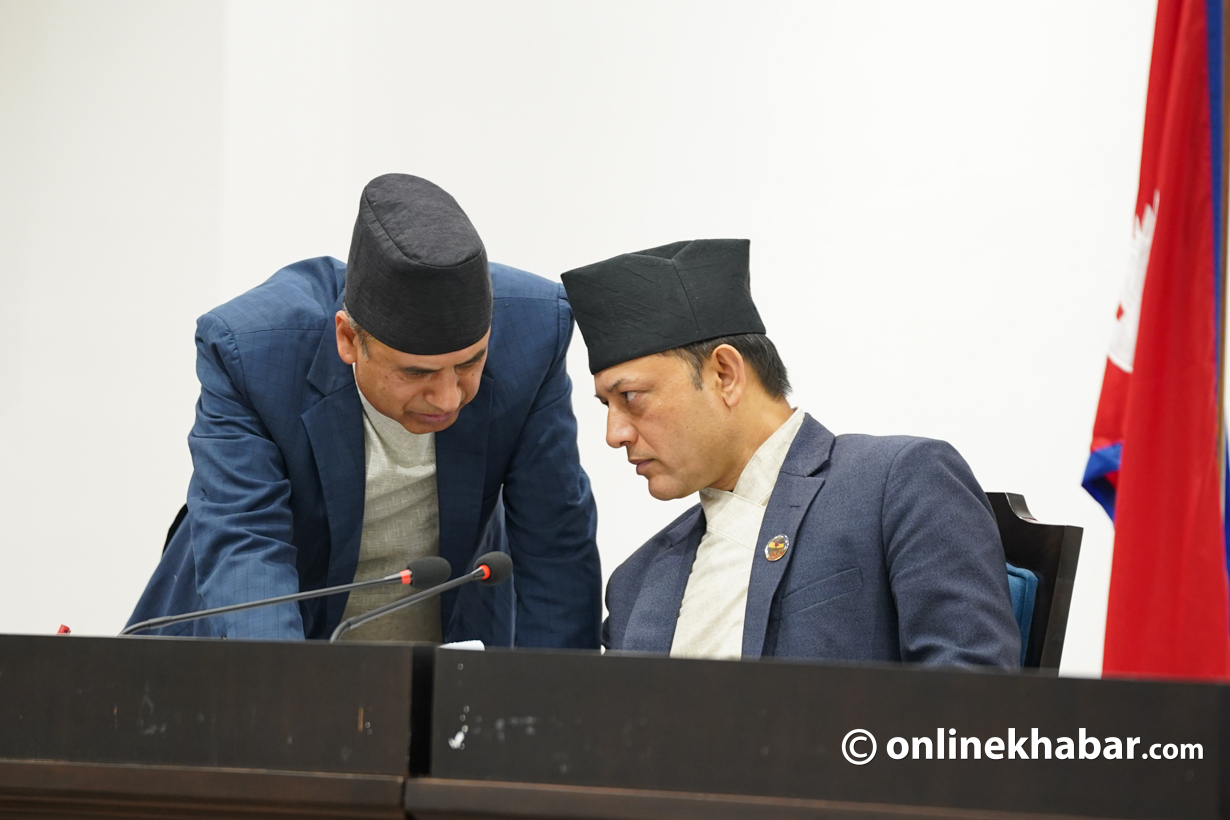
Thus, Prime Minister Balendra may remain absent but appoint another minister as representative.
According to Speaker Aryal, 35 amendments have already been registered upon which the debate will be based.
There is no binding provision demanding that the Prime Minister must personally answer all questions in the debate.
‘After the debate concludes, either the Prime Minister or the designated minister will respond,’ Rule 38(3) specifies.
Sub-rule 4 states, ‘After responses from the Prime Minister or designated minister, the debate will be considered complete. Following a decision on proposed amendments, the Speaker will present the program in the session.’


