




News Summary
- Adapa (home). Hearing the word instantly evokes memories of one’s home! It brings warmth and stirs various feelings within the heart. Sometimes it’s understood, but often remains ambiguous.
- The memories of the place of birth and upbringing — the joys and sorrows shared — are mysterious and filled with reminiscences.
- While my village smells like fragrance to me, perhaps others find a similar scent in the city. I want to say, this city lacks the earthy aroma and the sense of love and affection found in my village.
Homes were made with thatched roofs of straw and dry grasses. Sometimes rooftops were covered with bamboo mats. Truly, those mats woven from bamboo strips and straw carried layers of earth, standing firm as walls. The earthen walls bore the marks of a family’s pains and hardships. From windows, one could spot the landlord’s large house. The village homes often resembled the skeleton of a fish leftover after the meat was consumed.
Air and wind entered the house from all sides without permission from the homeowner. To protect the home from drafts, my parents understood the power of earth. We, the indigenous Urāw community, were born and raised in the soil and know it well. Urāw women are skilled in deciding which soil to apply and how to shape the walls. Following the laws of nature, homes were built with natural materials and painted with lifestyle motifs on the walls. No formal training or university was necessary to create these designs.
Our grandmothers, mothers, aunts, sisters, and cousins learned these skills by watching. They embellished worn-out windows, doors, pillars, and walls with dreams, hopes, hard work, and sorrow, using wild berry colors. The resulting paintings were beautiful.
Regardless of the home’s age or the family’s poverty, the touch of creativity made the house enchanting. The house provided light, and the flowers, leaves, animals, birds, and plants depicted on the walls brought brightness to the courtyard. Our house was more than bamboo and earth. It provided shelter, shared pain, and nurtured love filled with dreams.
The walls bore paintings, some signed “Phuchchan Devi Urāw.” Where did the custom of signing artworks originate? In our village, artists left their works anonymous and passed away unknown. Only in towns do artists and billboard writers show their names, like the “Raju Painters.”
On the courtyard-facing earthen wall, a name, Utejit, was unknown to us, but we regarded him as a great artist. He was my father’s cousin, my grandmother Phuchchan Devi Urāw. When raw earth is touched by her hands, even the clay does not know what shape it will take.
We live entirely in a world of earth. Many household items are made from soil — granaries, stoves, and hearths. Seeds hidden on paths give rise to plants growing on home walls.
Adapa means home. The word itself evokes memories of one’s home! It brings warmth and stirs myriad emotions that sometimes become clear but mostly flow as waves of feeling. The memories of the birthplace and those who shared joys and sorrows remain mysterious and abundant with recollections.
I have kept a museum of memorable childhood memories in my heart. Living far from my Adapa in this desolate city, those memories touch me and sometimes bring tears. Walls seem to fill with love, and the paintings appear to dance before my eyes. The generations tended my land. The earthy scent of the bamboo-supported roof spread a fragrant aroma.
But who cares for me in this desolate city? Why does it smell unpleasant now? While my village offers me fragrance, here that is absent. There is no musty earthy smell, no scent of love and affection.
Chhitaha village in Sunsari district is my ancestral home. There, I endured the harshness of scorching heat, cold winds, and winter chills through ceilings and walls.
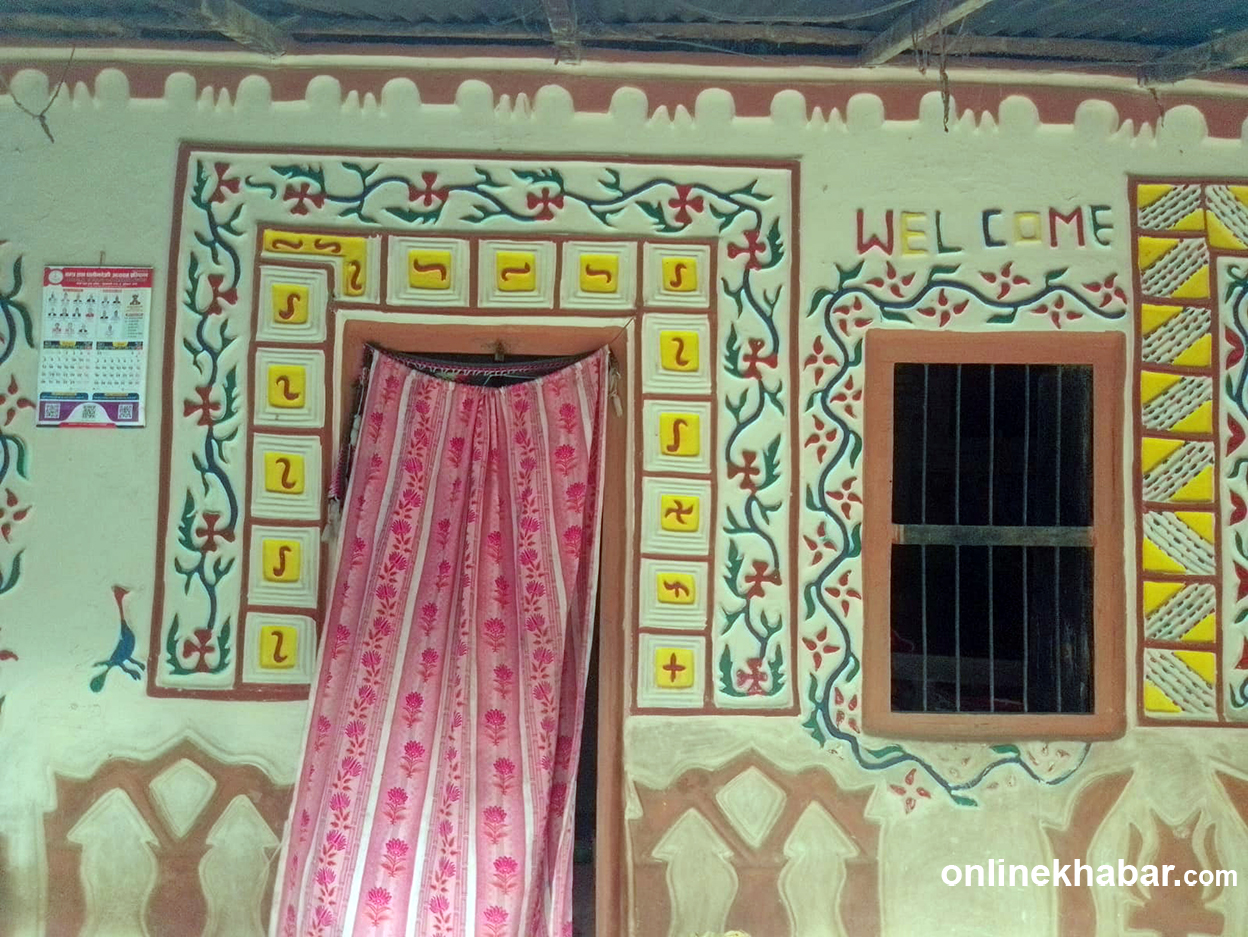
One night, I was waiting for sleep, trying to close my eyes, but it refused to come. My siblings were already asleep. My father, who earned 40 rupees daily working in a plywood factory in Itahari, would come home after half-day work on Fridays and return Saturday to the factory. That night was a Friday.
When my father came home on leave, the kitchen was filled with the aroma of fish meat. Elder neighbors came to exchange stories of joys and troubles. Sometimes, vegetables were sent in their company.
That evening we ate pork and rice before going to bed, but I could not sleep. The silence of the night was accompanied by the Lokbhak sounds of crickets singing. Listening carefully, a whispering voice could be heard outside.
Occasionally, words struck my ears. It felt as though something serious was happening. My mother said, “This time, even if we take a loan, we must build a two-room house.” My father whispered, “Yes, my brother’s marriage talks have started. We will build the two rooms. Our uncle built a three-room tin-roofed house, which is very good and should last.”
Above my bed, the half-moon was visible through the crack in the roof. Moonlight fell throughout the dark room.
On the earth-plastered walls of my uncle’s tin-roofed house, Phuchchan Devi Urāw’s name appeared clearly. Imagination painted scenes.
“Ah! Now our new house will be built. Paintings will decorate its walls, and the artist’s name will be Shyamwati Devi Urāw — my mother.”
Mother was adept at decorating the one-room hut with various paintings. She was skilled at shaping raw earth. When the time came to create murals in the new house, I resolved to learn as well. When I woke, the half-moon was still visible.
In its light, a granary for storing rice made of earth was visible. Then I finally fell asleep.
On Saturday morning, my father returned with 12 cement pillars of various shapes on a bamboo cart. Even the oxen raised at home looked happy. My uncle and friends helped unload the pillars.
The pillars were neatly stacked beside the gate, appearing as if asleep. When neighboring elders asked about the cost of bringing the materials, my father wiped sweat from his forehead and said it cost 125 rupees. The elders complained it was expensive, but then remarked, “I didn’t expect this to happen after ten to fifteen years.” Then he took a hoe and went to the field.
Next, my father brought tin baskets tied to a rickshaw. While talking, he cut his palm badly. To stop the bleeding, he tore a strip from his scarf and tied it. Back home, mother applied oil and cloth soaked with oil to the wound.
Father lit a wick and applied the oil to the wound, despite the burning pain. He closed his eyes tightly at the time.
Gradually, wooden beams were brought. On Sunday, the market day, Raju the carpenter and friends came with a construction contract to build the house.
Mother made straw thatch and stoked the fire on the hearth. She wrapped my brother in a blanket and sent him with my grandmother for a walk in the village.
The early morning call of the cuckoo welcomed each day. Birds made nests beneath the straw roof. Grandmother sang along with the birds while chaperoning.
The carpenters’ tools began to echo in the courtyard. They measured posts with ropes and inch tapes. A ritual was performed for laying the foundation pillars.
Construction began. Within two or three days, tin covered the roof, and earth was smeared on the thatched walls resembling thorny fish scales.
As the earth clods were crushed, grandmothers sang as friends brought and applied the soil.
The Urāw community has a traditional festival called Hauli. It encourages family cooperation, fosters intimacy, and beautifies the community.
Hauli helps economically weak families smile by sharing sweet treats as rewards for hard work.
My late mother invited the village grandmothers and aunts, saying “Come for Hauli to plaster the house.” On Saturday morning, about ten women gathered and divided the work.
As the clods were broken to rhythmic beats, grandmothers sang. Friends brought soil and played. After lunch, all daughters-in-law headed back home.
Grandmothers rested under the shadow of a nearby tree, smoking hookah. I passed the time removing mosquitoes that had been biting us and sucking blood.
Evening came, and work paused. Under the open sky, beneath moonlight and twinkling stars, all Hauli participants gathered in the courtyard. Mother busied herself welcoming everyone. Father cooked meat in the kitchen.
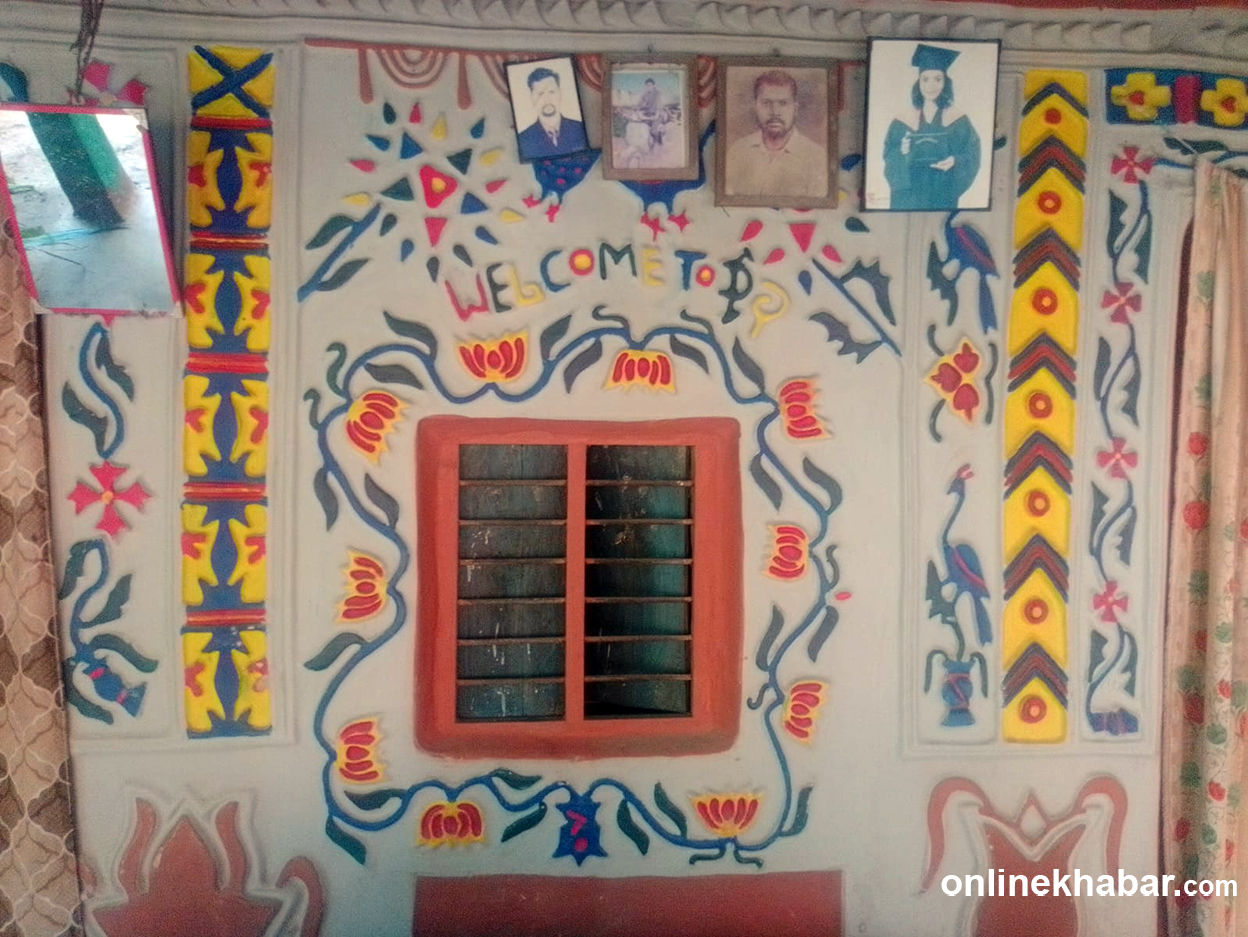
In the dense forest of Jhora, few houses had straw roofs. Our home was surrounded on all sides by small houses. At the courtyard’s entrance stood a long bamboo ladder held to climb up and enter the courtyard.
Different artwork in the form of a motif was crafted on the door. Birds often nested on the roof.
Now we had a new home. Grandmother exhaled deeply, smoked her hookah, and said, “Dharmendra built an enduring earthen house but gave it a tin roof. How will birds make nests on that roof?”
In the new house, mother worked hard creating various paintings. Cow dung helped fix the images on the walls. Painting was done during the Tihar festival, a time I eagerly awaited.
In the end, the house truly became a home.
Steps taken and stories rising from the stage remain untold.


