Prime Minister’s Ambition for Power Sparks Tug of War Over Intelligence Agency Control





News Summary
Prepared after review.
- On April 13, the Government of Nepal amended the organizational division rules to place the National Investigation Department (NID), the country’s sole intelligence agency, under the Office of the Prime Minister and Council of Ministers.
- The intelligence agency has historically been repeatedly transferred between the Home Ministry and the Prime Minister’s Office, and it is now once again under the Prime Minister’s Office.
- Former intelligence chiefs and experts recommend splitting the agency into separate internal and external intelligence bodies to strengthen its effectiveness.
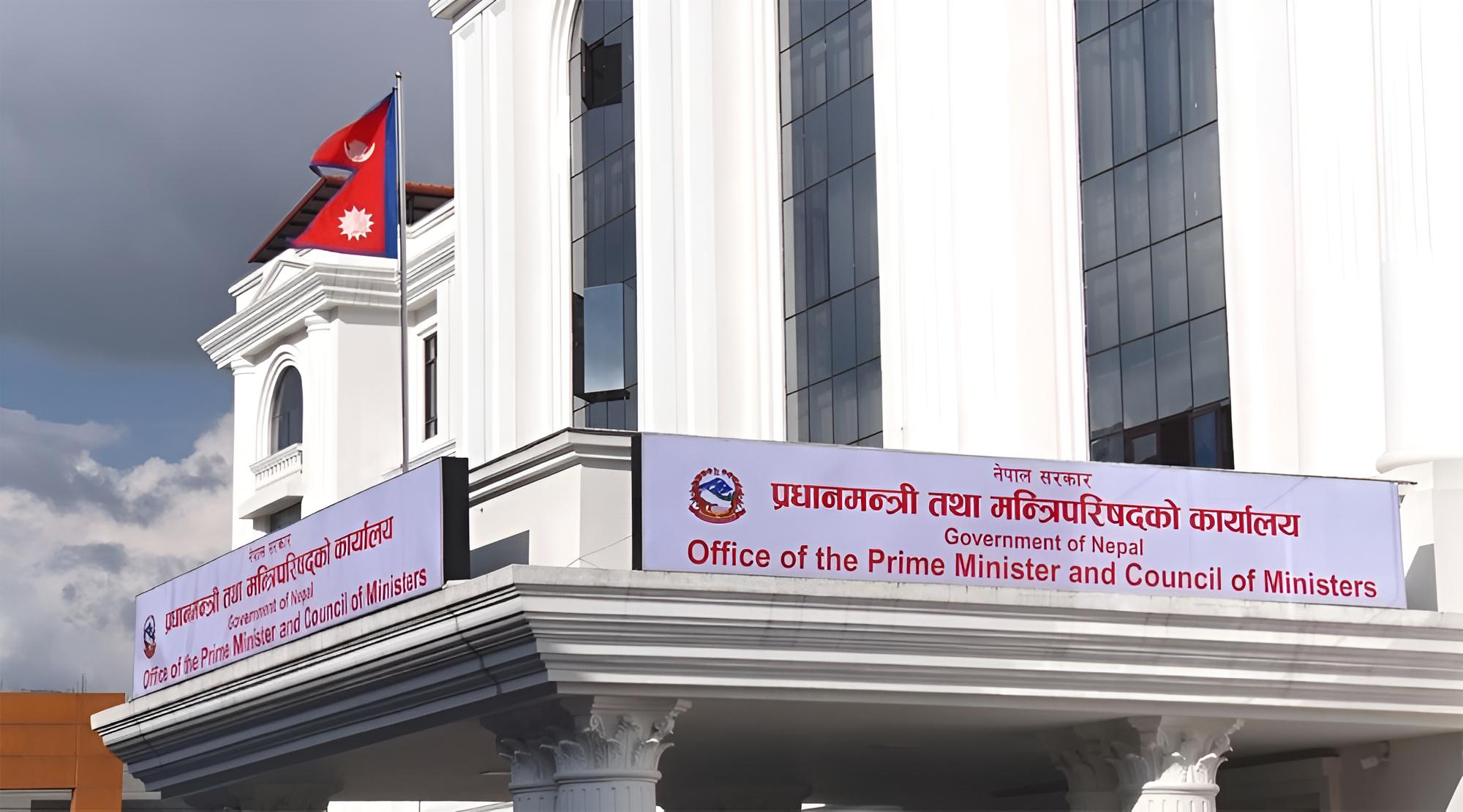
May 15, Kathmandu – The Government of Nepal amended the division of work rules on April 13 and subordinated the National Investigation Department (NID), the country’s only intelligence agency, to the Office of the Prime Minister and Council of Ministers.
According to the organizational division list published in the gazette under item 28 of the Prime Minister and Council of Ministers’ Office, this department will now function under the Prime Minister’s Office.
This is not the first time that the NID has been placed under the Prime Minister’s Office. During Prime Minister KP Sharma Oli’s tenure, the agency was transferred from the Home Ministry to the Prime Minister’s Office.
However, even before six months had passed, on November 20, 2025 (Nepali date: 5 Mangsir 2082 BS), the department was reassigned back under the Home Ministry, and shortly afterwards, shifted again to the Prime Minister’s Office.
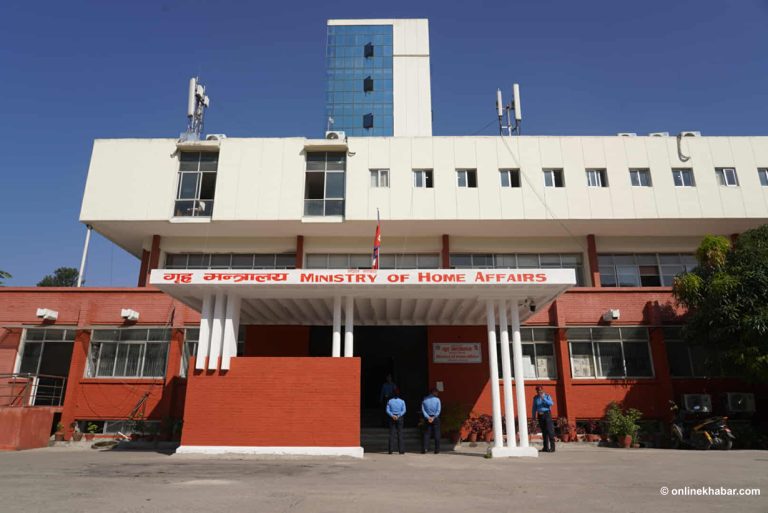
At that time, Home Minister Sudan Gurung had raised the issue in parliament on March 2, advocating that the intelligence agency should remain under the Home Ministry only.
“The NID was placed under the Prime Minister’s Office in 2018 (2075 BS), but before that, it was under the Home Ministry. Due to effective information collection, analysis, and coordination with other agencies, the government decided that the agency should remain under the Home Ministry, which led to the amendment ordinance,” said then-Home Minister Gurung.
Within a month and a half of this statement, senior leader and Prime Minister Balendra Shah from the same party brought the intelligence agency back under his own office.
During a meeting of ministers who insisted on the agency remaining under the Home Ministry, the government’s Good Governance Roadmap 2082 (2025 AD), published on March 29, recommended placing the intelligence agency under the Prime Minister’s Office.
The Prime Minister’s Office asserts the transfer follows this roadmap’s recommendation to make the agency stronger by bringing it under its supervision.
The 802-page roadmap, prepared under the coordination of Secretary Govinda Bahadur Karki, clearly suggests placing the intelligence agency under the Prime Minister’s Office.
“The department should not be shifted repeatedly between ministries but be permanently placed under the Prime Minister’s Office to ensure stability,” the roadmap reads.
It also directs the transfer process to be completed within three months to ensure institutional stability.
Only a month and a half later, the intelligence agency was under the Prime Minister’s Office again. Considering past experiences, former intelligence chief Deviram Sharma welcomed this decision.
“It was right to place it under the Prime Minister’s Office during Oli’s tenure. The interim transfer to the Home Ministry caused confusion. Now, this is again the correct decision,” Sharma said.
Competition to Empower the Agency
The struggle to position the intelligence agency as a powerful institution has led various leaders to attempt to assert control over it. Prime Minister Balendra Shah has now brought the agency under his direct supervision, as former Prime Minister Oli had done on February 28, 2018 (16 Falgun 2074 BS).
The intelligence agency, considered the government’s eyes, ears, and nose, is crucial for the government’s success through its information.
Oli had claimed that when the agency was under the Home Ministry, it was ineffective and had effectively become privatized under his direct control.
Former AIG Devaraj Bhatt emphasized the need to analyze how much power the agency gained in the eight and a half years it remained under Oli’s supervision.
“Oli moved it to his own wing because it had become ineffective under the Home Ministry – but did it improve? Did it become stronger? The answer, if sought, would be even worse,” Bhatt said.
He added that the crucial factor is not just where the agency is placed but how it is shaped. The character of the agency often tends toward misuse tailored to personal interests rather than institution building.
Despite claims of strengthening the intelligence agency, during Oli’s tenure shortcomings were evident; for instance, the agency failed to detect the indigenous peoples’ uprisings in mid-September 2020 (23-24 Bhadra), resulting in a breakdown of security systems and the collapse of the two-thirds government within two days.
During this period, it was publicly revealed that the agency had been involved in phone tapping of political leaders.
On January 27, 2021 (14 Poush 2077 BS), Maoist leader Barshaman Pun accused Oli of deploying the intelligence agency to tap the phones of political party leaders.
He claimed at an event in Rolpa Livang that “all leaders’ phones are being tapped, making it impossible to discuss confidential matters, and media is being used to intimidate leaders.”
Pun also made serious allegations that businessmen’s phones were intercepted.
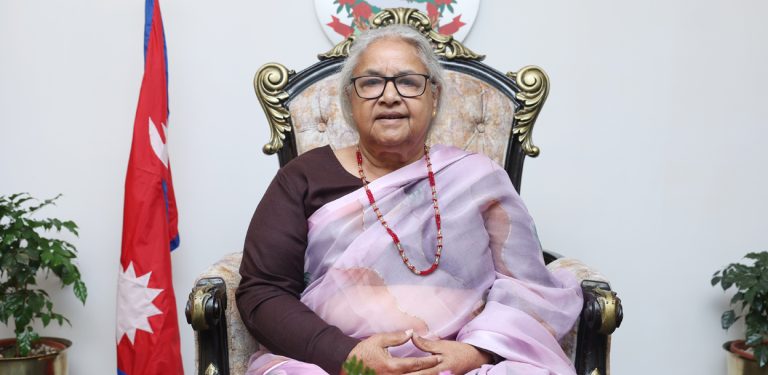
Former chairperson Sushila Karki, after making the agency powerful under the Prime Minister’s Office, had reinstated it under the Home Ministry due to concerns about misuse.
Now, with plans to strengthen the agency and place it again under the Prime Minister’s Office, fears about potential abuse are rising.
However, some intelligence personnel and officials claim this transfer is the first step toward strengthening the agency, and the new government is actively working on this.
“The Prime Minister is fully committed to empowering the intelligence agency. We have been given the task and are working on it. We believe that being under the Prime Minister’s Office will make the agency stronger,” said an intelligence official.
The agency has been misused during elections, from biased intelligence gathering favoring certain parties to monitoring opposition activities. This pattern of politically motivated abuse has been prevalent, including during the Lokman Singh Karki case, where the agency was reportedly used to intimidate individuals.
Where Should the Intelligence Agency Be Placed?
The tug of war over control of the intelligence agency has led to ongoing debate about the appropriate supervisory body. Historically, the agency has been shifted between the Police, Home Ministry, and Prime Minister’s Office.
Experts continue to debate which ministry is the best fit. Since Nepal currently lacks an external intelligence wing and the NID handles only internal security, some recommend it remain under the Home Ministry.
Others insist the intelligence agency must be under the Prime Minister’s Office. Former AIG Bhatt explained, “In principle, it should be under the Prime Minister’s Office, but in practice, the Home Ministry is more appropriate.”
While external intelligence should be overseen by the Prime Minister’s Office, the NID’s internal focus makes the Home Ministry a practical choice.
Even under the Prime Minister’s Office, the agency functions somewhat like a branch of the Home Ministry and acts under the Home Minister’s orders.
The Home Ministry even maintains a Superintendent of Police post within the intelligence agency. Former intelligence chief Deviram Sharma insists, “The head of the government must have the right to receive the first information. Therefore, the intelligence agency should be placed under the Prime Minister’s Office.”
He also advocates for two separate intelligence agencies: one for internal and one for external intelligence. External intelligence, he argues, must be under the Prime Minister’s Office.
“Where was our intelligence when the Lipulekh agreement was signed between India and China?” he questioned. “Maintaining the status quo is not acceptable.”
In India, for example, the Intelligence Bureau (IB) handles internal affairs, while the Research and Analysis Wing (RAW) leads external intelligence.
“In this globally interconnected village, Nepal needs at least two intelligence agencies,” he added.
Small incidents in foreign affairs increasingly impact Nepal, and strategic importance demands external intelligence capability. Currently, the country relies heavily on media for external intelligence.
History and Politicization of the Intelligence Agency
Though intelligence activities existed prior, the formal establishment of Nepal’s National Investigation Department originated in 1951 (2008 BS), then known as the Central Intelligence Bureau.
After the enactment of the Police Act in 1955 (2012 BS), the Nepal Police was formally established. Initially, the intelligence bureau was a division within the police department.
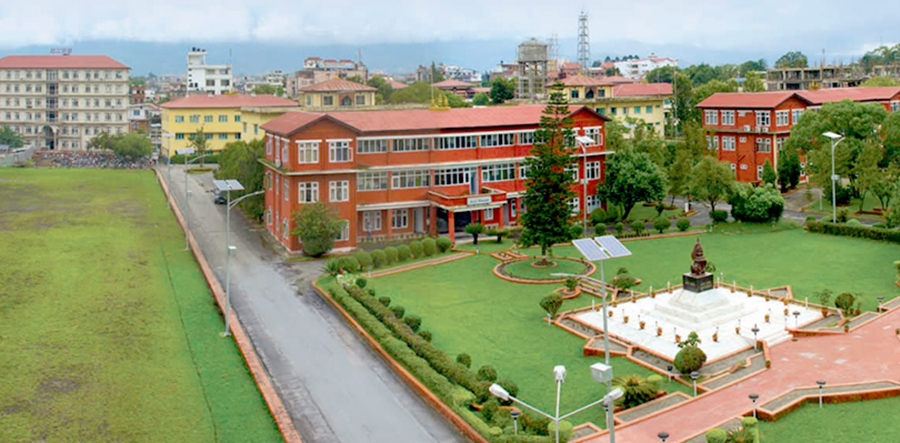
In 2015 BS (1968 AD), after six years under the police, the intelligence department was separated and renamed Nepal Intelligence Department, becoming an independent agency though still staffed by some police officers.
In 2018 BS, it was re-integrated under the Nepal Police Headquarters.
In 2023 BS (1966 AD), the agency was transferred to the Home Ministry, with its service conditions closely aligned to police regulations.
In 1983 BS, there was an attempt to rename it the Nepal Public Relations Headquarters, dividing it into (a) internal and (b) external intelligence divisions.
In 1985 BS, it was renamed as the National Investigation Department, and special service laws were passed to improve its function.
The department retains this name today and from 1990 onwards focuses solely on internal intelligence, as Nepal currently lacks an external intelligence agency.
In 1989, Home Minister Yograj Upadhyay eliminated external intelligence activities, stating such intelligence was unnecessary after democracy was established.
Political Interference by Oli and Bamdev
The intelligence department has a long history of being transferred and misused for political ends.
After the 1994 election (2051 BS), the Communist Party of Nepal (Unified Marxist-Leninist) became the leading party, and during Manmohan Adhikari’s premiership, KP Oli, as Home Minister, appointed DIG Govinda Karm Thapa as intelligence chief in 1995 (2052 BS).
Despite Thapa’s limited qualifications, Oli appointed him reportedly for political revenge, replacing Vishnuraj Pant.
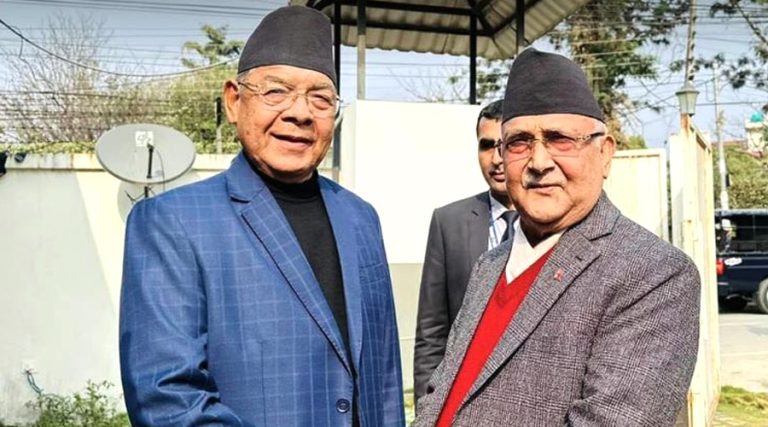
Following this, in 1996 (2053 BS), Bamdev Gautam intervened and attempted to appoint Nepal Police IGP Achyut Krishna Kharel as intelligence chief.
However, Kharel was removed from the post within 36 days, during the time when former Prime Minister Lokendra Bahadur Chand led the Rashtriya Prajatantra Party.
At that time, Home Minister Bamdev Gautam appointed Kharel while the standing intelligence chief was Haribahadur Chaudhary, who was ineffective and then transferred.
Kharel himself declined to be present at his transfer.
These events highlight a clear pattern of misuse and politically motivated replacements of intelligence chiefs.


