




News Summary
Includes editorial review.
- The government’s public debt reached NPR 2.975 trillion during the first 10 months of the current fiscal year 2082/83.
- By mid-April, the total public debt as a percentage of GDP was 45.08%, showing a decrease compared to the previous month of Chaitra.
- The High-Level Economic Reform Suggestion Commission has recommended strict prohibition on the use of internal debt for current and administrative expenditures.
May 19, Kathmandu – The government’s public debt to be repaid has reached NPR 2.975 trillion.
According to the Public Debt Management Office, the public debt size has neared NPR 3 trillion during the first 10 months (Shrawan to Baisakh) of the current fiscal year 2082/83.
By mid-April of the current fiscal year, an additional burden of NPR 532.91 billion was added to public debt, while NPR 231.92 billion was repaid during the same period. Hence, the net increase in public debt over 10 months amounts to NPR 39.9 billion, according to the office’s data.
At the end of last fiscal year (mid-July), the public debt stood at NPR 2.674 trillion. By mid-April, internal debt has reached NPR 1.381 trillion and external debt NPR 1.593 trillion.
External debt faced additional pressure this year due to the strengthening of the US dollar. Exchange rate fluctuations led to an added NPR 167.5 billion liability on external debt.
Of the total, the government itself deployed only NPR 365.16 billion in net debt during this period, with the remaining burden arising from exchange rate variations, the office stated.
Public Debt Status as of Mid-April
Internal debt: NPR 1.381 trillion
External debt: NPR 1.593 trillion
Total: NPR 2.975 trillion
New GDP Assessment Reduces Public Debt Ratio
Based on the total Gross Domestic Product (GDP), public debt stood at 45.08% by mid-April. This valuation uses the updated GDP figures announced by the National Statistics Office on May 28, 2026 (15 Baisakh 2083 BS).
The public debt ratio thus shows a decline compared to Chaitra, when it was 48.04% of GDP.
Until last month, the office calculated debt ratios based on figures of May 28, 2025 (15 Baisakh 2082 BS). The economy’s size rose from around NPR 6.1 trillion in the previous fiscal year to NPR 6.6 trillion currently, according to the National Statistics Office’s data. The external debt now accounts for 24.15% and internal debt 20.93% of GDP.
61.30% of Annual Debt Target Utilized in 10 Months
The office reported that the government has deployed 61.30% of the public debt target in the first 10 months. The total public debt issuance target for this year is NPR 595.66 billion.
By mid-April, debt issuance totaled NPR 365.16 billion, with NPR 298.66 billion in internal debt and NPR 6.649 billion in external debt deployed. The government’s targets for the current fiscal include NPR 362 billion internal and NPR 233 billion external debt issuance.
Nearly NPR 300 Billion Spent on Principal and Interest Payments
During the first 10 months, the government has already spent nearly NPR 300 billion on principal and interest payments for public debt. The office data indicates NPR 292.52 billion spent on debt servicing by mid-April.
The government allocated NPR 411.1 billion for this purpose in the current fiscal year. This reveals rising debt management costs relative to government productivity—a concern seriously noted by the Auditor General in the 63rd Annual Report.
Internal debt principal payments reached NPR 185.66 billion and interest payments NPR 5.052 billion. External debt principal payments were NPR 4.625 billion and interest NPR 1.06 billion.
In total, over 10 months, NPR 231.92 billion was spent on principal repayment and NPR 6.059 billion on interest. According to the office, debt servicing costs equal 4.43% of GDP.
Experts describe Nepal’s current public debt situation as becoming a “debtor before the nation is wealthy.” Compared to individual life, this is akin to falling into a debt trap where new loans must be taken to repay old ones. This is the current state of the country.
Public Debt Doubled in Seven Years
According to Ministry of Finance figures, public debt has almost doubled over the last seven years. Up to fiscal year 2076/77, public debt stood at NPR 1.433 trillion. Since then, it has grown substantially, now nearing NPR 3 trillion. The debt-to-GDP ratio has increased from 38.05% seven years ago to over 45% currently.
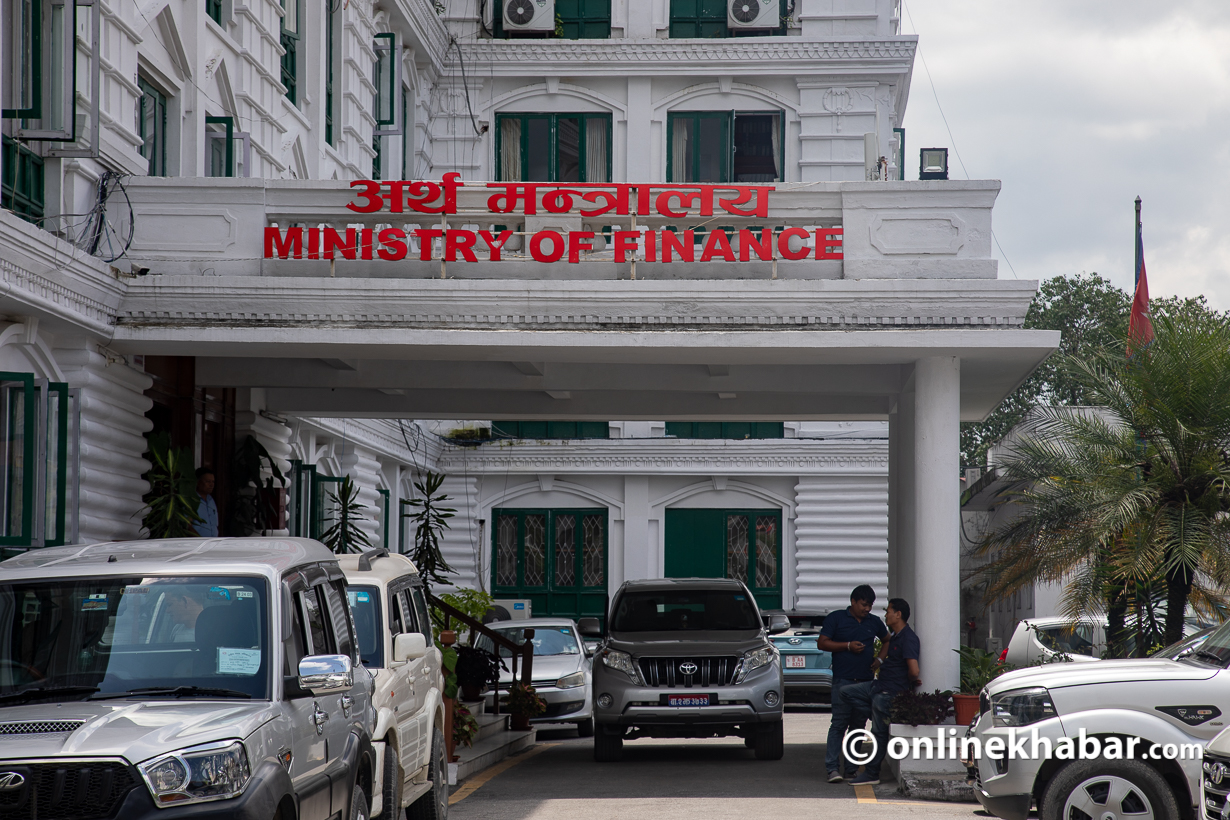
Rising public expenditure, declining foreign aid, and underperformance in expected revenue collections have continuously driven the increase in public debt.
Experts note that borrowing matched with investment in productive and capital-augmenting projects is manageable; however, the reality in Nepal is different.
Many major government projects funded by debt have failed to operate as expected, with Pokhara and Bhairahawa international airports being prominent examples.
The Melamchi Drinking Water Project, another debt-funded initiative, was not completed on time and further damaged by natural disasters. These infrastructure projects’ failure to deliver expected benefits raises questions about the effective utilization of Nepal’s public debt.
The High-Level Economic Reform Suggestion Commission, formed in 2081 BS, reported that increases in public debt volume and structure without proportionate GDP and revenue growth have escalated the burden of principal and interest payments.
The report states: “If public debt is not properly utilized, the country will increasingly fall into a debt trap.”
With rising principal and interest obligations, critical sectors like education, health, and security are experiencing budget shortfalls. Consequently, government bodies and experts recommend focusing debt deployment on capital-building sectors.
Commission Recommends Strict Ban on Internal Debt for Current and Administrative Expenses
The National Natural Resources and Finance Commission has recommended strictly prohibiting the use of internal debt for current and administrative expenses.
While defining limits for internal debt that federal, provincial, and local governments may incur in fiscal year 2083/84, the commission has issued this directive.
As in previous years, the commission has set a ceiling for internal debt at 5.5% of GDP for the next fiscal year, which the federal government must enforce. The commission further insisted on strict restrictions on using internal debt for administrative and current expenses.
“Internal debt should be allocated to projects that can create employment, yield long-term benefits, and contribute to capital formation, while current and administrative expenses must face strict limitations,” the commission stated.
In fiscal year 2081/82, the net internal debt issuance was only 1.41% of GDP. Due to increasing debt servicing costs, most internal debt issued has been used to repay existing obligations.
This trend has adversely impacted capital construction and economic expansion, the commission found. Since 2075/76, it has recommended that the government allocate internal debt proceeds toward capital formation projects.
However, Nepal’s government has yet to clearly disclose how internal debt proceeds are spent, limiting the commission’s ability to analyze debt utilization and implementation of recommendations.
The commission advises focusing internal debt only on profitable projects based on cost-benefit analysis, current evaluation, and internal rate of return.
Additionally, it recommends deploying internal debt on select social sector projects with high returns.
During the identification, development, and selection of debt-funded projects, the commission urges ensuring that project returns can cover principal and interest payments.
Internal debt should be limited to projects that promote production growth, employment creation, income increases, infrastructure development, and capital formation with proper preparatory work.
The commission further suggests that all three government tiers must explicitly mention internal debt in budget documents’ source-of-funding sections when preparing programs or projects.
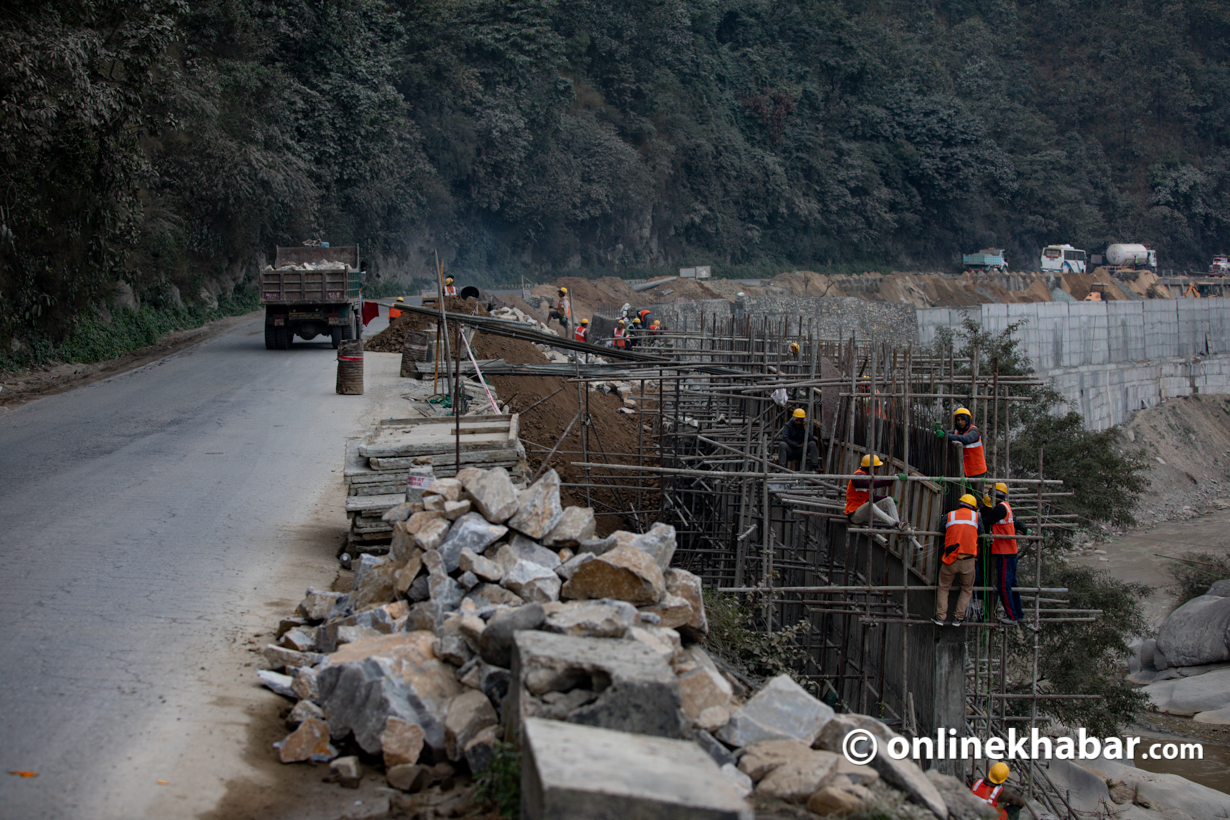
The commission also suggests establishing an integrated electronic information management, accounting, and reporting system for internal and overall public debt deployed by all three government levels via the Public Debt Management Office. It recommends providing access to the commission within this system.
It urges the three levels of government to craft internal debt and revenue improvement action plans, viewing internal debt deployment not as current revenue spending but as liabilities to be serviced by future revenue.
Auditor General’s Conclusion: Public Debt Not Spent on Capital Formation
The 63rd Annual Report of the Auditor General reveals that public debt funds have not been directed toward capital formation but instead spent on salaries, services, consultancy, and office operations.
The report highlights that the debt structure is vulnerable to external monetary influences, pointing out the failure to deploy financial instruments for managing foreign exchange risks. It recommends confining debt deployment to productive sectors.
It also notes that total revenue collection reached only about 80% of the target, exerting pressure on internal sources. Increasing debt servicing obligations have led to a rising dependence on borrowing for other expenditures.
The Auditor General suggests, “Current expenditures should be kept within desirable limits, and debt funds should be allocated to projects that yield returns.”


