




News Summary
Editorially reviewed.
- The primary reasons for the Rhododendron flowers blooming in various colors during the month of Baisakh in Tinjure, Tehrathum, are genetic diversity and environmental variations.
- The scientific name of this rhododendron is Rhododendron arboreum, and Nepal hosts two subspecies and two varieties of it.
- The government is preparing to allocate a budget in the upcoming fiscal year for road improvement and eco-friendly trail construction in Tinjure.
On Baisakh 11, I participated in a discussion at Chotlung Park in Basantapur, Tehrathum, on the topic “Impact of Climate Change on Rhododendron.” The participants included students from 10+2 level and community forest members. After the program, we proceeded towards Panchpokhari in Tinjure.
The distance was approximately 10 kilometers. The vehicle was a four-wheel drive with a ground clearance of 190 mm. Due to the rough, uneven road with potholes and large stones, vehicles with lower ground clearance face difficulty traveling this route.
This route has been trenched for over 25 years. According to government records, no matter what its official name is, locals refer to it as the “Tinjure-Gurans Route That Can Never Be Paved.” Electric vehicles were stirring up dust as they drove along. This road is challenging for domestic tourists, though the section to Rock and Rhododendron Park is paved.
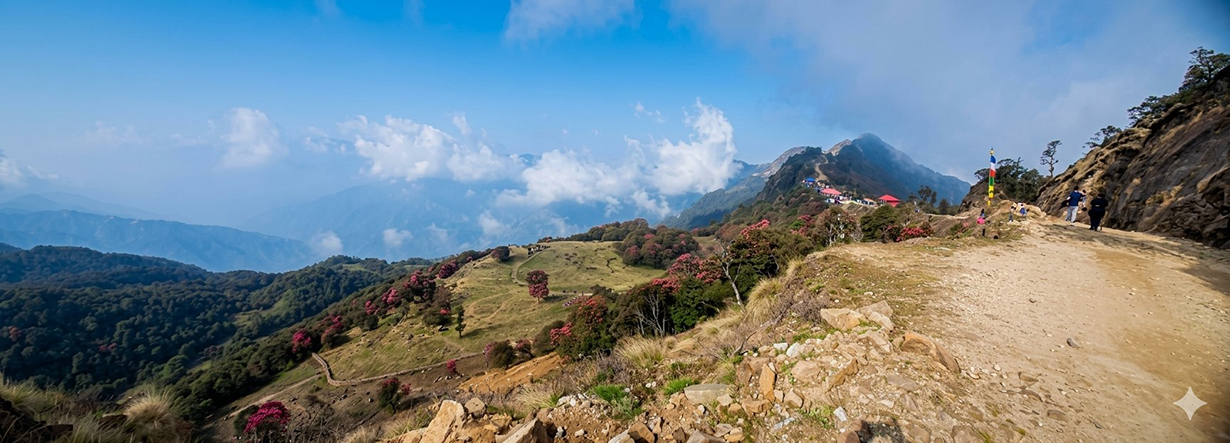
Rhododendrons were in full bloom in a variety of colors. Asking my companion Seeta Rana and son Shubhang why flowers of the same species bloom in different colors, I drove to Panchpokhari. We stayed at the homestay of Umesh Budhathoki, a Tinjure rhododendron conservationist.
On Saturday, Baisakh 12, we reached the Tinjure summit and returned to Basantapur. The forest along the road was filled with rhododendrons, making it difficult for the vehicle to move forward, leaving only space for people and motorcycles.
During the rhododendron blooming season, tourists flock to various parts of Nepal. Not only in Tinjure, but I had not imagined Nepal draws so many to see rhododendrons. Locals say, “Today, there are over a thousand four-wheel vehicles in Tinjure.” The number of motorcycles appeared two to three times greater.
Tourists were marveling at rhododendrons blooming in diverse colors. There was a large crowd making TikTok videos. We also got off the vehicle at some points to take photographs of the rhododendrons.
Last year, on Chaitra 2080, we also tried to reach Panchpokhari but had to turn back halfway due to poor road conditions; vehicles couldn’t pass. At that time, KP Sharma Oli was Prime Minister and it seemed the road would never be paved.
Now Balendra Shah is in discussion. We hoped that the road would be paved soon and continued. If the road improves, one can visit not only Tinjure but also Lampokhari, Khorunga Shir, and Gufapokhari to Milkedanda in a single day and witness diverse rhododendron species.
Misunderstandings in Perception
Photographers at Tinjure often exclaim, “Wow! So many rhododendron species are blooming here!” They mistake the red, white, pink, pale red, and pale pink flowers as different species.
But the reality is different. Only one species of rhododendron blooms in various colors in Tinjure during Baisakh. Apart from Rhododendron arboreum, another species named ‘Red Chimala’ blooms in red around Tinjure, but only a few exist toward Panchpokhari and were already in decline.
Nepalis’ limited knowledge about their national flower, the rhododendron, reflects a general lack of understanding about it. The education system of Nepal is also partly responsible. Even many postgraduate botanists cannot accurately identify rhododendron species. Therefore, it is understandable that the general public is unaware of distinct rhododendron species.
In Tinjure, other rhododendron species bloom during Jestha and Asar months, mostly around Milke Danda and Gufapokhari. In this article, I explain why Rhododendron arboreum blooms in different colors.
Rhododendron arboreum
To understand why Rhododendron blooms in various colors, it’s important to know the botanical classification of this genus and species. Scientific names derive from ancient Greek and Latin.
The English and scientific genus name for rhododendron is ‘Rhododendron.’ In 1753, Swedish scientist Carl Linnaeus coined the name from two Greek words: ‘rhodo’ (rose-like flower) and ‘dendron’ (tree).
Globally, the genus Rhododendron includes 1,096 species. Among them, Rhododendron arboreum refers to the large tree species known as the rhododendron.
British botanist James Edward Smith gave this species its scientific name in 1805, likely based on specimens collected from Nepal.
Relating to Nepal, Francis Buchanan Hamilton, an employee of the British East India Company, visited in 1802 for diplomatic reasons and gathered plant specimens in the Kathmandu Valley that were sent to India and Britain. Smith then named Rhododendron arboreum based on these samples.
A 2023 study revealed that Rhododendron arboreum in Nepal ranges from Mechi to Mahakali across hilly and Himalayan districts.
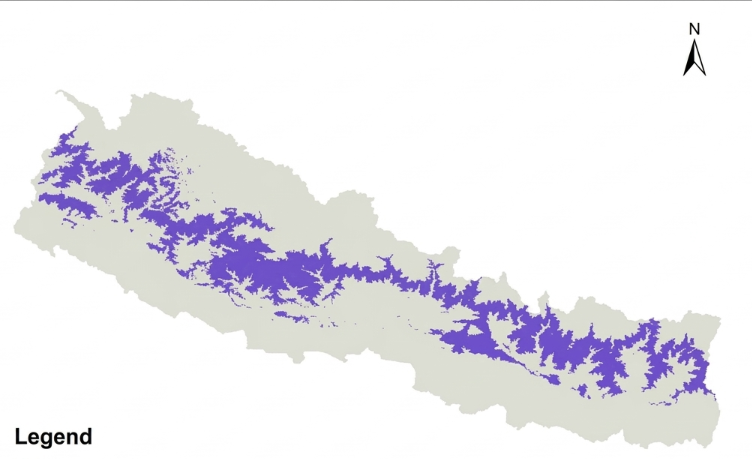
In Eastern Nepal, dense Rhododendron forests are found in Tehrathum’s Tinjure region, as well as abundant subspecies in Milke Danda, Sankhuwasabha, and Taplejung.
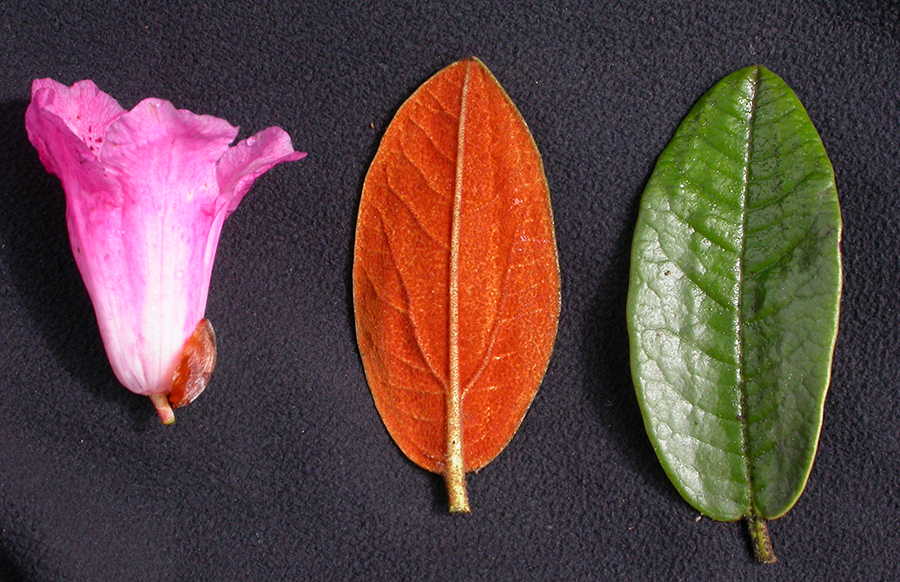
Rhododendron arboreum subspecies cinnamomeum features blackish and brownish spots on flowers and its undersides of leaves are covered with brownish compounds. This subspecies also grows in Sagarmatha National Park.
Rhododendron in Various Colors
Tinjure lies within Laligurans Municipality in Tehrathum. To get there, the route passes through Basantapur, which sits at 2,290 meters above sea level. From there, one must reach Tutedeuralai at roughly 2,510 meters, where the road splits west toward Sankhuwasabha and north to Tinjure.
At 2,540 meters, rhododendron forests begin, sometimes mixed with large oaks. In some uphill sections, rhododendron is dominant, with flowers exhibiting red, pink, pale pink, and white hues mixed together.
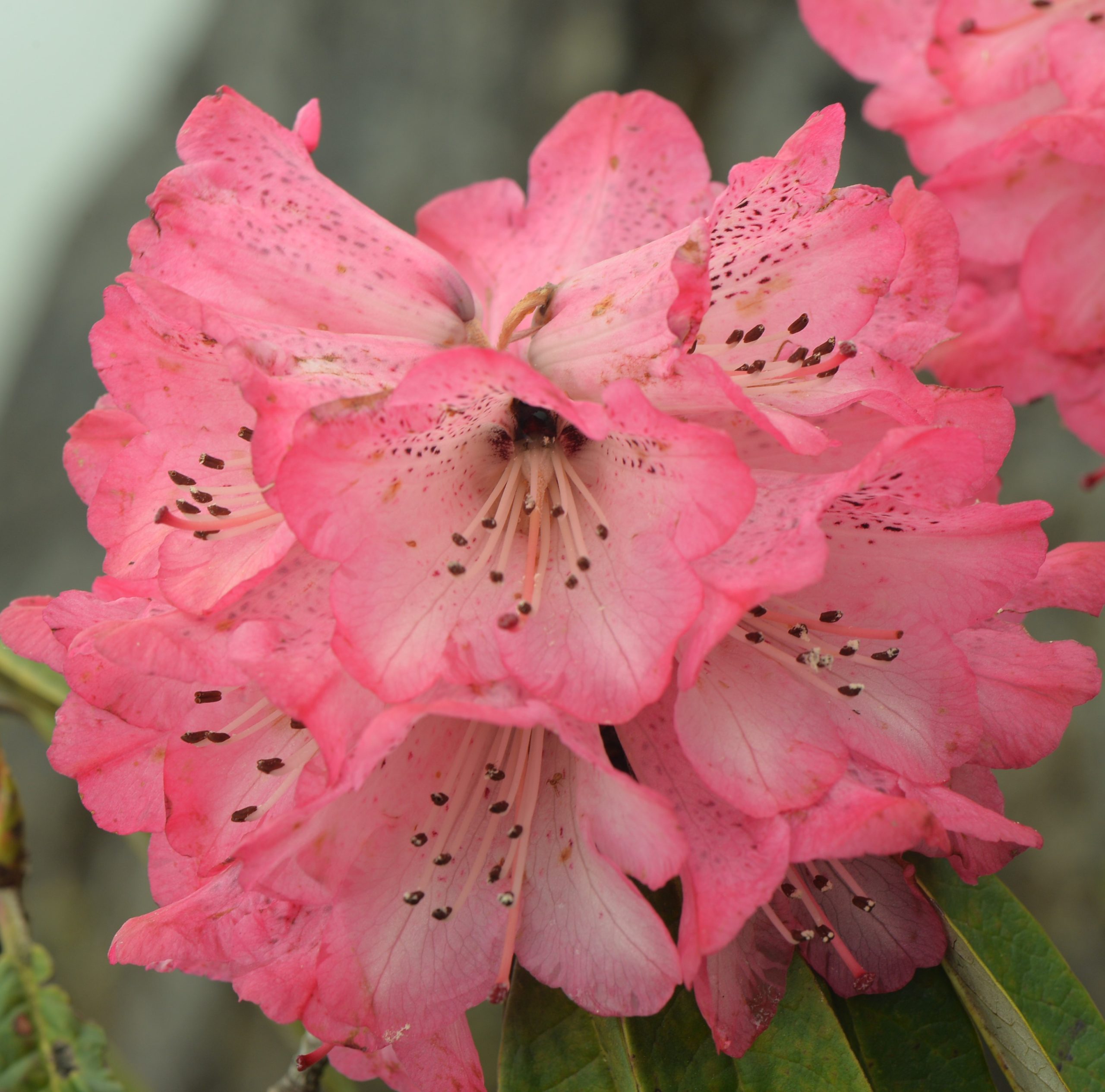
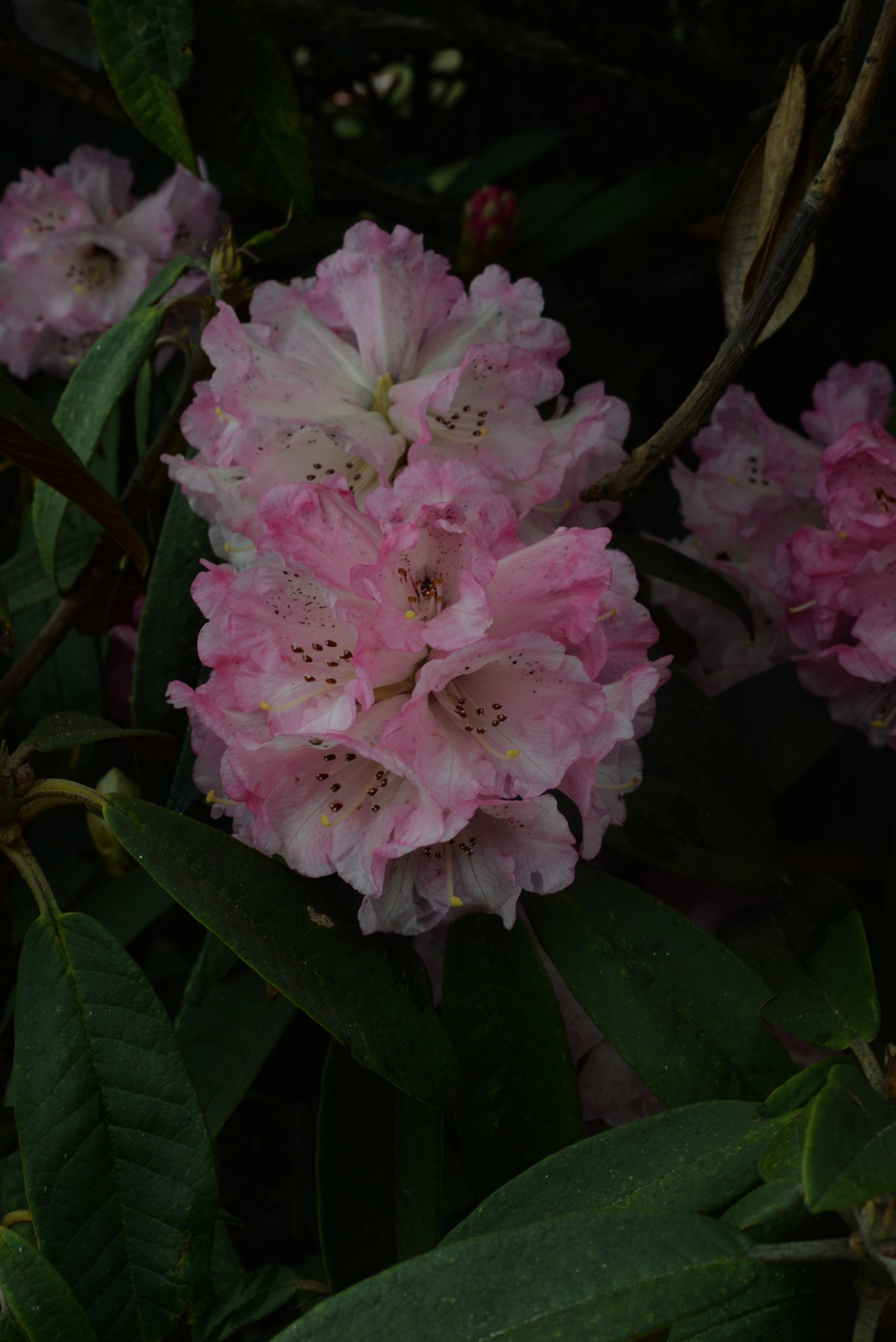
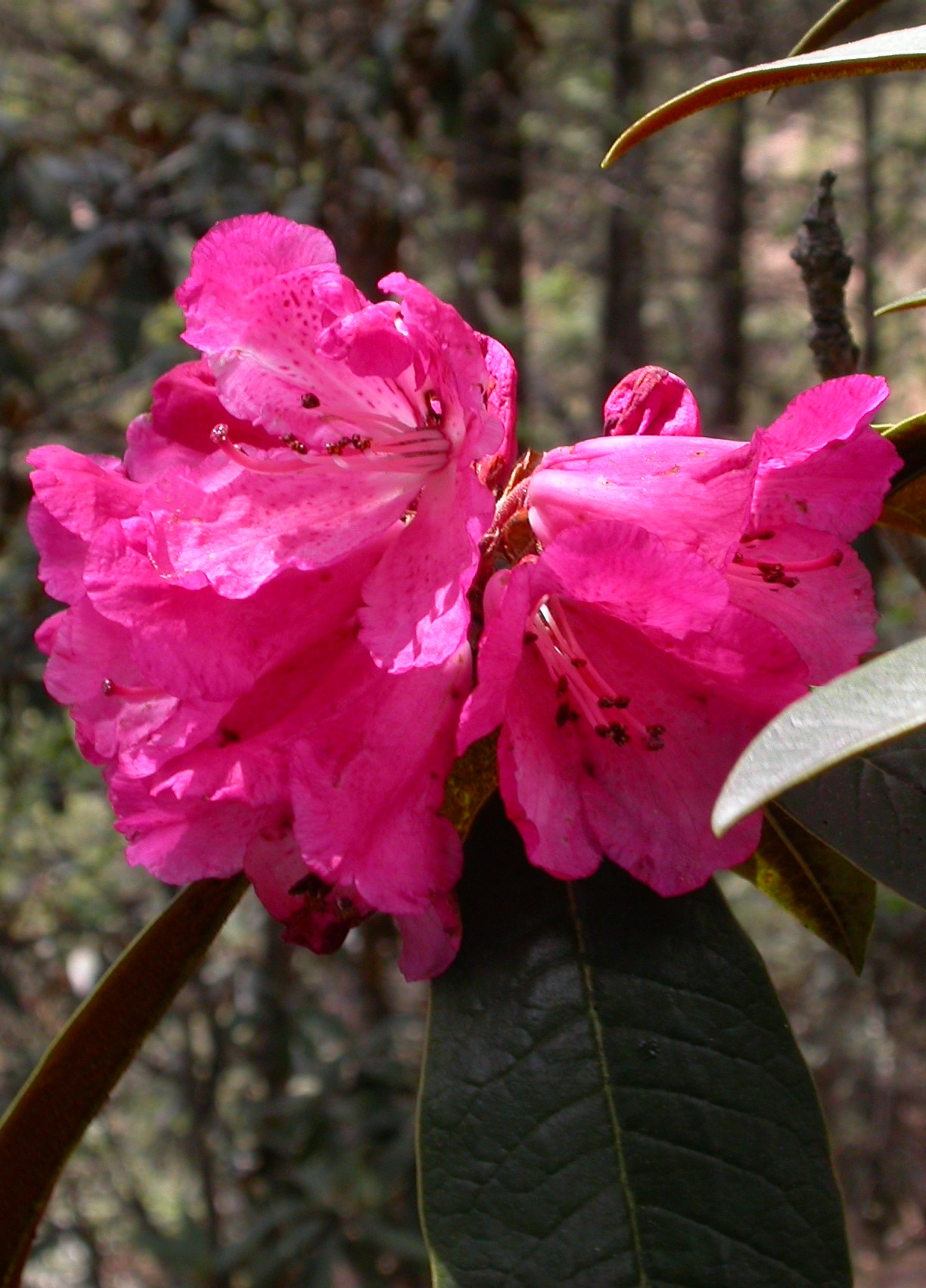
Pink flowers often blend pale pink and white tones. The petals show small brown and black spots. Pale pink and white flowers have darker brown or black spots inside.
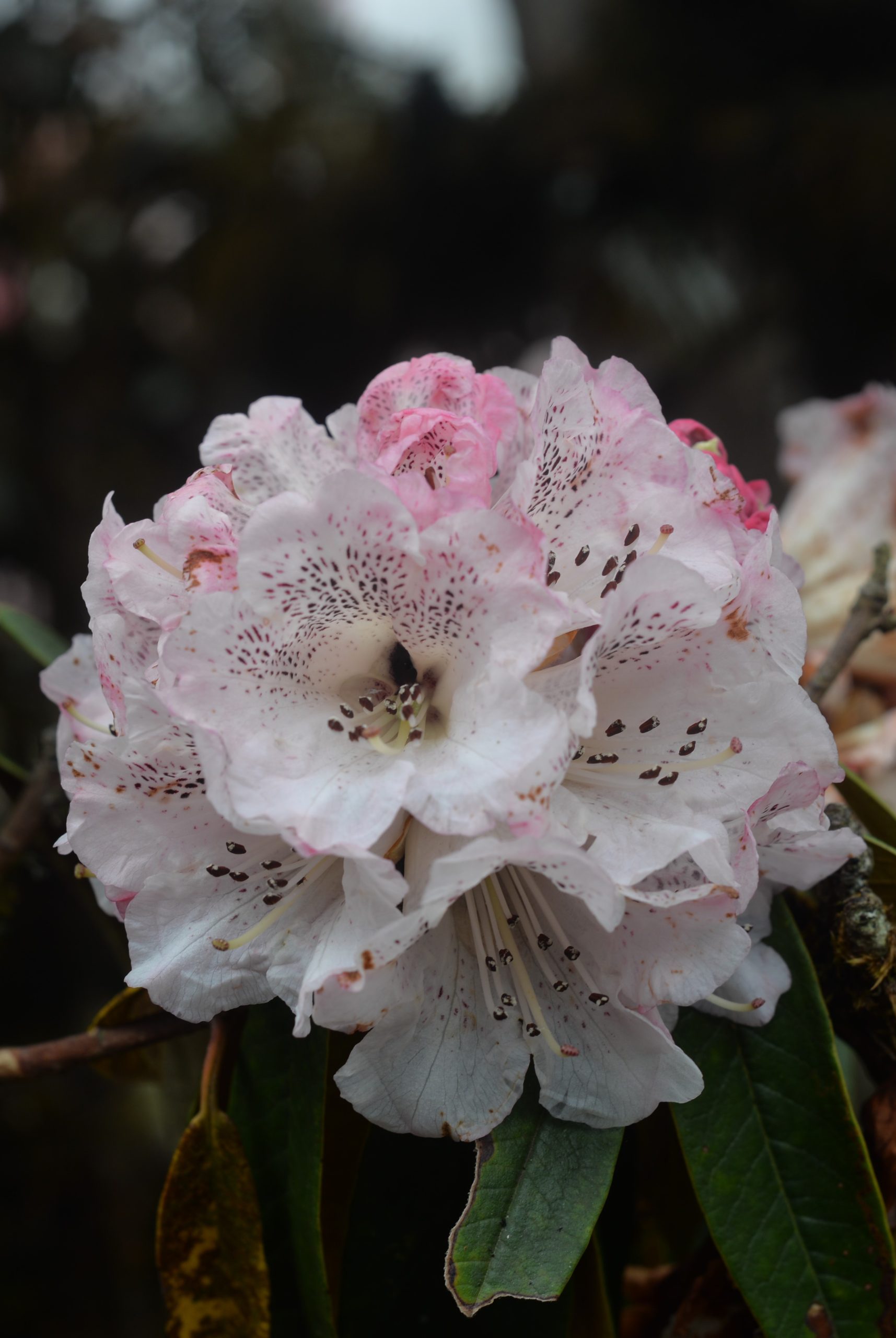
Some flowers sport a light pink color with white or pale interiors and few brown or black spots.
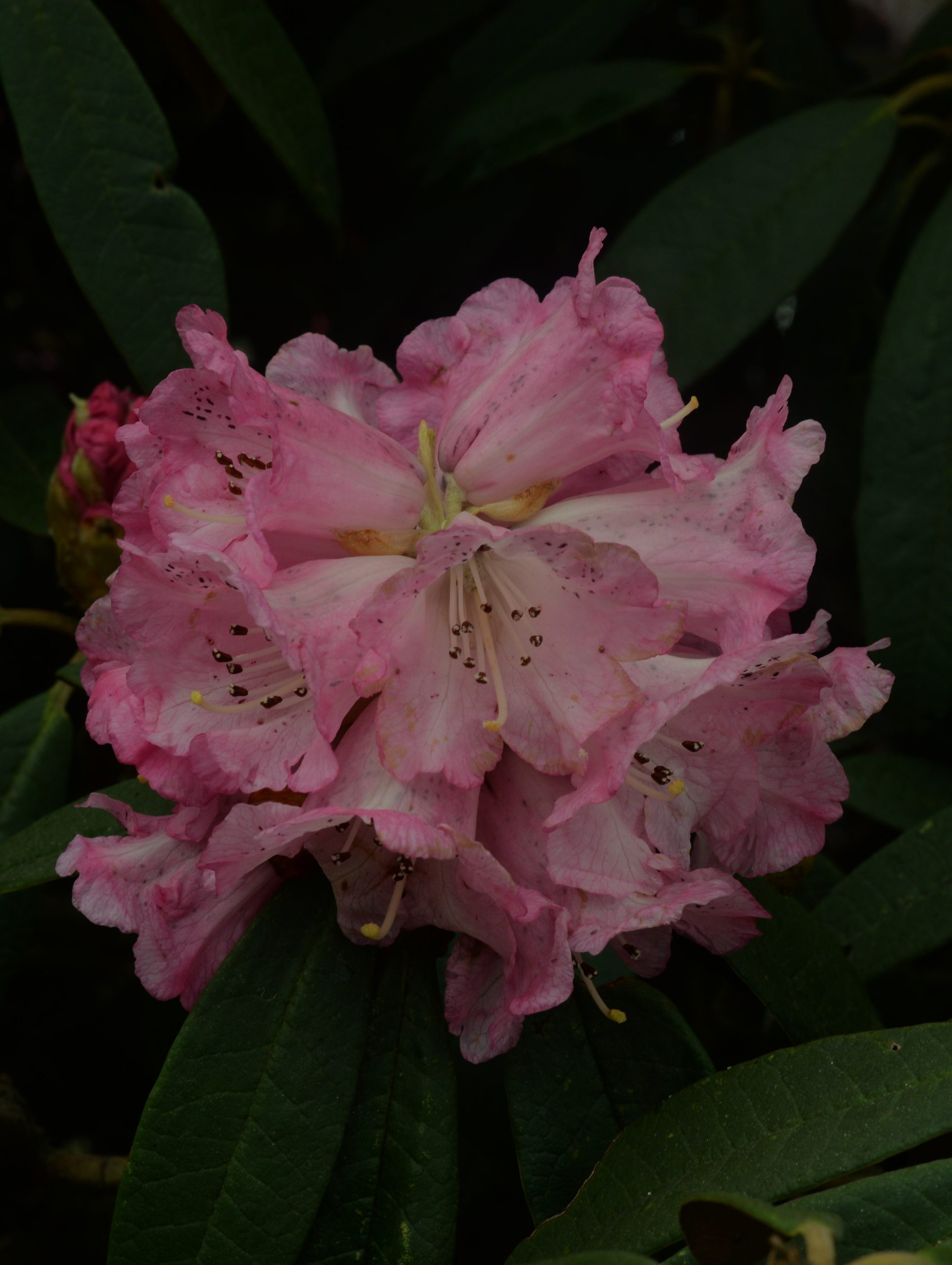
Pink flowers also appear mixed with pale pink and white inner parts.
In 1979, French mountaineer and author René de Millville photographed yellow-pink rhododendrons north of Tinjure, featured in his book ‘The Rhododendrons of Nepal.’
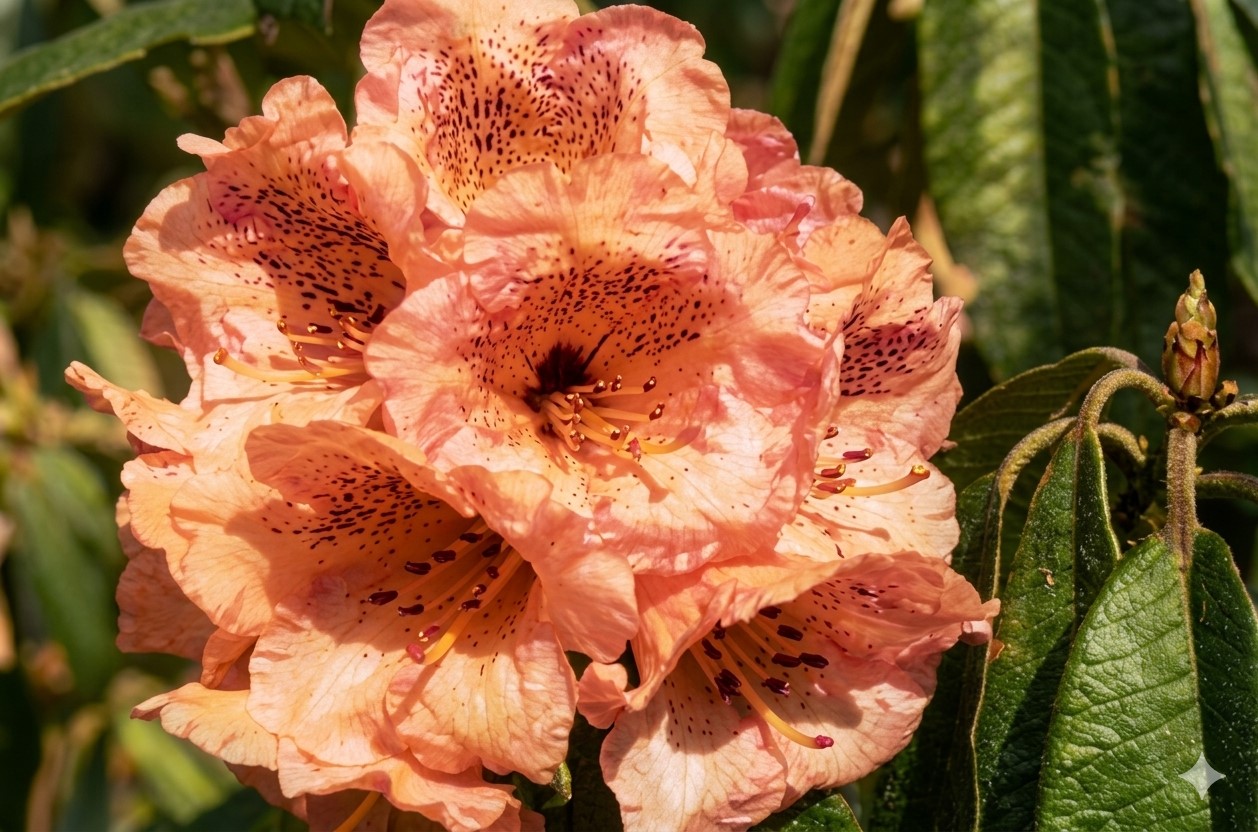
In 1993, Americans observed yellow rhododendrons at Tinjure checkpoint and Milke Danda, though I have yet to see that color myself.
In Sagarmatha National Park, researchers from the Royal Botanic Garden of Scotland photographed dark pink rhododendrons in 2004, also referred to as ‘Queen Pink.’
I personally photographed a dark red rhododendron at Phulchoki in Lalitpur in 2007, whose petals are bright red and resemble Rhododendron delavayi in appearance.
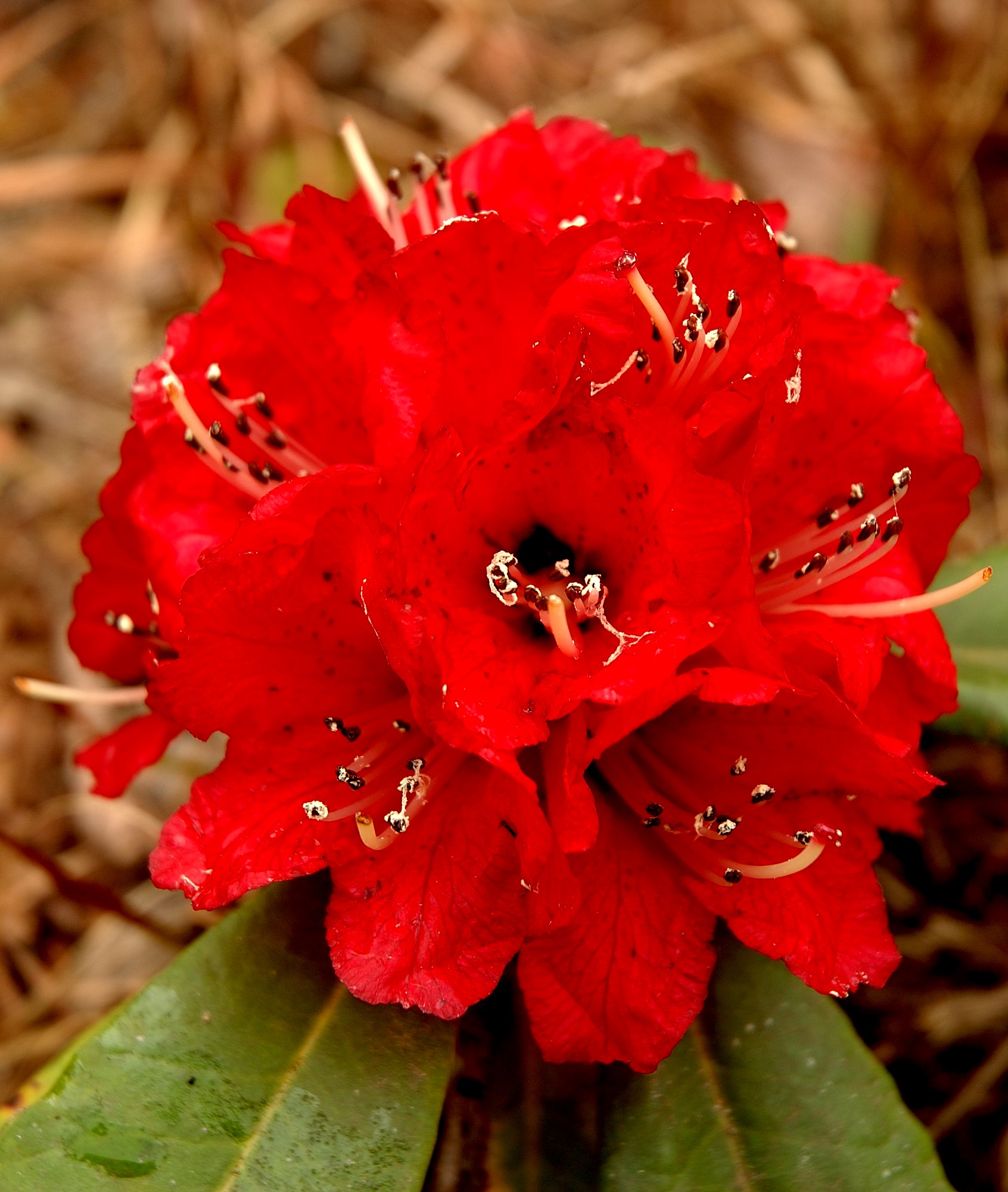
The inner parts of this flower show dark brown or black shadows that help attract pollinating insects.
In Basantapur’s Chotlung Park, roughly 10 to 12 rhododendron species are planted, but not all bloom simultaneously. Their leaves and colors vary, indicating different subspecies and varieties.
Rhododendrons such as Rhododendron dhahalhosi, grande, and lindleyi thrive at lower altitudes than Chotlung Park, preferring cool and shaded environments.
Unfortunately, some species there are poorly conserved due to insufficient fertilizer and water. Some rhododendron species found at 3,000 to 4,000 meters survive only in cool, shaded areas.
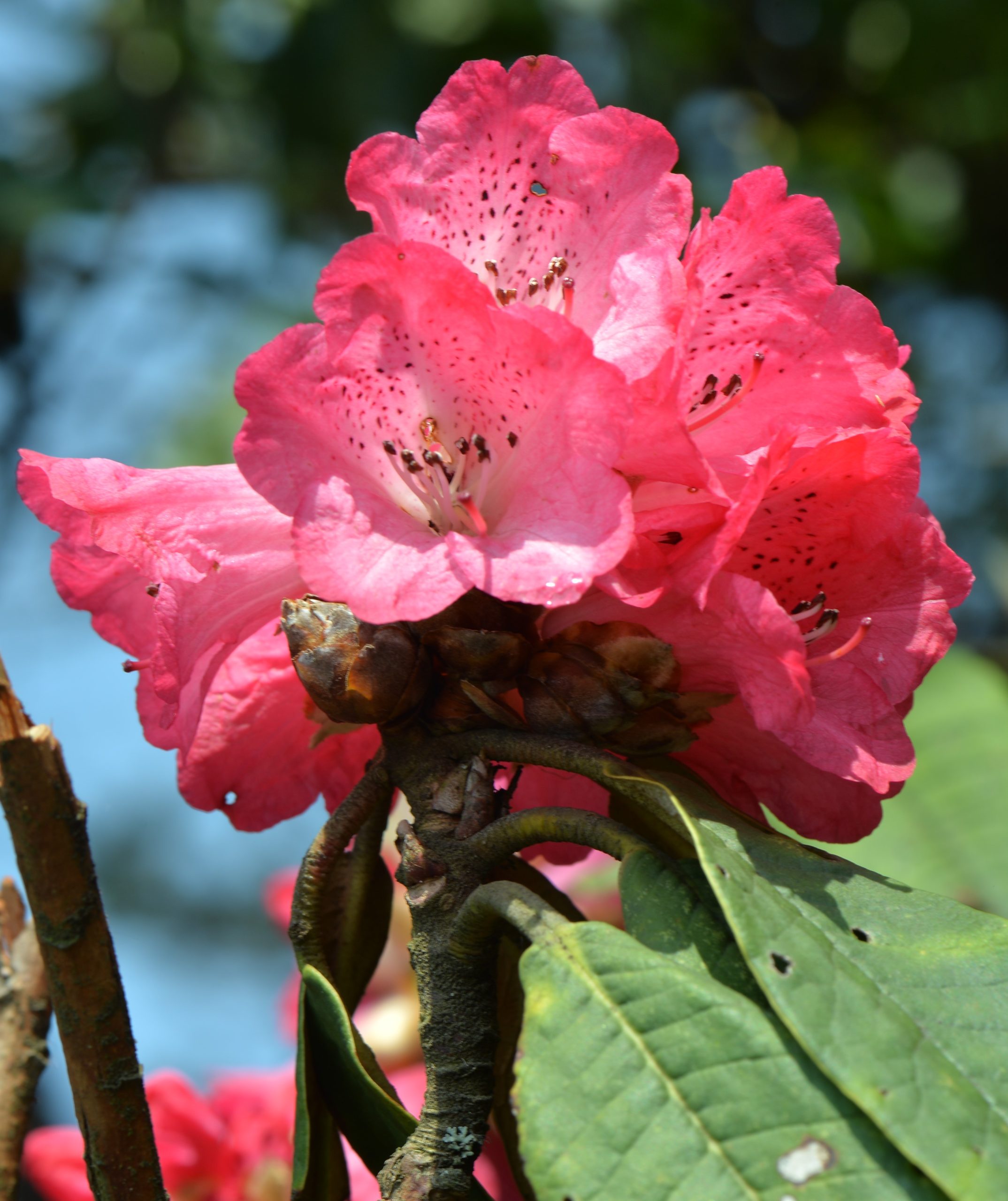
North of Tutedeuralai in Tinjure, deep pink rhododendrons bloom with darker outer petals and lighter pink-to-white inner petals featuring black dots, attracting pollinators.
Chemical Influences
Rhododendrons thrive in acidic soil, which is prevalent in Tinjure, leading to their extensive growth there. Anthocyanins and other chemical compounds play a dominant role in flower coloration.
Variations in anthocyanin levels explain different flower colors within the same species. The soil’s acidity influences anthocyanin production; if acidity decreases or soil neutrality increases, flower colors may shift to purple. Weak genes can result in white flowers.
Flavonoids and other chemical substances also contribute to color determination.
Geographical Factors
Rhododendron arboreum is found from approximately 1,100 to 4,400 meters above sea level, contributing to diverse subspecies, varieties, and local populations that exhibit notable genetic variation.
At lower altitudes, rhododendrons tolerate higher temperatures and grow in dense forests, while those in high Himalayan regions adapt to cold and ultraviolet light.
Around Bhedetar north of Dharan, rhododendrons mainly bloom red, and red rhododendrons are also abundant in the Dhankuta and Tehrathum regions.
Above 2,500 meters, lighter white or pale pink rhododendrons emerge. The varied colors in Tinjure result from its unique geography and environment.
Different environmental conditions affect the biochemical processes responsible for flower pigment synthesis, leading to color variations within flowers even in a single location.
Crossbreeding and Pollination
Rhododendron flowers possess both male and female reproductive organs. The female stigma is long and prominent, while there are ten ridged stamens.
Pollen grains on the stamens adhere to bees, bumblebees, and small birds when they visit the flower for nectar, transporting the pollen to the stigma.
When pollen grains reach the stigma and then the ovary during fertilization—a process called pollination—it results in crossbred plants that may produce flowers of varied colors.
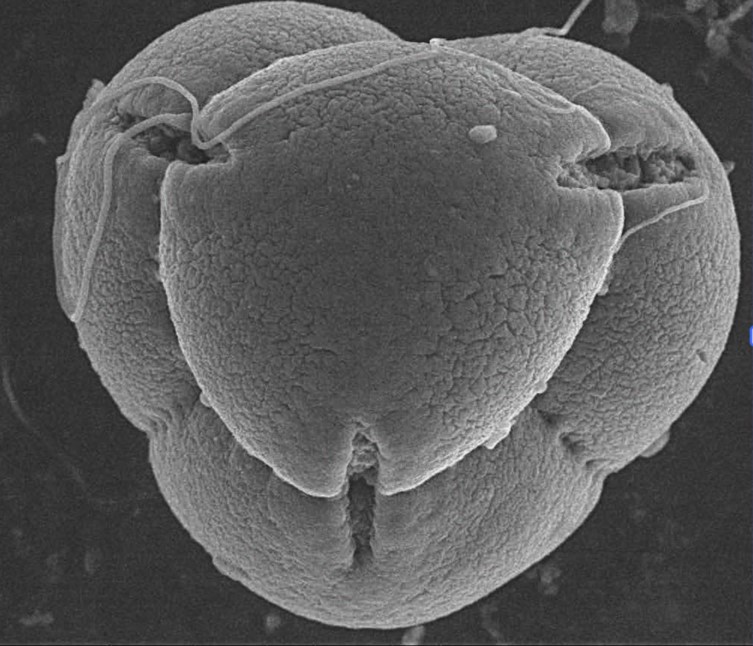
A 2016 study captured images of rhododendron pollen grains using scanning electron microscopes.
Pollen grains have thread-like, sticky structures easily attaching to bees and insects. The stigma contains a sticky substance covering pollen grains to promote pollen tube growth.
The pollen tube reaches the ovary and develops the embryo and seed.
The pollen’s outer layer is very tough, containing sporopollenin, a durable organic material allowing long-term preservation as fossils.
In Nepal, excavations have uncovered rhododendron pollen fossils dating from 2.5 to 1 million years ago around the Kathmandu Valley, indicating ancient rhododendron presence. Tinjure’s rhododendrons likely expanded from southeastern China.
Subspecies and Varieties
Rhododendron arboreum is native to India, Myanmar, Nepal, Pakistan, Sri Lanka, and Tibet. Globally, it has five subspecies and two varieties, but only two subspecies and two varieties are found in Nepal.
Nepal’s subspecies include Rhododendron arboreum subsp. cinnamomeum and Rhododendron arboreum subsp. arboreum. The varieties are Rhododendron arboreum var. album and var. rosium.
Table: Rhododendron arboreum Taxa
| Subspecies | Variety |
| Rhododendron arboreum subsp. cinnamomeum | Rhododendron arboreum var. album |
| Rhododendron arboreum subsp. arboreum | Rhododendron arboreum var. rosium |
These taxa differ in flower color, leaf texture, height, and microenvironment adaptations. For example, var. album has white or pale pink flowers, while var. rosium bears flowers with pink shading.
Evolution and Distribution
Fossil evidence suggests that the rhododendron genus originated around 60.5 million years ago in Alaska, USA. Subsequently, it spread from Siberia into Asia.
Rhododendron remains are also found in Europe, related to Himalayan plant expansion. Via the Bering Land Bridge, humans also migrated from Asia to America.
In the Himalayan-Hengduan mountain range, rhododendron diversification and expansion have been ongoing from 23 million to 5 million years ago.
Rhododendron arboreum likely originated about 5 million years ago in the Hengduan range and expanded into the Himalayas about 2.5 million years ago.
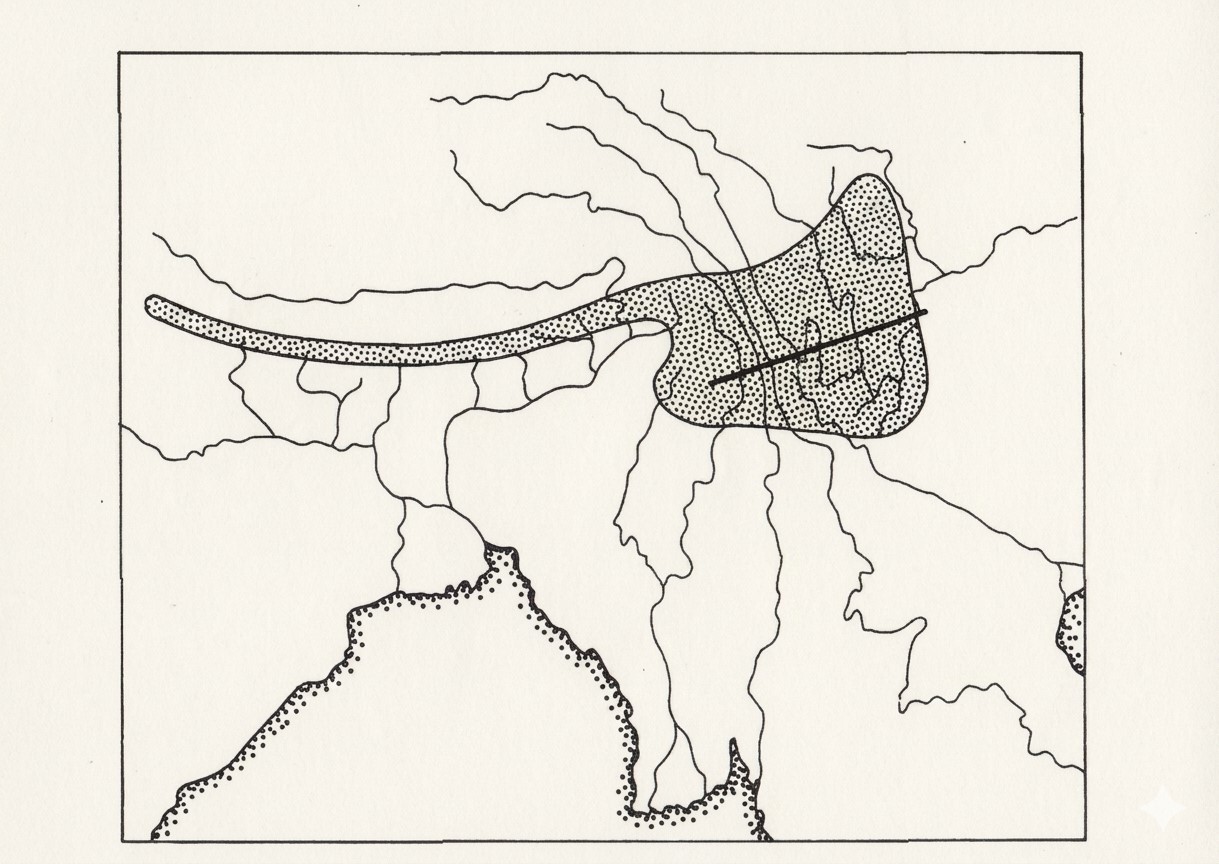
Currently, 32 rhododendron species are recorded in Nepal, but not all are closely related genetically to Rhododendron arboreum. Molecular and phylogenetic studies place Rhododendron and Rhododendron delavayi as closely related evolutionary clades.
Rhododendron delavayi has not yet been found in Nepal but is present in India, China, Myanmar, Thailand, Tibet, and Vietnam. Its distribution near the eastern Himalayas suggests it might be found in parts of eastern Nepal.
In conclusion, the diversity of Rhododendron arboreum in Tinjure and Milke arises from genetic variety, micro-environmental factors, and indigenous populations that have evolved over time.
Other parts of Nepal show less diversity due to lower variation in these elements and less favorable environmental differences. In Tinjure, Rhododendron arboreum has evolved in multiple environments, ranging from 2,200 to 3,000 meters above sea level over 1.5 to 2 million years. This long evolutionary process prevents uniform flower color, leading to reds, pinks, whites, and purples blooming together.
This area is the most favorable habitat for rhododendron diversity. Nearly 30 of Nepal’s 32 recorded species are found here; the remaining two native species occur only in central and western Nepal.
Tinjure stands proven as a region of exceptional, colorful rhododendron abundance. Despite the variety of flower colors, only two subspecies and two varieties occur here.
Rhododendron cinnabarinum in Tinjure also blooms in three to four colors.
Detailed microscopic studies of Tinjure rhododendrons might uncover new varieties including Rhododendron arboreum subsp. nilgiricum. Overall, Tinjure’s rhododendron color diversity makes it a key global biodiversity hotspot.
The government should prioritize tourism development in this region. The central government must include budgets for road improvements and eco-friendly trail construction in Tinjure.


