




News Summary
Editorial review completed.
- Former State Minister Bimala Bik shared that even after serving as minister and member of parliament, she faced difficulties securing housing due to being Dalit in Kathmandu.
- Deepa Nepali’s case against caste discrimination by landlords in Kathmandu has been pending for four years in the Supreme Court.
- Devraj Bishwakarma, Chairperson of the National Dalit Commission, revealed that due to legal complications and growing distrust, many in the Dalit community are resorting to changing their surnames.
After being elected as a proportional representative MP from Bardiya following the 2074 (2017–18) elections, Bimala Bik moved to Kathmandu. She needed a place to live. Although she had a voice in parliament, she did not have a roof over her head in the capital. She approached various homes looking for a room, but as the city expanded, landlords’ mindset remained narrow.
Landlords would ask immediately upon opening the door, “Who are you? Where are you from? What is your caste?”
Once they learned her caste, most landlords’ expressions changed. They would not directly offer a room and would instead say, “Let us consult and get back to you,” but then would never respond. After many attempts and with help from close friends, she finally secured a room in Anamnagar.
She lived there for some time. In 2077 (2020–21), she became a State Minister. Despite holding higher office and responsibilities, she was not freed from social discrimination.
As a minister, government rules typically allow residence with police and military security personnel. However, the landlord of her residence would not permit security guards. The government did not provide housing for state ministers either. Similar to when she was an MP, she faced the same hardship finding accommodation.
When searching for flats, landlords would wrinkle their noses and plainly say “No” upon learning she was Dalit.
But after hearing initial responses and observing the treatment after revealing her caste, Bimala easily understood that caste was the reason they refused her rooms.
“At first, they said rooms or flats were available, but after asking my surname, they’d say ‘Let us think about it’ and then delay. The behavior made these things clear,” said Bimala, a central committee member of UML, recounting her experience.
Despite becoming a minister, the caste-based discrimination persisted, forcing her to stay forcibly in a minister’s quarter in Pulchowk. The room was registered under another person’s name who was on leave at that time, and she was compelled to occupy the room.
Even now, while serving as a central member of the country’s third largest party, discrimination has not ceased.
She recalled a recent incident: after liking a flat at Ghattakulo and trying to negotiate rent, the landlord called back saying, “Someone else already took it. There is no flat available.”
After internal discussion, she understood the decision was reversed because she was Dalit.
According to Bimala, there are many such incidents.
Asha Bik, also a parliamentarian since 2074, had similar experiences searching for housing. Former MP Kalludevi Bishwakarma has reported several occasions where landlords evicted or refused due to her Bishwakarma surname.
“If ministers and MPs have to endure this, how is the situation for ordinary Dalits — whose names are unknown, without position, and unheard? When will their stories be publicly recognized?” asked former MP Bimala Bik.
000
Deepa Nepali came to Kathmandu from Kailali for higher education. While pursuing her master’s degree at Tribhuvan University, her dream was to become an officer or lawyer and bring happiness to her family. However, upon entering the city, circumstances were difficult. The first challenge was finding a place to stay. She was left frustrated and hopeless due to discrimination and inability to secure a room.
In Mangsir 2076 (Nov-Dec 2019), she rented two rooms in the Hill neighborhood of Tarkeshwor Municipality Ward No. 10, NepalTar, from Research Officer Shrikrishna Bidari’s home. Radika Bidari, Shrikrishna’s wife, booked the rooms with a 500 rupees advance on Mangsir 10. It took two days to paint the rooms.
“People from Sudurpashchim are simple; I will give it to someone like you who intends to stay 4-5 years,” Radika told Deepa. When Deepa went with friends to keep her belongings after painting, the landlord’s daughter Sharmila introduced herself. Deepa then shared her full name and background.
Once her identity was revealed, the atmosphere changed abruptly. Early next morning, the landlord knocked and said, “You all belong to a lower caste. Because the surname is unknown, we cannot let you stay here. Since my father passed away, the house needs purification. Society will be affected as well. You must leave immediately.”
Life then became difficult for Deepa. The landlord and tenants downstairs cut water supply, increased electricity bills, issued threats, and tried to physically assault her. Eventually, she was forcibly evicted.
She had to struggle extensively to find rooms afterward. Some Dalit friends even suggested changing surnames to secure housing. Deepa says many people change their surnames to survive in Kathmandu, but she refuses to hide her identity.
After the first eviction, Deepa did not remain silent. She filed a complaint at Balaju police station, but there was no action. She then held a press conference to publicly expose caste discrimination; some media outlets covered her case. She submitted audio evidence to the Ministry of Home Affairs and Attorney General’s Office.
Finally, on Falgun 22, 2076 (March 6, 2020), a case for caste discrimination was filed against Shrikrishna Bidari, Radika Bidari, Jankaraj Dhungana, and Santosh Dhungana. While fighting the case, Deepa’s education suffered. She ran between judicial offices with books in hand. The case remains under consideration in the Supreme Court.
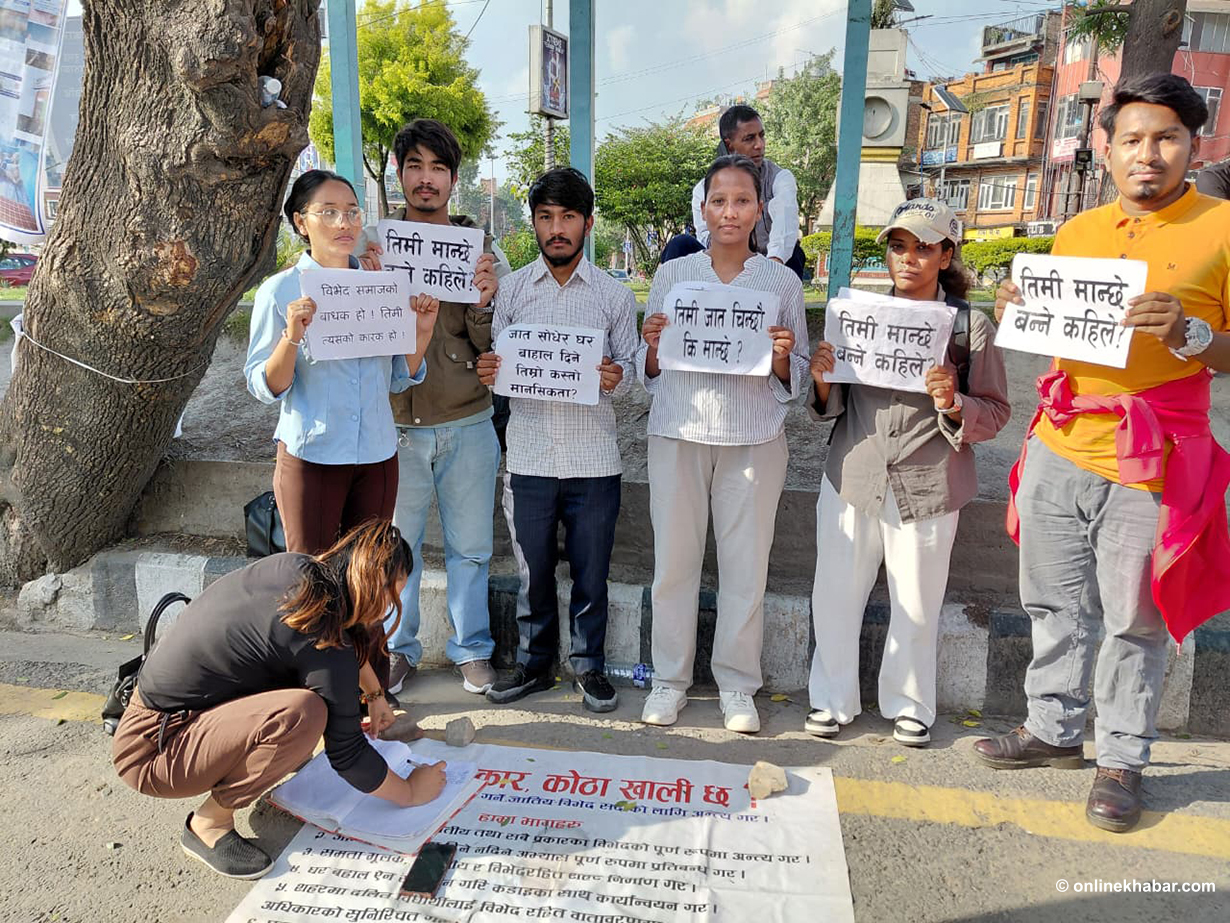
She knocked repeatedly on the door of justice while having to move rooms eight times. Every time the new landlord learned about the prior incidents, pressure mounted to vacate the room.
Carrying few belongings, Deepa shifted from Kailali to Kathmandu numerous times. Her study and environment both deteriorated; she could not complete her master’s studies or public service preparations. Her siblings also suffered mental stress, leading two of them to halt their studies for two years.
“Once they know I am Dalit, no one rents a room. Even today discrimination persists,” said Deepa, who staged a long symbolic protest. “Some people are afraid to join protests because they fear landlords might recognize their photos or videos. I know many friends who have changed their surnames to live here.”
Deepa has observed that protesters often identify Dalits by referencing individuals like Rupa Sunar, another discrimination victim who struggled to find housing and fought a legal case.
She is angered at society labeling her with a ‘dollar tag’ for fighting against insults and injustices she has faced.
Deepa shares names of many Dalit friends currently seeking rooms in Kathmandu, including Kiran Bik, Nirjan Bik, Bimala Bik, Jaumati Nepali, Laxmi Century, Kailash Bik, and Prakash Khati. She states, “Most Dalits still endure discrimination in this city. Imagine what conditions in villages must be like.”
Increasing Trend of Surname Changes
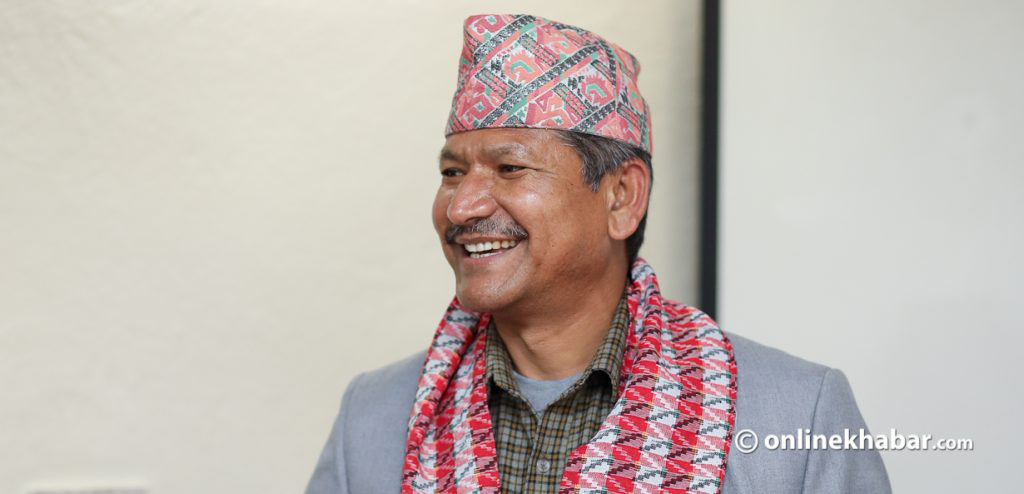
Devraj Bishwakarma, Chairperson of the National Dalit Commission, said there is no concrete data on how much pain Dalits endure or the number of complaints submitted.
According to him, recently, rather than filing complaints, an increasing trend of changing surnames has emerged. Many are adopting surname changes in citizenship documents to avoid legal complexities.
This is partly due to the complicated process of gathering evidence under law and growing mistrust of police and judiciary. Many prefer the easier path by altering their surnames.
“Because of lack of trust that police and judiciary will help Dalits, many opt for other means, including surname changes,” he said. “The commission currently lacks precise data on surname changes.”
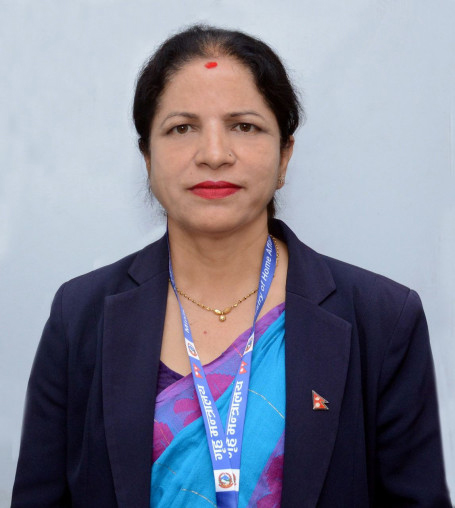
Though surname change trends have increased, Rama Acharya, Information Officer at the Ministry of Home Affairs, stated the ministry holds no specific data on this. Districts maintain their own records, but there is no centralized database at the ministry.
“Districts keep their records independently, but we have not compiled them all,” she said. “Since surname change procedures have recently become easier, the numbers may be rising.”
‘Room Finders’ Hide Discrimination Even More
A mediator in Bhaktapur known as a ‘room finder’—someone who helps find rooms for rent—said caste discrimination remains prevalent in the housing rental process.
Speaking informally but refusing to reveal his name, the mediator said landlords are pre-informed about the caste of potential tenants and instructed accordingly.
“This morning, someone came looking for a room but said Dalits and women won’t be accepted,” he said. “Many such cases occur. It pains us, but we must work like this because it’s a business.”
Regarding how to verify identity since some people provide only surnames, the mediator said they use QR codes to obtain advanced information and confirm real identity.
Because photocopies of citizenship documents are demanded, clients sometimes complain if incorrect information is provided; hence, they try to verify themselves or meet in person before finalizing.
Former MP Bimala Bik explained that when mediators discriminate, it conceals caste bias and makes it more dangerous.
“Intermediaries openly say, ‘You’re fine but being Dalit, landlords won’t accept you.’ If they didn’t say this, we wouldn’t know about this mindset. Now discrimination is hidden in intermediaries, which is more dangerous,” the former MP said.
Deepa Nepali’s experience is similar. Earlier it was easier to fight discrimination when one directly sensed landlord bias; now mediators cover it up. “Even now, Dalits find it difficult to get rooms in Kathmandu. Landlords tell ‘room finders’ not to mention lower castes, so they show rooms without revealing identities. This covert discrimination worries me,” she said.
For these reasons, Deepa urges that every house should display a sticker reading ‘Discrimination-Free Home.’ She believes just as signs warn of dogs outside homes, stickers declaring ‘Discrimination-Free Home’ would reveal landlords’ true attitudes.
“Others fear dog bites, but our fear is landlords asking about caste. That’s why every home must proudly place such stickers. This will make it clear who is prejudiced,” she added.


