




News Summary
Editorial review conducted.
- Due to financial difficulties, the Health Insurance Board has suspended non-emergency services at 36 private hospitals and medical colleges nationwide.
- Executive Director Shakuntala Prajapati stated the decision was compelled by rapidly increasing financial liabilities.
- To resolve the financial crisis, the board is preparing to change the payment system by implementing the ‘DRG’ package model.
May 26, Kathmandu – Following a financial crisis in the health insurance program, the Health Insurance Board has cut back services offered at private hospitals.
The board has announced that, until further notice, non-emergency services at private health institutions will remain suspended based on the ongoing financial difficulties.
In a meeting held on May 24, the board decided to halt OPD (Outpatient Department), diagnostic tests, surgeries, and medication services at 36 private hospitals and medical colleges affiliated with the health insurance scheme nationwide.
Shakuntala Prajapati, Executive Director of the Health Insurance Board, explained that the decision was inevitable due to mounting financial burdens on the board.
According to the board, claims have reached 1.8 billion NPR by the end of April, with a review of claims through mid-December already completed. Payments amounting to 800 million NPR for service providers remain outstanding only up to mid-December.
“The financial obligations have increased significantly. If the government had ensured timely financial support, service suspension could have been avoided,” Prajapati said. “This is a short-term measure. Once the financial condition improves, services will resume.”
The board reports that an average of 200 to 250 million NPR in claims arrive each month. However, officials say that without necessary financial assurance from the government, sustaining uninterrupted service is not feasible.
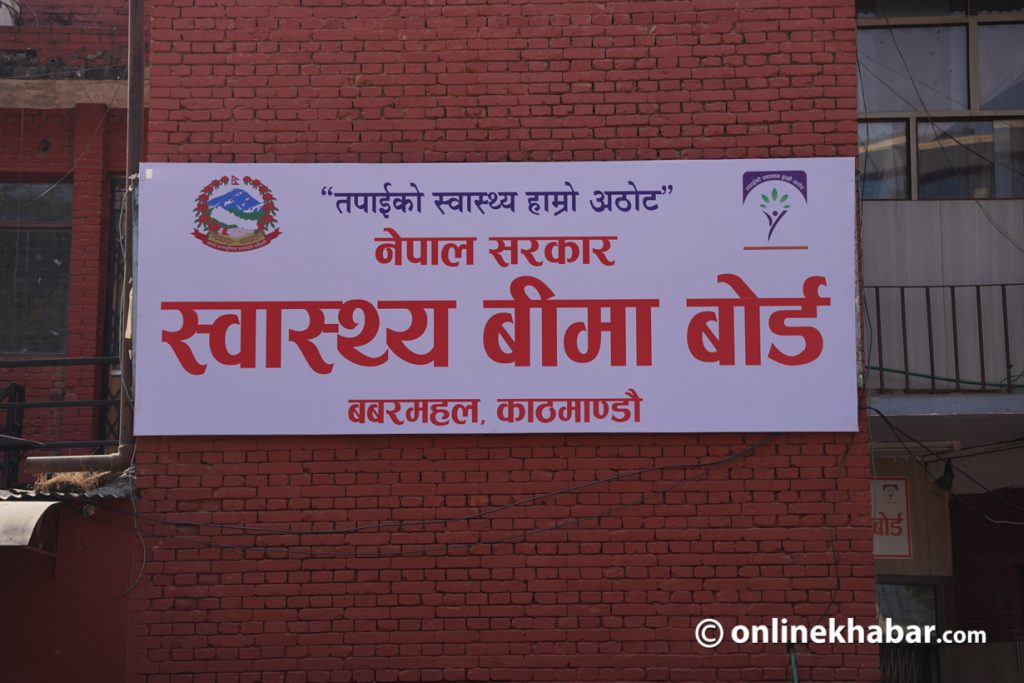
Running the program annually requires around 2.5 to 2.6 billion NPR, but there is a significant gap between income and expenditure. Premiums collected from the insured amount to roughly 400 million NPR annually while the government provides an annual subsidy of 1 billion NPR, which still covers less than half of the total expenses.
Prajapati added that the board bears the financial liabilities for services already rendered to private hospitals, yet the government has not committed to a timeline for releasing funds, prompting the board to reduce expenditures.
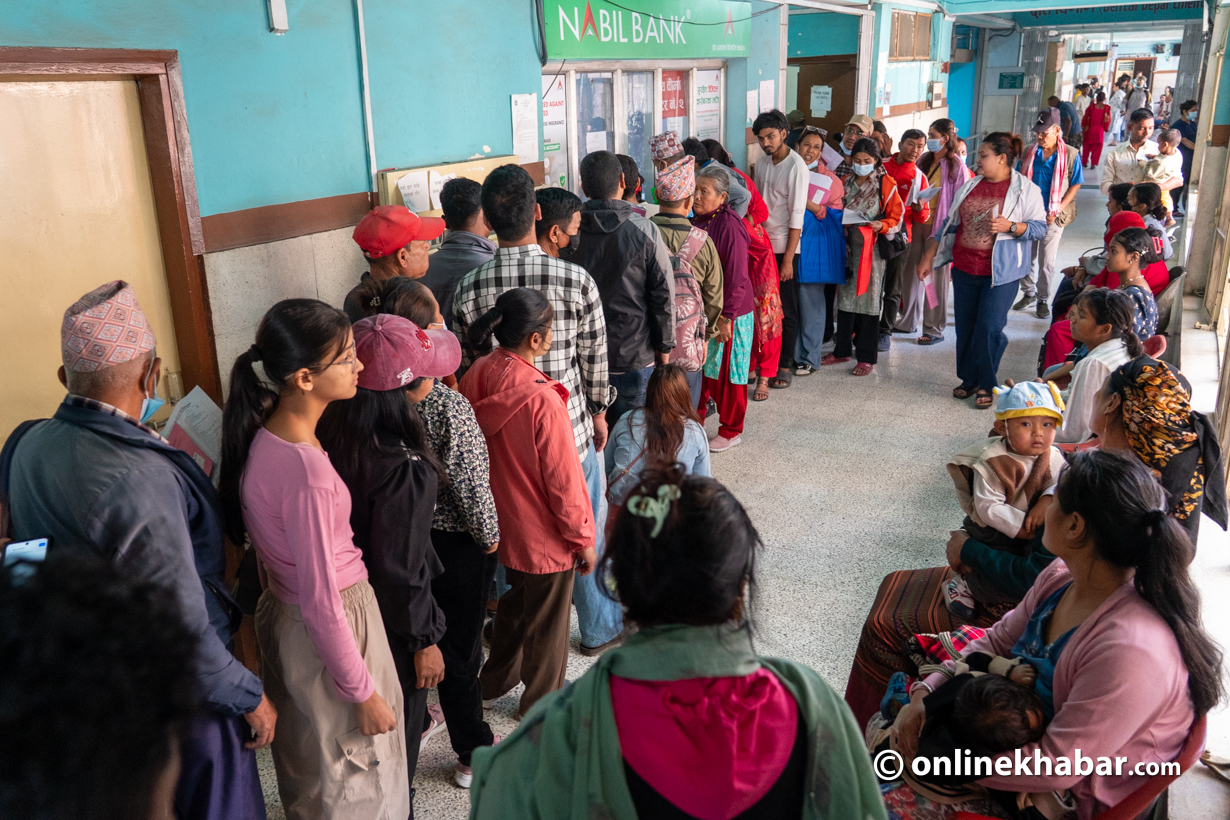
Concerns have been raised that the closure of services in private hospitals will increase the burden on government hospitals, which already struggle with long queues, limited staff, and equipment shortages. The board, however, assures that citizens will not be completely deprived of services. “Emergency services will continue uninterrupted. Regular services can be accessed at government hospitals,” Prajapati stated.
Declines in member contributions to the insurance fund, delays in government subsidies, and high claim volumes from private hospitals have together imposed heavy financial pressure on the board. The decision to limit OPD services and close services in private hospitals signals that the program is at risk.
36 Private Hospitals Equal to 400 Government Institutions
According to a board official, the decision was a forced step to control the escalating financial burden, with liabilities increasing by NPR 80 to 100 million daily.
The Health Insurance Board data shows that there are 36 private hospitals participating. However, the claims generated by these hospitals are equivalent to those from over 400 government health institutions. Although fewer in number, their share of expenses is almost the same.
“Approximately half of total claims come from private hospitals,” said the official. “The strategy adopted was to suspend the most costly OPD services first.”
Since the program’s inception, private hospitals have been accused of maximising claims through unnecessary tests, excessive medication, and additional services.
Former Board Director Raghuraj Kafle noted that claims from private hospitals are more than twice those of government hospitals.
He attributed this to flexible diagnostic practices and patient preferences rather than a genuine increase in patient volume.
“Treatments costing one NPR in government hospitals can cost up to three NPR in private hospitals,” Kafle explained.
In government hospitals, doctors often hesitate to conduct unnecessary tests and question patient demands, whereas private hospitals frequently perform extensive tests upon patient request.
Kafle added, “Both patients and hospitals in the private sector enjoy greater flexibility, which often leads to inflated claims.”
Board officials acknowledge that private hospitals tend to add unnecessary tests and medications. “Fake patients and fraudulent bills are difficult to catch, but there’s a risk of excessive testing and medication,” they noted.
This has led to long-standing discussions on strengthening oversight of private hospitals. The recent decision aims to gradually reduce dependency on private hospitals while empowering public facilities.
Former Board Chairman and ex-Health Secretary Dr. Senendra Raj Upreti described the move as a short-term pressure management strategy. He emphasized that rather than entirely closing private hospitals, reforming the insurance system is imperative.
He stated that although the removal of private hospitals may have limited impact in some areas, it will directly affect insured members in many districts.
“Medical colleges in places like Nepalgunj and Kohalpur attract patients from distant regions. Eliminating private hospitals will create accessibility issues,” Dr. Upreti said.
He highlighted that the foundational goal of health insurance was to provide equal service rates across both public and private sectors.
“The insurance used to pay government and private hospitals at the same rates, which enabled patients to receive timely and convenient care and resulted in patient satisfaction,” he noted.
However, he acknowledged that rising liabilities are the primary cause of the current crisis but cautioned that reducing services is not the only solution.
Dr. Upreti also recognized ongoing problems of false and exaggerated claims in private hospitals, with instances of billing for unperformed tests.
“Such issues are common not just in Nepal but globally in insurance systems. Nonetheless, accountability lies with the insurance system itself. Strengthening monitoring, digital tracking, and real-time claim processing is essential,” he asserted.
‘Deceptive to Citizens’
Since mid-February, the board has scaled down OPD services by limiting annual coverage to 25,000 NPR, aiming to control growing financial obligations and sustain the insurance program.
Insured individuals will be entitled to OPD services up to 25,000 NPR annually, after which inpatient (IPD) and emergency services can be availed.
The majority of the board’s expenditures go towards OPD services, accounting for approximately 71% of payments, while IPD and emergency services represent 19% and 10% respectively.
Former board officials criticize this restriction, stating that although insurance contracts originally covered benefits up to 100,000 NPR annually, there was no clearly defined limit on service expenses.

Dr. Upreti said, “There were no such limits at the program’s start, and applying new rules retroactively on current insured members is unfair. It’s unjust to collect premiums while failing to deliver necessary services.”
He warned that the decision will directly affect patients with chronic illnesses and those requiring regular medication.
The principal aim of health insurance is to protect patients from healthcare costs. Board data shows a large number of insured utilize OPD services, but limiting these may result in some being deprived of treatment.
Experts have reacted to the decision as deceitful towards citizens.
Preparations to Implement the ‘DRG Model’
As the financial crisis deepens, the board is preparing to switch the current payment system. At present, it follows a ‘fee-for-service’ model where payments are made for each test and service separately.
The board plans to adopt the ‘Diagnosis-Related Group’ (DRG) package system, where fixed amounts will be allocated per disease. For example, a fixed package payment will be assigned for pneumonia treatment.
Officials noted that implementing this new system will take time, which is why OPD services in private hospitals have been temporarily limited during this transition.


