




News Summary
Editorial Review Completed.
- Amrit Gandhari from Gorkha collaborates with his daughters to promote traditional Gandharva music and sarangi through their family band in Thamel.
- Alongside their musical work, Gandhari has been treating children with disabilities using clinical music therapy and supporting underprivileged children’s education with proceeds earned.
- They run the ‘Avira Music Shop’ in Thamel, teaching and selling sarangi to both local and foreign visitors.
May 29, Kathmandu – On an evening at Kathmandu Guest House’s garden, a cold breeze swept through. A light drizzle added coolness to the summer air. Visitors strolled around inside the guesthouse; some sipped tea while others held coffee cups gazing at the sky, speculating on the weather.
Suddenly, a melodious and sweet voice accompanied by enchanting instruments filled the air—
“Am I not Nepali?
Don’t I deserve love?
The sarangi played silently,
Doesn’t the pouch have a tear?”
This poignant tune from sarangi, madal, and flute captivated everyone’s attention. The madal’s rhythm added further charm to the sarangi. Each lyric reflected the struggles, identity, and deep connection of the older generation to their land.
Soon, some tourists with phones and cameras moved forward, recognizing the performers as Baba Amrit Gandhari and his daughters, Anu and Drishti Gandhari.
The exhaustion was nowhere to be seen on their faces; their profound dedication to music was evident.
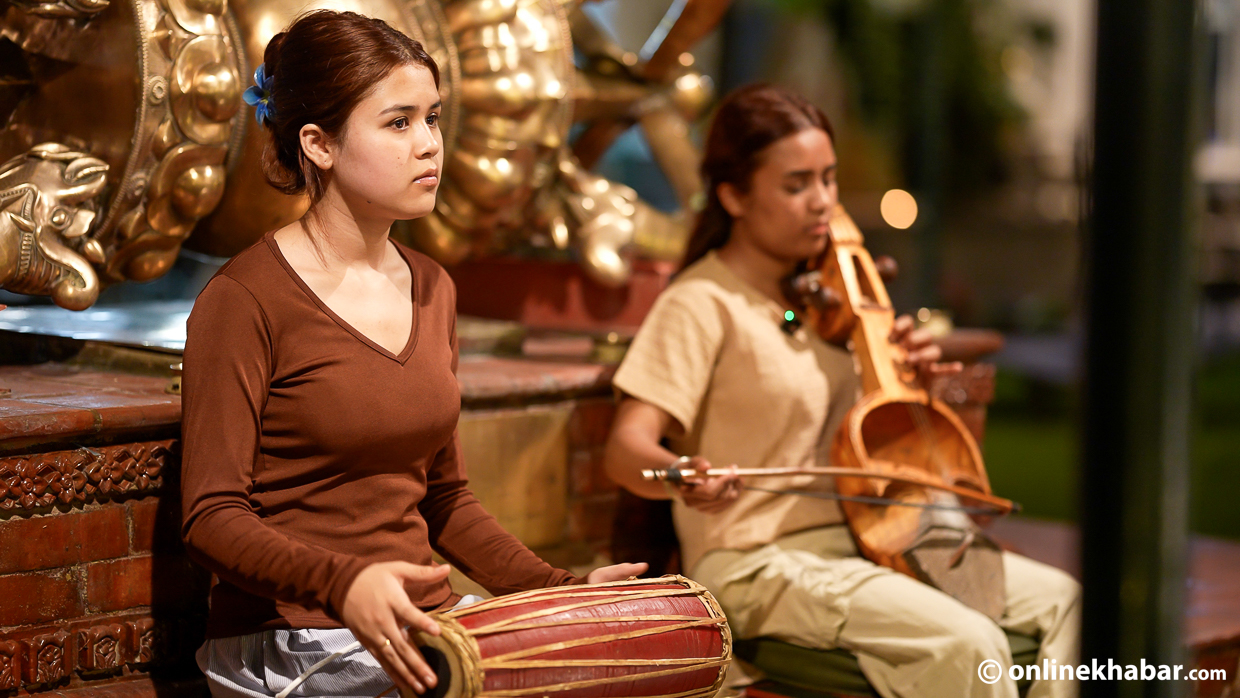
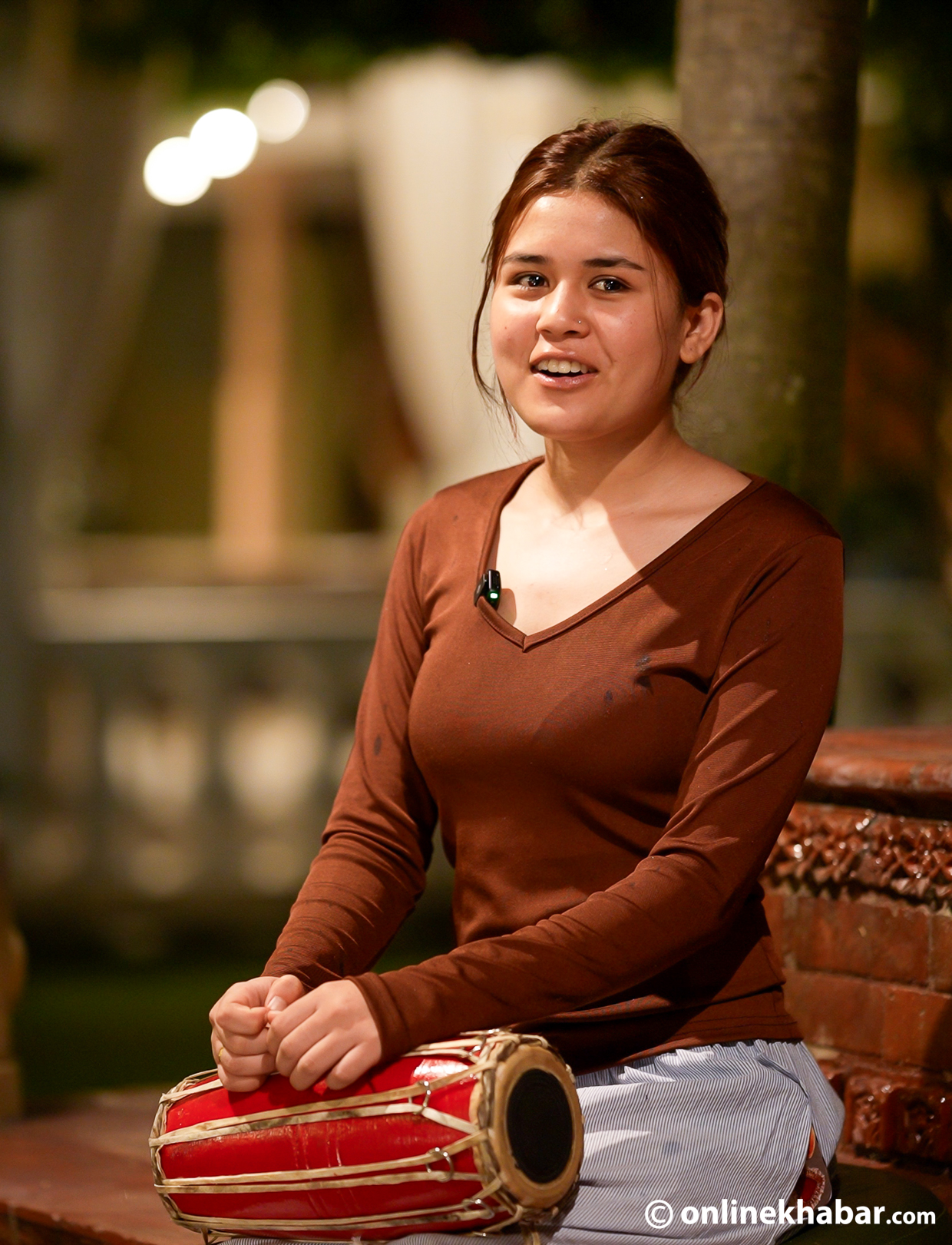
The trio belongs to the Gandharva community. They have been continuously striving to entertain tourists visiting Nepal and introduce traditional Gandharva instruments worldwide. This mission is central to Baba Amrit’s daily life. His elder daughter Anu supports him with sarangi and vocals, while younger daughter Drishti accompanies on madal.
Anu is currently in her fourth year of undergraduate studies, and Drishti has recently completed her School Leaving Certificate (SLC). Together, they formed a family band preserving their community’s musical heritage. Watching Anu and Drishti skillfully handle the sarangi and madal symbolizes the passing of tradition to the next generation.
“We formed the band in 2015 and started performing at places like this,” says Amrit. “Initially, friends in Thamel formed the group, around five or six people. After the lockdown, as friends left for studies, jobs, and abroad, I began teaching my daughters.”
Since then, Anu learned sarangi while Drishti took up madal. The daughters enthusiastically embraced their heritage.
“Now our family group carries forward this tradition,” Amrit shared.
Amrit hails from a small Gandharva settlement in Gorkha district, with only about 10–12 households. Historically, Gandharvas wandered village to village with their sarangis, transforming oral news into songs and spreading information before the advent of radio and television. They earned livelihoods through these performances.
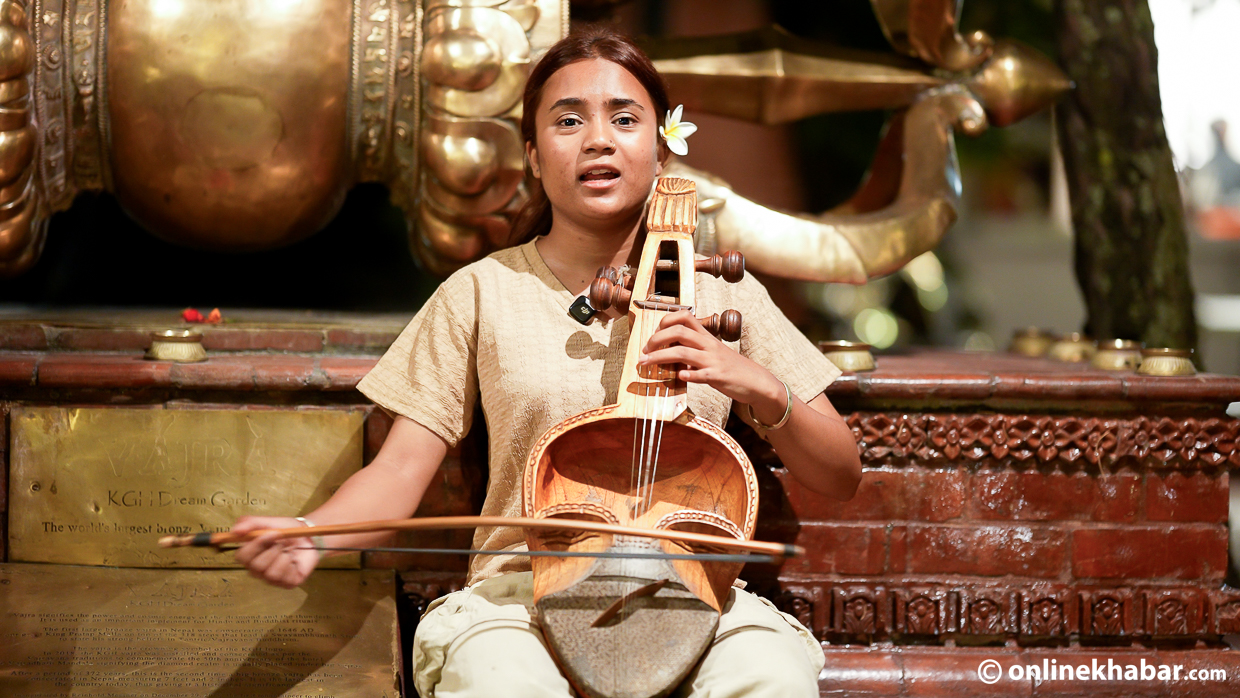
“My father and grandfather also lived by playing sarangi,” Amrit reflects. “I remember seeing them travel frequently and perform during my childhood. They were seldom home. That inspired me to embrace this art. Sarangi flows in our blood.”
Over time, they shifted from village performances to tourist hubs. Thus, the new generation found a foothold at Kathmandu Guest House in Thamel. Currently, the family performs regularly every evening from 6 to 8 PM. Additionally, they feature in various restaurants, hotels, and events.
When tourists seek Nepali culture and music in large groups, they are often invited. Foreign visitors usually enjoy guitars, drums, and their native instruments, but when they hear sarangi and Gandharva songs, they become enchanted. Many express appreciation to Amrit, Anu, and Drishti, saying, “Your music is wonderful; this is exactly what we wanted.”
Their pride in preserving their culture is evident, and tourists’ interest and enthusiasm provide further motivation. Some tourists come searching specifically for their performances and generously tip them.
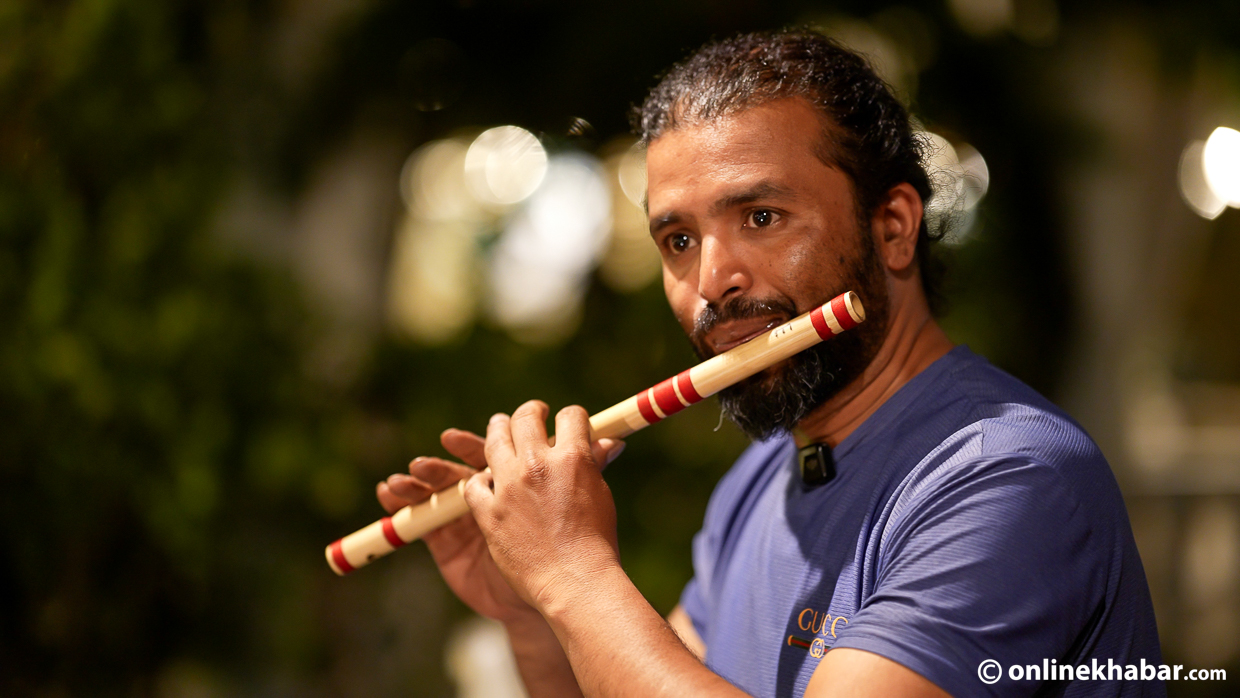
However, for the family, music and dedication are not purely means for monetary gain. “Income is necessary but not everything,” Amrit says. Tips are divided into two parts—family expenses and educational support for underprivileged children.
They collect tips for six months and aid 8 to 10 children annually with books, notebooks, pens, school bags, and cash. “Priority goes to those whose families cannot afford these basic materials,” Amrit explains. “Sharing with others brings peace of mind. It’s nothing extraordinary—just simple human compassion.”
After completing a postgraduate diploma in clinical music therapy in India, Amrit began systematic work. Through Kripa Counseling and Therapy Center in Imadol, they work with children diagnosed with autism, Down syndrome, and learning disabilities.
“Music has helped non-verbal children to speak, isolated children to gain companionship, and improve motor skills,” Amrit asserts. “This is not a myth or magic but grounded in years of scientific research. We have seen it firsthand.”
Continuing the conversation, Amrit shared the proud legacy of the Gandharva community. Historically, apsaras danced while Gandharvas played sarangi. During the unification of Nepal under King Prithvi Narayan Shah, Maniram Gaine motivated brave soldiers with sarangi music. During popular movements, artist Rubin Gandharva contributed significantly through song. Music played a transformative role in important socio-political movements.
The tradition of narrating events and stories through songs to reach the populace remains alive with this family. They regularly teach sarangi and madal to children and women in their Gorkha village. At Thamel, they operate the ‘Avira Music Shop,’ selling sarangi and offering lessons. Their YouTube channel features tutorials ranging from basic to advanced levels.
Foreign visitors frequently purchase sarangis, calling it ‘Nepal’s identity.’ Some learn to play before leaving, while others keep the instrument as a cherished souvenir. Many tourists return happy after acquiring new skills or instruments, even if their playing skills are limited.
“We are doing our best,” Amrit says earnestly. “Other communities must also preserve their traditional instruments. Only together can we safeguard our cultural heritage.”
As they spoke, the family band continued their heartfelt performance. Amrit, Anu, and Drishti played and sang—
“Queen Sita in the forest,
Today joy flows in the heart…”


