




Kathmandu, 19 Jestha — The economic bill is a crucial government document outlining tax policies and rates. According to this bill, the government began collecting taxes from 15 Jestha.
However, there is a significant discrepancy between the economic bill submitted to parliament on the 15th and the version currently posted on the Ministry of Finance’s website. The Nepalese government filed a 467-page economic bill in Parliament, but the Ministry of Finance has unilaterally revised the document four times and uploaded a 450-page amended version online.
According to former Secretary of the Parliamentary Secretariat Som Bahadur Thapa, any amendments to a bill already registered in Parliament must have parliamentary approval. He stated, “If amendments are to be made to the economic bill submitted to Parliament, the changes must first be introduced and approved in Parliament. The Ministry of Finance does not have the legal authority to make unilateral corrections. If tax rates themselves are being altered this way, it is a very serious matter.”
The Ministry of Finance appears to have implemented not minor but significant changes to tax rates and policies.
An ex-Finance Secretary remarked, “Such arbitrary amendments to a bill already registered in Parliament are not acceptable. Even if minor errors occur, corrections should only be made following parliamentary discussion.” Though the Finance Minister has indicated these are minor corrections, the ex-secretary expressed surprise over the issue.
First – The schedule 1 of the economic bill registered in Parliament included tax exemption on up to 50 units of electricity used for household purposes. However, the version on the Ministry’s website shows a major difference — now, tax exemption applies not only to electricity consumed for household use but also to electricity sold by electricity businesses, potentially giving tax relief to electricity project promoters.
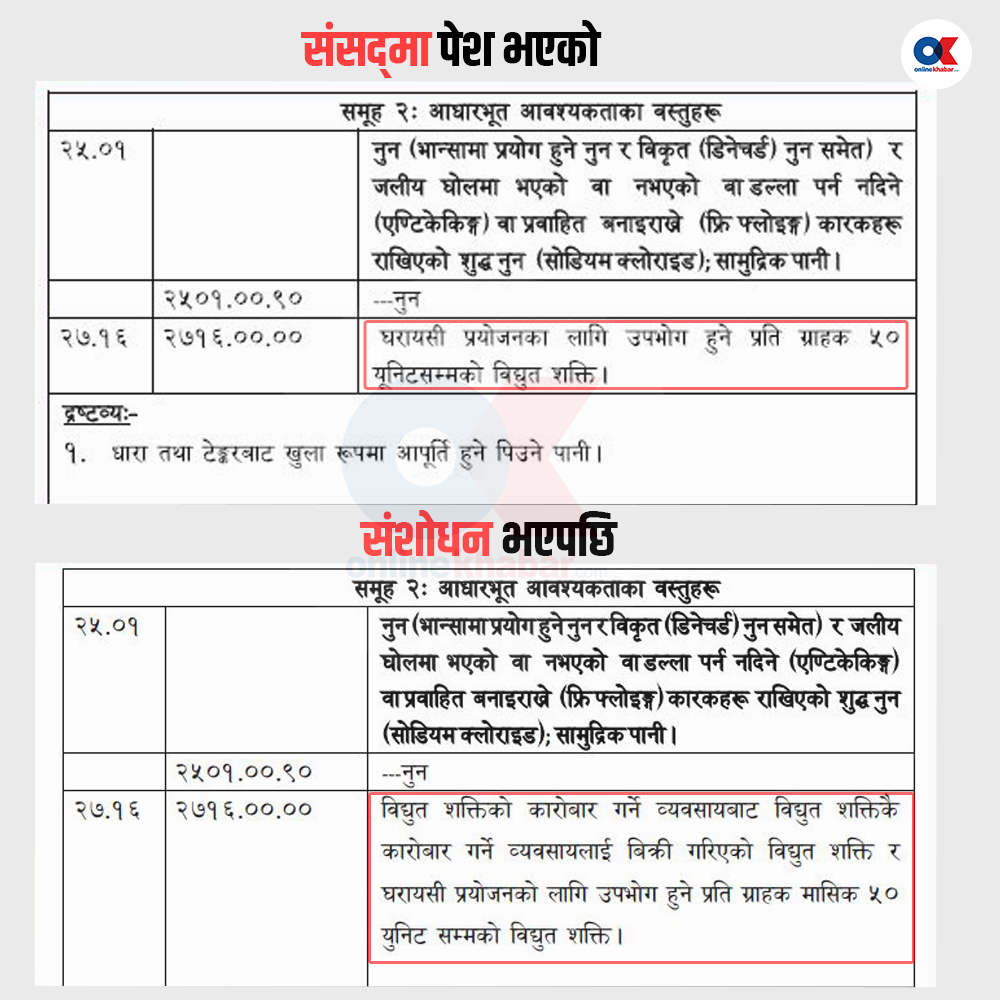
Per the original bill, VAT was imposed on all consumers except those using less than 50 units. Even when an electricity producer sold power to the authority, VAT was applicable. The revised provision seems to exempt electricity project promoters from tax.
Second – The bill filed in Parliament included no provision for income tax exemption for operating cinemas outside metropolitan and sub-metropolitan areas. However, the Ministry amended the Income Tax Act to provide a tax exemption for cinemas established outside metropolitan and sub-metropolitan areas for 10 years starting from the business commencement date.
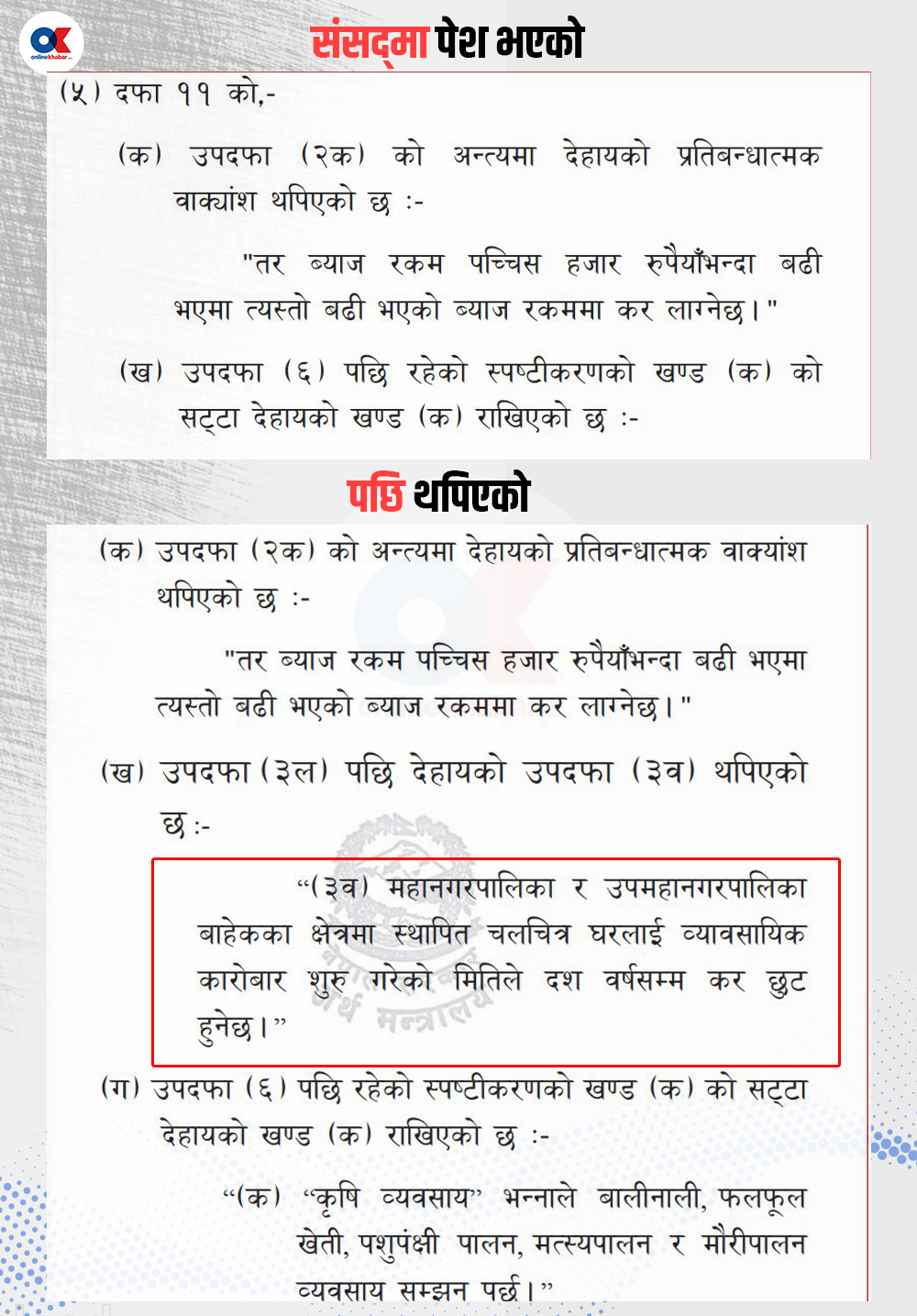
The film industry is primarily an entertainment sector, not philanthropic. This exemption seems to simply benefit select individuals.
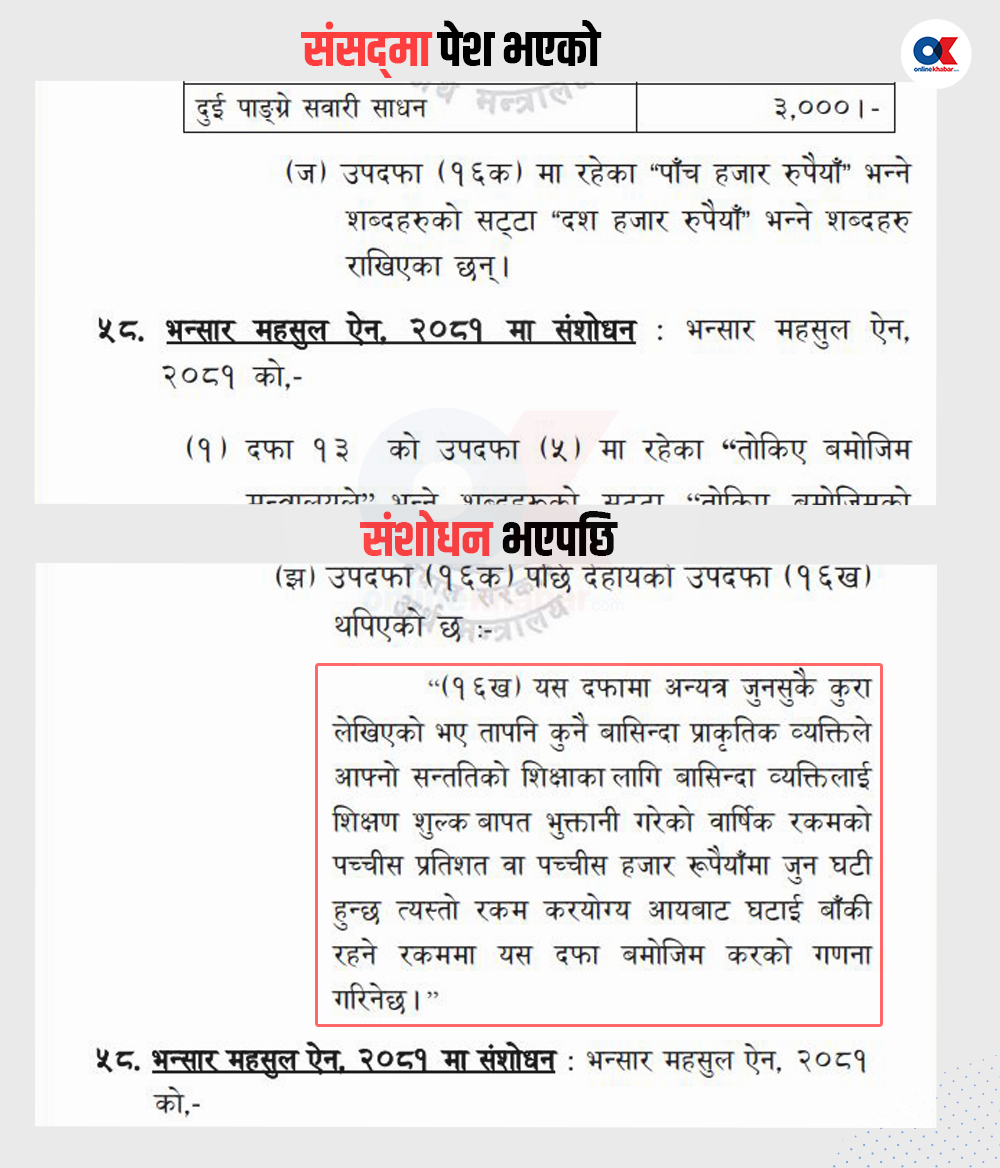
Third – The original bill filed in Parliament did not allow natural persons to deduct educational expenses paid for their children from taxable income. But the Ministry’s amended bill introduces a provision permitting natural persons to deduct 25% or up to NPR 25,000 of such payments.
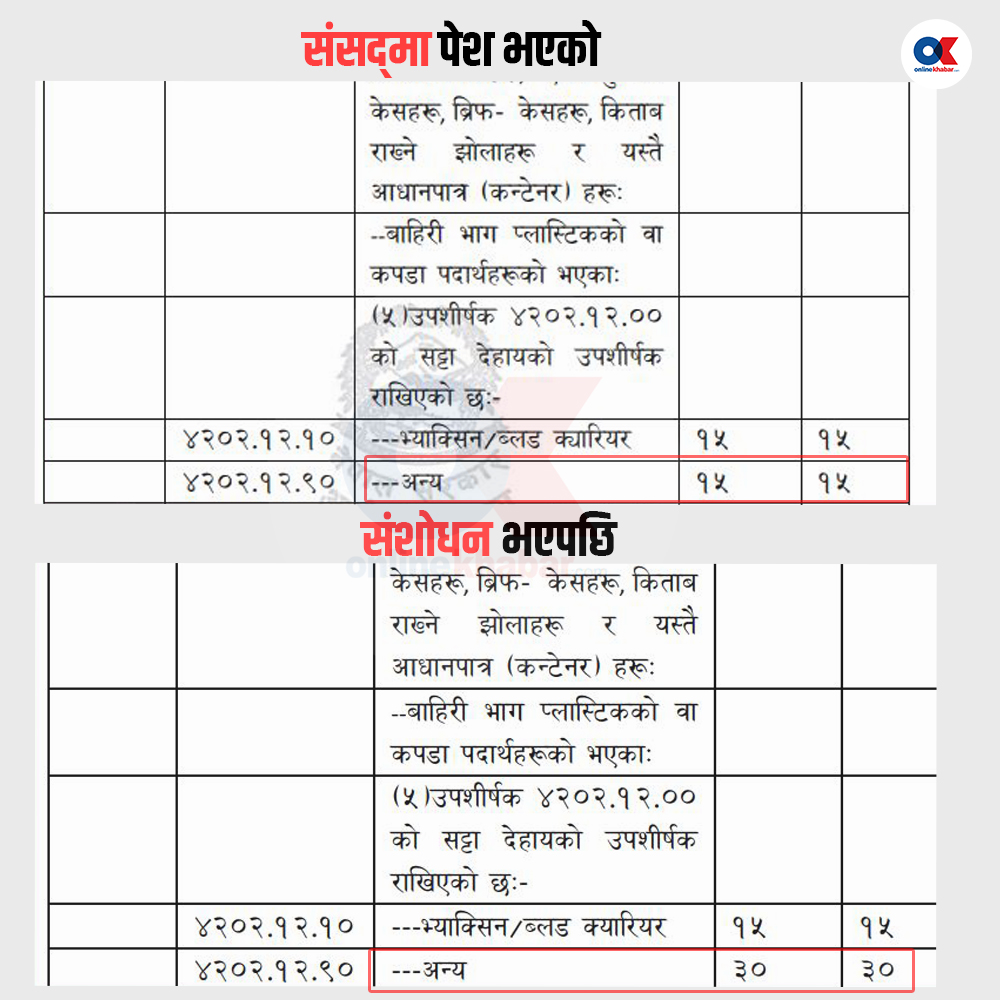
Fourth – The tariff on briefcases, wallets, and suitcases was 15% in the bill registered in Parliament. However, the Ministry raised the customs duty to 30% in the amended version on its website.
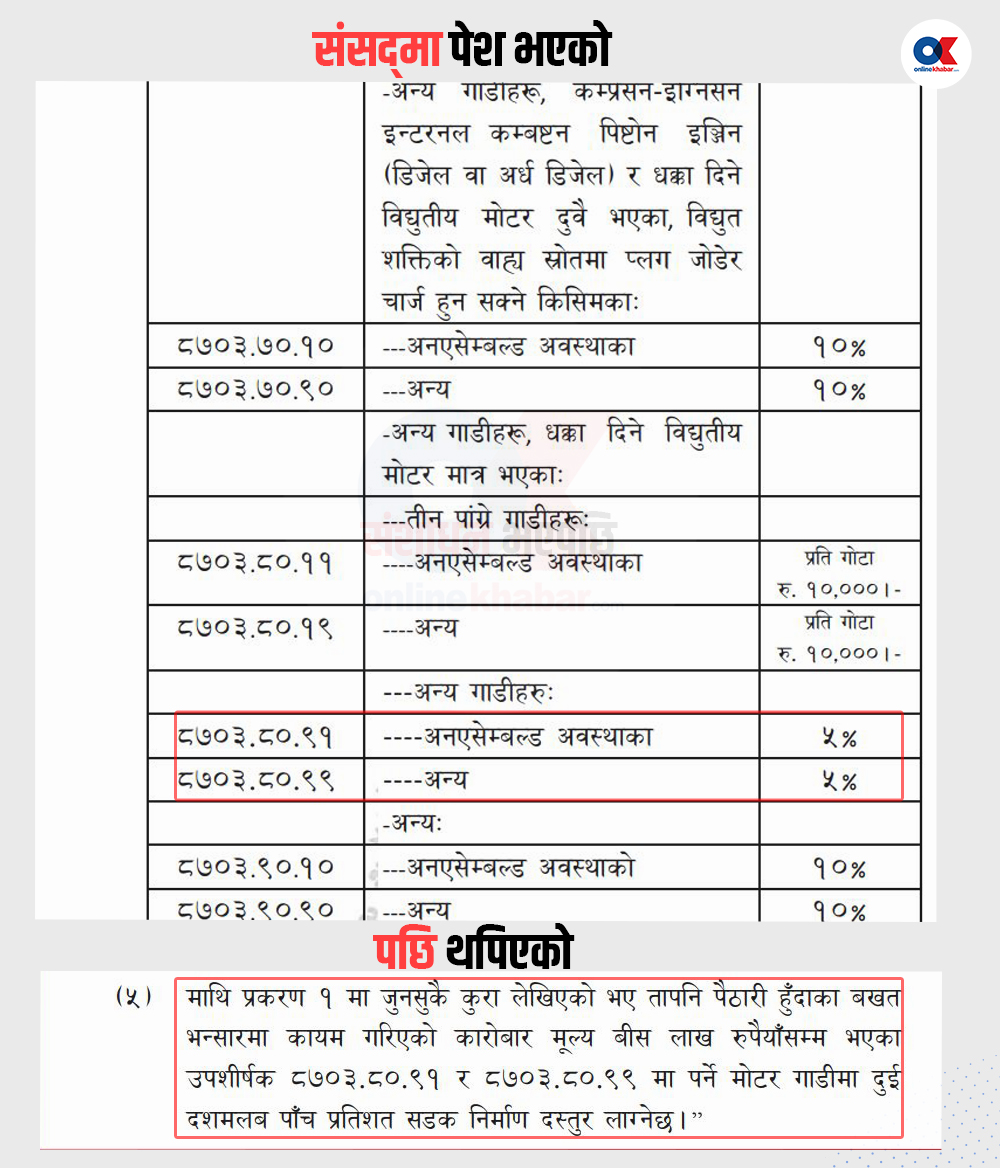
Fifth – The bill originally stipulated a 5% road construction fee on all electric vehicles. However, the Ministry introduced a new exemption reducing the fee to 2.5% for certain motor vehicles valued up to NPR 2 million.
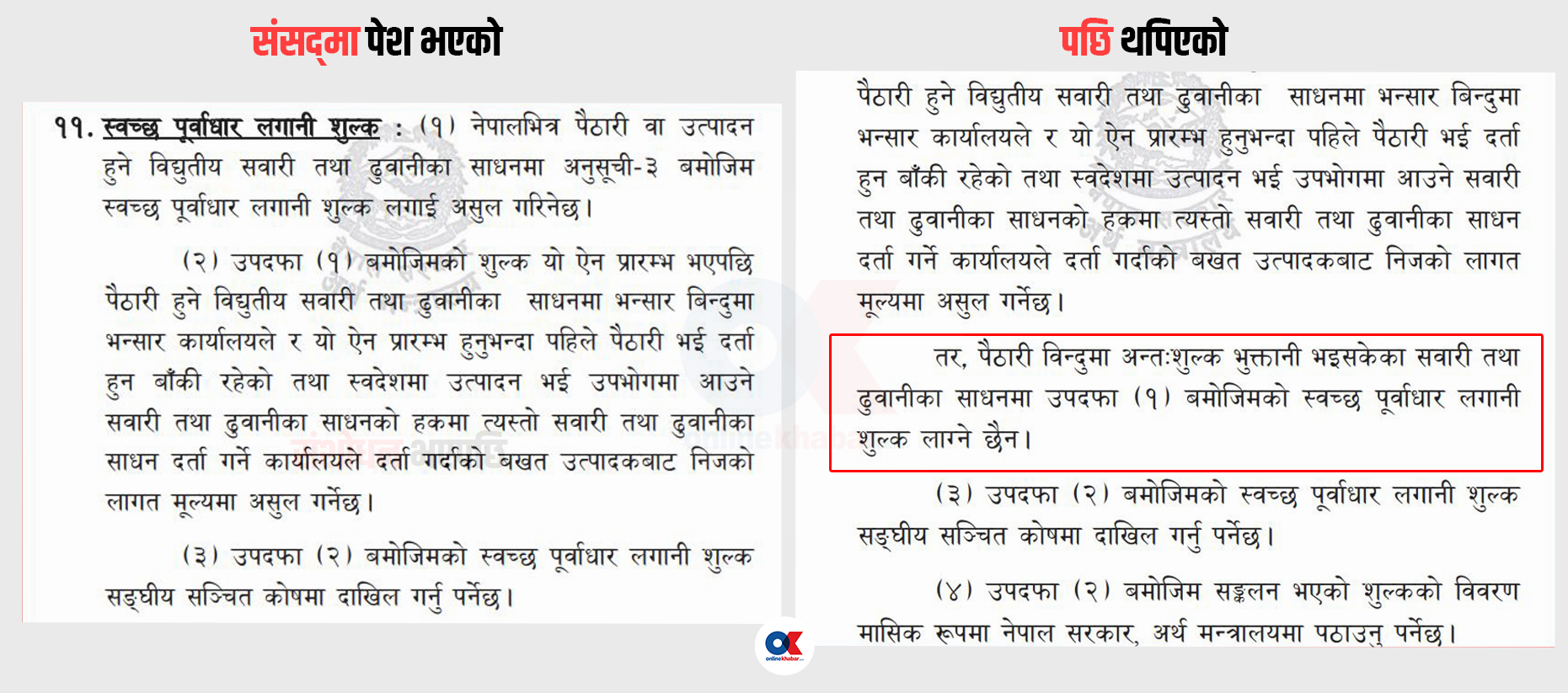
Sixth – In clause 11 of the economic bill, a revision was made to the clean infrastructure investment fee on electric vehicles. It now exempts vehicles that have already paid the fee at the point of import.
A senior official from the Parliamentary Secretariat stated that the government lacks the authority to amend a registered bill without informing the lawmakers. “Even if errors need correction, it should be done through parliamentary procedures,” the official emphasized.
An anonymous former Finance Secretary added, “During our tenure, automatic corrections to bills were not permitted.”
Parliament Secretariat Deputy Secretary and spokesperson Ekram Giri also informed that there is a defined process for passing and amending economic and budget-related bills. He explained, “First, the appropriations bill is discussed, followed by discussion and amendments on budget-related bills. Lawmakers are given a 72-hour window to propose amendments.”
Budget-related bills become effective only after approval by the parliament, cabinet, and presidential endorsement.
Chartered Accountant Sheshmani Dahal has called for adherence to regular parliamentary procedures when amending tax policies.


