Balen Shah Repeats the Mistakes of Former Prime Ministers, Says Political Analyst Bhaskar Gautam




Summary
Reviewed.
- Political analyst Bhaskar Gautam highlights a lack of historical awareness and a tendency for personal dominance over institutional processes in the government’s working style.
- He points out that instead of empowering local bodies, power is becoming centralized in Singha Durbar, resulting in issues with good governance and service delivery.
- Gautam warns that a strategy of selective punitive actions is increasing impunity and threatening the foundations of legal governance.
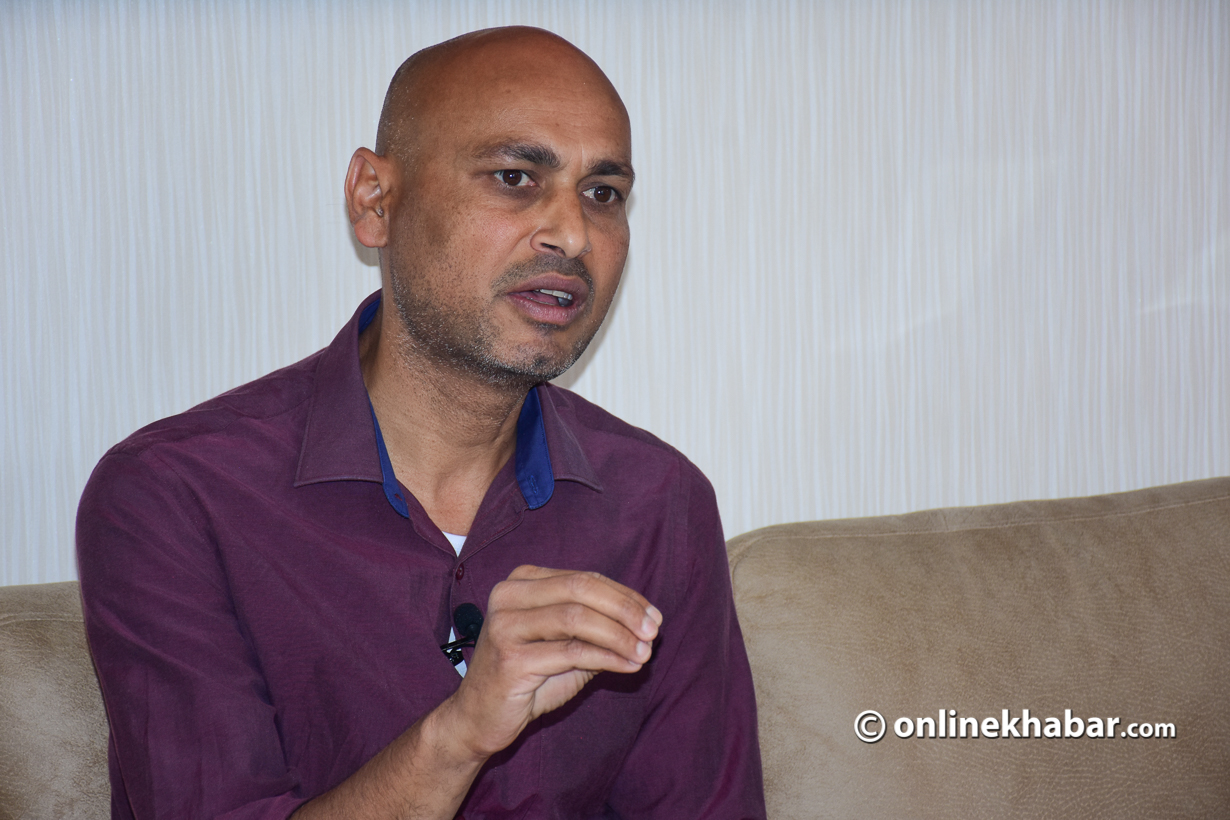
The Balen Shah-led government will complete its first one hundred days this week. Beginning with a hundred tasks on the agenda, the government’s performance in improving state institutions and delivering services to the public during this period is under review. In this context, an interview with political analyst Bhaskar Gautam:
How would you evaluate the government’s performance as it approaches its first 100 days?
This can be viewed from two or three angles.
Firstly, there is an evident case of ‘historical amnesia.’ Since 2007 or 2017, every ruler in Nepal prioritizes ‘development’ as the central theme.
This is not new in Nepal’s administrative history. Achieving economic prosperity has been a pursuit globally since after the World Wars. We have been experimenting with this for about 70-75 years.
Yet each new ruler treats the Nepali people as if they were naive and reveals a lack of historical understanding. This reflects their ignorance. They imagine a single person can magically fix everything, but they fail to comprehend structural complexities.
In English, this is called ‘historical amnesia,’ which is glaring at present.
For example, around 2007 or 2017, Nepal might not have had much experience or readiness for democracy or development. Nevertheless, King Mahendra spoke about development within existing circumstances.
During King Birendra’s era, the Panchayat system promoted slogans like ‘roots of development.’ After 1990, leaders talked about turning Nepal into ‘Switzerland’ or ‘Singapore,’ though these were just empty promises.
What’s worrying is that each new ruler, without retaining any historical knowledge, revives failed old promises. What King Mahendra, Birendra, or former prime ministers did before, Balen Shah is now repeating.
Neither the prime ministers of the past seven decades nor Balen Shah have a clear understanding of past development mistakes in Nepal. Balen advocates pushing the accelerator without coordinating the brakes or clutch, showing only historical ignorance and haste in governance.
Even now, the government is rushing forward. Although previous leaders like KP Oli, Prachanda, or Congress leaders seemed to promote different approaches, the reality is different.
Nepal has always practiced ‘historical amnesia,’ and this government continues that pattern. This is the first major tendency reflecting rulers’ superficiality.
How has the relationship between the Prime Minister and state apparatus—President, Parliament, Judiciary, constitutional bodies, and bureaucracy—appeared since taking office?
Actually, I am referring to four major tendencies, the second of which relates to this question.
Rulers consider themselves greater than ‘institutions’ and capable of controlling everything. The biggest problem in Nepal is that political parties and the prime minister have never been able to govern institutionally.
They fail to understand the value of institutions and place individuals above institutional frameworks, which results in widespread incompetence.
A weak institution means neither law nor the constitution is strong, thus resources cannot be justly distributed.
Personal domination over institutions remains Nepal’s primary governance issue, rooted in ‘historical ignorance.’
Selective detention and punitive actions distort politics and undermine the principle of legal governance.
Every new ruler imagines they are the most knowledgeable leader of the state. While KP Oli centralized power, Balen Shah exhibits a different pattern. Yet the core message remains: ‘The individual is bigger than the institution.’ This was problematic previously and is repeating now, weakening institutions.
Each prime minister must establish law and process; without this, governance will go astray.
Moves such as merging ministries and bringing agencies under the Prime Minister’s Office may yield short-term benefits but ultimately weaken institutions, as Balen Shah is doing.
There are two parties responsible for weakening institutions: rulers who refuse to let them develop, exemplified by Balen Shah.
What deeper crisis arises in society when institutions are not allowed to develop beyond just legal and procedural issues?
The rule of law must be strengthened.
However, this government, like previous ones, is increasing impunity and weakening the legal framework.
Abuse within security agencies and media centralization are notable.
The government’s selective targeting furthers impunity, causing political distortion and weakening legal governance.
None of the former prime ministers seriously worked to strengthen legal governance, and this government is repeating these mistakes.
Arresting a few to display ‘visible good governance’ only weakens the system.
The government believes it is bringing good governance, but the results are opposite.
Selective punitive measures weaken the foundation of legal governance and boost impunity.
The people had high expectations for better service delivery. What positive actions has this government taken?
I have already discussed the weaknesses of ‘historical amnesia’ and personal dominance over institutions.
The third weakness is the rulers’ ignorance leading to widespread misuse of state resources.
Although the tax base has expanded, the lack of historical awareness and strong institutions has created a dangerous situation.
State resources often end up in the pockets of a few rather than shared for the public good.
The government has failed to ensure equitable resource distribution and cannot formulate detailed, long-term plans.
Digital reforms and superficial efforts alone do not ensure good governance.
When state resources are not used for public benefit, public trust in the government weakens.
This leads to challenges in increasing employment and social security.
The relationship between state and citizens grows weak, and fundamental rights go unfulfilled.
Lack of understanding of structural complexities leaves rulers uninformed.
The rebellions in Nepali society emerged from people desiring stronger access to the state and more jobs.
However, these three weaknesses show worsening public trust and unmet expectations.
These four tendencies remain the largest problems and crises today.
When the government starts off on the wrong path, no amount of work will bring true improvement.
Has the individualistic behavior—such as an inability to face questions in Parliament and failing to communicate with the President—become an institutional crisis?
Yes, when individuals dominate institutions, decision-making becomes unilateral and centralized. The main issue is centered on resources, means, and authority. The government is unable to decentralize these.
Service delivery is the responsibility of local governments at lower levels, but currently power remains centralized at Singha Durbar.
Though the Constitution grants autonomy to local governments, the central government is acting unconstitutionally against this.
Service delivery is not about a ruler magically turning the country into a ‘Singapore’ from the center but empowering local bodies to deliver services effectively.
The tendency to concentrate power into a single individual, entity, or at Singha Durbar damages the Constitution’s core spirit.
Ultimately, the central government should formulate policies and regulations, while local governments execute service delivery.
Except for large infrastructure, other services should be local-level responsibilities, and local governments should have the authority to prioritize major infrastructure projects.
When these powers remain confined to the center, the government’s resources become controlled by a few individuals.
Without systemic reform, digital improvements and superficial fixes cannot bring proper good governance.
The government’s publicity appears focused only on short-term gains; systemic reform is essential.


