



Norway’s golden generation in world football did not emerge by chance. This success is built on a plan spanning over two decades, substantial investment in infrastructure, and revolutionary changes in youth player training.
Summary
- Norway’s football team reached the World Cup quarterfinals following a two-decade plan, infrastructure development, and a revolution in youth training.
- Since 2000, major investments in artificial turf have transformed Norwegian football into a year-round sport despite harsh winters.
- An integrated structure from local clubs to the national federation, along with financial support from a state-owned betting company, forms the foundation of Norway’s success.
Previously, football in Norway was a seasonal sport due to snow and cold climate, played only a few months a year. When Norway was mentioned in the 1998 World Cup, the narrative repeated itself. Better known for winter sports than football, this nation has now advanced to the World Cup quarterfinals.
Norway defeated Ivory Coast in the last 32 and five-time world champions Brazil in the round of 16. They are now set to face England for a place in the semifinals.
Behind this success are two prominent figures – Erling Haaland and Martin Ødegaard.
Haaland, the prolific goal scorer from Manchester City, has scored seven goals in this World Cup, while Ødegaard captains both Arsenal and the Norwegian national team. Yet, considering this historic journey as just their story would be a major oversight.
Among Norway’s 26-man World Cup squad, 17 players compete across Europe’s four major leagues: the English Premier League, German Bundesliga, Spanish La Liga, and Italian Serie A.
Most of these players were nurtured through a common, well-structured football development system.
Norway’s golden generation is the outcome of more than two decades of planning, significant infrastructure investment, and a revolution in youth coaching.
Artificial Turf Enabled Year-Round Football Despite Snow
According to Håkon Grøttland, head of player development at the Norwegian Football Federation, two key pillars underpinned Norway’s transformation: investment in artificial football pitches and a revolution in youth training systems.
Since 2000, the country has built a large number of artificial turf fields. Between 2016 and 2025 alone, 539 new artificial pitches were constructed, with an additional 586 renovated.
For Norway, where winters are harsh, this was not a mere infrastructural upgrade; it changed the country’s football culture.
Grøttland explains, ‘Football in Norway became a twelve-month sport instead of just a summer game. Previously, players had to compete on snow and ice during the cold months.’
During the 1990s, Norway was known for defensive, physical football. The availability of uniform artificial surfaces year-round enabled players to develop their technical skills.
Captain Martin Ødegaard perfectly exemplifies this progress.
Norwegian football has moved far beyond its old, defensive reputation, showcasing improved ball control, passing, game understanding, and creativity.
Grøttland jokes, ‘Perhaps we’ve progressed too much — now we might not be producing enough defenders!’
Significant Funding from Betting Revenues Bolstered Sports Infrastructure
Norway is among Europe’s wealthiest nations, its economy strengthened by substantial oil reserves. Another notable financial pillar for sports development is revenue from a state-owned betting company.
Betting is tightly regulated in Norway, and 64% of the earnings from Norsk Tipping—the major, state-run gambling operator—are reinvested for public benefit.
A large portion of this reinvestment goes toward building sports infrastructure. For example, in 2026 alone, Norsk Tipping allocated over two billion Norwegian kroner for sports facilities.
This long-term investment has provided children in rural areas and small towns with access to quality pitches, enabling year-round football opportunities.
Training Revolution
Building fields alone was not sufficient. Norway undertook major changes in training systems to develop player capabilities.
After failing to qualify for the 2012 European Championship, the Norwegian Football Federation launched the “Landslagskolen” (National Team School) system in 2013.
Unlike a centralized academy, this is an integrated structure involving local clubs, regional football authorities, top clubs, and the national federation.
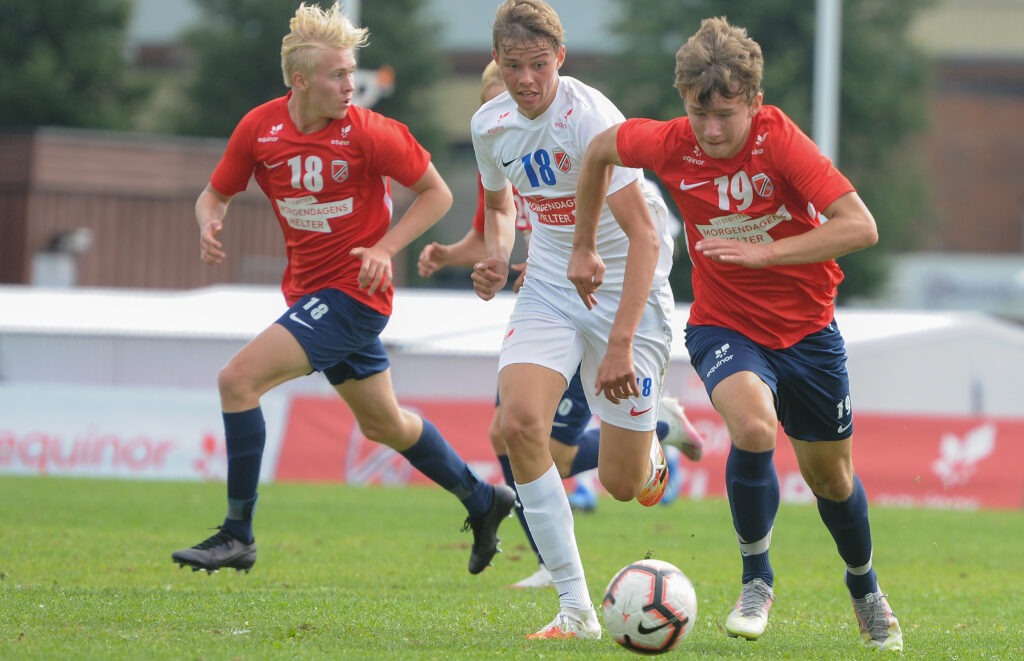
Grøttland states, ‘Unlike in other countries where only elite clubs develop talent and local clubs play just for fun, in Norway everyone is on the same journey.’
Of the 15 players who started against Brazil in their historic 2-1 victory, 14 had played for youth national teams, with 11 involved in the national team school system from as young as 15 or 16 years old.
Before the World Cup, Norwegian players took a team photo wearing their first club jerseys as a tribute to this system.
Staying with Local Clubs for Up to 12 Years
In contrast to English youth players, who often join Premier League academies by age eight, Norwegian children typically remain with their local clubs until the age of 12; early doors remain open.
Grøttland remarks, ‘Our philosophy is to never close the door on anyone too early.’
Erling Haaland is a prime example. While he was part of the national talent camps and team school from age 14, he was not initially expected to become the best player in his age group.
Today, Haaland is one of world football’s most dangerous strikers.
The world focuses on Haaland’s seven goals and Ødegaard’s creativity, but Norway’s true story began long before these two rose to stardom.
Ødegaard Redefined the Definition of Talent
While people hesitated to predict Haaland’s future, Martin Ødegaard was recognized as a standout talent from childhood.
Grøttland recalled seeing 11-year-old Ødegaard’s talent as unlike anything before.
Ødegaard attracted attention from major European clubs early and signed with Spanish giant Real Madrid at 16 for €4 million.
His upbringing shaped Norway’s national team school talent development philosophy.
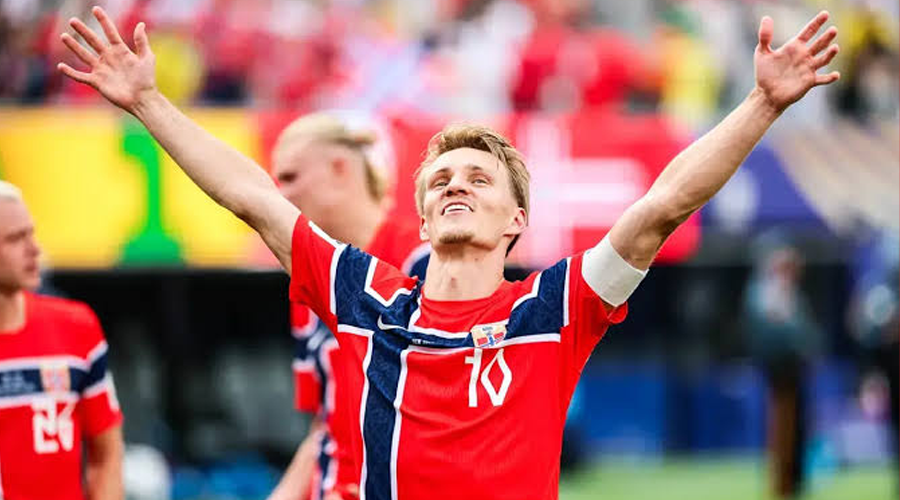
In Norway, talent evaluation considers not only speed, ball skills, and physical ability, but also passion for the game.
Grøttland states, ‘We consider talented players those who love football most, take responsibility for their development, and feel accountable for their team’s progress.’
This outlook was inspired by Ødegaard’s character.
The Team Above All
Norway’s training system teaches players more than just football; it instills safety, confidence, and unity.
Grøttland believes these values are evident in their current World Cup performance.
Though Haaland is globally renowned and Ødegaard an outstanding midfielder, the contributions of players like Patrick Berg, Sander Berge, Antonio Nusa, Alexander Sørloth, Jørgen Strand Larsen, and Oscar Bobb are equally vital.
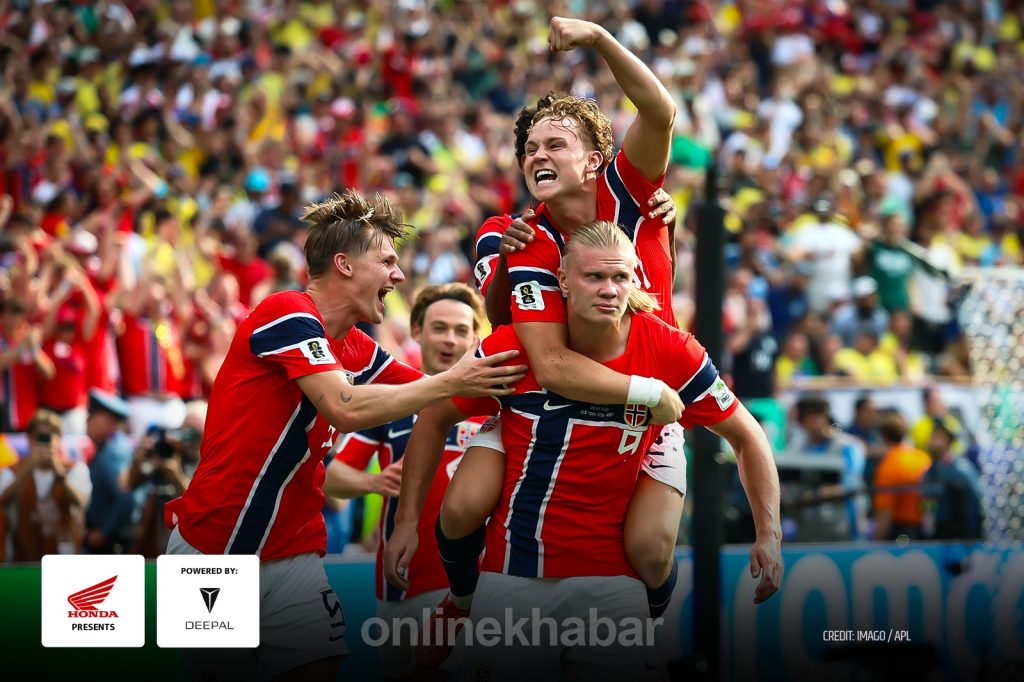
After beating Brazil, the team and supporters embraced the “Viking roar,” now a symbol of Norwegian unity echoed from stadiums worldwide to Times Square.
Grøttland comments, ‘That boat-rattling chant symbolizes unity.’
Develop Players to Export to Major Leagues
Norway’s domestic league has yet to reach the level of Europe’s elite competitions. Only four World Cup squad members play in the Norwegian league, three of whom are from Bodø/Glimt club.
However, Norway recognizes this weakness and has devised clear plans accordingly. Grøttland states, ‘One of Norwegian football’s main goals is to produce talented players and send them to major leagues.’
The domestic league’s quality has also improved recently, as evidenced by Bodø/Glimt’s progress in European competitions.
Coach Ståle Solbakken refuses to restrict the team’s success to a “golden generation.”
According to him, the squad blends experienced players around 30 years of age, young talents aged 18-20, and players in their prime careers.
‘I don’t know if this is a generation or not,’ Solbakken says, ‘but it’s the result of the club and federation’s hard work.’
Norway Returns to the World Cup After 28 Years
Norway and Scotland have roughly similar populations. Both had been absent from the World Cup for 28 years since 1998. However, the 2026 story contrasts sharply.
Scotland exited in the group stage, while Norway advanced to the quarterfinals by defeating Ivory Coast and five-time champions Brazil and is now competing against England.
Global attention focuses on Haaland’s goals and Ødegaard’s creativity, but Norway’s true narrative began long before their emergence.
From artificial pitches built for children once forced to play on snow, to a national football structure linking local clubs with the federation, a philosophy of not closing the door early on talent, and a training system that values love for football over physical metrics.
Haaland is the poster child of Norway’s program, Ødegaard its artist. Yet this World Cup squad is the fruit of more than two decades of planning, investment, and coaching revolution—not a sudden arrival of two superstars overnight.
Content originally published by the BBC


