




Summary
- Impact of the monsoon season has caused wholesale vegetable prices to soar by up to 400 percent within a month, directly affecting ordinary consumers.
- According to Kalimati Fruit and Vegetable Market Development Committee, reduced production at farms has led to abnormal price increases.
- Prices are unlikely to drop until new produce arrives in the market, with further increases possible if adverse weather continues.
August 4, Kathmandu – Amid the mid-monsoon season, kitchen expenses for consumers have become significantly more expensive. Despite wages and incomes remaining steady, prices for daily consumption vegetables have skyrocketed by up to 400 percent in a month, severely impacting the general public.
Data from the Kalimati Fruit and Vegetable Market Development Committee reveals an abnormal increase in vegetable prices during the month of Shrawan compared to Ashad. Comparing average prices on July 5 and August 4 shows that the costs of most green vegetables, leafy greens, and chili peppers have placed heavy pressure on consumers.
Market traders are attributing the price surge to rain and landslides. However, extensive excuses over essential commodities like vegetables have left consumers feeling exploited, with the government remaining silent on the issue.
Though the Department of Industry, Commerce and Consumer Protection conducts daily market monitoring, traders claim that it only offers superficial solutions without addressing core problems.
Among seasonal vegetables, green pumpkin (Dallo) which was available at an average of NPR 11 per kilogram on July 5, has surged to NPR 55 per kilogram on August 4 — a fivefold increase. Retail prices are even higher, reaching between NPR 90 and NPR 120 per kilogram.
Similarly, green chili peppers have become difficult to purchase. The Bullet variety, priced at NPR 22.50 per kilogram one month ago, has climbed fivefold to NPR 96. This marks an increase of approximately NPR 74 in just a month.
Long green chili has tripled from NPR 30 to NPR 96, while Mache chili has doubled to NPR 75. Consumers pay between NPR 150 and NPR 170 for these chilies.
Leafy Greens Becoming Unaffordable
Leafy greens, regarded as beneficial for health, have largely become inaccessible to poor and middle-class families. Spinach prices, for example, have risen dramatically from NPR 55 per kilogram in Ashad to NPR 233.33 in Shrawan, an increase of nearly 4.5 times.
Similarly, mustard greens increased fourfold from NPR 35 to NPR 133.33 per kilogram, while taro leaf prices rose two and a half times to NPR 100.
Potato prices have averaged between NPR 35 and NPR 49 per kilogram, and onions have reached NPR 55. In Ashad, potatoes were traded at NPR 29 to NPR 39 and onions at NPR 53.
The price surge among green vegetables also disappoints consumers. Maize pod prices increased from NPR 30.83 to about NPR 95, while long beans rose from NPR 14.25 to NPR 45.
Broccoli prices have tripled from NPR 43 to NPR 125 per kilogram. Local cauliflower rose from NPR 38 to NPR 86, garden peas from NPR 45 to NPR 95, and cowpea from NPR 27 to NPR 55. Consumers are compelled to pay NPR 100 to 200 more for these vegetables.
Gap Between Wholesale and Retail Prices
A comparison between wholesale and retail vegetable prices shows a significant disparity. Wholesale prices are set around NPR 20–25 per kilogram, while retail prices can climb up to NPR 100 per kilogram. After wholesalers raise prices, retail merchants frequently impose arbitrary rates, often leading to consumer exploitation.
Saraswati Paudel, a vegetable seller from Shankhamul, explains, “Retailers can’t even be asked why prices have risen; their ready response is that prices are already high at wholesale level, so selling cheap isn’t possible. Okra, which used to cost NPR 25–30 a week ago, is now priced between NPR 130 and NPR 150. How can people afford to eat in such conditions?”
| Vegetable | Average Price 5 July (NPR) | Average Price 4 August (NPR) | Increase (NPR) |
| Green Pumpkin (Dallo) | 11 | 55 | 44 |
| Green Chili (Bullet) | 22 | 96 | 74 |
| Long Bean (Lamcho) | 14 | 45 | 31 |
| Maize Pod | 30 | 95 | 65 |
| Broccoli | 43 | 125 | 82 |
| Cowpea | 27 | 55 | 28 |
| Okra | 25 | 47 | 22 |
| Bitter Gourd | 26 | 45 | 19 |
| Ridge Gourd | 24 | 35 | 11 |
| Bottle Gourd | 27 | 45 | 18 |
Retail sellers provide their perspective, arguing that consumers blame traders unfairly without understanding their challenges. A vegetable seller in Shankhamul said, “We sell according to the market prices of Kalimati and Koteshwor. I keep only a small profit margin. If prices rise too high and consumers don’t buy, vegetables rot and are wasted. Selling vegetables often results in losses.”
He also claimed that due to rising commodity prices, buying large quantities to sell at reasonable prices is currently impossible.
Wholesale Traders Claim Prices Haven’t Increased Much
Wholesale traders maintain that prices for many vegetables have not risen significantly. Bharat Prasad Khatiwada, president of the Nepal Fruit and Vegetable Business Federation, stated that vegetable supply is smooth and prices remain stable.
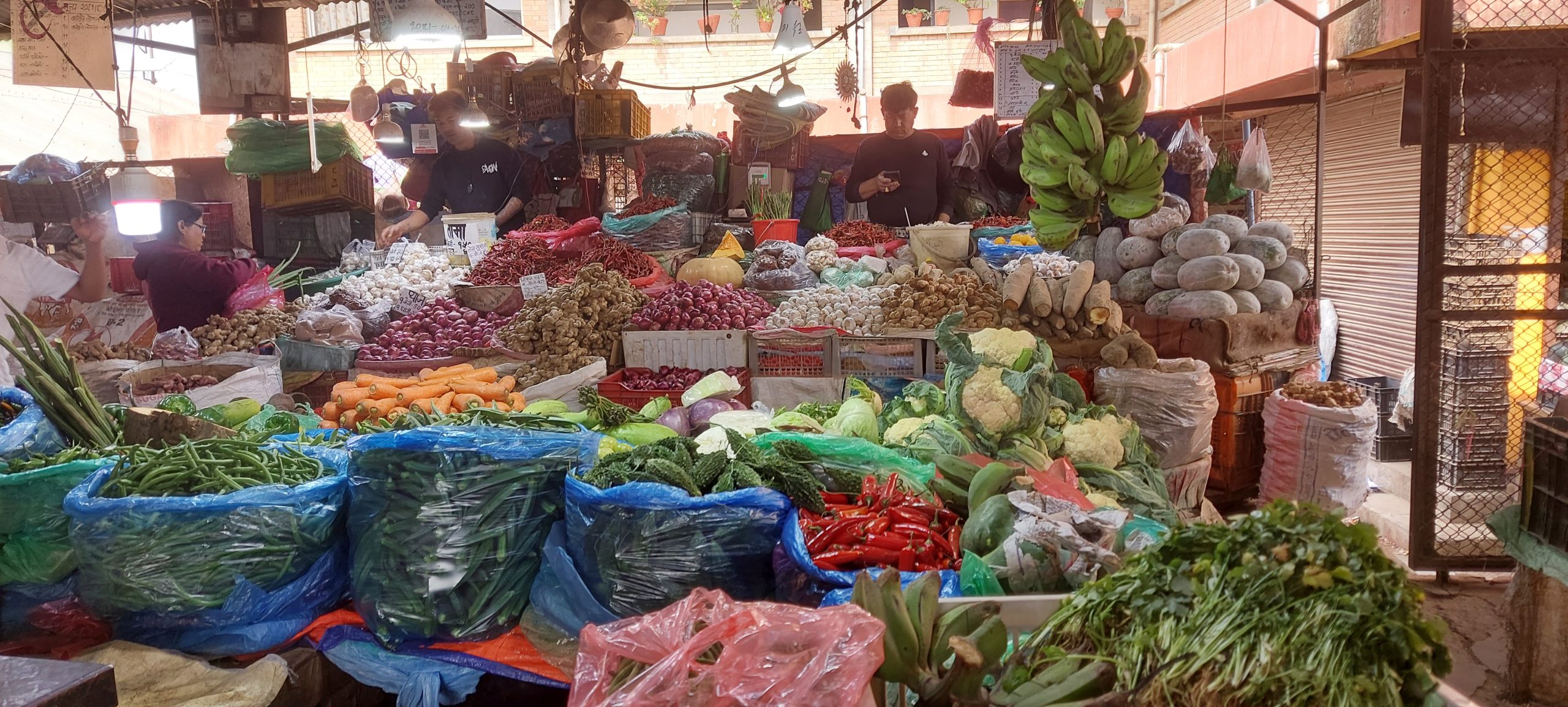
President Khatiwada emphasized, “Vegetables are continuously being supplied and there is no shortage. The market is functioning well and prices are not excessively high. The current situation is normal; it does not appear as if vegetables are lacking.”
He also dismissed claims that roads damaged by rain and landslides have impacted supply. “We have not heard of vegetables being delayed due to obstructions caused by water. The market remains stable,” he added.
Khatiwada suggested that retailers may be exploiting consumers by artificially inflating prices, using transportation costs and profit margins as excuses.
Prices Unlikely to Drop Until New Crop Arrives
The Kalimati Fruit and Vegetable Market Development Committee attributed the current price surge to reduced vegetable production in farmers’ fields, leading to decreased supply in the market.
Committee spokesperson Binay Shrestha said, “Daily shipments of 600 to 700 tons of vegetables are arriving in the market. However, price increases are typical during the monsoon season. Currently, production at farms has declined.”
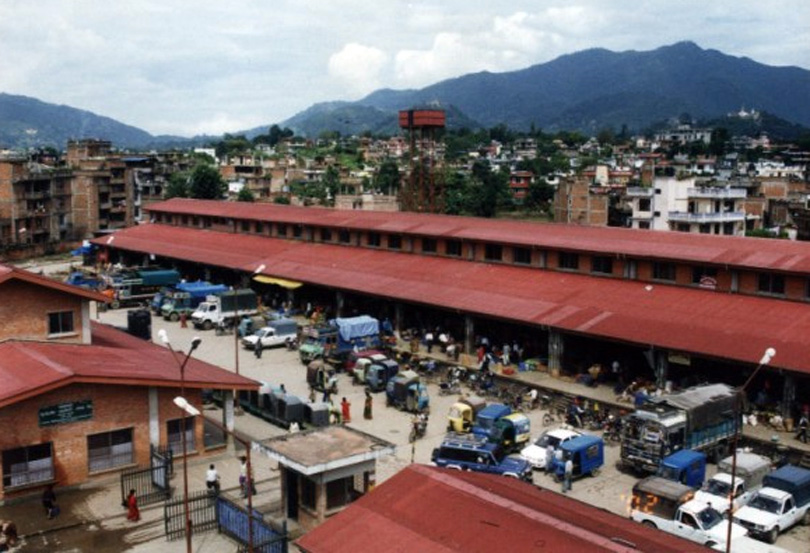
Shrestha further explained, “Not all vegetable prices have increased. While some green vegetables have risen in price, others like tomatoes and radishes have become cheaper at wholesale. Prices of potatoes and onions remain stable. Beans, cowpea, bottle gourd, and ridge gourd prices have seen slight increases.”
Potential for Further Price Increases
The committee warns that until new produce arrives in the market, prices are unlikely to decrease, and adverse weather could push them even higher. Shrestha stated, “Prices won’t drop until new production arrives. If the weather remains unfavorable, prices may climb further.”
Official data reveal abnormal rises in vegetable prices, but wholesale traders characterize the situation as normal, offering conflicting narratives. The brunt is borne by middle-income daily wage earners and low-income consumers.
Without effective market monitoring by relevant authorities, intermediaries and retailers may continue to dominate the market, leaving farmers without fair returns and consumers facing higher kitchen expenses.


