




News Summary
Reviewed.
- The government has announced the phased implementation of the Animal Slaughterhouse and Meat Inspection Act 2055 across the country following the Supreme Court’s directive.
- In the first phase, from Mangsir 1, the Act will be mandatory in all local units of Kathmandu Valley including Kathmandu, Lalitpur, and Bhaktapur.
- The Act requires licenses, pre- and post-slaughter health inspections, sanitation certification, and prohibits the sale of contaminated meat, imposing fines and jail sentences for violations.
September 21, Kathmandu – How healthy is the meat cooked in Nepali kitchens? How is the consumption of meat from animals slaughtered unhealthily on streets, roadsides, and informal stalls impacting public health?
Citizens consume meat from animals slaughtered openly on streets, riverbanks, and unclean yards, risking their health. To address these issues and regulate the meat market, the government introduced the ‘Animal Slaughterhouse and Meat Inspection Act 2055’ over two and a half decades ago.
However, due to lack of infrastructure and government negligence, this Act remained largely inactive on paper for 25 years and was shelved for nearly three decades.
Following a Supreme Court directive, the government recently announced the enforcement of this Act through a notice published in the Gazette on Bhadra 1 and is preparing for phased implementation nationwide.
In the first phase, starting Mangsir 1, the Act will be mandatory in all local units of the three districts of Kathmandu Valley (Kathmandu, Lalitpur, and Bhaktapur).
The second phase will roll out from Magh 1 to all metropolitan, sub-metropolitan, and municipalities outside the valley, followed by the third phase from Shrawan 1, 2084 BS, to all remaining rural municipalities.
According to the new provisions, operating a slaughterhouse and meat shop will require mandatory government licensing.
Pre-slaughter health inspections are mandatory, allowing slaughter only of animals certified as healthy. Only after sanitation inspection post-slaughter by meat inspectors will meat be permitted for sale.
It is strictly prohibited to mix meat from different animals, adulterate weight, or add any external substance that alters the taste or quality.
If adulterated or unhealthy meat is found during monitoring, inspectors will confiscate and halt its sale. Violators face fines from NPR 5,000 to 20,000, imprisonment from one to three months, or both under the current Act.
The sale or distribution of meat from sick or dead animals including goats, sheep, pigs, buffalo, wild boars, rabbits, chickens, ducks, and pigeons is banned.
The government is progressing with the ‘Animal Slaughterhouse and Meat Inspection (First Amendment) Bill 2082’ to strengthen the law and increase penalties up to tenfold. The new bill also aims to close many loopholes of the old Act.
Notably, the bill expands the definition of animals to include fish along with wild boars and meat businesses, bringing fish business and quality control under this law’s scope.
Previously, the term ‘meat’ referred only to healthy edible animal meat; the new bill includes raw, semi-processed, processed (ready-to-eat) meats, and packed meat products under regulatory oversight.
Fines and penalties have increased as well. Previously, slaughtering without health checks resulted in fines from NPR 5,000 to 10,000; now proposed fines range from NPR 25,000 to 50,000. Serious violations like operating slaughterhouses without licenses or meat adulteration may incur fines from NPR 50,000 to 100,000 and imprisonment.
Despite stricter laws, the country’s infrastructure remains inadequate. Many slaughterhouses are in poor condition.
Key examples include the public-private partnership slaughterhouse in Butwal Ramnagar costing NPR 220 million which closed within months, and the ‘Alpine Livestock and Bio Trade’ slaughterhouse in Thakre, Dhading, established with NPR 110 million, which also shut down after five months.
Chitwan lacks organized slaughterhouses, and old or substandard facilities dominate municipalities.
Given this situation, the government has yet to present a concrete solution on where and how thousands of animals will be slaughtered starting Mangsir 1.
Dr. Umesh Dahal, Director General of the Department of Livestock Services, stated the 28-year dormant law is now preparing for nationwide enforcement beginning in Kathmandu Valley’s first phase. He added local governments are actively cooperating.
He emphasized that slaughtering animals in small homes or rooms will no longer be permitted, and designated slaughterhouses or slaughter points set by municipalities will be mandatory.
As health inspection before and after slaughter is necessary, meat will be allowed for sale only thereafter. He stressed, ‘Nothing is more important than human health; this law is essential for public health.’
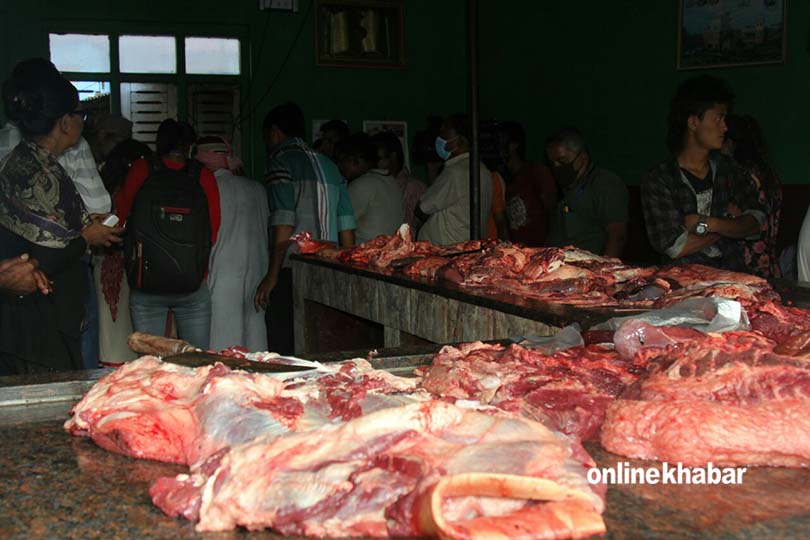
Though the price of certified meat from slaughterhouses may be higher, Dr. Dahal says health should be prioritized. Meat inspectors and local governments have been appointed for monitoring duties.
However, Ministry spokesperson Dr. Maniratna Aryal clarified that infrastructure development responsibility lies with business owners, not the government.
He explained the government will monitor and facilitate compliance regardless of whether businesses meet standards and stated the government is ready to improve Nepal’s meat market.
He also informed that coordination with courts and local governments is ongoing to operationalize many large, yet dormant slaughterhouses outside Kathmandu Valley.
View from Kathmandu Metropolitan City
Kathmandu Metropolitan City is preparing to enforce the rules strictly based on meat traders’ commitments, with severe monitoring and fines for violations.
City spokesperson Nabin Manandhar said that since traders have committed to comply with standards, there is confidence that improvements will follow.
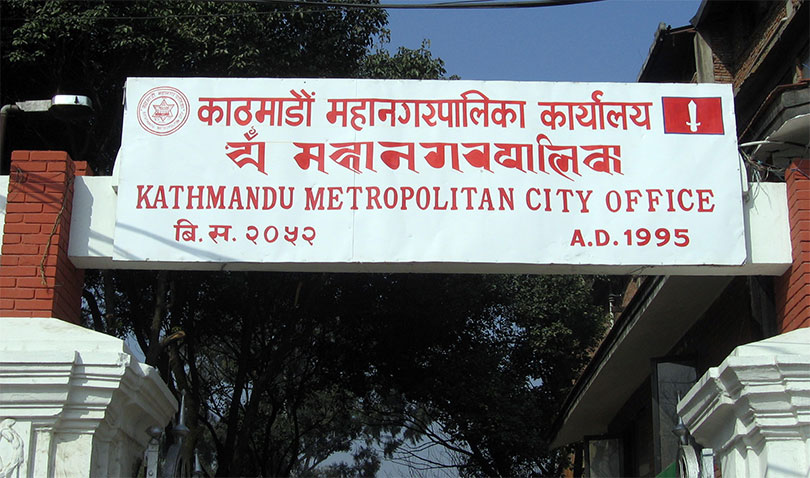
Manandhar warned that unhealthy meat sales will be stopped, and those who resist compliance will be fined.
The metropolitan office currently has sufficient meat inspectors, and there is no cause for immediate concern, he added.
He expressed trust that responsible authorities will carry out inspection duties and emphasized that time is needed before doubting the enforcement process.
Consumer Rights Activists’ Recommendations
Consumer rights activists view the amendment of the Animal Slaughterhouse and Meat Inspection Act 2055 as a positive step and stress the importance of effective enforcement.
They urge the government to act as a guardian to correct malpractice in the industry.
Recognizing that lack of infrastructure may pose challenges to enforcement, they call on the government not to reduce investments in slaughterhouse developments.
There is consensus that government and stakeholders’ investment and attention are necessary to ensure the new law’s regulations are effectively implemented.
Meat Industry’s Perspective
The Nepal Fish and Meat Traders Association views the long-unimplemented Act’s enforcement now as a positive move.
However, the association notes the lack of necessary infrastructure and absence of government monitoring in recent years have caused some disorder in the market.
Chairman Ramesh Khadgi expressed that despite the government’s renewed enthusiasm, Kathmandu Valley suffers a shortage of slaughterhouses, none under government ownership, and irregular animal slaughtering by meat shops.
He suggested establishing mini-market style slaughterhouses to operate organized businesses, believing this would ensure healthy meat supply and improve market management.
Khadgi stated, ‘Unless the government plays a guardian role and initiates slaughterhouse construction through public-private partnerships, strict laws alone will not guarantee successful implementation.’


