




News Summary
- Education Minister Sasmit Pokharel expressed commitment to revising the draft School Education Bill by incorporating suggestions from all stakeholders.
- He highlighted that only about 11 percent of the total education budget has been allocated, while international standards suggest allocating at least 20 percent.
- He noted that for the first time since 1971 BS, the process to develop a School Education Act with renewed vigor is underway.
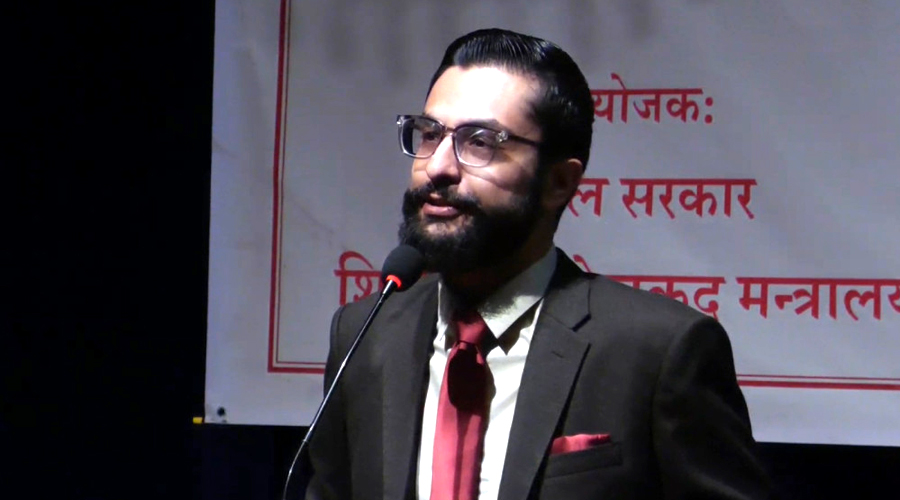
September 23, Kathmandu – Education and Sports Minister Sasmit Pokharel has committed to refining the draft School Education Bill by effectively integrating feedback from all relevant stakeholders.
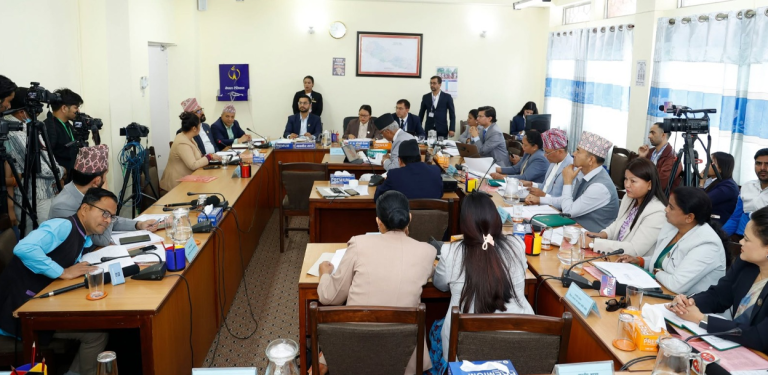
Speaking at a discussion convened by the ministry on Sunday regarding the draft of the School Education Bill, the minister acknowledged the existing challenges within the education sector and emphasized the need for collective efforts to find solutions.
Addressing the issue of investment in education, Minister Pokharel stated that although international practice recommends allocating at least 20 percent of the total budget to education, currently, Nepal allocates only about 11 percent.
He clarified issues concerning remuneration for Early Childhood Development (ECD) facilitators and school staff, noting that the funds sent by the federal government are conditional grants.
“We must increase the education budget. About 70 percent of the recently allocated budget is provided to local levels as grants. Therefore, alongside authority, the role of local governments is crucial in education reform,” Minister Pokharel said.
Using Kathmandu Metropolitan City as an example, he stated that even with minimal grants from the federal government, local bodies can mobilize their own resources to raise staff salaries. He also stressed the importance of acknowledging weaknesses in the education system.
He noted that since 1971 BS, the process of forming a School Education Act with renewed energy has been initiated and that it will be developed as a long-term framework.
“The first step to resolving any problem is acknowledging its existence. I accept the weaknesses in the roles of the federal government and the ministry. It is essential for all stakeholders to similarly acknowledge their shortcomings from their respective positions and to collectively seek solutions,” he added.








%20-%20Copy.jpg "Cozy Homes, House for Sale in Imadol")

.jpg "House for Sale in Imadol")
%20-%20Copy.jpg "House for Sale in Siddhipur")




.jpg "Bungalow for Sale in Dholahiti")

.jpg "Bungalow for Sale on Bhandari Marg")





Comments 4