




News Summary
- Rahul Gandhi described a quote from Manusmriti regarding women as shameful and asserted that women should not be subject to anyone’s subjugation.
- He emphasized that women, with their 700 million unique journeys, aspirations, and dreams, represent India’s greatest strength and asset.
- Following Rahul’s statements, Uttar Pradesh Chief Minister Yogi Adityanath and BJP leaders criticized him, stating he must be accountable to the Constitution and Indian civilization.
September 25, Kathmandu – Rahul Gandhi, leader of the opposition party in India’s Lok Sabha, has sparked controversy over his remarks on the Manusmriti text. At the “Students’ Echo” event held on Saturday in Pune, Rahul Gandhi highlighted certain passages from Manusmriti.
He called the quote about women in Manusmriti ‘shameful’ and stated, “Women should not be subjected to anyone’s authority.”
Gandhi further noted, “I want to mention this reference from Manusmriti which says that during childhood, a woman must be under her father’s control, in youth under her husband’s, and after her husband’s death, under her sons’. These words are shameful and should never have been expressed.”
He added, “Women are the greatest strength of India. They embody 700 million unique journeys, imaginations, and dreams. Women are a tremendous asset to the entire nation and must become self-reliant and have confidence in themselves.”
The controversial citation is found in verse 148 of the fifth chapter of Manusmriti. The text is criticized for denying women’s independence and personal existence and for subjugating Dalit castes.
According to Hindu scriptures, Maharishi Manu is credited with composing Manusmriti, compiled approximately between the 2nd century BCE and the 2nd century CE. It contains 12 chapters and roughly 2,684 verses.
The first chapter addresses creation. The second covers rules regarding dharma, caste duties, and brahmacharya. The third discusses marriage and women’s honor. The fourth highlights householder duties and types of hell.
The fifth chapter outlines food and drink rules, women’s duties, purity, and impurity. The sixth deals with forest dwelling and renunciation, the seventh with kingly duties, the eighth with crime, justice, and politics.
The ninth addresses ancestral property, the tenth caste mixing, the eleventh sinful acts, and the twelfth the three qualities and praise of the Vedas.
Historically, Manusmriti was considered the foundation of social order but has faced strong criticism from progressive movements. For example, Dr. Babasaheb Ambedkar publicly burnt Manusmriti on July 25, 1927, in Kolaba district, Maharashtra.
Ambedkar believed Manu structured the caste system but did not create it, though he sowed its seeds. In his works, including “Philosophy of Hinduism,” he strongly opposed Manusmriti.
At the time, Dalits and women were deprived of basic rights, and Brahmin dominance led to the caste system’s emergence. Ambedkar compared the caste system to a multi-storied building with no stairway for upward mobility.
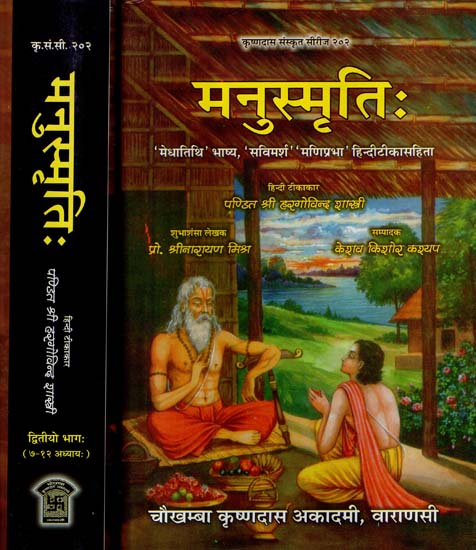 Historian Narhar Kurundkar supports Manu-smriti advocates who argue the text deserves respect similar to the Vedas. He states, “Smritis are based on the Vedas, and Manusmriti should also be interpreted in that light.”
He notes in his book that while some passages could be misinterpreted, Manusmriti contributes positively to social welfare. Kurundkar cautions against forming wrong impressions of the text.
Following Rahul Gandhi’s statements, Uttar Pradesh Chief Minister Yogi Adityanath strongly criticized him on Monday, stating Gandhi must be accountable to the country’s democracy and Constitution.
Adityanath said, “Rahul Gandhi’s statement in Maharashtra that women should break free from Manusmriti’s bonds is incorrect. Despite being the opposition leader, he opposes democracy.”
He accused Rahul of disrespecting India’s traditions and heritage after swearing allegiance to the Constitution.
He questioned, “Who lives without the support of women—mother, sister, wife, or daughter? Can a daughter exist without a father? A sister without a brother? A wife without a husband? A mother without a son?”
BJP parliamentarians and supporters chiefly criticized Rahul Gandhi. BJP MP Nishikant Dubey advised him, “Read first, understand, then speak.”
BJP leader Amit Malviya urged that only selective excerpts should not be highlighted for propaganda, asserting the Manusmriti honors women. He criticized Rahul for politicizing Hindu scriptures.
Malviya stated, “Rahul Gandhi should not view Hindu religious texts through a political lens and must at least read them honestly. Indian civilization cannot be understood through a Western perspective.”
(From Agencies)


