‘Preserving Decomposed Bodies in Refrigerators Is Not Safe,’ Says Dr. Gopal Chaudhary





Summary
The content has been editorially reviewed.
- Dr. Gopal Chaudhary emphasizes that during disasters when numerous bodies are found, documentation, DNA sample collection, tagging, and mapping are essential for body management.
- He states that decomposed bodies cannot be safely preserved in refrigerators and that scientific temporary burial is the suitable method.
- He urges not to consider temporary burial as permanent cremation, since burning bodies might lead to loss of identification and infringe on relatives’ religious and cultural rights.
During floods, landslides, and other natural disasters, the rescue and retrieval operations as well as management of deceased bodies pose significant challenges. The discovery of a large number of bodies, difficulties in reaching remote areas, and managing bodies that have already started decomposing are major issues. There is often debate about whether to cremate or temporarily bury these bodies.
According to Dr. Gopal Chaudhary, Head of the Forensic Department at Tribhuvan University Teaching Hospital, body management during disasters must consider not only emotional aspects but also scientific, legal, and human rights perspectives.
It is necessary to secure body identification, collect DNA samples, tag bodies, maintain records of management locations, and assign responsibility to relatives after identification.
The following is a segment from an interview with Dr. Gopal Chaudhary conducted by Sumitra Luintel focusing on body management, identification, and temporary burial of flood victims:
How challenging is managing bodies when a large number are found during disasters?
Keeping bodies safe during disasters is a massive challenge. This is an issue faced by countries worldwide. Under normal circumstances, refrigeration is the most effective method to preserve bodies by slowing decomposition.
However, disasters often cause mass casualties, and when many bodies arrive simultaneously, it becomes impossible to store all in refrigerators.
Nepal’s geography also complicates this; many areas are difficult for rescue teams to reach promptly, which means bodies may begin decomposing before recovery.
Is it true that decomposed bodies cannot be safely kept in refrigerators?
Refrigeration works only if applied before decomposition begins. If bodies are refrigerated promptly, the decomposition process can be delayed or halted temporarily.
Once decomposition starts, placing bodies in refrigerators cannot completely stop this process.
Even when a body is refrigerated after decomposition, the process continues internally. Therefore, storing already decomposed bodies in refrigerators is not the optimal solution in most cases.
Then, how should a large number of decomposed bodies be scientifically managed?
Internationally, temporary burial underground is the recommended method in such cases. When managing mass casualties, bodies should not be haphazardly buried; instead, scientific protocols for temporary burial must be followed.
Before burial, all body details must be documented. Identification information and other records should be compiled. DNA samples must be collected and bodies clearly tagged.
Exact records of burial locations must be maintained. Mapping, possibly including digital or Google mapping, should be conducted to ensure secure and traceable locations.
Why is collecting DNA samples from bodies important?
DNA is the primary basis for identification. In disaster situations, facial recognition may be impossible due to the body’s condition. DNA testing then becomes essential for identifying the deceased.
Hence, before managing bodies, DNA sampling and profiling processes must be initiated. DNA samples should also be collected from relatives of missing persons.
Police or investigative authorities should coordinate the collection of DNA samples from families.
These samples are profiled in laboratories and compared with those from deceased bodies to confirm identity.
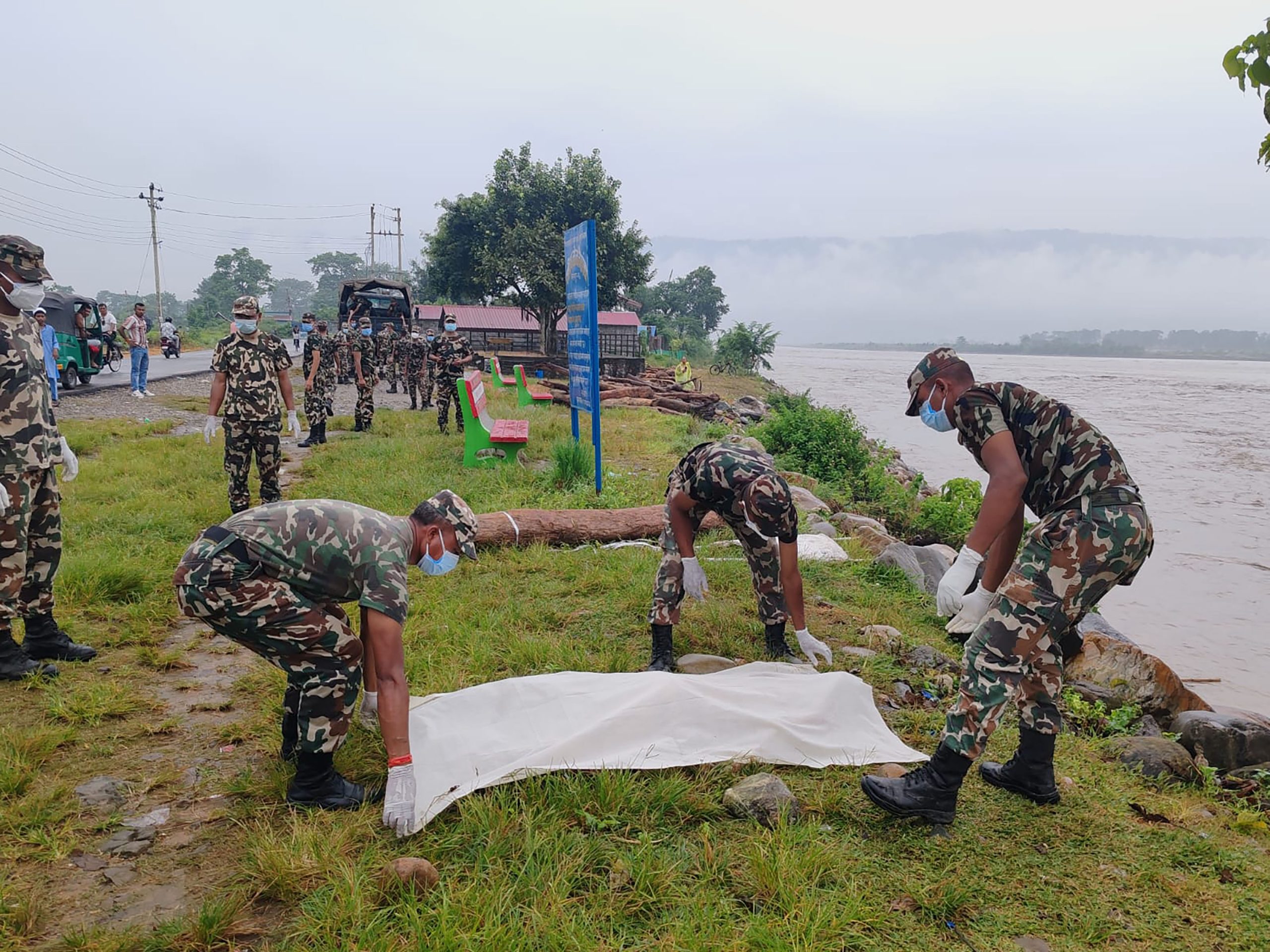
Why is it necessary to keep records of burial locations?
After temporary burial, it is crucial to know exactly where each body is located. Hence, tagging and mapping are extremely important. For example, one body may be temporarily buried in Chitwan while another in Dhunche.
With DNA testing, once identification is confirmed, tagging enables retrieval of the specific body from the recorded location.
The body or remains can then be exhumed and handed over to relatives, allowing proper religious and cultural funerary rites. Thus, random burial without record-keeping is unacceptable, and the current procedure reflects this scientific approach.
How long can a body remain preserved when temporarily buried underground?
Decomposition slows down underground due to reduced oxygen and cooler temperatures.
Soft tissue decomposition is delayed for roughly two to three months, but over time, soft tissues decay. After about one year, bodies typically reduce to skeletal remains.
Therefore, the purpose of temporary burial is not permanent preservation but to scientifically manage the remains until identification and handing over to families is completed.
Why is temporary burial appropriate for already decomposed bodies?
Decomposed bodies cannot be restored to their original state by refrigeration. Hence, temporary underground burial is the practical and scientific approach in such scenarios.
After about one year, while most soft tissue is gone, bones remain intact to serve as vital evidence for identification. Once matched, remains can be returned to families to conduct funerary ceremonies complying with their religious and cultural traditions.
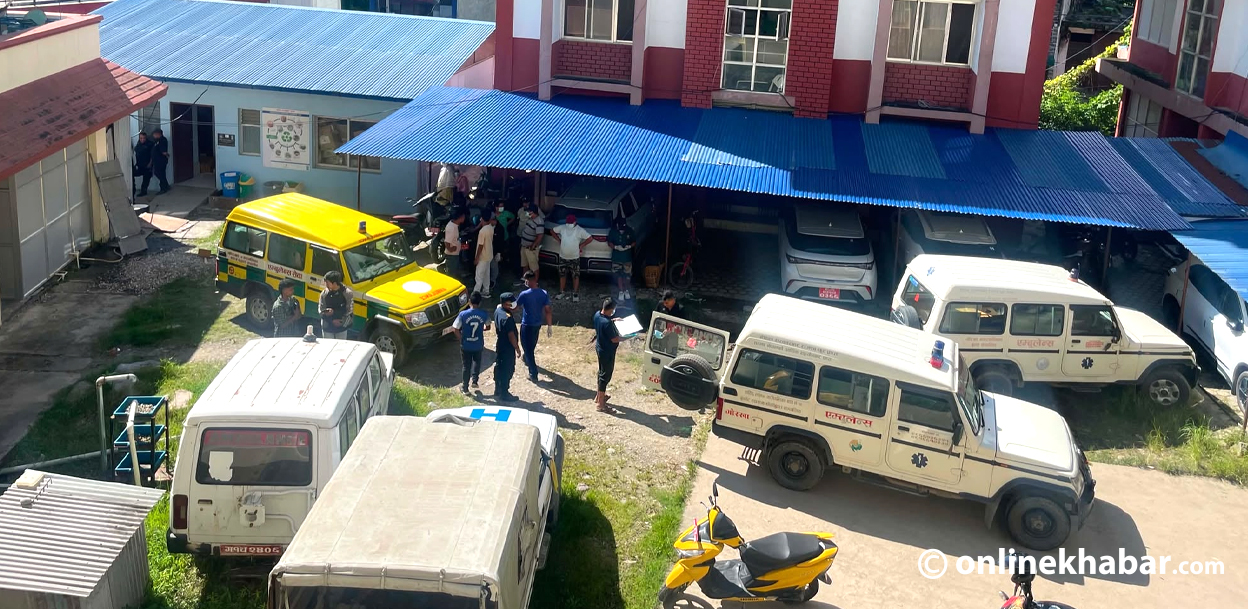
Some claim that immediate cremation is better than burial. What is your opinion?
This perspective is neither scientifically nor human rights-wise appropriate. Cremation destroys vital identification evidence.
The identity of the deceased and relatives’ rights are paramount. While most Nepalese are Hindu, there is religious diversity and customs vary. Foreign nationals affected by disasters also have their own religious and burial rights.
Immediate cremation of decomposed bodies can render identification impossible and may deprive families of their religious and cultural mourning rights.
Does this apply to foreign nationals as well?
Yes, the same principle applies. Foreign nationals affected by disaster in Nepal also have rights.
Embassies actively seek to identify and assist their citizens. Thus, identification and handing over remains to families or home countries is essential.
Decisions to immediately cremate based solely on decomposition or odor risk creating significant human rights and legal issues.
Is it true that bodies cannot be buried randomly?
Bodies must not be casually buried. Temporary burial is a scientific process which the government currently follows, including documentation, DNA collection, tagging, and mapping.
All details including which body is buried where and where samples are stored are meticulously recorded. When DNA matches occur, bodies can be exhumed and given to families.
How does human rights factor into body management?
Human rights extend beyond the living to include the deceased’s right to respectful funerary treatment.
If bodies are burned or buried without proper identification or record-keeping, families may lose the right to perform religious and cultural rites for their loved ones.
Temporary burial ensures both identification security and respect for deceased and relatives.
Is there any risk of disease from temporary burial?
Decomposed bodies can cause odor and health hazards during long transport or postmortem examinations, potentially causing additional health crises in disaster settings.
Thus, scientifically managed temporary burial with prior DNA collection and record-keeping is the safest method. Once identification is complete, remains can be handed over to families.
Has this practice been implemented in Nepal before?
This is not new for Nepal. The 2015 earthquake saw similar procedures, with about 32 bodies temporarily buried underground.
Later, relatives provided DNA samples for matching, and after identification, remains were handed over.
Therefore, current temporary burial should not be mistaken for permanent cremation but viewed as a temporary, identification-preserving process.
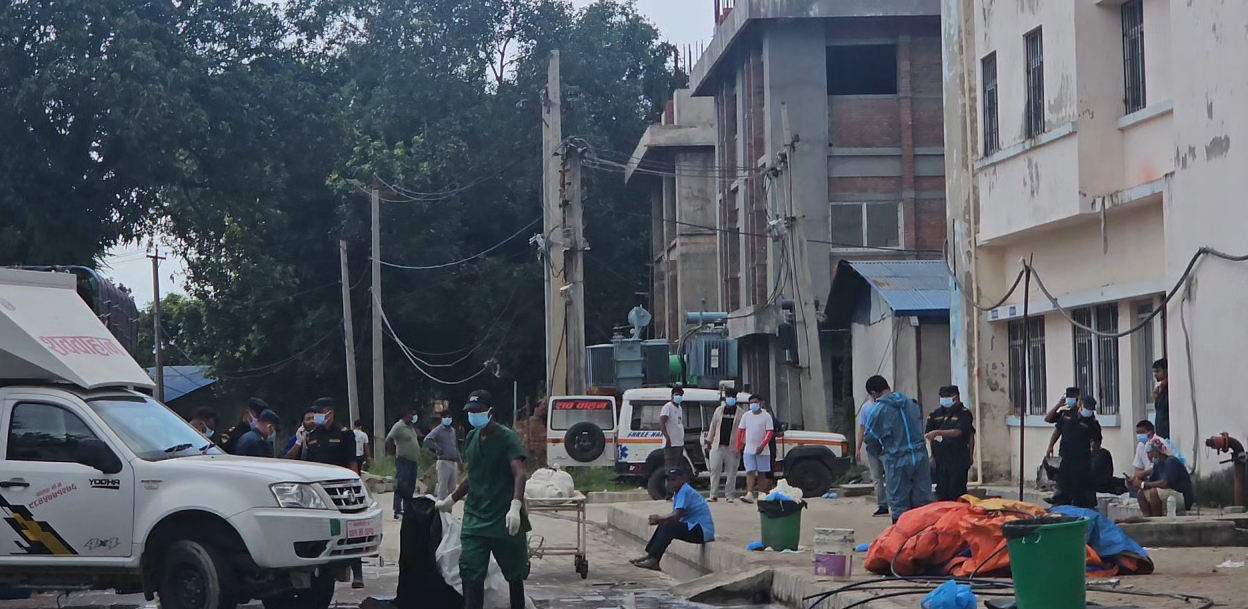
What is the most crucial process when managing newly discovered bodies?
Documentation is the foremost priority. Forensic experts and clinicians must record all identification information. DNA samples need to be collected and bodies clearly tagged.
Precise identification and secure mapping of burial locations are necessary.
DNA samples from relatives of missing persons must also be collected and profiled in laboratories. Once a match is found, the specific remains can be located, exhumed, and handed over for burial following their religious and cultural practices.
Finally, what should the public understand about the current temporary body management?
It should not be regarded as permanent cremation. This is a temporary and scientific process aimed at preserving identification, records, and remains safely.
Disasters exert huge emotional pressure, but decisions must be made thoughtfully and scientifically. Rather than randomly burning or burying bodies, every possible effort must be made to preserve identification.
Saving lives is paramount, but giving deceased individuals respectful funerary treatment is equally important. Thus, during disaster body management, scientific techniques, forensic procedures, DNA identification, proper documentation, and human rights must all be considered together.


