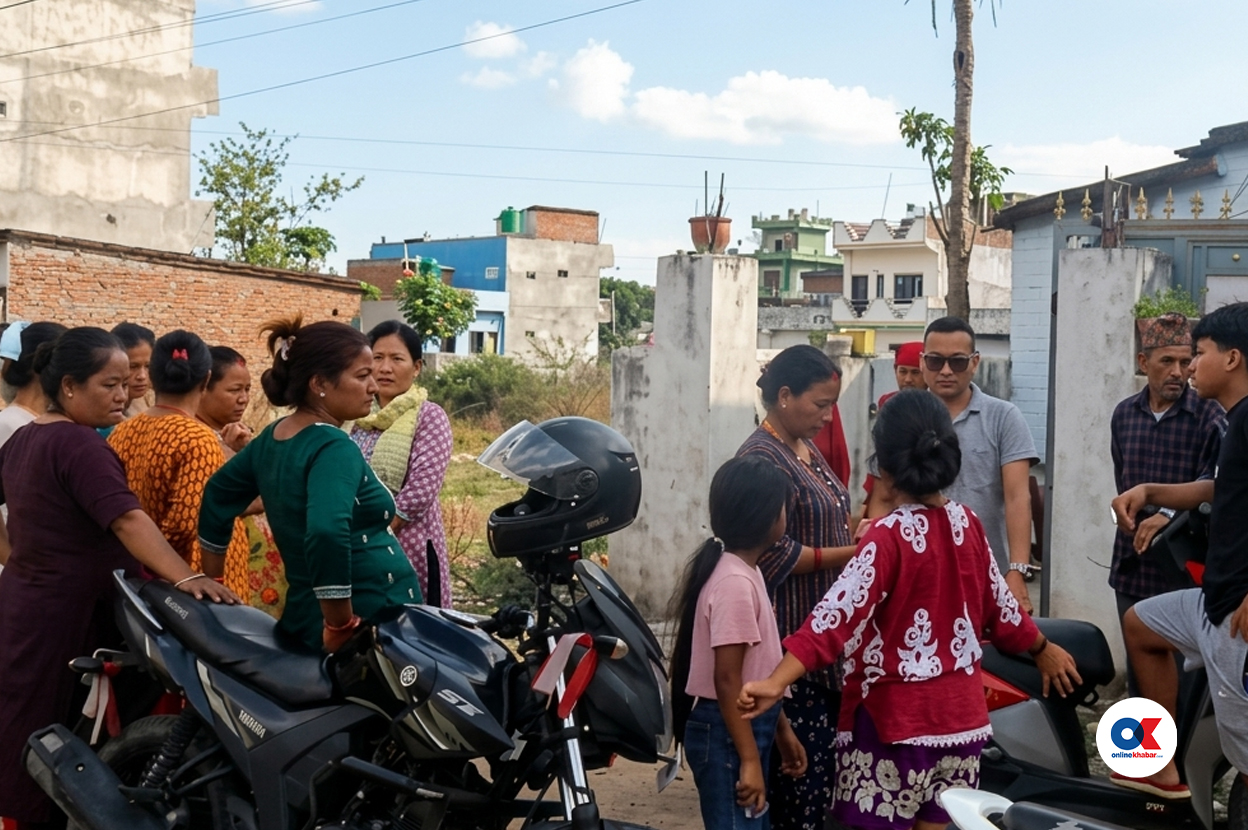
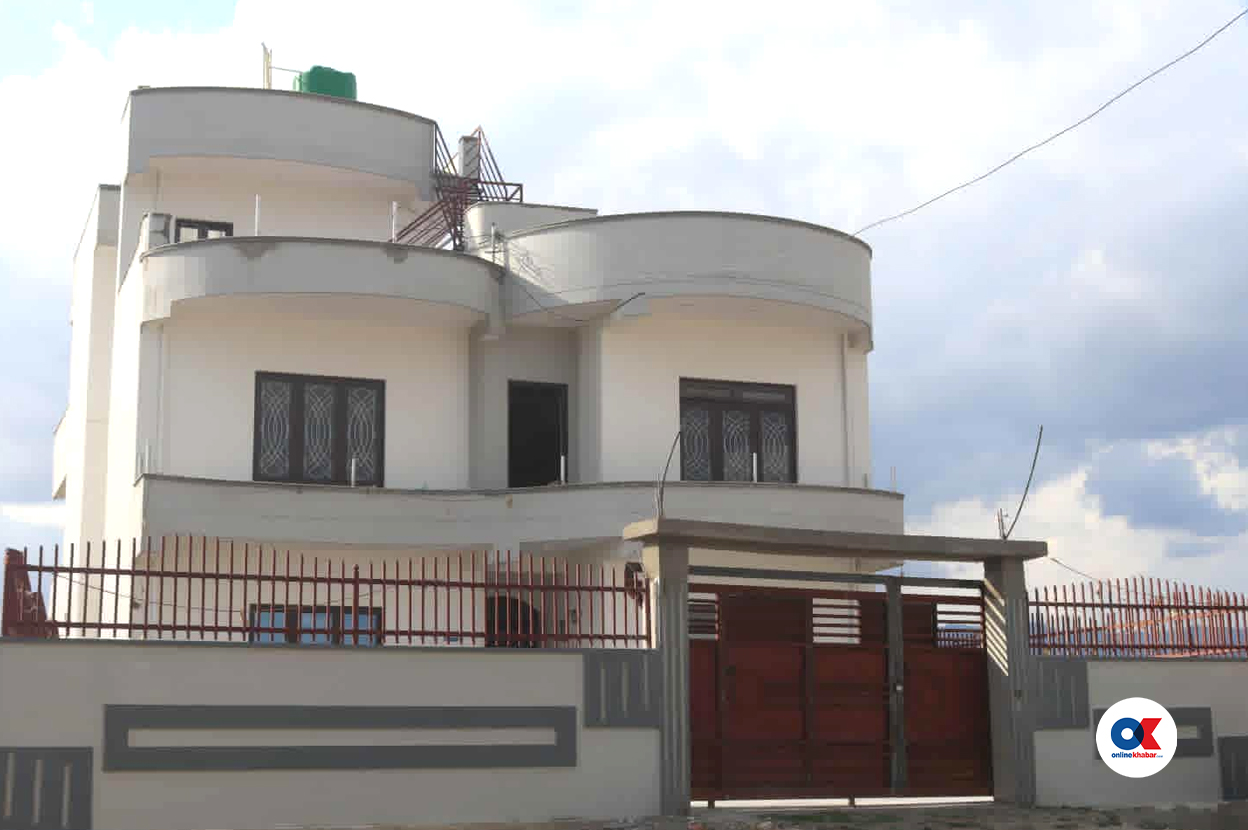
While recounting history in Kathmandu, a team of 15 to 20 personnel from the Nepal Police had left from there. After they all departed, Krishna fell silent and said, ‘It feels as if they swallowed everything up and left. We were left helpless.’
President Ramchandra Paudel, upon the recommendation of the Council of Ministers, has promulgated the Prevention of Money Laundering (Third Amendment) Ordinance, 2083. Kathmandu, 18th Baishakh. According to Ritesh Kumar Shakya, spokesperson of the President’s Office, the ordinance has officially been issued.
So far, the government has submitted eight different ordinances to the President’s Office. Among these, ordinances related to cooperatives and public procurement have already been promulgated. The remaining ordinances are still under review. On Thursday, President Paudel held discussions with legal experts regarding several ordinances, including those concerning the Constitutional Council.
The Open Institute for Social Sciences has distributed the ‘Ethnography Writing Award.’ This competition was organized to promote quality and scientific research in the field of social sciences, recognizing outstanding works selected from authors nationwide. In the competition, Shristha Bisht’s article titled “The Daily Life World of Out-of-School Children in Urban Informal Settlements” secured first place, winning a cash prize of NPR 100,000.
Similarly, Chiring Cholmo Gurung’s “The Door That Phoolmaya Never Opened” achieved second place, and Yukta Sunuwar’s “Flourishing Within the Dissection of Compassion” took third place; both received NPR 25,000 each. Considering the substantial outflow of currency as hundreds of Nepali students seek higher education and opportunities abroad annually, the institute has been conducting internationally recognized academic programs within Nepal for the past seven years.
The institute stated that it has initiated this new ethnography writing competition to further strengthen these efforts. At the event, chief speaker Dr. Muktasing Lama remarked that such awards create new debates and a flourishing research environment in the field of social sciences.
The Narcotics Control Bureau team from Koteshwor has arrested four individuals from different locations in Kathmandu, seizing a pistol, bullets, and Tramadol. The arrested are Kabir Deula from Budhanilkantha Municipality-5, Sabina Pode, Sansar Sitaula, and Subas Shahi from Godawari Municipality-11, Lalitpur. Confiscated items include one pistol, three magazines, four rounds of bullets, two rounds of SLR bullets, and 16,750 tablets of Tramadol. Dated 18th Baisakh, Kathmandu.
Deputy Superintendent of Police and spokesperson for the Narcotics Control Bureau, Durgaraj Regmi, informed that “Our team has arrested four individuals from various locations in Kathmandu with one pistol, magazines, bullets, and the narcotic Tramadol. Investigations are underway regarding the individuals.” He further detailed that the police confiscated one pistol, three magazines matching the pistol, four rounds of pistol bullets, two rounds of SLR bullets, and 16,750 tablets of the controlled narcotic Tramadol from the arrested suspects. The police are continuing necessary investigations into the matter.
At the Ramhari Krishna Memorial Third National Rapid and Second National Blitz Chess Championships held in Kathmandu, FM Kshitij Bhandari and Kritisara Adhikari emerged as the champions. Kshitij Bhandari scored 8.5 points in the Rapid category and a perfect 9 points in the Blitz category, making significant improvements in his individual rating. Female national rapid champion Kritisara Adhikari demonstrated an excellent performance with 6 points, matching a rating of 1910.
In the National Rapid Championship, Kshitij Bhandari, with a rating of 2136, secured the title by scoring 8.5 points over 9 rounds. He achieved an impressive individual rating increase of 31.4 points, reaching a peak rating of 2360. Additionally, in the Blitz category, Kshitij Bhandari from Makwanpur was declared the national champion with a full 9 points. Female rapid champion Kritisara Adhikari, holding a rating of 1759, secured the national title with 6 points.
On this occasion, national champion Kshitij Bhandari was awarded a cash prize of NPR 50,000, while female champion Kritisara Adhikari received NPR 15,000 along with a trophy, medal, and certificate. The national chess competition saw the participation of 180 players from various districts, with 53 players winning a total of NPR 300,000 in cash prizes across different categories. The event was chaired by club president Gopal Mali, and acting mayor Sunita Dangol described chess as an intellectual sport, expressing Kathmandu Metropolitan City’s commitment to promoting games.
April 30, Myagdi – A dozer operator died when a landslide buried the vehicle in Raghuganga Rural Municipality-1, Beg, Myagdi on Friday. During the road construction from Bhijra to Bhajne in Beg, a landslide occurred, burying a dozer owned by Ruisee Deurali Construction Pvt. Ltd. The operator, 51-year-old Padam Karki from Bhagwati, Raghuganga Rural Municipality-2, was confirmed dead by the district police office.
While excavating the road route from Mithila, a dry landslide occurred, burying both the dozer and the operator. Police and local residents conducted rescue efforts for about four hours before retrieving Karki’s body from the debris. Police Inspector Sagar Timilsina, present at the scene, informed that other dozers and backhoe loaders were deployed to recover the body, which was then sent to Province Hospital Beni for postmortem examination.
On Chaitra 25, Nepali Congress has resolved to cancel all existing active memberships and update them through a new membership system. A faction outside the establishment has opposed this update, calling it against party bylaws and disrespectful to historical warriors. The Congress has mandated members to fill out forms, take photos, and receive Congress ID cards as part of the update process.
Kathmandu, Baisakh 18 – As the 15th General Convention approaches, controversy over active membership within Nepali Congress has reached its peak. While the leadership seeks to digitalize and strengthen the party by introducing a new membership system, the faction outside the establishment has indicated rebellion, claiming the move violates party bylaws and dishonors historic fighters. The dispute intensified after President Gagan Kumar Thapa declared at a provincial-level electoral review event in Madhesh Province on Chaitra 25 that all old active memberships have been canceled and members must update their status through the new process.
The Central Working Committee of Congress, during its meeting on Chaitra 10-11, decided to initiate a campaign and special arrangements for updating all active memberships from the 14th General Convention. President Thapa announced the cancellation of active memberships during the Madhesh provincial election review, stating, “By decisions from the previous Central Committee, we have canceled all active memberships of the Nepali Congress party. All memberships are canceled. There are no active memberships now.”
Decision number 5 of the meeting outlined, “To organize, streamline, and simplify the distribution, management, and record-keeping system of the party’s existing active memberships, it was resolved to update all memberships once by having every member fill out a reactivation form according to the Nepali Congress Constitution 2017 (11th amendment).” The committee also decided to conduct a month-long special membership update campaign, called ‘Jarma Jaaun Abhiyan,’ throughout all 743 wards of the country during the month of Baisakh.
The government has recently implemented a new system of paying employee salaries every 15 days. With no substantial salary increases in the past four years, inflation has pushed employees into poverty. The author suggests that strict measures are needed for salary hikes, health and education benefits, and corruption control.
In the country’s administrative structure, the civil service is considered the backbone of state operations. From policy formulation to service delivery, the responsibility rests on the employees’ shoulders. Ironically, this backbone is now being crushed under severe financial constraints and rising inflation.
The newly introduced biweekly salary payment system is viewed as either an appealing and modern arrangement or merely an administrative experiment. This has become a critical topic of debate today. In previous decades, coalition governments led by UML, Congress, and Maoist parties routinely increased salaries by 10 to 15 percent every two years through budget provisions. However, there have been no significant salary increases for employees in the last four years.
A key question is how the biweekly salary system will affect employees’ lives. Receiving 50 percent of their salary every 15 days, what needs can an employee realistically meet? Major expenses such as rent, bank installments, and children’s costly school and tuition fees require substantial amounts. Half a salary might only cover gas and basic household groceries. How do employees manage the remaining 15 days’ expenses? This system has reportedly added to employees’ mental stress.
Discussions on corruption control and good governance have become a trend lately. However, when the state fails to provide its employees with wages sufficient for a “respectable life,” workers are forced to seek alternative and sometimes illegal means. In Nepal, the situation is paradoxical—the government promotes slogans of good governance but expects honesty from employees who are left hungry. The decision to pay salaries every 15 days is merely a technical adjustment. What Nepal’s civil service truly needs is not just technical reform but economic justice and dignity.
(The author, Shahi, is a civil servant working in Karnali Province, Dolpa.)
Nepal clinched a crucial win over the UAE today by a thrilling margin of 6 runs. In an ICC Cricket World Cup League 2 encounter, Dipendra Singh Airey played a key role in the victory, scoring 100 runs off 94 balls. Nepal posted 289 runs for 7 wickets in their allotted 50 overs, while the UAE, chasing a target of 255 runs in 38 overs as per the DLS method due to rain, managed only 248 runs for 8 wickets.
On 18th Baishakh in Kathmandu, Nepal hosted the UAE at the Tribhuvan Cricket Ground as part of the ICC Cricket World Cup League 2. Despite Mohammad Shahdad top-scoring for the UAE with 65 runs, it was not enough to secure victory. Shahdad formed a significant 80-run partnership for the third wicket with Harpreet Singh, who contributed 41 runs. Other UAE batsmen included Aryash Sharma with 33, Adib Usmani 14, Mohammad Juhaib 1, and captain Mohammad Wasim, who was dismissed without scoring.
Khaijima Vin Tanvir scored an aggressive 49 runs from 26 balls, while Akshdeep Nath remained unbeaten on 26 off 32 balls. Bowling for Nepal, Sandeep Lachhimani took 3 wickets, with Sompal Kami and Nandan Yadav claiming two wickets apiece.
Batting first, Nepal won the toss and scored 289 runs for 7 wickets in their full 50 overs. Vice-captain Dipendra Singh Airey showcased an impressive century, hitting 13 fours and one six. After four years, Vinod Bhandari returned to the national squad, adding 56 runs in his comeback match. Gulsan Jha scored 44, opener Arjun Kumal made 11, captain Rohit Paudel contributed 39, while Bhim Sarki was dismissed without scoring. Arif Sheikh made 11 before getting out, and Sompal Kami remained not out without scoring.
Among UAE bowlers, Ajay Kumar and Junaid Siddiqui took two wickets each, while Haider Ali and Khaijima Vin Tanvir picked up one wicket apiece. Nepal will play their fourth match against Oman on Tuesday.
Authorities in the Gothatar squatter settlement issued a morning announcement ordering residents to vacate the area. Seventy-two-year-old Pampha Damai, who has lived in her makeshift shelter for 13 years, expressed deep concern about having to leave her home. Pampha shared her life struggles and family situation as she waits for assistance. Kathmandu, April 30 – Early this morning, the police administration announced via loudspeakers, “Evacuate the settlement.” Pampha Damai, 72, a resident of the Gothatar (Love Danda) squatter community, was left uncertain. “I have trouble hearing well. Neighbors told me we have to leave,” she said. The process of clearing the homes began. Some started dismantling their zinc-sheet roofs, others went to find new places to stay, some were packing their belongings. Pampha’s shelter was little more than a hut surrounded by corrugated sheets. “Yesterday’s rain soaked my clothes,” she explained, as she tried to dry clothes outside her door. There is nowhere to properly hang or shelter her belongings. Pampha has spent 13 years living in this makeshift shelter. “They say I should find another room, but I have nowhere to go and no money to rent a place,” she lamented. She sustains herself by sewing clothes and lighting a stove inside her shelter. “I still have my sewing machine and can work. If I don’t work, who will feed me?” she said, undeterred. Yet the order to vacate has caused tremendous anxiety about where she might go. “I cannot go anywhere. I won’t allow them to demolish my shelter. If the police come to take me, I will go wherever they take me,” she explained, resigned to having no other options. During the House of Representatives election on March 4, she voted for the Rashtriya Swatantra Party. “I voted for Ghanti. And now he has done this,” she said, showing her voter ID card in frustration. Pampha had 16 children, but now she is alone. “Fourteen have passed away. Only one daughter and one son are left. My daughter said she’ll come tomorrow,” she shared. Her son works in solid waste management. Pampha lost her husband in 2001. She had been married in Thimi, Bhaktapur, before moving to Gothatar. At that time, she owned two to three aana of land. “My husband had cancer. We had to spend the land income on his treatment and raising the children. In debt, I sold the land and came to live in this squatter settlement,” she explained. “So where else can I go now?” While her neighbors prepare to leave the settlement, Pampha remains alone in her hut, waiting for rescue.
The Ministry of Agriculture and Livestock Development has implemented a new ‘Subsidized Fertilizer Distribution Management Procedure 2082’ to ensure that chemical fertilizers are more accessible to farmers. This procedure regulates the entire process from quota allocation to distribution, including the provision for quota distribution down to local levels. Sellers found engaging in irregularities with fertilizer distribution will have their certificates revoked, and monitoring and management will be conducted by committees across five administrative levels. Kathmandu, April 30.
With the goal of providing farmers with easier access to chemical fertilizers, the Ministry of Agriculture and Livestock Development has introduced this stringent new procedure. On April 29, Agriculture Minister Geeta Chaudhary approved the second amendment to the ‘Subsidized Fertilizer Distribution Management Procedure 2082’. Once implemented, farmers are expected to receive chemical fertilizers more conveniently, while the supply and distribution system will become organized, transparent, and more effective.
The ministry believes that the full implementation of this procedure will significantly contribute to increasing agricultural production and productivity, strengthening the country’s food security, and ultimately supporting overall economic prosperity. The government will now provide fertilizers to farmers as subsidies based on cost-sharing. To create a scientific fertilizer distribution system, the ministry has established clear and mathematical criteria for quota determination.
To prevent black marketing and price inflation, the government has set fertilizer prices at the import point. The import point prices for subsidized fertilizers have been fixed at NPR 14 per kilogram for urea, NPR 43 for DAP, and NPR 31 for potash. The procedure mandates transparency, stating that “local governments must arrange for local committees to display the price determined for sale at both the local government office and the vendor’s sales point in a manner visible to all.”
April 30, Kathmandu – Former King Gyanendra Shah and his family are currently staying in Pokhara. On Friday, former Queen Komal Rajyalakshmi Devi Shah, along with the royal family, was seen at ‘Chu Mee Chinese Restaurant,’ located inside the 31 Park Hotel in Barahighat, Pokhara. They visited the restaurant for a meal. According to the hotel, their presence enriched the venue with a distinguished and dignified atmosphere.
“Friday afternoon was special for us as we had the opportunity to warmly host former King Gyanendra Shah, former Queen Komal Rajyalakshmi Devi Shah, and the royal family for a meal,” the hotel shared. After dining, Former King Shah expressed his satisfaction with the restaurant’s hospitality, service, and ambiance. He praised Pokhara’s tradition of hospitality and expressed his belief that such quality services will further enhance the tourism sector, according to a hotel staff member.
‘Chu Mee Chinese Restaurant,’ situated within the 31 Park Hotel premises and backed by investment from the Anshuwara Group, is renowned for its premium Chinese cuisine in Pokhara. Local tourism entrepreneurs believe that high-profile visits like this and the positive feedback they generate contribute significantly to strengthening Pokhara’s reputation as a tourism destination.
A jeep accident in Rolpa’s Jaljala claimed the lives of 20 people on the spot, including nine members of the Jisi family.
Yam Bahadur and Dropada Jisi, their daughter Yuba, and grandson Divyansh were among nine family members who died while traveling to attend religious ceremonies.
The Jisi couple had just built a new home and were preparing for their daughter Yuba to depart for the United States before the tragic accident.
18 Chaitra, Kathmandu – Just days before their daughter was scheduled to fly to the United States, the family was also looking forward to moving into their newly constructed home.
To celebrate this joy and perform customary rituals, Yam Bahadur and Dropada Jisi from Ghoreahi Sub-metropolitan City-15 Ratnpur took their daughter, daughter-in-law, and grandchildren—a total of nine family members—out from their home.
They had chosen the special occasion of Chandi Purnima on Friday for this visit. However, a tragic road accident the day before the full moon cast a shadow over their happiness.
The jeep carrying the Jisi couple and other passengers left Rukumkot heading toward Jaljala in Rolpa to participate in worship ceremonies. The vehicle, which had a capacity of 21, crashed on the hilly terrain of Thabang Rural Municipality-1 and 4. Preliminary police investigations attribute the accident to slippery roads caused by rain.
Twenty passengers died on the spot, including nine members of the Jisi family.
Accident Occurred During Religious Visit
According to neighbor and relative Malati Thapa, former policeman Yam Bahadur Jisi and his wife Dropada lived in Ghoreahi-15 Ratnpur. Their 28-year-old daughter Yuba Bisi’s husband, Deepak Budhathoki, holds a US green card, and Yuba was preparing to travel to America on Baishakh 29 to join him.
The family had two reasons for joy: their daughter’s upcoming move to the US, and their long-awaited plan to settle into a new house.
To celebrate, the family was traveling to Jaljala for pilgrimage. Additionally, they intended to inquire about the health of Yuba’s brother-in-law who was ill.
The family gathered at Yam Bahadur’s home.
“The family was filled with happiness because Yuba was set to leave for America,” Malati said, “But in an instant, their joy turned into heartbreaking sorrow.”
Yam Bahadur, Dropada, their daughter Yuba, and 10-year-old grandson Divyansh lost their lives. Additionally, their daughter-in-law Tila Bisht Jisi and her two children—7-year-old Janis and 12-year-old Janisa—also died. Tila’s husband Govinda Jisi currently resides in the United States.
Their 25-year-old daughter, Elina Jisi, and her 7-year-old son Sanyog Jisi also perished. Elina’s husband is currently in Italy.
Family Lost Before Moving into Newly Built Home
Yam Bahadur and Dropada Jisi had recently built a new home in Ratnpur, Ghoreahi. Previously, they had lived in a smaller house. Neighbors recall that the family worked hard to construct this larger house.
The couple had planned to move in within days, but they took their final leave from life before ever settling into their new home.
Neighbor Malati Thapa described the Jisi family as one of the happiest and most prosperous in their neighborhood. Most of their sons and sons-in-law are abroad, and there was added happiness about their daughter’s move to America.
“Who would have thought the cheerful family would return like this? It’s hard to believe this happened. This tragedy has left the entire village in mourning,” she said.
As the Indian rupee (INR) reaches its weakest point in history, the Reserve Bank of India (RBI) has not managed to increase the supply of US dollars. Factors such as conflict in the mid-west region, rising oil prices, and higher US interest rates have contributed to the depreciation of the Indian rupee. This decline has also impacted the Nepalese rupee, causing its exchange rate against the dollar to fall. Kathmandu, 18th Baisakh.
The RBI typically attempts to stabilize the rupee’s value by increasing dollar supply; however, it has not expanded dollar availability under the current circumstances. The ongoing conflict in the mid-west and alternative international trade strategies have weakened the Indian rupee. Recently, BRICS countries, including India, have been preparing to develop an alternative currency to the dollar.
On Friday, not only the Indian rupee but also the Nepalese rupee weakened against the US dollar. The exchange rate system between Nepal and India remains stable, fixed at 160 Nepalese rupees for 100 Indian rupees. When the rupee weakens against the dollar, the Nepalese rupee naturally depreciates as well, even without direct internal causes. Currently, the exchange rate is 94.88 Indian rupees per US dollar, while the Nepalese rupee’s buying rate is 151.56 and selling rate is 152.16.
According to Gurupadsad Paudel, spokesperson for Nepal Rastra Bank, the exchange rate against the dollar is calculated based on changes in the Indian rupee, which affects the Nepalese exchange rate. He reported that in April 2026, India recorded an outflow of 110 billion rupees and noted, “The Indian rupee depreciated by 5.5 percent during April.” He explained that global political instability has increased investor confidence in the dollar, leading to the decline of the Indian rupee.
April 30, Dhangadhi. The Kailali police detained 30 individuals during raids conducted at various hotels in Dhangadhi. The police launched these operations following intelligence reports indicating unethical activities occurring at these establishments. The raids were carried out by a team led by District Police Office spokesperson, Deputy Superintendent of Police (DSP) Yogendra Timilsina.
According to DSP Timilsina, the raids targeted hotels located in Dhangadhi Sub-Metropolitan City wards 1, 3, 7, and 8, based on the information about ongoing illicit activities. During these operations, 17 women and 13 men, totaling 30 individuals accused of engaging in and promoting these unethical acts, were taken into custody.
The police apprehended seven persons at Black Stone Cottage, four at Samjhana Hotel, five at A M and A Hotel, five at Prince Hotel, six at Karnali Hotel, and three at Everest Hotel in Dhangadhi. The detained individuals remain in custody as further investigations proceed.