
Author: space4knews

Nepal Poised to Become a ‘Clean Energy Powerhouse’ for AI and Data Centers

April 20, Kathmandu – The American Chamber of Commerce in Nepal (AmCham Nepal) has launched its prestigious ‘Washington Door Knock’ program with an ambitious proposal to link Nepal’s hydropower resources with energy-intensive digital infrastructures such as artificial intelligence (AI), blockchain, and data centers. A delegation including AmCham Nepal’s Founding Chair Ajit Vikram Shah, Mogha Energy President Samarth Mogha, and AmCham Executive Director Amir R. Thapa engaged in in-depth discussions with senior officials from the US government and private sector on various critical investment issues.

The delegation held focused meetings with the US Department of State, Department of Commerce, Department of Energy, US Trade and Development Agency (USTDA), and the US International Development Finance Corporation (DFC). These discussions centered on positioning Nepal as a reliable and competitive destination for next-generation investments, AmCham stated. The mission’s core theme was the ‘Hydro-to-Data’ concept.

AmCham aims to leverage Nepal’s vast hydropower potential to supply energy for globally expanding sectors based on data processing, AI computation, and blockchain technologies. With abundant renewable energy sources and competitive pricing, Nepal is well-equipped to sustainably power hyperscale data centers, AI training models, crypto mining, cloud computing, and decentralized digital systems, the chamber emphasized.

“Bold thinking is essential for transformative change,” said Ajit Vikram Shah, Founding Chair of AmCham Nepal. “Nepal must transition from secondary aid dependency to trade by aligning with global economic shifts to secure long-term prosperity.” As part of the campaign, AmCham plans to collaborate with the US Energy Association to organize a US-Nepal Energy Roadshow.

Mark W. Menezes, CEO of the US Energy Association, welcomed the Nepalese delegation and highlighted the country’s strategic role in the global clean energy transition. During this mission, USTDA expressed strong interest in supporting feasibility studies for energy-focused digital infrastructures, including AI and data center ecosystems, AmCham reported.

In addition, AmCham noted productive discussions with DFC concerning financial mechanisms to assist Nepalese entrepreneurs and chamber members in digital and energy infrastructure development. The chamber also engaged in dialogues with the World Bank and Asian Development Bank (ADB) during this period.

The delegation met with Atul Keshap, Vice President for South Asia at the US Chamber of Commerce and former ambassador. Keshap conveyed a positive outlook on Nepal’s political maturity and investment potential, pledging to strengthen institutional and private sector collaboration.

“Nepal possesses a rare capacity to provide vast amounts of clean energy for a data-driven world,” said Samarth Mogha, President of Mogha Energy. “By integrating hydropower with AI and blockchain infrastructures, Nepal can evolve beyond an energy exporter to become the digital backbone of the global economy of the future.”

AmCham Nepal has urged the Nepalese government to take decisive steps to reduce regulatory barriers, ensure policy stability, and build forward-looking frameworks supporting AI, crypto, and data-driven industries. “The future waits for no one—and Nepal must not wait either,” the delegation emphasized.

Gagan Thapa Holds Meeting with Purn Bahadur Khadka at Golfutar Residence

Gagan Kumar Thapa, the President of the Nepali Congress, met with Purn Bahadur Khadka at Khadka’s residence in Golfutar on the evening of April 18 at 7 PM. Thapa’s secretariat confirmed the meeting but did not disclose details of the discussions. Following the Supreme Court’s order, leaders aligned with Khadka have been engaged in ongoing talks, emphasizing the need for a respectful resolution.

Earlier in the afternoon, leaders supporting former president Sher Bahadur Deuba also convened discussions. They expressed their acceptance of the court’s order but insisted on securing a dignified status. Meanwhile, in the evening, Thapa visited Golfutar to meet with Khadka for further talks.

NARF Secretary Shahdeb Byanjankar to Participate in London Marathon, Federation Sends Off

Shahdeb Byanjankar, Central Secretary of the Nepal Adventure Running Federation (NARF), is set to run in the TCS London Marathon 2026. The federation held a farewell ceremony for Byanjankar at their office in Satdobato. NARF President Ekendra Kunwar highlighted that the new government has prioritized adventure sports and expressed hopes for governmental support.

Byanjankar has previously competed in the New York City Marathon and Chicago Marathon in the United States, as well as the Berlin Marathon in Germany. The London Marathon 2026 is scheduled for April 26. At the farewell event, Byanjankar said, “I was not used to receiving farewells, but I feel happy that my parent organization has seen me off.”

President Ekendra Kunwar noted that Byanjankar’s participation will make the Nepal Adventure Running Federation’s presence felt at the London Marathon. He also emphasized that the new government is prioritizing adventure sports, including trail and ultra-running, and expressed expectations for strong support and cooperation from the authorities.

खजुरा गोल्डकपको उपाधि नाईजेरियन जष्ट जोनलाई – Online Khabar

Nigerian Team Just Zone Wins Khajura Gold Cup Title

The Nigerian team Just Zone FC claimed the championship in the MT Arena First Khajura Gold Cup football tournament held in Khajura, Banke. In the final, Just Zone defeated India’s JVM Club Lucknow by a 4-0 margin to become the champions. The winning team received a cash prize of NPR 400,000 along with trophies, medals, and certificates.

On 6th Baisakh (April 19), in Nepalgunj, at the mini stadium in D-4, Khajura Rural Municipality, the Nigerian team Just Zone emerged victorious in the final held on Sunday by beating JVM Club Lucknow 4-0. For Nigeria’s win, Club Kon scored two goals, while Edward Thomas and Olawi Afiz each scored one. Along with the title, Just Zone received NPR 400,000 cash, trophies, medals, and certificates, while the runners-up JVM also received NPR 400,000 in prizes.

Kshitij Magar from JVM Lucknow was declared the Best Midfielder, and Naveen Mahto from Four Brothers FC, Nawalparasi, was honored as the top scorer. The prizes for the winning teams were supported by Lilbahadur Thapa, a native of Khajura now living in the United States. The tournament organizer and New Danphe Sports Club president Balaram Khatri stated, “Lilbahadur Thapa, currently residing in the US for foreign employment, personally contributed this amount.”

Khajura Rural Municipality, Lumbini Province Sports Council, MT Arena, and other organizations provided financial support for the successful conduct of the competition. The awards for the winning team and outstanding players were presented by Khajura Rural Municipality Chairperson Dambar Bahadur Vik, Vice-chairperson Manju Mall, and others. At the closing ceremony, Chairperson Dambar Bahadur Vik called the tournament a historic achievement and expressed Khajura’s readiness to make the next edition even grander.

Fuel Price Surge Impacts Economy on Multiple Fronts, Continuous Downward Pressure on Growth Rate

Summary

Reviewed and prepared.

  • Due to the Iran–America conflict, diesel prices have surged from NPR 136 to NPR 237 per liter within four months.
  • The World Bank, ADB, and IMF predict Nepal’s economic growth rate will be limited to between 2.2% and 2.7% due to the Middle East war.
  • The conflict has triggered crises in tourism, construction, and transportation sectors, while rising fuel costs have significantly impacted consumers.

April 19, Kathmandu – Four months ago, on January 16, 2026, the price of diesel was NPR 136 per liter. The Iran–America war has caused a significant increase in diesel prices.

By April 16, 2026, diesel prices surged to NPR 237 per liter. According to Nepal Oil Corporation (NOC), “Even after the latest price adjustments, the corporation continues to face a weekly loss of NPR 575 million.”

On January 1, 2026, aviation fuel cost NPR 128 per liter, which doubled to NPR 262 by April 16. This represents more than a twofold increase within four months.

Similarly, petrol was priced at NPR 159 per liter on January 1, 2026, and has risen to NPR 222 now. Experts note that rising fuel costs have adversely affected multiple sectors of the economy.

Last week, the World Bank, Asian Development Bank (ADB), and International Monetary Fund (IMF) released new economic growth projections, uniformly highlighting the negative impact of the Iran–America conflict on Nepal’s growth outlook for the current fiscal year.

The IMF forecasts the growth rate will decline by 2.2 percentage points, settling around 3 percent.
According to the IMF, ongoing tensions in the Middle East and the youth uprising last September will result in slower economic expansion in Nepal.

Thomas Helbling, Deputy Director of the IMF’s Asia-Pacific Department, warned that the Middle East conflict will also exert inflationary pressure.

The IMF noted that this war will increase the cost of chemical fertilizers in countries like Nepal and reduce farmers’ income. Rising food and petroleum prices will also increase transportation costs, causing an overall rise in household expenses.

The World Bank also estimates Nepal’s growth will be capped at 2.3 percent. In its “Nepal Development Update April 2026,” the World Bank cited declines in agricultural production and the war in Gulf countries as direct impacts on Nepal’s economy.
The World Bank highlighted the economic fallout of the protests last September, projecting the service sector as the hardest hit this year.

Disruptions in tourism, increased transport costs, and supply chain challenges are factors putting Nepal’s economy in jeopardy. Prolonged conflict in the Middle East is expected to reduce tourist arrivals, remittances, and overall economic activity.

Similarly, the ADB attributed sluggish economic growth this fiscal year to the September protests, political instability, and ongoing West Asia conflict. It predicts growth will be limited to 2.7 percent.

The “Asian Development Outlook April 2026” report from ADB notes that the Middle East war has created risks not only in petroleum prices but also in tourism and remittances.

Manwar Singh Khadka, an economist with ADB Nepal Resident Mission, explained that growth rates across agriculture, industry, and services sectors will all decline this year.
“A slowdown in capital investment, reduced investor confidence, and a slump in the construction sector will dampen manufacturing growth. Only the power sector is expected to remain production-focused,” he said. “The West Asia conflict weakens tourism and affects the service sector as well.”

Construction Sector in Crisis

Business leaders report the construction industry is facing a severe crisis due to the Middle East conflict. According to Shiva Hari Ghimire, General Secretary of Nepal Construction Entrepreneurs Federation, continuous price hikes and shortages in diesel, petrol, kerosene, as well as essential materials like bitumen, cement, and rods are increasingly burdening the sector.
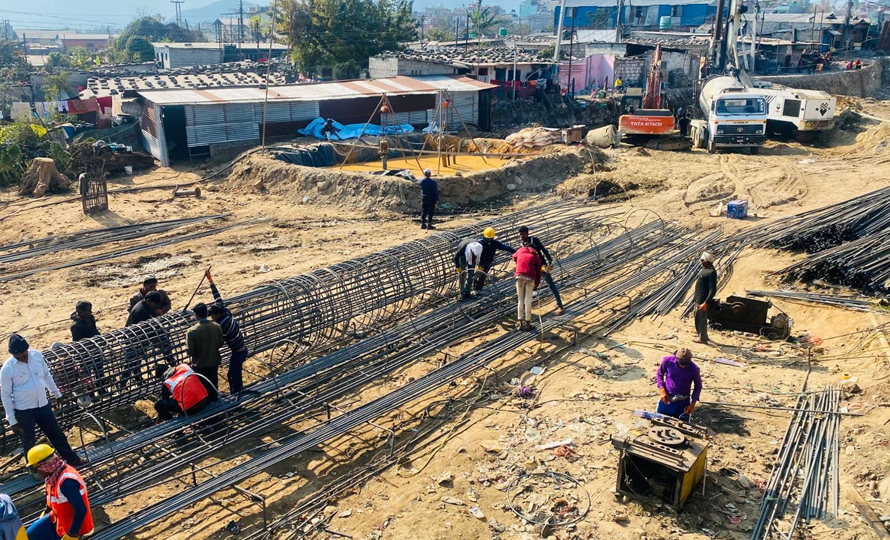
The rising cost and scarcity of construction materials have created significant financial pressure on contractors. The federation has urged the government to make public procurement laws more infrastructure-friendly.

They also demanded that the government issue a directive (Price Adjustment Directive-2) to promptly adjust project costs in line with inflationary changes.

Tourism and Aviation Share Similar Crisis

The tension in the Middle East has placed the tourism sector in a critical situation. Tourist arrivals dropped in March 2026 compared to March 2025, largely attributed to the Iran–America war. The usual influx of Western tourists for trekking and mountaineering has notably decreased.

Statistics show that 7,974 tourists visited from the U.S. in March 2026, a 28.1 percent decrease from 11,092 in March 2025.

Tourist arrivals from Europe similarly declined by 18.9 percent in total, with 4,814 visitors from the UK in March 2026 compared to 5,995 last year, down 19.7 percent.
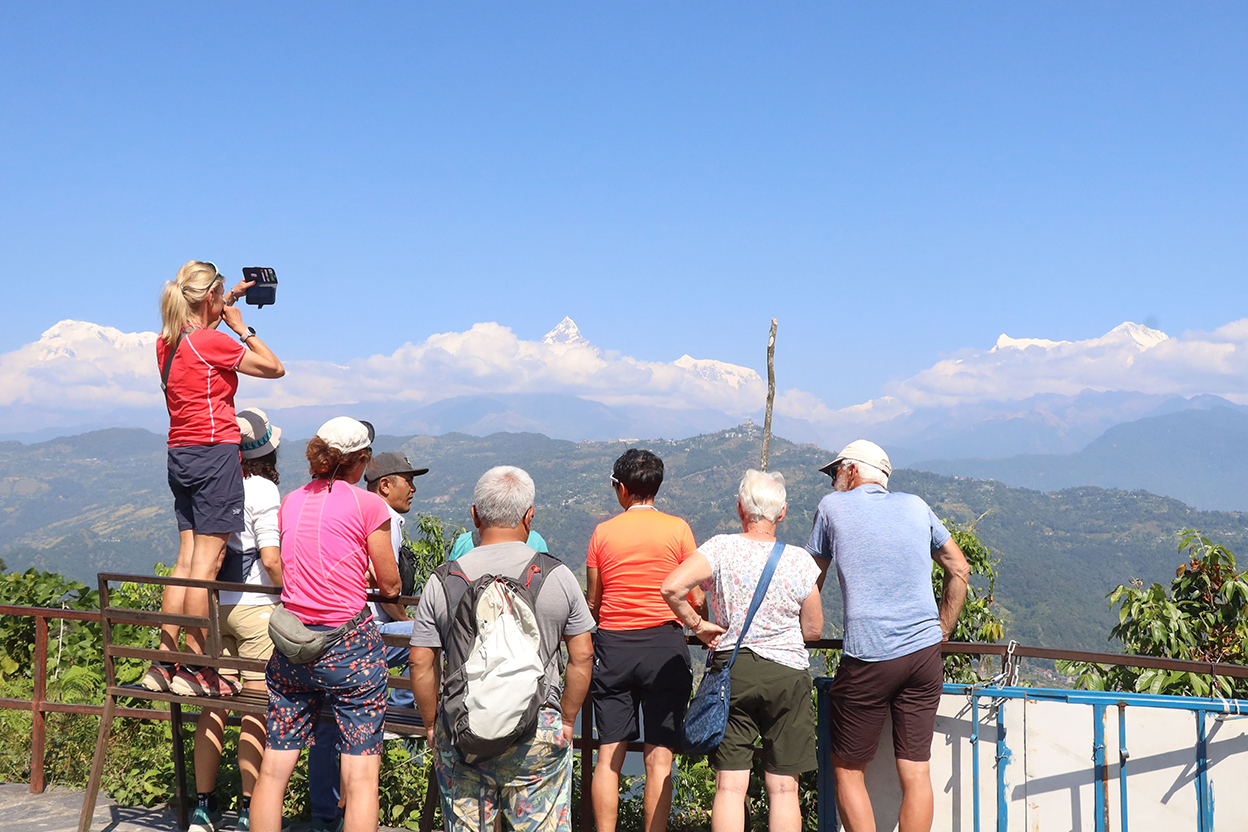
According to Deepkaraj Joshi, CEO of the Nepal Tourism Board, prolonged conflict in the Gulf region has reduced the number of tourists traveling to Nepal via Middle Eastern transit routes.

“The war has introduced travel uncertainties,” he said. “This will be a major setback for our countries.”

Rising fuel costs due to supply disruptions have also made tourism services more expensive. Aviation fuel prices doubling has raised air travel fares.

According to Pratap Jung Pandey, chairman of the Airlines Operators’ Association, the increased cost of aviation fuel has made air services more expensive, pushed up ticket prices, and adversely affected tourism overall.

Data from the Civil Aviation Authority of Nepal shows that the maximum airfare on the Kathmandu–Dhangadhi route has exceeded NPR 23,000.

Transport Industry Also Struggling

Continuous increases in fuel prices amid the Middle East war have put the transportation business under severe strain. Although fares were adjusted last week following extensive government discussions, the Oil Corporation has since increased diesel prices sharply.

The Nepal National Transport Business Federation stated that rising fuel prices have compounded challenges for public transport operators.
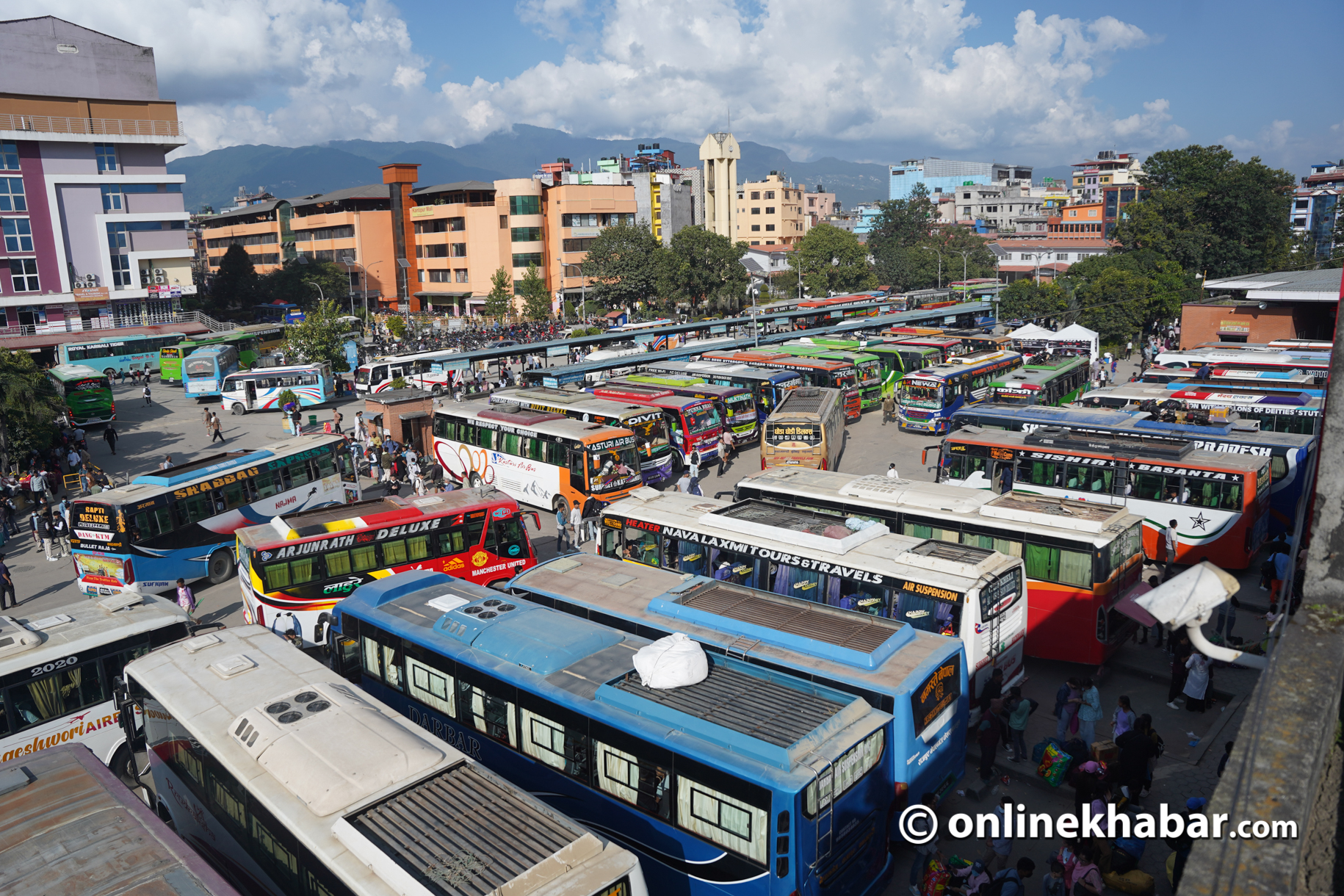
The federation has urged the Oil Corporation to develop meaningful alternatives to price hikes and has demanded that the government implement an automatic fuel price adjustment policy.

Consumers Ultimately Bear the Brunt

The final impact of the economic challenges is felt most by consumers at all levels. Fuel price increases have aggravated inflation, leading to higher prices in all market commodities, including additional issues with cooking gas. Transportation costs have also risen in both private and public sectors.

Consumer rights advocate Prem Lal Maharjan says fuel price hikes have sharply increased the cost of daily essentials and negatively affected the service sector as well. He criticized the government for remaining indifferent amid these conditions.

He added that despite the government’s announcement to reduce taxes on fuel imports by 50 percent, consumers have seen no tangible benefits.

“Traders raise prices daily and create artificial shortages, while the government fails to play a regulatory role,” he said.

He further condemned the trend where prices rise immediately when international rates go up but do not fall correspondingly, claiming that only the government benefits economically in such cases.

“Who controls the market? If the government cannot regulate prices, then is the market solely controlled by traders and middlemen?” he questioned.

Accelerated Road Upgrading Works on Kagbeni–Chhusang Section Connecting Korala Checkpoint

Road upgrading works on the Kagbeni–Chhusang section under the Kaligandaki Corridor in Mustang are progressing rapidly. The project aims to complete the enhancement of the road, which connects the Korala checkpoint, within two years. So far, five thousand cubic meters of gabion walls and two thousand cubic meters of retaining walls have been installed.

On 6th Baishakh, Mustang – The Beni–Jomsom–Korala road project under the Kaligandaki Corridor, which links neighboring countries China and India, is swiftly paving and upgrading the Kagbeni–Chhusang section. The work, interrupted due to severe cold, snowfall during the winter, and the House of Representatives election on Falgun 21, has now regained momentum.

The project office reported that the nine-point-eight-kilometer stretch is undergoing intensified upgrading. Approximately 98 percent of the road from Thasang-4 Ghaso to Korala checkpoint and Kagbeni has been blacktopped by the project. The plan includes proper upgrading and asphalt paving of the road up to Nepal–China’s northern Korala checkpoint, for which the federal government allocated a budget last year.

For asphalt paving and road widening of the Kagbeni–Chhusang section connecting Korala checkpoint in Mustang, the project signed a contract on Asar 26 last year with Toksar Effata/Buddha JV Construction at a cost of NPR 288,796,000. The contract specifies completing the road enhancement, including asphalt paving, within two years. According to the contract, the Kagbeni–Chhusang road should be finished by Asar 24, 2084 BS, project chief Tejaswi Sharma informed.

Although the contract was signed by late Asar, work was halted for five months due to adverse weather and elections, Sharma noted. With the end of winter and the start of summer, the construction company has resumed work. Currently, about 20 percent physical progress has been achieved on the under-construction Kagbeni–Chhusang section. The road, approximately 11 meters wide with 8 meters of asphalt paving, is being constructed. Sagar Shrestha, a representative of the contractor, said that paving and road structure work is underway in Baragung Muktikshetra-3, Tangwe area, which connects to Korala checkpoint.

To upgrade the road, construction of five thousand cubic meters of gabion walls and two thousand cubic meters of retaining walls has been completed. Work including grading, drainage construction where necessary, and other road structures is ongoing. With fuel prices dropping and supply stabilizing, the company aims to complete paving from Kagbeni to Tongwe within five months, Shrestha added. Over 80 workers are deployed daily to meet the project deadline. Shrestha further stated, “We have arranged all necessary equipment and crushers for constructing road structures and paving. Since work is not feasible during winter, the working period each year is limited to seven months.”

The Kagbeni–Chhusang stretch in Baragung Muktikshetra-3 suffered some minor damage from floods and landslides during Asar and Saun. Floods caused erosion in some parts and damage to the road base. In preparation for further upgrading and asphalt paving of the road to the much-discussed northern Korala checkpoint, two phases of initial environmental impact assessments have been completed for the Chhusang–Gham and Gham–Korala sections. Lopzang Chomfel Bisht, chairperson of Loghekar Damodarkunda Rural Municipality, said that if the Ministry of Physical Infrastructure and Transport, under the Finance Ministry, allocates budgets for paving the road up to Korala, the road access in Upper Mustang will improve significantly. The project estimates that upgrading and paving the Chhusang–Korala road will cost over five billion NPR.

Farewell Ceremony for Nepal National Women’s Hockey Team Before Departure to India

The Nepal National Women’s Hockey Team was seen off as they left to participate in the Indo-Nepal Senior Women’s Hockey Tournament held in India. Ram Charitra Mehta, Member Secretary of the National Sports Council, extended his best wishes for the team’s excellent performance. This team is embarking on foreign training and competition for the first time in 31 years.

On 6th Baishakh in Kathmandu, the Nepal Hockey Association organized a farewell event on Sunday for the Nepal National Women’s Hockey Team ahead of their participation in the Indo-Nepal Senior Women’s Hockey Tournament in India. Ram Charitra Mehta, Member Secretary of the National Sports Council, wished the team well and advised the players to demonstrate their full potential.

Suvarna Shrestha, General Secretary of the Nepal Hockey Association, announced that the women’s hockey team has departed for India on Sunday to undergo training and participate in the tournament, marking the first time in 31 years that the team travels abroad for such purposes. She added that the team would spend the first week training before joining the competition.

Led by captain Ankita Adhikari, the Nepalese squad comprises 26 players. The head coach is Ashwini Kumar Adhikari, assisted by coach Ravindra Singh. Kanturam Paneru holds responsibility as the team manager, while Hit Guru serves as the team leader. The farewell ceremony was attended by Nepal Hockey Association President Anil Prasad Sharma, General Secretary Suvarna Shrestha, and Executive Member of the National Sports Council.

कसरी अघि बढ्छ स्थानीय तहको संख्या र सीमा हेरफेरको प्रक्रिया ?

Detailed Information on the Process of Adjusting the Number and Boundaries of Local Levels

The government is moving forward with the process of adjusting the number and boundaries of local levels across the country. The Ministry of Federal Affairs and General Administration has prepared a draft standard and is seeking suggestions on the matter. This standard stipulates that decisions will be based on population, geography, administrative convenience, infrastructure development, economic capacity, natural resources, and linguistic-cultural composition. When changing the number and boundaries of local levels, a committee led by the District Coordination Committee must be formed and submit a report within three months. (Kathmandu, 6 Baisakh)

Under this process, the government has drafted and publicly released criteria related to the reclassification of rural and urban municipalities for feedback. The criteria include the adjustment of the number and boundaries of rural municipalities, municipalities, and wards, as well as the merger of units or the reclassification of municipalities. According to the proposal, all seven provincial governments are required to provide suggestions on these standards.

The draft identifies six key bases for adjustments or mergers of rural municipalities and municipalities. Among these, population, geography, and administrative convenience are the primary factors. In addition, the status of infrastructure development, economic capacity, and availability of natural resources will be considered when determining changes in number and boundaries. Linguistic, cultural, and community composition also form part of the criteria. According to Kalanidhi Devkota, Executive Director of the Nepal Municipal Association, the ministry has received 97 requests related to ward division and boundary adjustments from Tribeni Municipality in Bajura to Ilam.

In an article published a few days ago, Devkota stated that many standards were not adhered to during boundary changes made a decade ago, and some decisions lacked logical basis. For example, although Simikot in Humla, Chame in Manang, Jomsom in Mustang, and Dhunche in Rasuwa are district headquarters, these places are still classified as rural municipalities. Conversely, in Rautahat, 16 municipalities were established solely based on population. He said it is natural to question why district headquarters remain as rural municipalities and why dozens of municipalities were created in some districts based only on population criteria.

Ramkumari Jha questions why student organizations remain silent amid rising prices

Former minister and UML parliamentarian Ramkumari Jha expressed outrage over student organizations’ silence amidst soaring prices and the public’s suffering. She noted that despite petrol prices reaching 219 rupees in Nepal compared to 107 rupees in India, students and delivery drivers have remained silent. Jha attributed the emergence of an ‘ideological crisis’ in the country to the inactivity and internal weaknesses of major political parties. Kathmandu, 6 Baisakh.

Speaking at an event on Sunday in Kathmandu about the role of student organizations and the current social situation, Jha argued that the student movement has lost its credibility and agenda. “At one time, we took to the streets demanding concessions for students who cooked with kerosene and fought for student discounts in public transportation. But today, when petrol prices in India are 107 rupees and in Nepal 219 rupees, students and delivery drivers remain silent. Why is no one concerned today?” she questioned.

Jha expressed surprise that neither consumers nor student organizations have resisted when the price of rice surged by 350 rupees per sack simultaneously in the market. She said, “The public and students may be silently enduring the price hikes as ‘retribution.’ Previously, they applauded and voted, but now those same people are strangling themselves. This situation must mature; only when people and students truly realize it will rebellion arise from school benches.”

Member of Parliament Jha blamed the ‘ideological crisis’ in the country on the major political parties’ inactivity and internal weaknesses. She criticized the parties for failing to make activists thoughtful and instead turning them into ‘consumers.’ “What happened in the last election? The reformed Congress dropped to 18 seats, UML to 9 seats, and the NCP secured 7 seats. This is no one else’s fault but the consequences of our own incompetence, a punishment given by the people. If we don’t improve, this penalty will become even harsher,” she warned.

Lahan Municipality Provides Relief to Musahar Community Affected by Storm

Lahan Municipality distributed relief materials including tarpaulins, rice, salt, and cooking oil to Musahar families affected by the storm that struck Saturday evening. Mayor Mahesh Prasad Chaudhary prioritized immediate shelter arrangements for the victims and pledged to establish long-term housing within one week. The municipality has also advanced plans to construct 500 houses in a second phase for landless and squatter families.

6 Vaisakh, Siraha – The storm that hit Saturday evening caused significant damage in the Musahar settlement. In Lahan Municipality–2, Kalabanjar, 21 Musahar families lost their tin and leaf roofing. During an on-site inspection, Mayor Mahesh Prasad Chaudhary distributed essential supplies such as tarpaulins, rice, salt, and cooking oil to the affected families.

On the occasion, Mayor Chaudhary stated, “Providing immediate secure shelter to families affected by the storm is the municipality’s top priority. We have supplied tarpaulins to keep the affected households safe. Within the next week, we will provide tin sheets to establish long-term housing.” He also informed that a plan to build 500 houses in a second phase is underway for long-term management of landless and squatter families.

“We are planning to relocate squatter families to safe locations,” Mayor Chaudhary added. Currently, 42 families reside in the affected settlement. Additionally, the storm caused damage to seven houses in Lahan–24 and one house in Lahan–19.

Did the Failure of the Women’s Reservation Bill Amount to ‘Political Feticide’ as Claimed by Modi?

Summary with editorial review. The constitutional amendment bill on women’s reservation and the delimitation of constituencies failed to secure the required two-thirds majority in the Indian Lok Sabha, leading to its rejection. Following the bill’s downfall, Prime Minister Narendra Modi accused opposition parties of conducting ‘political feticide,’ framing the failure as a setback to women’s rights. The bill’s defeat has sparked concerns about its impact on political representation in South India and introduced new challenges for the upcoming delimitation process. Kathmandu, 20 March – A rare political development has taken place in Indian parliamentary history. On Friday, the ‘One Hundred Thirty-First Constitutional Amendment Bill, 2026’ failed in the Lok Sabha due to not achieving the necessary majority vote. It is a significant and uncommon moment in Indian democracy that a constitutional amendment bill, introduced by a government with a strong majority, was rejected in the house.

This bill was directly linked to implementing the ‘Nari Shakti Vandana Act’ passed in 2023. The Act mandated 33 percent reservation for women, and the bill proposed immediate application of this quota through a revised delimitation of electoral constituencies. The key reason for the bill’s failure was the unprecedented unity and strong opposition by the opposition alliance termed the India Bloc. The government was unable to secure the required two-thirds majority in the house for the constitutional amendment.

Opposition parties protested the proposed delimitation provisions, arguing that they would disrupt federal balance and cause injustice to the representation of southern states. The bill’s failure has raised significant questions about the future of women’s reservation implementation and the legal and political complexities involved in the process. There were 528 members present for the vote, with 298 voting in favor and 230 against. However, the minimum required votes for the amendment were 352, missing the mark by 54 votes, resulting in the bill’s defeat. Following the setback, the government withdrew two related bills — the ‘Delimitation Bill, 2026’ and the ‘Union and State Area Laws (Amendment) Bill, 2025.’

This event marks the first time in 12 years of the Modi government’s rule that a constitutional amendment bill has been defeated.

मन्त्रीदेखि संसदीय समिति सभापति छनोटसम्म सन्तुष्ट छैनन् रास्वपाकै नेता

Rastriya Swatantra Party Leaders Express Dissatisfaction Over Selection Process of Ministers and Committee Chairs

Leaders within the Rastriya Swatantra Party (RSP) have expressed dissatisfaction with the selection of ministers, parliamentary committee chairs, and party secretaries. The unilateral approach to appointments by Prime Minister Balen Shah and Party Chair Ravi Lamichhane has sparked internal discontent. Despite a parliamentary party meeting assigning the responsibility of ministerial selections to the chairperson and senior leaders, many leaders are pressuring for a more democratic process.

Kathmandu, 19 April – Within RSP, discontent points to the naming of ministers, parliamentary committee chairs, chief secretaries, and secretaries without adequate internal consultation. Party chair Ravi Lamichhane and Prime Minister Balen Shah, who is also a senior leader, reportedly decided on names without party discussion. While leaders hesitate to openly voice their disagreement, some members informally admitted, “Whatever these two elder brothers decide, we have to accept.” Here, the “two elder brothers” refers to Lamichhane and Shah.

Dissatisfaction Over Ministerial Selection Process

On April 1, fourteen ministers including Prime Minister Shah took their oath of office. However, party leaders pointed out the absence of any formal party decision on these names. “We only learned about the ministers through the media and at the swearing-in ceremony. There was no internal party discussion,” a central member and MP stated. The issue is not personal, but the lack of consultation is considered problematic.

Some leaders and MPs voiced concerns over how the selection process was conducted, emphasizing that two individuals made decisions alone. “Usually, the decisions are made by these two elder brothers, and what they say is the final word,” another MP remarked. Many were surprised when the ministerial list was announced. Dissatisfied leaders call for adherence to democratic procedures, pointing out that many aspirants deserved consideration based on their vision and mission, but decisions were finalized unilaterally.

However, RSP spokesperson Manish Jha denied any controversy or dissent over the selection of ministers. He defended the process, citing the parliamentary party meeting on March 25, which authorized the chairperson Lamichhane and senior leader Shah to make these appointments, thus making objections inappropriate. “Once the parliamentary party meeting gave the leaders this authority, there is no procedural error,” he said, adding that dissatisfaction is natural in such a large party, which now has 182 members compared to four in the previous LSP party.

Several MPs proposed providing opportunities to both new and experienced politicians. Some dissatisfied leaders recalled how, within just 14 days, ministers had to be reshuffled due to the absence of prior consultation. “If ministers were selected aligned with a vision and mission, such early changes would not have been necessary,” complained a directly-elected MP.

Prime Minister Balen Shah dismissed Labor, Employment, and Social Security Minister Deepak Kumar Sah on April 9; the next day, a parliamentary party meeting was held. During that meeting, Chairperson Lamichhane announced preparations to appoint Ramji Yadav as Labor Minister and Gaurikumari Yadav as Minister of Industry. “The chairperson read out the names without any questions,” a participant said. “The ministers are qualified, but the party must be consulted.”

On April 9, Gaurikumari Yadav appeared bewildered when her name was proposed as minister. She admitted she had been surprised and was unsure whether anyone else shared her name. “When my name was announced, I was checking if someone else with the same name existed,” she said outside the party office. “Had I known earlier, I would have secured citizenship papers, but I came empty-handed.”

There are many new MPs in RSP this term, with limited acquaintance among themselves. “We are not informed beforehand that we are to become ministers; this kind of process is unprecedented,” another discontented MP explained. While some MPs propose giving chances to experienced as well as new members, many veteran MPs have been excluded from government positions and parliamentary committees. Twice directly elected Tosima Karki, proportional MPs from the previous house Manish Jha, Indira Rana, and Nisha Dangi have not been included in government or committee chair roles. Similarly, former independent MP Amaresh Singh, now elected under RSP, has also been left out of leadership posts.

Challenges Within Parliamentary Committees

The parliamentary party meeting on March 17 selected committee chairs, with Chairperson Lamichhane announcing names for 11 committees in brief, concluding the meeting swiftly. “There is no second discussion at these meetings. The chairperson reads out names quickly, no leader speaks, and the meeting ends,” a member reported.

There is also discontent over the appointments of chief secretary and secretaries. “Many are unhappy, alleging bias,” said one dissatisfied MP. “Names were changed abruptly, with one person’s name announced in the morning and a different one at the meeting.” On the same day, the party selected Ganesh Parajuli as deputy leader of the parliamentary party, but the meeting did not inform members. “We only learned after going home that he had been appointed,” most MPs reported. “Party decisions should not be notified from outside.” Some leaders have also expressed frustration on social media over one individual holding multiple posts; leader Pramod Nyaupane commented, “Whoever’s not in charge is left with more offices, while others have to sit under someone’s shadow.”

Spokesperson Manish Jha called on members to focus on party-building rather than dissatisfaction. “There is much work ahead beyond ministries and committees. Lawmaking remains. The party must be institutionalized. If everyone goes to the Singha Durbar, who will manage the base?” he asked rhetorically. “This is RSP’s third time in government, yet I remain busy organizing the party. I will support the chairperson. There are no grounds for dissatisfaction.”

Emergency Rescue and Treatment Drill Conducted at Beni Hospital Following Bus Accident Simulation

A simulated bus accident scenario was conducted at the Province Hospital in Beni, Myagdi, to practice emergency rescue and treatment management. The hospital activated sirens to alert all medical personnel and staff, who then prepared to respond. Injured individuals were triaged and classified into yellow, blue, and red priority groups for treatment. According to the hospital, this exercise aimed to assess and enhance the effectiveness of rescue operations involving the police, armed police, Nepalese Army, and ambulance services by identifying weaknesses for improvement.

At 10:30 a.m. today, a bus traveling from Pokhara to Mustang was hypothetically involved in an accident on the Beni-Galeshwor highway section to test the hospital’s emergency treatment capacity and readiness. Upon receiving the accident notification, security agencies quickly reached the scene, rescued the injured, and transported them to the hospital. The hospital simultaneously sounded sirens to mobilize all necessary medical personnel, including doctors.

Doctors evaluated the condition of the injured transported by ambulance and classified patients into yellow, blue, and red groups based on whether their injuries were minor, complex, or critical. Treatment was then prioritized accordingly. Hospital doctors and nurses were deployed for treatment, while security personnel assisted with patient transfers.

According to Dr. Hemant Bastola, this exercise tested the hospital’s preparedness and capacity to treat a large number of complex injuries simultaneously during accidents or natural disasters. He noted that the drill also evaluated the coordination and efficiency among police, armed police, the Nepalese Army, and ambulance services during rescue operations. Dr. Bastola expressed confidence that identifying shortcomings in emergency treatment management during the drill will help guide future improvements at the hospital.

Nepali Congress Calls Meeting of Central Discipline Committee

The Nepali Congress has called a meeting of the Central Discipline Committee at 3 PM on Monday, 6th Baishakh, at the party’s central office in Sanepa. The committee secretary, Dinesh Thapa Magar, has issued the notice convening the meeting. The session is scheduled to be held at the party’s central office in Sanepa.

अध्ययन गर्न प्रहरी हेडक्वार्टरले बनायो समिति – Online Khabar

Police Headquarters Forms Committee to Review Police Bill

A committee has been formed at Police Headquarters, coordinated by AIG Rajan Adhikari, following directives from the Ministry of Home Affairs to propose improvements. There is dissatisfaction regarding the proposed bill increasing the authority of the Chief District Officer (CDO) while weakening police powers. Kathmandu, 6 Baisakh — After the dissolution of parliament, the Police Headquarters in Naxal has formed a committee to study the inactive Police Bill, known as the proposed Federal Police Act. The bill had become inactive following the dissolution of parliament after the Jana Andolan movement on 23 and 24 Bhadra. After the House of Representatives election on 21 Falgun, the Police Headquarters established the committee to review the bill.

The committee was formed under the coordination of Rajan Adhikari, Chief of the Crime Investigation Department and Additional Inspector General of Police (AIG). Police Headquarters sources informed that members include SPs from the legal branch and other police officers. The committee was formed after the Ministry of Home Affairs requested suggestions for improvements to the Police Bill. According to SSP and Nepal Police Deputy Spokesperson Deep Shamsher Jabara, alongside AIG Adhikari’s committee, the Police Investigation and Planning Development Directorate is also working on the matter.

Nepal Police has voiced concerns over certain provisions in the Police Bill. The Headquarters opposes the attempt to revoke powers held since the Police Act of 1956 (2012 BS). According to the draft, Section 7 outlines arrangements for deployment, direction, control, and supervision. The responsibility for peace and security in districts lies under the Chief District Officer (CDO). Under Section 8 of the Police Act of 1956, police have been working under the orders of the CDO for peace and security.

However, Section 7 (2) of the proposed bill states, “In matters relating to peace, security, good governance, crime prevention, and control, police personnel shall be under the direction, control, and supervision of the Chief District Officer.” This provision indicates that police intelligence personnel must operate under CDO direction not only for maintaining peace and security but also for crime prevention. Police officers argue that this increases the CDO’s authority while weakening the police force.

Additionally, Police Headquarters is dissatisfied with efforts to transfer police powers to the Armed Police Force. Section 8 of the proposed Armed Police Force, Nepal Bill authorizes the Armed Police to take responsibility for international border security and control border-related crimes. Subsection (t) of Section 8 allows the Armed Police to detain, search, and conduct preliminary investigations into illegal activities in the international border area and hand over offenders to relevant agencies for legal action. The police have expressed dissatisfaction with this and suspect attempts to cede their powers to the Armed Police Force.

Two laws concerning police integration were enacted in 2076 BS. The “Bill on the arrangement of integrating police personnel into Nepal Police and Provincial Police” received presidential assent on 28 Magh 2076 BS. Similarly, the “Bill relating to the operation, supervision, and coordination of Nepal Police and Provincial Police” was also ratified on 28 Magh 2076 BS. Following the enactment of the police integration laws, the necessary Organizational and Management survey (O&M) has been approved by the Council of Ministers.

According to the organizational and management survey approved by the Council of Ministers in Mangsir 2077 BS, a total manpower of 24,816 is to be allocated to the central police and 54,072 to the seven provinces. However, this process has not yet started. The issue of which level the security agencies should fall under has been repeatedly raised in previous parliaments. To resolve integration complexities, the then government registered the Nepal Police Bill in the House of Representatives on 15 Magh 2081 BS. The bill introduced by Home Minister Ramesh Lekhak was registered on 16 Magh 2081 BS and general discussion was completed on 5 Falgun 2081 BS.

During the discussion, MPs raised challenges related to security coordination that could arise following constitutional implementation and police integration. However, the bill did not progress on schedule and was eventually passed to the State Affairs and Good Governance Committee on 11 Falgun 2081 BS. After limited committee discussion, the bill did not become law. After the election on 21 Falgun, efforts are underway to revive this issue in the new House of Representatives. The Ministry of Home Affairs is working on four bills including the Nepal Police Bill, Armed Police Force Bill, Immigration-related Bill, and Intelligence-related Bill. It is anticipated that police integration will move forward after the Federal Police Act comes into effect, and currently, there are no legal barriers to integration.