
Author: space4knews

Public Debt Surpasses NPR 2.9 Trillion, Per Capita Debt Exceeds NPR 100,000

News Summary

Prepared by AI. Editorially reviewed.

  • As of the third quarter of fiscal year 2082/83, the government’s public debt has reached NPR 2.933 trillion.
  • This includes NPR 1.388 trillion in domestic debt and NPR 1.545 trillion in external debt.
  • The National Natural Resources and Fiscal Commission has strongly recommended prohibiting the use of domestic debt for current and administrative expenditures.

April 16, Kathmandu – Nepal’s public debt has crossed NPR 2.9 trillion. According to the Public Debt Management Office, by the third quarter (mid-July to mid-March) of the current fiscal year 2082/83, the government’s outstanding debt reached NPR 2 trillion 933 billion 7 crore 94 lakh 6 thousand.

This total comprises NPR 1 trillion 388 billion 11 crore in domestic debt and NPR 1 trillion 545 billion 67 crore in external debt. Within the last nine months alone, the government has taken on NPR 348 billion 15 crore in new debt.

Exchange rate fluctuations have weakened the Nepali currency, increasing the burden of external debt by NPR 115 billion 75 crore, which has significantly contributed to the rapid rise in Nepal’s overall public debt.

Before the start of the current fiscal year, at the end of Ashar (mid-July), the public debt stood at NPR 2 trillion 674 billion 4 crore, which has now neared NPR 2.95 trillion.

When public debt is divided by Nepal’s population, the per capita debt amounts to approximately NPR 105,94. This calculation is based on the latest census reporting a population of 29,164,578 individuals.

External debt accounts for 52.69% of the total public debt, while domestic debt represents 47.31%.

Breakdown of Public Debt

Domestic Debt: NPR 1.388 trillion

External Debt: NPR 1.545 trillion

Total Debt: NPR 2.933 trillion

Based on Nepal’s Gross Domestic Product (GDP), public debt accounts for 48.04%, with domestic debt at 22.73% and external debt at 25.31%.

Debt Increased by Nearly NPR 300 Billion in Nine Months

The government raised approximately NPR 345 billion in public debt during the first nine months of the current fiscal year. The annual target for this year is to borrow up to NPR 595 billion. As of mid-March, NPR 348 billion 15 crore has been borrowed, fulfilling 58.45% of the annual target.

Within this period, NPR 283 billion 66 crore was raised through domestic debt against a target of NPR 362 billion, while NPR 64 billion 48 crore was taken from external sources against a target of NPR 236 billion 66 crore. Domestic debt stands at 78.36% and external debt at 27.60% of their respective targets.

Interest and Principal Repayment Reach NPR 258 Billion

The government spent NPR 258 billion 44 crore on principal and interest repayments over the nine months, which is 62.88% of the annual budget. By mid-March, total debt servicing equated to 4.23% of GDP.

Domestic debt principal repayments consumed NPR 163 billion 77 crore, with interest payments outlaying NPR 45 billion 60 crore. External debt principal payments totaled NPR 40 billion 39 crore, with interest payments of NPR 8 billion 67 crore. In total, principal repayments amounted to NPR 204 billion, and interest payments NPR 54 billion 27 crore.

Experts warn that the current situation—where new debt is borrowed primarily to service existing interest and principal—is indicative of a debt trap.

The government has struggled to fully mobilize revenue, and the revenue raised can barely sustain ongoing expenses. This dependence on public debt for financial management and capital expenditure has intensified.

Economist and former Vice-Chair of the National Planning Commission, Prof. Dr. Govind Raj Pokharel, describes this as the country being trapped in a debt cycle. He notes that the increase in debt is largely due to spending in unproductive sectors, failing to generate development.

Similarly, former National Planning Commission Vice-Chair Prof. Dr. Shivraj Adhikari emphasizes that if debt is not allocated to productive and appropriate sectors, the problem will worsen. Most nationally important projects are now in their final phases, and the new government must prioritize completing these swiftly to stimulate the economy.

Both experts suggest that domestic debt should be raised only for targeted projects, with clear details disclosed in the economic survey.

Public Debt Doubled in Seven Years

According to Ministry of Finance data, public debt has nearly doubled over the past seven years. From NPR 1 trillion 433 billion 40 crore in fiscal year 2076/77, it has now nearly reached NPR 2.95 trillion.

Seven years ago, public debt was 38.05% of GDP, now it has exceeded 48%. Reduced grants from the World Bank and decreasing revenue collection contributed to this rise in debt.

Several important government-initiated projects have not delivered expected results, including the Pokhara and Bhairahawa international airports. The Melamchi Drinking Water Project also missed its timelines and suffered damage from natural disasters.

A report from the High-Level Economic Reform Commission highlights that without proper improvements in public debt structure and revenue, the burden of principal and interest payments will continue to increase.

The commission warns that failure to utilize public debt efficiently could entrap the country in a debt spiral and result in budget shortages for essential sectors such as education and health. It recommends adopting fiscal prudence urgently.

Commission Calls to Ban Domestic Debt for Current and Administrative Expenses

The National Natural Resources and Fiscal Commission has strictly recommended prohibiting the use of domestic debt for current and administrative expenditures.

For fiscal year 2078/79, the commission has capped domestic debt borrowing by federal, provincial, and local governments at no more than 5.5% of GDP.

The commission urges that domestic debt investment should be limited to projects that generate employment, provide long-term benefits, and contribute to capital formation—while strictly forbidding its use for current and administrative costs.
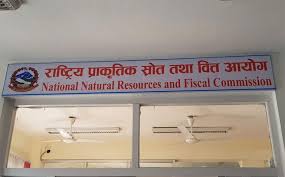
In fiscal year 2078/79, domestic debt mobilization was only 1.41% of GDP, with most borrowed funds already allocated to servicing old debt, the commission notes.

It recommends that the project selection process include cost-benefit analysis and economic rate of return assessments to ensure domestic debt is invested only in profitable projects.

The commission also suggests domestic debt be allocated strictly for social sector projects.

When selecting ongoing or new projects, it’s essential to ensure that returns from the project can cover debt servicing and interest payments.

Only projects that are prepared to increase production, create jobs, develop infrastructure, and build capital should receive domestic debt investment, according to the commission.

Three tiers of government are also recommended to clearly specify the source of domestic debt in budgetary planning documents.

Additionally, the commission urges development of an integrated electronic information management, accounting, and reporting system for domestic and public debt managed across the three government levels through the Public Debt Management Office.

To avoid treating domestic debt as future revenue spent in the present, the commission suggests devising plans to improve revenue collection.

‘बाह्रखरी गल्फ तथा इकोनोमिक सिम्पोजियम’ १९ वैशाखमा काठमाडौंमा हुने

‘12 Kharhi Golf and Economic Symposium’ Scheduled for April 30 in Kathmandu

The 9th edition of the Ncell Business 12 Kharhi Golf Tournament and Economic Symposium is set to take place on April 30 at the Gokarna Golf Course. Amitabh Kant, former CEO of India’s Policy Commission, will participate as the keynote speaker, while Finance Minister Dr. Swarnim Wagle will deliver a special address. Over 100 players are expected to compete in the tournament, with the grand winner receiving a gold ball prize and the Hole-in-One player awarded a BYD Atto 3 car. Kathmandu, April 12 – The ninth edition of the ‘Ncell Business 12 Kharhi Invitational Golf Tournament’ along with the ‘Economic Symposium’ will be hosted this year in Kathmandu. The event was announced during a press conference held by 12 Kharhi Media on Thursday (April 12) in Kathmandu, stating the tournament and symposium are scheduled for April 30 at the Gokarna Golf Course. The 9th ‘Ncell Business 12 Kharhi Golf and Economic Symposium’ will feature Amitabh Kant, a distinguished Indian administrator and former Policy Commission CEO, as the keynote speaker. Kant also serves as Chancellor of MIIT University. During the press meet, Pratik Pradhan, Editor-in-Chief of 12 Kharhi Media, shared details of the event and noted that Finance Minister Dr. Swarnim Wagle will present a special address as the chief guest at the Economic Symposium.

Internal Disputes in Nepali Congress Must Be Resolved Through Dialogue and Consensus

Internal disputes within the Nepali Congress are intensifying. The Central Discipline Committee has asked outgoing Acting Chairperson Purna Bahadur Khadka for a seven-day clarification regarding allegations of issuing a press release using a fake letterhead. Khadka has rejected the decision, calling it illegal, absurd, and meaningless. He claimed that the issue of the party’s official status is currently under consideration by the Supreme Court and asserted that he used a legitimate letterhead. This controversy has led to a serious clash over discipline and the legitimacy of leadership within the party.

In a brief conversation on this issue, Nepali Congress leader and former Foreign Minister NP Saud said, “It is unreasonable to seek clarification from Mr. Purna. The dispute between the committee elected by the 14th General Convention and the committee elected by the Special General Convention has not yet been finally decided. Since this matter is under judicial review, disciplinary actions against him are irrelevant.” He added, “When there is an unresolved dispute within the party over a matter pending in court, the possibility of division increases.”

Saud further stated, “The Nepali Congress is a historic party. Its unity is extremely important for democracy and nationalism.” He warned that changes made during the membership renewal process could negatively affect internal democracy, fairness, and transparency.

In conclusion, Saud said, “The Nepali Congress can be strengthened only by promoting broad unity, transformation, and regular legal processes without obstacles. Any complex problems can be solved through discussion and dialogue.”

Mahiman Singh Bist Sentenced to Six Months Imprisonment for Involvement in Resham Chaudhary’s Arrest

Kathmandu, 22 Chaitra – The Kathmandu District Court has sentenced Mahiman Singh Bist, a branch officer of the Supreme Court, to six months imprisonment for offenses related to issuing fraudulent documents. Bist had issued a fake letter that led to the arrest of Resham Chaudhary, the then founding leader of the Civil Liberties Party. Judge Khimanand Bhusal’s bench imposed a six-month jail term along with a fine of NPR 10,000 on Bist.

On 17th Baisakh, based on a letter issued by Mahiman Singh Bist, Resham Chaudhary, a former parliamentarian and protector of the Civil Liberties Party, was arrested. However, the letter, which ordered Chaudhary’s imprisonment despite the case still being under consideration, was later declared unauthorized and illegal by the court. Chaudhary was released within hours of this ruling. Following the incident, Bist was arrested for issuing the fraudulent letter.

The Supreme Court promptly issued another letter to the prison and police authorities to facilitate the release of Resham Chaudhary.

Trump Announces 10-Day Ceasefire Agreement Between Israel and Lebanon

US President Donald Trump announced that Israel and Lebanon have agreed to a 10-day ceasefire. Trump revealed that officials from the two countries met in Washington D.C. for the first time in 34 years. He also stated that he has directed the Vice President, Secretary of State, and military chiefs to work toward establishing a long-term peace.

April 16, Kathmandu – On Thursday evening, via the social media platform Truth, Trump informed that a ceasefire agreement had been reached within a few hours. “I just spoke with the honorable President of Lebanon, Joseph Aoun, and Israel’s Prime Minister Benjamin Netanyahu,” Trump wrote. “These two leaders have agreed to initiate a 10-day ceasefire to establish peace between their countries.”

According to Trump, representatives from both countries met in Washington D.C. for the first time in 34 years, with US Secretary of State Marco Rubio also participating in the discussions. “I have instructed Vice President JD Vance, Secretary of State Rubio, and Chairman of the Joint Chiefs of Staff Dan Caine to work together to establish long-term peace between Israel and Lebanon,” he said. Trump added that resolving nine wars across the world is a matter of his pride, and that this ceasefire will mark the 10th such achievement.

सिंहदरबारभित्र भुर्रभुर्र (तस्वीरहरू) – Online Khabar

A Vibrant Display of Colorful Flowers Inside Singha Durbar (Photos)

Flowers provide insects and birds with food, attraction, and a protective environment. The appeal that both humans and birds have toward flowers highlights the connection between human nature and natural necessities. April 15, Kathmandu. Various species of colorful flowers have captivated the attention of people. The beauty of flowers has long attracted humanity. This attraction to flowers is not just an expression of human nature but also draws insects and birds. Birds are attracted to flowers for multiple reasons. Flowers offer birds a combination of food, allure, and safe habitat, naturally making them fascinated by flowers. The country’s main administrative center, Singha Durbar, is currently filled with vibrant flowers. The colorful blossoms across Singha Durbar seem to welcome bees, wasps, and sparrows that inhabit the surrounding area. Among the colorful flowers, birds freely flutter around, appearing joyous and content.

YouTube Launches New Option to Permanently Disable Shorts

Viewers on YouTube who find themselves endlessly scrolling through Shorts and wasting time can now look forward to a solution. YouTube has updated its ‘Time Management’ feature, offering users the ability to completely block the Shorts feed without relying on any third-party apps. Initially introduced for parents, this feature became available to all users starting April 16, 2026.

Here’s how to disable Shorts: Open the YouTube app on your Android or iOS device. Tap the profile icon located at the bottom right corner of the screen, then access ‘Settings.’ Within Settings, navigate to the ‘Time Management’ section, where YouTube has included various options to help users save time and reduce distractions.

Enable Shorts feed limit: Turn on the ‘Shorts feed limit’ toggle. Previously, users had to set a minimum time limit of 15 minutes, but with the new update, it is possible to set the limit to zero minutes.

Set time limit to zero minutes: Adjust your daily limit to ‘0 Minutes.’ Once configured, YouTube will immediately stop showing you Shorts content.

What happens after activation? When you set the time limit to zero, no videos will appear under the Shorts tab. Instead, you will see a message stating, “Reached your Shorts feed limit.” In most cases, Shorts content will also be removed from your home feed.

Additional Armed Police Personnel Deployed at Hilsa Border Area

April 15, Humla – The Armed Police Force has deployed additional personnel at the Hilsa check post located in Namkha Rural Municipality-5, northern Humla. This move aims to bolster security and surveillance at the APF’s BOP Hilsa situated in the border region. According to a recent decision by the Government of Nepal, nine newly assigned personnel from Armed Police Force Nepal, 44 Gulm Headquarters, have been dispatched to Humla, as reported by Deputy Superintendent of Police (DSP) Pushkar Singh.

DSP Singh stated that the increased manpower will play a vital role in reducing crimes, securing the border, and controlling theft and smuggling activities in the area. Despite heavy snowfall at Nara Lake and challenging conditions, the new team reached Hilsa after approximately six hours of trekking on foot, he added.

इजरायली हमलामा दक्षिण लेबनान जोड्ने अन्तिम पुल पनि ध्वस्त

Israel Strikes Destroy Last Bridge Connecting Southern Lebanon

Kathmandu, April 16 – The Israeli military missile attack on Thursday has destroyed the last secure bridge in southern Lebanon. According to reports, a large plume of smoke rose following the strike in the city of Nabatieh. The targeted bridge over the Litani River is located in Nabatieh, home to over 40,000 residents. Lebanese officials have stated that no routes remain connecting southern Lebanon after this attack.

Bagmati Province Chief Minister Proposes Reducing Number of Ministers Through Constitutional Amendment to Prime Minister

Chief Minister Indra Bahadur Baniya of Bagmati Province has advocated for a constitutional amendment to reduce the number of ministers in the provincial government. In discussions with Prime Minister Balendra Shah, he also suggested the need to amend the electoral system and called for direct election of the Chief Minister. Furthermore, Baniya urged the federal parliament to quickly enact legislation granting provincial authority over land, forests, and police.

Kathmandu, 16 April – Chief Minister Indra Bahadur Baniya of Bagmati Province has clearly stated that the number of ministers in the provincial government should be reduced through a constitutional amendment. During a discussion with Prime Minister Balendra Shah, he explained that applying the constitutional provision allowing ministers up to 20 percent of the total provincial assembly members results in an unnaturally high number of ministers at the provincial level, which attracts criticism. He said, “In my conversation with the Prime Minister, I expressed the view that the constitutional provision should be amended to reduce the size of the provincial council of ministers. The allowance to appoint ministers up to 20 percent of the total assembly members is leading provinces to be criticized. Bagmati Province is reducing its number of ministers to seven, which will help cut costs in state management.”

In the same discussion, Chief Minister Baniya referenced the ongoing federal government process to initiate constitutional amendments and emphasized the need to reform the electoral system. He stated, “The current electoral system does not provide stability. The situation where a single party wins a clear majority will not always prevail. Hence, I believe the constitution should be amended to enable the direct election of the Chief Minister. At the same time, inclusive proportional representation must be ensured based on defined geographical constituencies.”

He pointed out that the lack of provincial authority over land, forests, and police hampers service delivery. Without land rights, Bagmati Province has been unable to build necessary infrastructure for eight years. “The absence of land authority is creating problems in infrastructure development,” he explained. Highlighting this issue to the Prime Minister, he urged the federal parliament to promptly draft a law to grant these powers to the provinces.

Prime Minister Shah expressed interest during the discussion in the South Kali–Sisneri–Bhimfedi and Pharping–Kulekhani–Bhimfedi roads that connect Kathmandu, the provincial capital, with Hetauda. Chief Minister Baniya assured that reconstruction of both roads would be completed within the upcoming fiscal year. He emphasized that education and health services must be accessible to the poor. The Prime Minister committed to reserving 10 percent of seats in every school and hospital for disadvantaged groups. Baniya further stressed the necessity of federal government support to implement regulations that set definite timeframes for investors to complete requisite processes such as regulatory compliance and environmental impact assessments to attract investment effectively.

Comprehensive Discussion Within Congress on Fulfilling the Role of the Main Opposition

News Summary

  • The Nepali Congress has decided to effectively fulfill the role of the main opposition in Parliament while cooperating with the government.
  • Congress urged the government to be vigilant in protecting freedom of expression and the rule of law, cautioning against curtailing citizens’ rights.
  • Labeling the Gauribahadur Karki Commission report as incomplete and selective, Congress demanded a high-level judicial commission for an independent investigation into the events of Bhadra 24 (September 9, 2025).

April 15, Kathmandu – The Nepali Congress has engaged in detailed discussions on how to effectively fulfill its role as the main opposition party. The Central Working Committee meeting, chaired by party president Gagan Kumar Thapa, deliberated on the role of the main opposition in Parliament and its relationship with the government.

“Nepali Congress firmly believes that the values of freedom, equality, respect, and coexistence, cultivated through numerous struggles and movements by the Nepali people from 1950 to 2025, can be further developed on the fertile grounds of democracy,” the party’s decision document states. “Respecting fundamental principles enshrined in the Constitution such as democracy, republicanism, federalism, citizen supremacy, pluralism, separation of powers, independent judiciary, freedom of expression and press, rule of law, human rights, and linguistic, cultural, and religious diversity, the Nepali Congress is committed to exercising the role of main opposition in Parliament effectively, without compromising these values, and according to its policy commitments outlined in the election manifesto.”

Congress also affirmed its commitment to strengthening five pillars: good governance, transparency and accountability, freedom of expression, and a robust parliamentary culture. The party emphasized that it will not support any measures that undermine rule of law, civil rights, or democratic values and has urged the government to remain cautious to avoid such actions.

Full Congress Decision Is As Follows:

Contemporary Political Issues

1. Role of the Main Opposition in Parliament and Relationship with Government

  • Congress holds a firm conviction that the freedoms, equality, dignity, and coexistence won through popular struggles from 1950 to 2025 can be nurtured further on the democratic foundation. By morally safeguarding the constitutional values of democracy, republicanism, federalism, citizen supremacy, pluralism, separation of powers, independent judiciary, freedom of expression and press, rule of law, human rights, and ethno-cultural-religious diversity, Nepali Congress will effectively exercise its role as the main opposition in Parliament.
  • Congress is steadfastly committed to strengthening good governance, transparency, accountability, freedom of expression, and a strong parliamentary ethos. Believing that parliamentary democracy thrives on tolerance, dialogue, and respectful behavior, Congress will support legal governmental work and cooperate on issues of national interest, yet will not endorse any efforts undermining rule of law, civil rights, or democratic values, and will caution the government accordingly.

2. Protection of Freedom of Expression and Democracy

  • Freedom of expression is an integral part of democracy. Nepali Congress recognizes that citizens must be able to freely express their views without fear. The Constitution guarantees freedom of thought and expression for every citizen, a significant achievement of democratic struggles. However, recent fear of cyber lynching has hampered citizens’ ability to express themselves openly, fostering self-censorship and shrinking freedom of expression. Congress commits to continuously advocating for an open society.
  • The protests on September 8 and 9, 2025 (Bhadra 23-24) were not only for good governance and a corruption-free society but also to uphold freedom of expression. Congress expects the government to protect freedom of expression and open society values, but some recent measures fail to indicate this. Congress urges the government to uphold citizen freedoms and cautions against anti-citizenship measures.
  • Equality is the core of the Constitution, freedom the foundation, and press freedom a fundamental right. Equal treatment between government and private media is essential to realize press freedom. Denying private media access to government advertisements violates constitutional rights. Congress appeals to the government to ensure fair and appropriate decisions.

3. Rule of Law and State Functioning

  • The rule of law is the foundation of democracy. Laws apply equally to all, and no one is above the law. The state has the authority to conduct investigations following due legal process, and all citizens are obliged to cooperate.
  • The state must follow procedural justice during investigations, as misuse of power and position is detrimental to democracy. All governmental actions must comply with the law.
  • Issuing arrest warrants in criminal cases requires substantial evidence; however, recent actions appear hasty and unsubstantiated. Such trends risk unlawful detention and infringement on personal liberty. The government must ensure investigations are impartial and transparent.

4. Investigation of Assets

  • Congress has long advocated for a commission to investigate the assets of high-ranking public officials since 1991, including nationalization of illicit assets and probing corruption cases from 1990 to 2025. Congress appreciates the government’s steps to advance this process and urges expanding the scope of investigations.
  • The government’s cabinet-formed commission lacks autonomy and impartiality potential, raising concerns of executive interference. Congress calls on the government to ensure the commission’s independence.
  • After disclosure of assets by the Prime Minister and ministers, questions about the sources and tax compliance have arisen. While asset declaration is a legal obligation, clarifying sources is also a moral responsibility, according to Congress.

5. Gauribahadur Karki Commission Report and Independent Inquiry Into Bhadra 23-24 Events

Congress considers it wrong not to publish the Gauribahadur Karki-led commission report and demands its immediate legal publication. It also urges rapid release of the Human Rights Commission report.

The report should not be the sole basis for action until it is officially and formally accepted. A committee led by senior advocate Yadunath Khanal has reviewed the report and provided recommendations.

Based on these recommendations, Congress decided the following:

  • The commission’s primary mandate was factual investigation of September 8-9, 2025 incidents. However, the report included policy and prosecutorial recommendations and overstepped its jurisdiction into political and structural matters.
  • It prioritized the September 8 incident while superficially addressing September 9, raising concerns about balance and insufficient investigation into seriously harmful events.
  • The commission’s recommendations must undergo legal scrutiny before implementation. Treating the commission as a judicial body contradicts constitutional and judicial principles.
  • The government’s selective approach is inappropriate; applying different measures for similar incidents on the same day can lead to non-legal actions.
  • Hence, Congress concludes that the Gauribahadur Karki commission’s report is incomplete, biased, and selective. Inadequate investigation denies victims justice. Therefore, an independent and high-level judicial commission must be formed for the September 9 events, and a special parliamentary oversight committee established.

6. On Reducing Petroleum Price Hikes

The crisis in the Middle East has impacted the daily life, business, employment, and economy of Nepali citizens. Price increases in petroleum products and gas have exacerbated difficulties in agriculture, tourism, and transportation sectors.

Congress appeals to the government to take the following measures to reduce petroleum prices:

1. Provide relief or refunds on value-added tax increases that have inflated prices. Temporarily reduce taxes to protect citizens from high costs.

2. Partially reduce or exempt various taxes, such as removing infrastructure development tax and lowering others.

3. Clarify VAT refunds or exemptions as Nepal Oil Corporation is forced to purchase fuel at higher prices due to import taxes.

4. Review and reduce overall tax rates in light of current price rises and offer special support for students’ transportation expenses.

7. Regarding Affiliated Organizations

A study on the current status of affiliated organizations and expatriate liaison committees was conducted, and recommendations submitted.

8. On Active Membership

According to Congress’s 2017 constitution, various decisions have been made regarding updating active membership. Processes for new membership issuance and renewal will proceed.

a) Renew active membership for the 14th general convention members.

b) Issue membership to new aspirants according to constitutional provisions.

                                                                                                     Devaraj Chalise

                                                                                                        Spokesperson

Pakistani Army Chief Meets Iranian Parliament Speaker Ghalibaf in Tehran

April 16, Kathmandu – Pakistan’s Army Commander Field Marshal Asim Munir met with Mohammad Bagher Ghalibaf, the Speaker of the Iranian Parliament, on Wednesday. Munir, who has been playing a mediating role to halt the Middle Eastern conflict, arrived in Iran on Thursday. According to Iranian state television, he held talks with Speaker Ghalibaf, who leads Iran’s peace negotiation delegation.

State television reported that Munir’s visit to Iran aims to apply pressure for further negotiations to end the war involving the United States and Israel. “Yesterday, the Pakistani Army Chief Munir, who arrived in Iran, held discussions and dialogue with Iranian Parliament Speaker Ghalibaf,” the Iranian television quoted in its Thursday morning report. No additional details have been released about other meetings Munir attended in Tehran along with his delegation. Iranian state media interpreted the peace initiative as a message transmitted via the United States. Previously, peace talks held in Pakistan’s capital Islamabad had failed. However, both sides have indicated the possibility of resuming negotiations in recent days.

टोरन्टोमा गुञ्जियो ‘गाउँ गाउँबाट उठ’, अमृत गुरुङ भन्छन्- नयाँले यो गीतको मर्म बिर्सनुभएन

‘Gaun Gaun Bata Uth’ Resonates in Toronto: Amrit Gurung Stresses New Generation Must Remember the Song’s Essence

Summary: Despite being in the fourth stage of cancer, 22-year-old Riya Basnet managed to attend and dance at Nepathya’s concert. Tickets for Nepathya’s Canada tour Toronto concert had sold out two weeks in advance. The band is preparing for another event on April 18 at London Music Hall in Ontario after the Toronto show.
Toronto, Canada – As audiences left Queen Elizabeth Theatre, their faces shone with joy. Yet none were as deeply satisfied as 22-year-old Riya Basnet. Battling stage-four ovarian cancer, Riya had undergone two surgeries and multiple therapies. Attending her favorite band’s concert was a significant challenge. Standing was difficult, dancing almost impossible. Yet on Monday evening, she arrived at the packed hall in Toronto. Uncomfortable sitting, she was helped to a spot where she could stand and dance.
“Because of my physical condition, I was different from other dancing spectators,” said Riya, a business graduate living in Canada from Birtamod, Jhapa. “I was battling myself in every moment of what had been a dream since childhood.” Her cancer has also affected her mental health; she now needs medication for depression. “How can I express the value of a little light in deep darkness?” Riya reflected. “I will cherish this moment as if it were my last breath of life.”

The show in the bustling business city of Toronto had sold out tickets two weeks prior. Though the crowd had similar vibrant energy, individual circumstances varied. Sonia Tiwari, a third-generation Nepali family member residing in North America, had never attended a Nepali concert before.
“Before I was born, Nepathya’s songs played at home, and I grew up listening to those songs,” Sonia shared. “I never imagined how much energy Amrit Gurung spreads to every spectator on stage, touching the soul.” She praised how professionally and meticulously the Nepali event was organized. Because of this experience, after the concert ended, the audience hesitated to leave, chanting “Nepathya, Nepathya” for a long time as Nepali flags waved everywhere.
The songs themselves and the messages they carried energized the crowd, especially Amrit Gurung’s remarks before performing “Gaun Gaun Bata Uth.”
“This song played in every movement that brought change to Nepal’s government,” Amrit said before the performance. “However, those who repeatedly came to power have forgotten the song’s essence.” When Amrit referenced the “recent Gen-Z movement,” the hall erupted in applause.
“The new generation must not forget this song’s meaning. Written by Shyam Tamot in opposition to the Panchayat system and sung by Manjul-Ramesh, this song reminds us that if mistakes are repeated, Nepalis will rise again from every village and settlement with the same vigilance.”
The audience responded with wholehearted agreement and enthusiasm.
Throughout the concert, the artists received continuous encouragement and energy from the crowd.
“Songs played one after another, allowing me to immerse myself in nostalgic memories,” said Sameer Shrestha, a medical lab technician from Kathmandu attending the concert in Toronto.
Many spectators came from afar to see Nepathya’s performance in Toronto, including Anup Ghimire from Vancouver.
“This was my first time experiencing a Nepathya concert,” said Anup, who graduated in communications from Pokhara. “From the presentation to the atmosphere and organized program, I didn’t feel like I had traveled far.”
Ujjwala Pradhan, a graduate of George Brown College, said the concert reminded them of their roots.
“It was like a sweet story blending excitement and past memories,” she observed. “Nepathya carried their environment and made us feel a sense of home.” Ujjwala, who came from Sikkim, recalled how the band’s energetic performance made all the audience jump and dance.
The band concluded their show with the song “Rato Ra Chandrasuraj.” On stage, Amrit was supported by Dhruv Lama (drums), Subin Shakya (bass guitar), Neeraj Gurung (guitar), Shanti Rayamajhi (madal), and Dineshraj Regmi (keyboard).
“Such a Nepali performance on foreign soil is rare,” said organizer Chiring Sherpa, expressing pride in hosting a concert that brought so much joy to the audience.
After this performance, the 14-member team of artists, technicians, and management will travel to London, Ontario, for the tour’s final show scheduled for April 18 at London Music Hall, approximately two hundred kilometers from Toronto. Since tickets at the Elizabeth Hall had sold out, organizers expect Toronto’s audience to attend the London concert as well. Tickets can be purchased online through arrangements made by Nepalaya, with reservations available via Nepathya’s official website.

Four Arrested with Counterfeit Currency in Rupandehi

The Rupandehi police have arrested and disclosed four individuals found in possession of counterfeit currency. The arrested persons are from Kapilvastu, Nawalparasi, Sindhupalchok, and Kathmandu districts. They were caught with 21 counterfeit 1,000-rupee notes on Chaitra 22 and 26, in the Siddharthnagar and Sainamaina areas respectively.

A team dispatched by the District Police Office of Rupandehi seized the counterfeit notes and arrested the four suspects. According to the police, the arrested individuals are 36-year-old Bishnu Shrestha from Wangsanga Municipality-2 in Kapilvastu, 28-year-old Sujan Khanal alias Muktiprasad Khanal from Devchuli Municipality-15 in eastern Nawalparasi, 35-year-old Rolbahadur Shrestha from Chautara Sangachokgadhi Municipality-8 in Sindhupalchok, and 53-year-old Dipendra Thapa from Budhanilkanta Municipality-9 in Kathmandu.

According to Krishna Kumar Chand, the Information Officer and Deputy Superintendent of Police at the District Police Office, Rupandehi, special intelligence was received indicating the illegal trade of Nepalese currency notes in various parts of the district. Based on this information, a police team dispatched from the district office and its subordinate offices conducted surveillance operations. On Chaitra 22, the team apprehended suspects at Siddharthnagar Municipality-5 (Bhairahawa), and on Chaitra 26, at Bachkaiya in Sainamaina Municipality-10, seizing 21 counterfeit Nepalese 1,000-rupee notes along with the four individuals. The police have publicly disclosed the arrests and are continuing further investigations related to the case.

Chief Minister Baniya Advises Prime Minister to Legalize Cannabis for Medicinal Use

April 15, Kathmandu – Indra Bahadur Baniya, the Chief Minister of Bagmati Province, has advocated for the authorization of cannabis use for medicinal purposes. In a discussion held on Thursday with Prime Minister Balendra Shah at the Prime Minister and Council of Ministers’ Office in Singha Durbar, Chief Minister Baniya emphasized the need for the federal government to enact legislation granting this right.

“Cannabis contains medicinal properties. If cannabis is already used as medicine at the Singha Durbar clinic, why not move forward with legally regulating it?” he suggested to the Prime Minister. He added, “The initial phase can start in designated pocket areas such as Makwanpur and several other districts. Coordination among federal, provincial, and local governments is essential to establish proper regulation and monitoring systems, thereby paving the way for controlled cannabis use.”