Author: space4knews

लोप हुँदै झिँगटीको छाना – Online Khabar

Traditional Jhingtis Roofs Disappearing Rapidly in Tehrathum

In the villages of Tehrathum, roofs made from jhingtis have traditionally been used for houses, but they are now rapidly disappearing. Jhingtis roofs help maintain a balanced indoor temperature, whereas tin roofs tend to increase heat during summer and cold in winter. Local governments and communities emphasize the need to preserve the skill of making jhingtis, through training and tourism promotion.

March 14 – In various villages of Tehrathum, such as Manglung, Chhathar, Fedap, Athrai, and Laligurans, houses once featured decorative roofs made from jhingtis, which are now gradually becoming a thing of the past. This traditional roofing is deeply linked to the rural lifestyle, identity, and cultural heritage but is now rapidly disappearing.

Many villages in Tehrathum had houses built with stone and mud, topped with beautifully arranged jhingtis roofs. Especially in the homes of landowners, elders, Subbas, and Mukiyas, having a jhingtis roof symbolized honor and prosperity. However, the current landscape is changing; dirt roads are being replaced by paved ones, modernization is reaching villages, market access has improved, and new construction materials are readily available, contributing to the swift rise of tin roofs and concrete houses.

Leelabahadur Tumbahangphe, a local resident of Manglung Municipality-2, states, “Previously, houses with jhingtis roofs were much respected in the village. Now, tin and cement houses have become more common, causing the tradition of jhingtis roofing to decline.” According to him, skilled craftsmen who made and installed these roofs are now almost nonexistent in villages. The chief feature of jhingtis roofs is their natural ability to regulate temperature.

The roofs maintain comfortable indoor temperatures during both extreme heat and cold seasons. They provide cooling in summer and warmth in winter, offering an experience that harmonizes well with the surrounding environment. Local resident Khagendra Prasad Dhakal comments, “As society changes, old structures and customs are disappearing. The jhingtis roof is disappearing along with such transformations.”

The skill of making jhingtis roofs is also fading in Tehrathum villages. In the past, there were expert craftsmen in the villages who produced and installed jhingtis roofs using local materials. Now, this knowledge has not been passed on effectively to the younger generation. Due to foreign employment, educational opportunities, and the lure of alternative professions, traditional skills like this are being sidelined. Consequently, alongside the decline of jhingtis roofs, aspects of rural lifestyle, social structure, and cultural identity are also vanishing.

The jhingtis roof is a living document of our past. It embodies the history, technology, environmental knowledge, and cultural values of rural society. Without efforts to protect it, future generations will only read about it in books and never experience it in their villages. Therefore, local governments, stakeholders, and communities must collaborate actively to conserve this invaluable heritage.

Wholesale Prices of Vegetables and Fruits for Today

March 30, Kathmandu – The Kalimati Fruits and Vegetables Market Development Committee has set the wholesale prices of agricultural produce for today. According to the committee, the prices are as follows: large tomatoes (Indian) at NPR 70 per kilogram, small tomatoes (local) at NPR 30, small tomatoes (Indian) at NPR 32, small tomatoes (Terai) at NPR 36, red potatoes at NPR 23, red potatoes (Indian) at NPR 23, and dried onions (Indian) at NPR 36 per kilogram. Additionally, local carrots are NPR 50 per kilogram, Terai carrots NPR 30, local cabbage NPR 35, Terai cabbage NPR 30, local cauliflower NPR 60, Jhyapu cauliflower NPR 80, local white radish NPR 30, hybrid white radish NPR 32, long bhanta NPR 70, and dallō bhanta NPR 80 per kilogram.

Furthermore, long beans weigh in at NPR 120 per kilogram, peas at NPR 90, local ghee beans at NPR 70, hybrid ghee beans at NPR 60, rajma beans at NPR 130, tate beans at NPR 110, bhatman corn at NPR 350, bitter melon at NPR 110, bottle gourds at NPR 50, local parwar at NPR 100, and chichindo at NPR 90 per kilogram. Ghiroula is priced at NPR 60, ripe pumpkin NPR 60, long green pumpkin NPR 40, dallō green pumpkin NPR 60, okra at NPR 110, squash at NPR 70, bitter gourd at NPR 70, pindalu at NPR 60, and skus at NPR 70 per kilogram.

Other prices include rai saag at NPR 60, spinach at NPR 100, chamsur at NPR 100, mustard greens at NPR 40, fenugreek at NPR 100, green onions at NPR 100, bakula at NPR 60, tarul at NPR 80, small mushrooms at NPR 250, large mushrooms at NPR 400, king oyster mushrooms at NPR 300, and shiitake mushrooms at NPR 1,000 per kilogram. Kurilo is priced at NPR 500, niguro at NPR 80, broccoli at NPR 100, beetroot at NPR 60, sajiwan at NPR 110, koirala at NPR 260, red cabbage at NPR 40, jiri saag at NPR 60, gyathkobi at NPR 60, celery at NPR 120, parsley at NPR 200, fennel greens at NPR 100, mint at NPR 100, tamarind at NPR 180, tama at NPR 150, tofu at NPR 150, and gundruk at NPR 300 per kilogram.

The prices for fruits are: apples (jhole) at NPR 250, Fuji apples at NPR 320, bananas (per dozen) at NPR 230, lemons at NPR 320, pomegranates at NPR 380, green grapes at NPR 230, black grapes at NPR 350, Indian oranges at NPR 160, green watermelon at NPR 45, guava at NPR 160 per piece, local cucumbers at NPR 80, hybrid cucumbers at NPR 40, local cross cucumbers at NPR 60, khatkhar at NPR 80, Chinese pears at NPR 250, Nepalese dried fruits at NPR 70, Indian dried fruits at NPR 90, and kiwi at NPR 400 per kilogram. Ginger is priced at NPR 90, dried chili at NPR 460, green chili at NPR 100, bullet green chili at NPR 70, mache chili at NPR 80, sheep chili at NPR 140, green garlic at NPR 100, fresh coriander at NPR 100, dried Chinese garlic at NPR 230, dried Nepalese garlic at NPR 140, dried chhiyapi at NPR 120, fresh chhiyapi at NPR 90, dried fish at NPR 1,000, fresh fish (rahu) at NPR 340, fresh fish (bachuwa) at NPR 310, and fresh fish (chhadi) at NPR 300 per kilogram.

US Announces Blockade of Ships Passing Through Hormuz Strait, Iran Responds Strongly

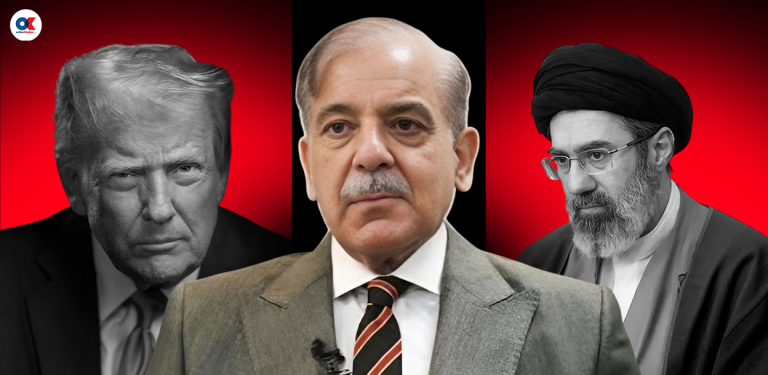
US President Donald Trump has announced that the US Navy will blockade ships passing through the Hormuz Strait. In a social media post, he stated that any vessel attempting to navigate this route will be stopped and inspected. Trump specifically mentioned that ships paying tolls to Iran will be under strict surveillance. He warned that ships illegally paying tolls to Iran will not be granted safe passage. His argument is that this move aims to reduce Iran’s economic power.

Trump also asserted that the US is prepared for any situation and will take steps to end the conflict if necessary. Earlier, Iran’s Deputy Speaker Haji Babai claimed that the strait is under Iran’s control. He referred to it as Tehran’s ‘red line’ and noted that ships traveling through the route must pay tolls in Iranian currency, the rial.

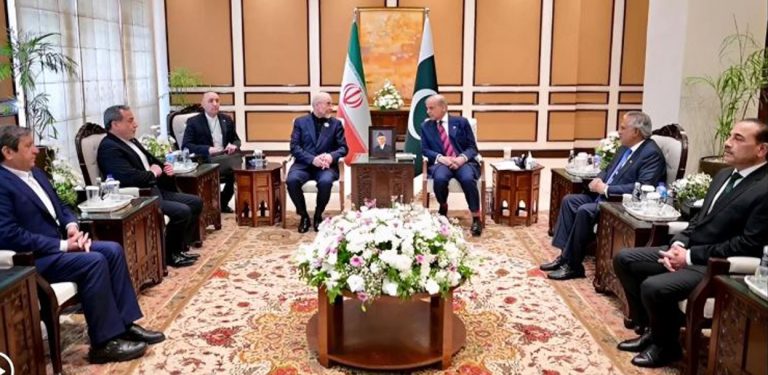
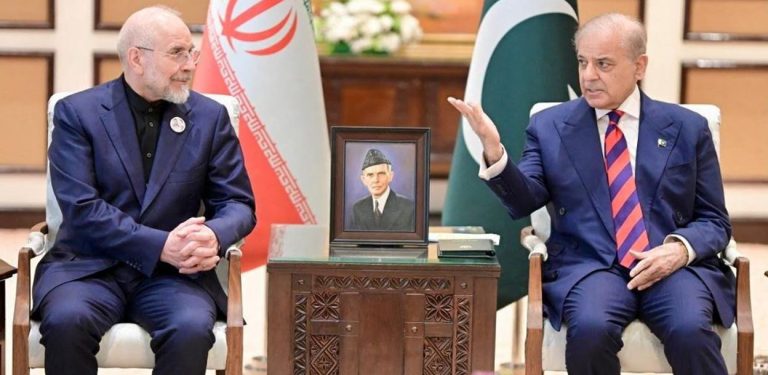
Yesterday, peace talks between Iran and the US in Pakistan, which lasted about 21 hours, ended without any conclusions. Following the talks, both sides issued strong statements against each other. Reports indicate that discussions about reopening the Hormuz Strait and Iran’s nuclear program hit an impasse. Meanwhile, Iranian Parliament Speaker Mohammad Bagher Ghalibaf issued a stern warning to the US. Reacting to the threat of a blockade of the Hormuz Strait, he said, “Enjoy the current petrol prices.”

Ghalibaf posted on his Twitter account, “Watch the current petrol prices, because after this so-called blockade, $4-5 per gallon petrol will start to seem cheap to you soon.”

Following the US announcement to blockade Iranian ports starting Monday, global crude oil prices surged sharply. In early trading, US crude oil rose by 8 percent to reach $104.24 per barrel, while the international benchmark Brent crude increased by 7 percent to $102.29 per barrel.

US Imposes Blockade on Iranian Ports Starting Monday; Iran Takes a Firm Stand

The United States announced it will impose a blockade on Iranian ports starting Monday. This blockade will take effect at 10:00 a.m. Eastern Time (14:00 GMT) on Monday. However, vessels from other countries passing through the Strait of Hormuz will not face any restrictions.

Previously, former President Donald Trump shared on the social media platform Truth Social that the US Navy would blockade any ships attempting to enter or exit this critical waterway. Speaking to reporters on Sunday night, Trump stated that despite Iran not returning to negotiations, he was unconcerned whether Iranian vessels attempted to enter or not. “I don’t care if they come or not; it’s fine either way,” he said.

Trump also mentioned that the ceasefire between the US and Iran remains “well maintained.” However, following the failure of the US-Iran peace talks held in Pakistan, tensions have escalated and reports indicate that oil prices have once again surpassed $100 per barrel. After the inconclusive talks in Islamabad, it has been reported that Trump is considering resuming airstrikes in Iran.

In response, Iran has declared it will take strict action against any military vessels entering this waterway. The Speaker of the Iranian Parliament asserted Tehran’s determination to “not yield to threats.” Recently, Iranian Foreign Minister Abbas Araghchi noted during the peace talks in Pakistan that the US and Iran are only inches away from reaching an agreement.

मोटरसाइक्लिङ स्पोर्टस् तथा साहसिक खेलकुदमा युथ लिडरसिप प्रोग्राम

Youth Leadership Program Launched in Motorcycle Sports and Adventure Activities

The Nepal Automobiles Association has launched the first event under the Youth Leadership Program 2026 focused on youth leadership development. The program saw the participation of 68 young individuals with an aim to cultivate leadership in motorsports and safe mobility. Through 12 sessions until December, training will be provided on motorsports management, road safety, media, sports innovation, and adventure tourism. Kathmandu, March 14.

Sixty-eight youths engaged in engineering, automotive, academia, adventure tourism, and motorcycle sports sectors participated in this event, which is designed to nurture future leaders in Nepal’s motorsports and safe mobility fields. Ram Charitra Mehta, Secretary of the National Sports Council, inaugurated the program, highlighting motorsports as a rapidly developing sport among Nepalese youth. He emphasized that such leadership development programs play a vital role in empowering young people.

Program coordinator Kamala Kshetri expressed confidence that this initiative will cultivate responsible and visionary leadership in motorsports, adventure tourism, mobility, and safe transport sectors. She noted that leadership entails not only holding a position but also assuming responsibility, having a vision, and being able to bring about positive change. In collaboration with the International Motorcycle Federation (FIA), the program will conduct 12 sessions—physical, virtual, and practical—throughout the year until December.

During the program, expert speakers from various fields delivered presentations. Saurabh Jyoti, Chairman of Syaakar Trading Company and board member of NAIMA Nepal, shed light on the interrelations between motorsports, road safety, and the corporate sector. Sports expert Sulochana Sijakhwa presented on the long-term development cycle of riders and athletes. Concluding the event, Anil Kumar Baral, Chairperson and Vice President of the Motorcycle Commission, expressed optimism that Nepali motorsports will progress from maturity to youth involvement, from central to local engagement, from amateur to tourism focus, and from power to technology-driven advancement. The next session is scheduled to be held next month at Kantipur Valley College, Kumaripati.

Trump Warns China: 50% Tariffs Imposed if Military Aid Provided to Iran

US President Donald Trump has issued a stern warning to China against providing military support to Iran. In an interview on Sunday, he stated, “If China is found to be giving military assistance to Iran, a tariff of up to 50 percent will be imposed.” Trump also mentioned plans by the UK and several other nations to deploy naval vessels to clear underwater mines in the Strait of Hormuz. Expressing dissatisfaction with NATO, he said, “Even when necessary, NATO does not support the US for long.”

Trump highlighted that the US bears a significant financial burden within NATO but has not received the expected level of assistance. He remarked, “I am frustrated with NATO and a thorough review will be conducted on this matter.” Earlier, he had indicated that preparations are underway to take action against Iran at the appropriate time. On his social media, Trump described the US as “locked and loaded,” implying complete readiness.

Meanwhile, Iran maintains that the Strait of Hormuz is fully under its control and has introduced regulations requiring ships passing through to pay tolls in Iranian rial. Trump confirmed that a truce with Iran remains in place but announced that the naval blockade against Iran will be enforced starting Monday morning. According to the US Central Command, all vessels heading towards or departing Iranian ports will be stopped.

Following the announcement of the US blockade, Asian stock markets have seen a decline in trading against Iran. Japan’s Nikkei 225 index dropped by 0.84 percent, while South Korea’s KOSPI index fell by 1.83 percent. Investors have expressed concerns that the blockade could impact oil supplies, especially those transported through the Strait of Hormuz.

Iranian Officials Arrest 50 for Espionage, Collaboration with Enemy States, and Anti-Government Activities

Summary

  • Iranian officials have announced the arrest of 50 individuals charged with espionage, collaboration with enemy countries, and anti-government activities.
  • Cases have been registered against the detainees, and numerous assets have been confiscated.
  • In Gilan province, the Islamic Revolutionary Guard Corps (IRGC) arrested 102 people linked to an American-Zionist terrorist network.

30 Chaitra, Kathmandu – Iranian authorities have reported the detention of numerous individuals accused of espionage, cooperation with enemy states, and activities opposing the government.

According to reports, cases have been filed against those detained, and many assets have been seized.

Iranian media outlets stated that on Sunday, following intelligence-based operations across the country, police command broke up an organized network attempting to transmit sensitive information to enemy parties.

A total of 50 individuals were arrested during these raids, as reported by the official news agency IRNA.

The suspects are accused of providing hostile forces with details about service infrastructure, checkpoints, and security forces, facilitating targeting against them. Additionally, authorities confiscated special electronic devices, satellite equipment, weapons, and ammunition from the suspects.

Similarly, the IRGC in Gilan province announced the recent arrest of 102 individuals connected to an “American-Zionist terrorist network” amid ongoing conflict.

The official statement also mentioned the capture of four individuals alleged to have ties with Mossad.


How did this news make you feel?
Happy

Happy

Sad

Sad

Surprised

Surprised

Excited

Excited

Angry

Angry

Comments

Newest Oldest Popular

Comments

Hot Properties

दक्षिणकालीको केराबारीमा कार दुर्घटना, चालकको मृत्यु

Car Accident in Kerabari, South Kali Claims Driver’s Life

March 13, Kathmandu – A car accident in the South Kali area of Kathmandu has resulted in the death of the driver. According to police reports, the vehicle fell off the road in Kerabari, South Kali Municipality-8, leading to the fatality. The car, bearing registration number Bagmati BAD 5281, was traveling from Makwanpur to Kathmandu when it plunged approximately 500 meters down from the road around 10:15 PM. The driver, 34-year-old Suraj Khadka from Kathmandu Metropolitan City-7, was pronounced dead at the scene.

Nagdhunga Tunnel Route: How Feasible is the Temporary Operation Plan to Save Fuel?

An energy expert has suggested that temporarily operating the ready-to-use Nagdhunga-Sisne Tunnel Route could provide some relief amid the current fuel crisis. According to the plan, a Chinese company, in partnership with a Nepali firm, has already been selected to manage the route’s operation. The agreement is expected to be signed during the first week of Baisakh (mid-April).

The 2,688-meter-long tunnel is set to reduce the distance on the Naubise-Kathmandu highway by approximately three kilometers, cutting the average travel time by about 20 minutes. Experts have noted that the tunnel will help bypass uphill slopes, sharp turns, and congestion-prone areas.

One study estimates that around 14,000 vehicles use the highway daily, with 7,000 to 8,000 four-wheeled vehicles traveling each day, according to Soujanya Nepal, the project chief of the tunnel route. Two-wheeled motorcycles and three-wheeled tempos will not be permitted to operate through the tunnel. Additionally, vehicles carrying highly flammable materials, including fuel, will be prohibited from entering. “Pedestrians will also not be allowed in the tunnel,” stated project chief Nepal.

The Nagdhunga-Sisne Tunnel is regarded as Nepal’s first modern transportation tunnel. While there are tunnels constructed for some hydroelectric projects, this is the first modern tunnel built specifically for commercial road use, according to tunnel expert Shree Ram Nyaupane. Nepal’s earliest known tunnel, located near Churiyamai Temple in Bara and built during the Rana period in 1918 under then-Prime Minister Chandra Shamsher, is no longer in use. Meanwhile, tunnel construction is ongoing for the Kathmandu-Tarai-Madhesh Fast Track and the Siddhababa area in Palpa.

National Independent Party MP and Energy Department head Nyaupane explained, “Vehicles consume significantly more fuel when traveling uphill with heavy loads.” “Financially, this tunnel will offer substantial savings by reducing unnecessary fuel consumption.” He also noted that temporary operation of the tunnel could help address the current fuel shortage and that he has raised this issue with the government through his party.

“While this temporary operation may provide some relief for energy-related problems, the government must make a decisive move to proceed,” Nyaupane added.

जीवन विकास, युनिक र मानुषीबीच मर्जर सम्झौता – Online Khabar

Jeevan Bikas, Unique, and Manushi Microfinance Institutions Finalize Merger Agreement

March 13, Biratnagar – Three leading microfinance institutions in Nepal have advanced their merger process. Jeevan Bikas Microfinance Financial Institution Limited, headquartered in Katahari, Morang; Unique Nepal Microfinance Financial Institution Limited, based in Kohalpur, Banke; and Manushi Microfinance Financial Institution Limited, with its central office in Banepa, Kavrepalanchok, are moving forward with their merger.

The memorandum of understanding was signed by Vikramraj Subedi, Chairperson of Jeevan Bikas; Shiv Bahadur Chaudhary, Chairperson of Unique Nepal; and Veena Shrestha, Director of Manushi Microfinance. This agreement represents the largest merger to date in Nepal’s microfinance sector.

According to Sanjay Kumar Mandal, Chief Executive Officer of Jeevan Bikas Microfinance Financial Institution, the merger aims to strengthen the capital base of the microfinance institutions, provide technologically advanced financial services, and enhance public confidence in the financial sector. After the merger, the institution will operate under the name “Jeevan Bikas Microfinance Financial Institution Limited.”

The central office will remain in Katahari Gaunpalika–2, Morang district, where Jeevan Bikas is currently located. Sanjay Kumar Mandal will continue as the CEO. The paid-up capital of Jeevan Bikas currently stands at NPR 1.751232 billion, Unique Nepal at NPR 148.575 million, and Manushi at NPR 109.375 million. Jeevan Bikas serves over 315,000 members in 31 districts across Koshi, Madhesh, and Bagmati provinces through 160 branch offices with doorstep microfinance services. Unique Nepal provides financial services to more than 80,000 clients in 10 districts, while Manushi serves over 34,700 beneficiaries in 14 districts.

To facilitate the merger, a six-member Joint Merger Committee has been formed. Prakash Kumar Shrestha, Director of Jeevan Bikas, was appointed as the committee’s coordinator. Other members include Ashok Sitoula, Puran Prasad Chaudhary, Santaram Tharu, Navina Dhakwa Shakya, and Tara Kumar Rizal. Damodar Regmi, Deputy Chief Executive Officer of Jeevan Bikas, serves as the committee’s member secretary. The merger process is slated for completion by the end of Ashad 2083 (mid-July 2026), with integrated operations expected to commence thereafter.

Nepalis in Moscow Celebrate New Year with Cultural Festivities

March 30, Moscow (Russia) – The Nepali New Year 2083 was celebrated with a vibrant cultural program at the Nagornaya Cultural Center in Moscow, the capital of Russia. The event was successfully organized by the Non-Resident Nepali Association (NRNA) and the National Coordination Council of Russia on Sunday. Artists including Ramji Khand and Bhumikha Giri performed musical presentations during the program.

Approximately 300 Nepalis attended the event and enjoyed the musical performances delivered by the artists.

Maheshwar Mani Tripathi, Acting Ambassador of Nepal to Russia and the chief guest of the program, highlighted that this was the first event organized since the COVID-19 pandemic to bring artists directly from Nepal. He emphasized that such events help preserve Nepali art and culture abroad. Ambassador Tripathi remarked, “Nepalis never forget their roots even after moving abroad, and this program reflects that spirit. I am hopeful that this celebration on the occasion of the Nepali New Year will continue in the coming years.”

On the occasion, Sitaram Kattel (Milan), President of NRNA Russia, expressed gratitude to everyone who contributed to the success of the event. He assured that similar programs would be organized in the future and stressed the need for ongoing support from the community. He also mentioned that organizing this cultural event after a long interval required considerable effort and was a great success.

NRNA Vice President and event coordinator Sanjyan Karki underlined the importance of these programs in preserving and promoting Nepali art and culture overseas. He pledged to continue holding such events to encourage Nepali language, art, and culture in the future.

In line with this objective, the artists who traveled from Nepal and Nepalis residing in Russia presented songs and dances that reflect Nepali culture.

Dr. Jamini Sen: A Forgotten Pioneer Woman Doctor and Her Connection to Nepal

Image courtesy of The Royal College of Physicians and Surgeons of Glasgow. Sen was the first female fellow enrolled in the college

Image source, Courtesy of The Royal College of Physicians and Surgeons of Glasgow

Image caption, Image courtesy of The Royal College of Physicians and Surgeons of Glasgow. Sen was the first female fellow enrolled at the college

At the beginning of the 20th century, medicine was dominated by men and European institutions kept their doors closed to women. During this time, a woman from Bengal in British colonial India broke through this difficult barrier.

In 1912, Jamini Sen was recognized as the first woman fellow of the Royal College of Physicians and Surgeons of Glasgow.

This college had been established in 1599 and remained closed to women for a long time.

However, unlike many other pioneers in medicine, her story was largely lost over time.

Undated image of Sen holding a child

Image source, Courtesy of The Royal College of Physicians and Surgeons of Glasgow

Image caption, Undated photo of Sen sitting while holding a child

Over a century later, Sen’s remarkable life — spanning the wards of Nepal’s royal court, examination halls in the UK, and epidemic-stricken cities of colonial India — has been chronicled in a new biography titled Dr. Jamini Sen, written by her granddaughter Deepta Roy Chakraverti. (In North Indian languages, a female doctor is often referred to as ‘Doctorine’.)

यस्तो छ आज विदेशी मुद्राको भाउ

Today’s Foreign Currency Exchange Rates Announced

March 30, Kathmandu – The Nepal Rastra Bank has set the foreign currency exchange rates for today. The buying rate for the US Dollar is NPR 148.07, and the selling rate is NPR 148.67. The buying rate for the European Euro stands at NPR 173.54, with a selling rate of NPR 174.24. Meanwhile, the British Pound Sterling has a buying rate of NPR 199.02 and a selling rate of NPR 199.82.

Two Men Arrested with Homemade Guns in Udayapur

In Udayapur’s Belka Municipality-6, two men were apprehended with two homemade guns from the Wabulnga community forest. The arrested individuals have been identified as 46-year-old Man Bahadur Rai and 45-year-old Ram Bahadur Tamang. A team deployed from the Rampur Thoksil Police Office recovered the firearms and detained them. The police are conducting further investigations into the incident.

March 13, Udayapur – Authorities in Udayapur have arrested two men with homemade guns. Police reported that the two individuals were found in possession of two unlicensed firearms seized from the Wabulnga community forest, located in Belka Municipality-6. The suspects, residents of the same area, were taken into custody by a team from the Rampur Thoksil Police Office. Investigations into this case are ongoing.

नेपाली संगीतप्रति हुरुक्कै, नारायणगोपाल फेभरेट – Online Khabar

Asha Bhosle’s Musical Journey: Enthusiasm for Nepali Music and Narayan Gopal as Her Favorite Singer

The passing of Indian singer Asha Bhosle marks the end of an era in the global music world. She contributed significantly to linking Nepali music with an international flavor by lending her voice to Nepali films and songs. Collaborating with eminent Nepali music creators, Asha elevated Nepali music to new heights. The incomparable Indian vocalist Asha Bhosle is no longer with us. Her death is a profound loss not only to the Indian subcontinent but to world music altogether. Over a successful musical career spanning more than seven decades, her legacy of thousands of songs will continue to shine for future generations. Her impact runs deep in Nepal as well. By singing for Nepali films and songs, she played a pivotal role in connecting Nepali music with global tastes. In particular, during the 1970s and 1980s, as collaborations between Nepali and Indian musicians and singers increased, Asha’s voice became extremely popular in Nepal. Some of her Nepali songs remain highly regarded today. She introduced new levels of sophistication to playback singing for Nepali cinema. At a time when the Nepali music industry was still developing, the involvement of an internationally acclaimed singer like Asha instilled confidence in Nepali music.

Her contributions extended beyond singing songs alone; she helped take Nepali music to a wider audience. On Indian radio and cassette culture, Nepali songs alongside her music became frequently broadcast, creating a receptive environment.

A Life of Struggle: Born in 1933 into a family in Maharashtra, Asha Bhosle’s childhood was not easy. As the daughter of the renowned singer and playwright Pandit Deenanath Mangeshkar, music was in her blood. However, after losing her father at a young age, she took on family responsibilities and proved her resilience and self-reliance. It was not easy to create her own identity under the shadow of her elder sister, Lata Mangeshkar. Initially facing opportunities in B-grade films and the pain of rejection, she nonetheless established herself. Never giving up, she mastered diverse genres including classical, ghazal, pop, cabaret, and folk music.

Due to the quality and variety of her music and songs, she holds an irreplaceable place in the music world. She worked with legendary composers like R.D. Burman and O.P. Nayyar, introducing new sounds and styles. Songs such as ‘Piya Tu Ab To Aja’, ‘Dum Maro Dum’, ‘Chura Liya Hai Tumne’, and ‘In Aankhon Ki Masti’ immortalized her name. Asha Bhosle sang not only in Hindi but also in over 20 languages including Bengali, Marathi, Gujarati, Punjabi, and English, gaining worldwide fame.

Her interest in Nepali music and culture was particularly special. By lending her voice to Nepali films and songs, she became a cherished figure among music lovers. Asha sang songs that captured the emotions of Nepali audiences, including ‘Ma Pyaar Bechidinchu’, ‘Yeti Dherai Maya Diyau’, ‘Ekta Manche Manparcha’, ‘Baiguni Mayale’, ‘Gairi Khetko Shirai Hanyo’, ‘Aaja Hamro Bhet Bhayeko Din’, ‘Kina Badhdai Chha Dhukdhuki’, ‘Diyo Bali Sanjhko’, ‘Saune Jharima’, ‘Basant Nai Basna Khojchha Yaha’, ‘Pahadko Mathi Mathi’, ‘Mohani Lagla Hai’, and ‘Timro Manma Lukeko Kura’. These songs conveyed simple emotions of love, separation, nature, and life with a unique style.

Her voice brought these songs to life, and they remain popular on radio, music festivals, and digital platforms. Asha collaborated with many esteemed Nepali creators, including Narayan Gopal, Prakash Shrestha, Shambhujit Baskota, Jaydev, Kiran Kharel, Ranjit Gazmer, and Kusum Gazmer. The combination of Indian singing styles with Nepali words and melodies created a new identity. Especially, her collaborations with Ranjit and Shambhujit significantly elevated modern Nepali film music.

Asha always regarded Nepal as a culturally close neighbor. She saw the Nepali audience not just as neighbors but as a society that understood and embraced music deeply. She consistently admired Nepali listeners’ love for music, their sensitivity, and their dedication to songs. She expressed how the shooting of the song ‘Pardeme Raheko Do, Parda Na Uthao’ and various programs in Kathmandu deeply impressed her with Nepal’s musical atmosphere, people’s energy, and hospitality. Her perspective toward Nepali music remained consistently positive. She appreciated the originality, the depth of folk tunes, and the sweetness of words in Nepali songs.

According to her, Nepali music has a profound connection to nature, reflecting the experiences of mountains, rivers, rain, and villages, which makes Nepali music special. Asha believed in maintaining quality, using good lyrics, and persistent practice.

Asha Bhosle is not only an essential figure in Indian music but also a significant name in global music. She performed concerts internationally, collaborated with artists worldwide, and brought Indian music to the global stage. Her songs are highly popular beyond South Asia as well. This is why she is honored as a global icon.

Love and Collaboration: Narayan Gopal as Her Favorite Singer

Asha had a special relationship with Nepali film director Tulsi Ghimire. Tulsi and Ranjit Gazmer traveled to Mumbai to request her to sing for the debut film ‘Bansuri.’ Asha affectionately called Ranjit “Kanha,” and they shared a strong friendship. Tulsi met Asha in Mumbai and sought her participation to sing songs. Tulsi still recalls the moment when, leaving the studio, he met Asha again, and she humorously asked about the payment for the songs. Bharati, who later became Tulsi’s wife, was also present then. Tulsi recalls Asha’s lighthearted remark, “How much will you pay?” and her direction to Ranjit: “Kanha, get the song ready.” Afterwards, studio bookings followed, and everyone was excited. Asha lending her voice to Nepali films was a remarkable achievement.

She sang songs like “Mirmire Sajhama Simsime Pani” and “Jhajhalko Liye Aarhecha Sawan Pheri Aankhama” from ‘Bansuri,’ with music by Ranjit. Subsequently, she lent her voice to other Tulsi films including ‘Chino,’ ‘Koseli,’ and ‘Lahure.’ Tulsi shares, “She was a beloved singer who cared deeply for the Nepali people. Her favorite singer was Narayan Gopal. They collaborated in the song ‘Pahadko Mathi Mathi.’” Asha often praised Narayan Gopal’s voice, singing style, and personality. “Asha did have immense love for Nepal and Nepalis,” Tulsi recalls. “She was genuinely enthusiastic about Nepali songs. Though she sang in various languages, she never displayed any negative attitude toward Nepal or its music.”

Asha Bhosle’s passing feels like the close of an era. Yet her songs will never fade away. Her voice will continue to play on radios, inspiring new generations and reminding older ones. Her stories of struggle, dedication, and devotion will always be a source of inspiration. While her absence will be felt deeply, her voice will forever remain with us.

Asha’s life offers a vital message to new artists: success is not achieved through shortcuts. She prioritized continuous practice, discipline, and hard work. While evolving over time, she never compromised her originality. Today’s singers must learn from her the importance of versatility and preserving authenticity.