Author: space4knews

धरपकड वा बदला लिन खोजे प्रतिरोधमा उत्रन बाध्य हुन्छौं – Online Khabar

If the Government Seeks Arrests or Revenge, We Must Resist, Say 23 UML Organizations

23 organizations affiliated with the Communist Party of Nepal (UML) have objected to the government’s decision to implement the report of the inquiry commission formed to investigate the incidents during the Jana Andolan (People’s Movement) and have demanded its immediate withdrawal.

On Friday, these organizations issued a joint statement accusing the Karki Commission of lacking impartiality and fairness in its investigation.

They alleged that the newly formed government is determined to proceed with biased and vindictive actions against opposition leaders. They warned that any attempt to carry out arrests or revenge would lead to serious consequences.

“If, under the pretext of implementation, the government takes steps to conduct arrests or seek revenge contrary to fundamental principles of justice, it will undoubtedly result in grave outcomes in the country,” the joint statement said.

The organizations demanded the annulment of the Karki Commission and the reversal of the Cabinet’s decision, warning that they will escalate protest programs if their demands are not fulfilled.

“We call for the repeal of the prejudiced Karki Commission and urge the Cabinet to rescind today’s decision. Otherwise, we clearly state that we will be compelled to initiate necessary resistance programs, and the government itself will be held responsible for any resulting circumstances,” the statement emphasized.

Our serious attention has been drawn to the newly formed Cabinet’s first meeting decision to implement the report of the Gauri Bahadur Karki Commission, established to investigate the damage to life and property following protests on September 8 and 9, 2025 (Bhadra 23 and 24, 2082 BS).

We believe an impartial investigation is necessary into the damage caused on Bhadra 23, 2082 BS, and into the infiltration, attacks on national and personal properties, looting, and arson during the destructive protests on Bhadra 24. However, the commission’s chair, Gauri Bahadur Karki, had already released conclusions prior to the commission’s formation, presenting misleading findings. This confirms the commission’s complete bias. Our view is that the commission was not established for an impartial investigation, a stance clearly supported by the report. The report was prepared with the intent to defame the then-political leadership and institutionalize politics of hatred. Therefore, such a report is condemnable, regrettable, and unacceptable.

Ignoring feedback from legal experts and civil society leaders, the Cabinet’s decision to take retaliatory action without proper analysis is regrettable. While establishing a committee to study security personnel, the decision to initiate action against the former political leadership clearly signals the new government’s prejudiced and vindictive approach towards opposition leaders. If the government attempts arrests or revenge under the guise of implementing the Karki Commission’s report, defying fundamental principles of justice, it will inevitably lead to serious repercussions in the country.

The protests on Bhadra 23 involved instigating unrest, forcibly bringing children wearing school uniforms onto the streets, creating tension through encirclement, and spreading terror. On Bhadra 24, incidents occurred including arson and vandalism targeting Parliament, Singha Durbar (the administrative complex), the Supreme Court, provincial and local offices, security agency buildings, government institutions, political party offices, private industries, and residences. It is a grave matter that individuals involved in these acts later assumed high government positions. All parties implicated must be subjected to impartial, independent, and thorough investigation and be held accountable under the law. Additionally, there are suspicions that some funds and resources from various dubious domestic and international non-governmental organizations were used in criminal activities, which also requires investigation. Any steps taken without impartial investigation of all parties will be biased and will call into question the integrity of the criminal justice system. We demand the dismissal of the prejudiced Karki Commission and the revocation of the Cabinet’s decision. Otherwise, we will be forced to escalate resistance programs, for which the government will bear full responsibility.

Signatories:

1. Maharaj Gurung, President, National Youth Union Nepal

2. Parshuram Basnet, President, Nepal Sports Federation

3. Deepak Dhami, President, All Nepal National Independent Students’ Union

4. Vinod Shrestha, President, Nepal Trade Union Federation (Jifant)

5. Tukabuddha Hamal, President, All Nepal Women’s Association

6. Vidur Subedi, President, Human Rights and Social Justice Forum Nepal

7. Bhumikā Limbu Subba, President, National Cultural Federation Nepal

8. E. Bhesraj Thapa, President, Progressive Engineers Association Nepal

9. Ganesh Pandey, President, Press Chautari Nepal

10. Tejprasad Nisad, President, All Nepal Backward Class (OBC) Federation

11. Amarbahadur Thapa, President, Progressive and Professional Lawyers’ Organization

12. Punyaprasad Dhakal, President, Professional Federation Nepal

13. Vinod Pandey, President, Nepal National Ex-Servicemen and Police Organization

14. Indra Tamang, President, Land Rights and Workers Organization Nepal

15. E. Gajendra Thapaliya, President, Nepal Intellectual Council

16. Dr. Prem Dangal, President, All Nepal Farmers Federation

17. Bhagirath Sapkota, President, Nepal Industries and Entrepreneurs Federation

18. Manohar B. Paudel, President, Mukti Samaj Nepal

19. Pasang Sherpa, President, Democratic Indigenous Nationalities Federation Nepal

20. Jagdish Adhikari, President, National Disability Organization Nepal

21. Harun Haluwai, President, Nepal Muslim United Organization

22. Vinod Bhattarai, President, Returnee Federation Nepal

23. Pushparaj Shrestha, President, National Volunteers Force Nepal

Who Will Face Action First?


March 26, Kathmandu – Following the appointment of Rashtriya Swatantra Party senior leader Balendra Shah (Balen) as Prime Minister, the first cabinet meeting decided to implement the report of the commission investigating the events of the Janajati movement.

Announcing the decision to implement the Gauribahadur Karki Commission’s report, government spokesperson Sasmit Pokharel stated that a committee will be formed to study matters concerning security agencies. For others, the decision was to proceed directly with the implementation of the report.

This opens the way for the concerned bodies to implement the commission’s recommendations for all except the security agencies.

The commission recommended that former Prime Minister KP Sharma Oli, Home Minister Ramesh Lekhak, and former Inspector General of Police Chandrakuber Khapung be investigated and prosecuted for crimes punishable by up to 10 years’ imprisonment.

The report suggests investigation under Section 181 of the Criminal Code Act, 2074.

This section states that “no one shall cause death by negligent act.” Those found guilty face imprisonment from three to ten years, along with a fine ranging from NPR 30,000 to NPR 100,000.

With the government’s decision to implement the report, the path to investigate Oli and Lekhak under this charge is now open.

Khapung, however, being a security personnel, is unlikely to be investigated immediately.

Additionally, the commission recommended prosecution under Section 182 for Home Secretary Gokarn Mani Duwaadi, Armed Police Force Inspector General Raju Aryal, former chief of the National Investigation Department Hutaraj Thapa, and former Chief District Officer of Kathmandu Chhabi Rizal.

The commission concluded that these individuals were involved in causing death through negligence. Charges under this provision carry a maximum sentence of three years’ imprisonment and a fine of NPR 30,000.

Among those recommended for action, Aryal remains the current Inspector General of Police, and Thapa is a former intelligence officer, which suggests they are unlikely to be investigated immediately. However, the path to investigate Home Secretary Duwaadi and former Kathmandu CDO Rizal is now open.

बालेनको पुर्ख्यौली गाउँमा उत्सव, पाँच क्वीन्टल लड्डु बाँडिदै

Celebration Held in Balen’s Ancestral Village with Distribution of Five Quintals of Sweets

News Summary

  • Locals in Balen’s ancestral village, Ekdara, celebrated his appointment as Prime Minister by distributing sweets.
  • Ekdara Rural Municipality office operates from Balen’s ancestral home, where locals benefit from his property.

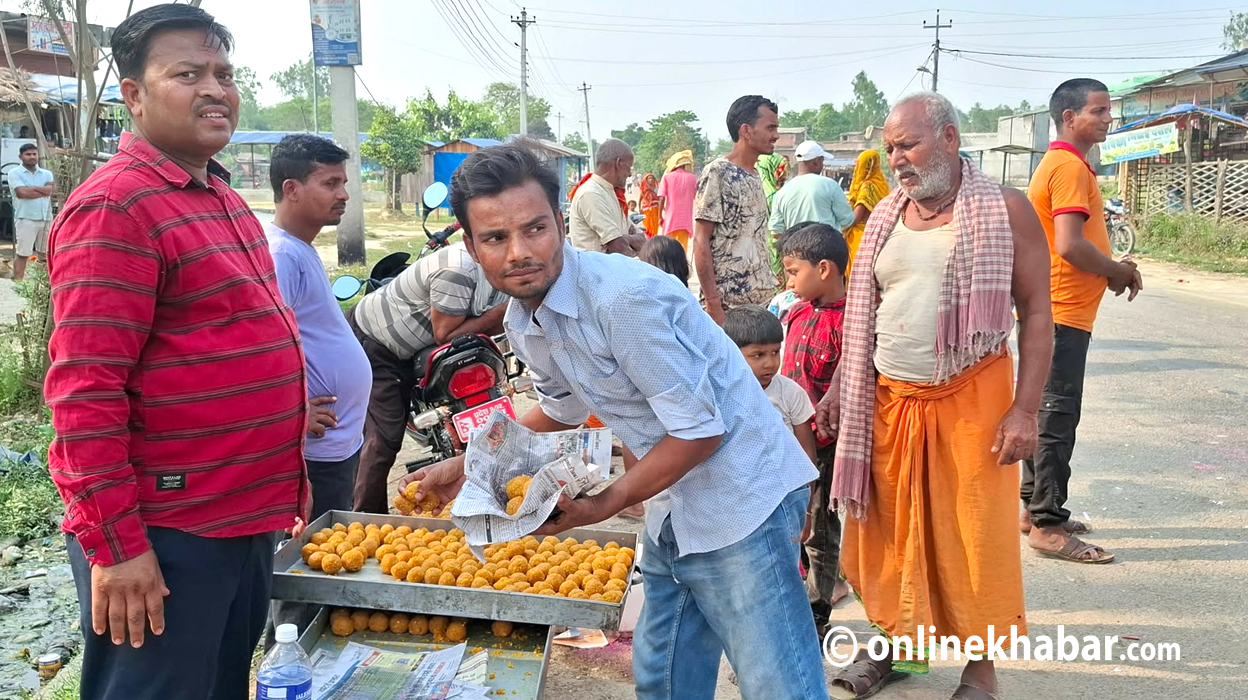
Janakpurdham, Chaitra 13 – On Friday afternoon at 2:30 pm, villagers in Ekdara along the Jaleshwar-Samsi road gathered carrying sweets in their hands.

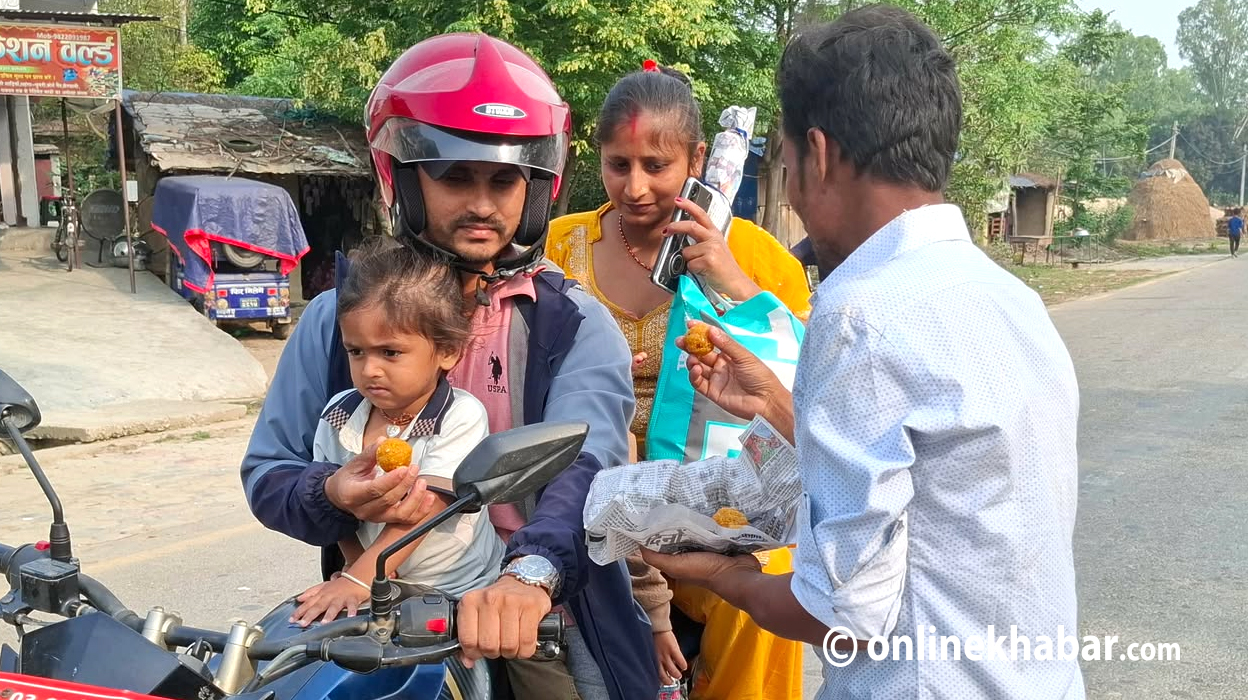
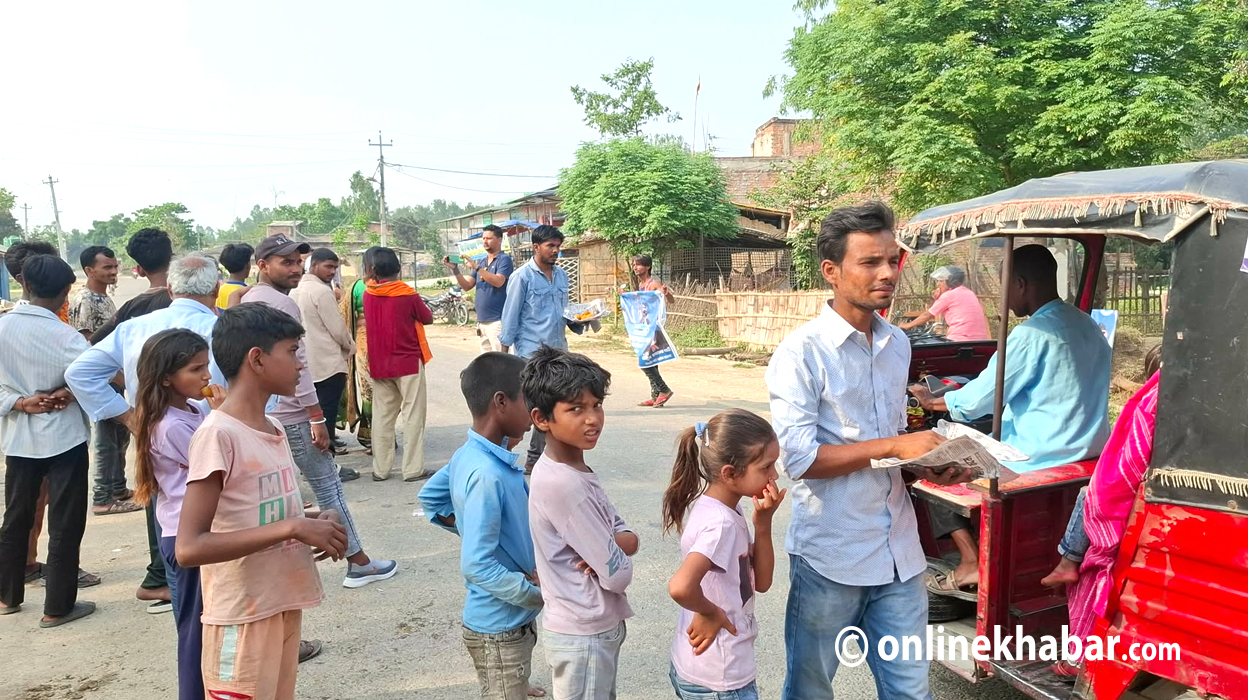
Pedestrians, cyclists, motorcyclists, buses, and tractors traveling along the road were stopped, and each traveler was given a laddu (mung bean sweet). The villagers busily handed out sweets, spreading delight.

The villagers appeared joyful and excited. This celebration marked the occasion of Rashwapak’s senior leader Balendra Sah ‘Balen’ becoming Prime Minister.

This is Balen’s ancestral village. On Friday at 12:34 pm, Balen took his oath of office and secrecy from President Ramchandra Paudel and assumed the role of Prime Minister.

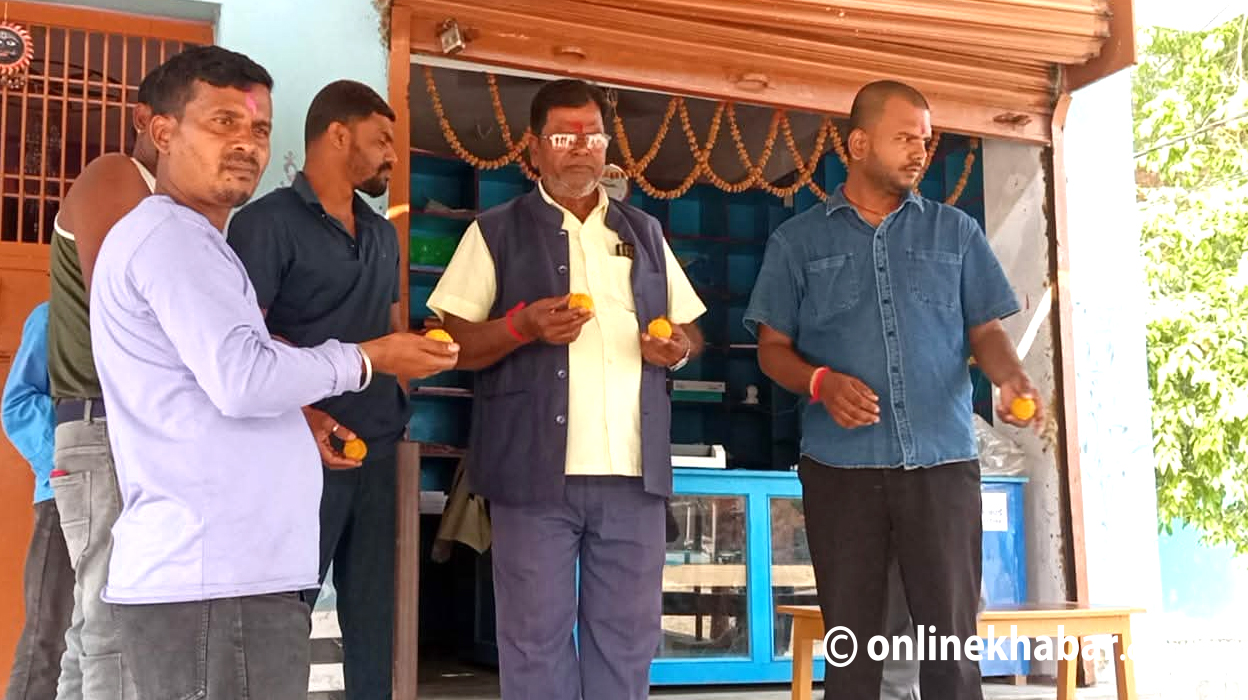
Youth Dinesh Bhandari, distributing sweets, said, ‘This is a celebration for our village’s Balen becoming Prime Minister. Since 12:30 pm, we have been distributing laddus like this. We are sweetening the faces of travelers.’

Balen used to visit his ancestral home in his childhood. At that time, villagers would play with him, and once he was old enough, he played alongside the village children.

Among those distributing sweets was 75-year-old local Nur Mohammad Nadaf. He said, ‘Balen was born here. His becoming Prime Minister is a matter of pride for us. That’s why we are celebrating with sweets. We are very happy.’ He also emphasized the need for Balen to address farmers’ problems.

Manohar Mahto, handing out sweets, expressed confidence that issues would gradually be resolved now that Balen is Prime Minister. ‘He is our village youth Prime Minister. He knows what needs to be done,’ he said.

Local Maheshwar Bhandari said he never imagined Balen would become Prime Minister but is now encouraged by it. He hopes that farmers’ problems will be addressed to some extent and that agriculture-based livelihoods will be easier.

‘We never thought Balen would become Prime Minister,’ he said. ‘We need a cremation ground and irrigation channels. We cannot do much else; irrigation helps production.’

The decision to distribute sweets in Balen’s ancestral village was made last Monday. According to local Vinod Sah, ten villagers convened that day.

‘We knew Balen was becoming Prime Minister and discussed what to do next. We agreed to distribute sweets and celebrate like during Diwali,’ he noted. ‘Ten of us decided to distribute sweets, arranged to make five quintals of sweets, and are distributing them today with everyone’s support.’

While handing out sweets, people also shouted slogans like “Long Live Balen” and “Victory to Ghanti.” A young man held a banner featuring Balen’s village Ekdara and the picture of Ujjwal Jha, a winner from Rashwapak.

Today, the sweets were kept at Balen’s own house. By 2:30 pm, over half of the sweets had already been distributed.

Residents expect the new Balen government to implement effective work in employment, education, health, and irrigation sectors.

In another neighborhood, Satyanarayan Sah also distributed sweets. The village celebrated happily by throwing colors and powder.

While villagers celebrated, Balen’s ancestral home, located about 100 meters north, appeared quiet in the afternoon. The Ekdara Rural Municipality office operates from his house. Although Ram Navami was a public holiday, the office remained open due to scheduled programs. Chief Administrative Officer Ramji Joshi, whom we met at the office, said that they would light lamps in the evening.

‘This is Balenji’s ancestral home. His becoming Prime Minister and having the office here is a pride for us. Some staff are still here today. We will celebrate by lighting lamps in the evening,’ he said.

They lit lamps to celebrate Diwali. Balen’s family has not lived long-term in the house for decades. His grandfather Munilal lived here but passed away ten years ago. His eldest brother and Balen’s father, Dr. Ramnarayan Sah, also passed away last Mangsir (November/December).

Ramnarayan had four brothers – engineer Satyanarayan Sah, Jeetnarayan Sah, and the youngest Lalbabu Sah. After going abroad for studies, they built homes outside but visit regularly.

After federalism was implemented, the Ekdara Rural Municipality office was established in his house. The office continues to operate here. Joshi said the office is maintained as a support service with minimal fees.

More than 50 bighas of land belonging to Balen’s estate remain in the village. Most of the land is utilized by locals, who also benefit from Balen’s property.

From Mithila Art to Silam Sakma: Prime Minister Balendra Shah’s Inauguration Ceremony

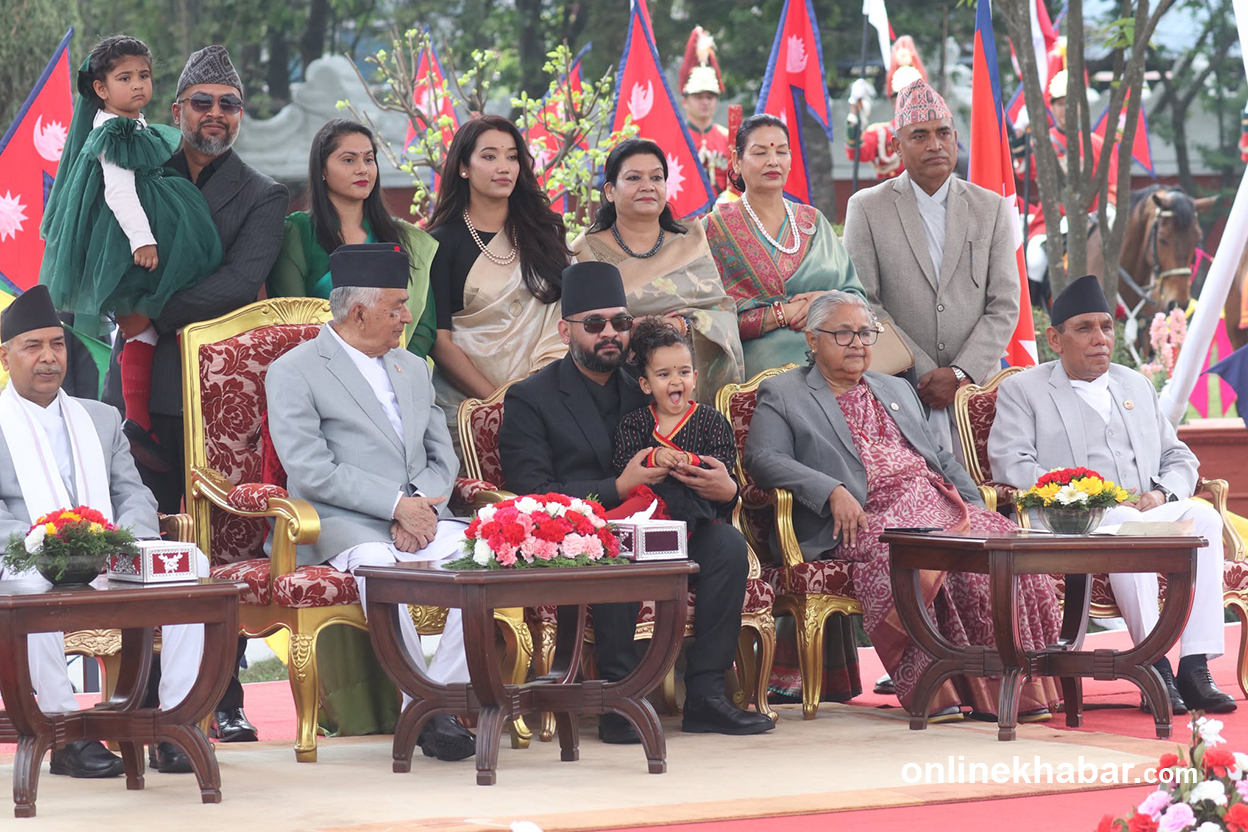
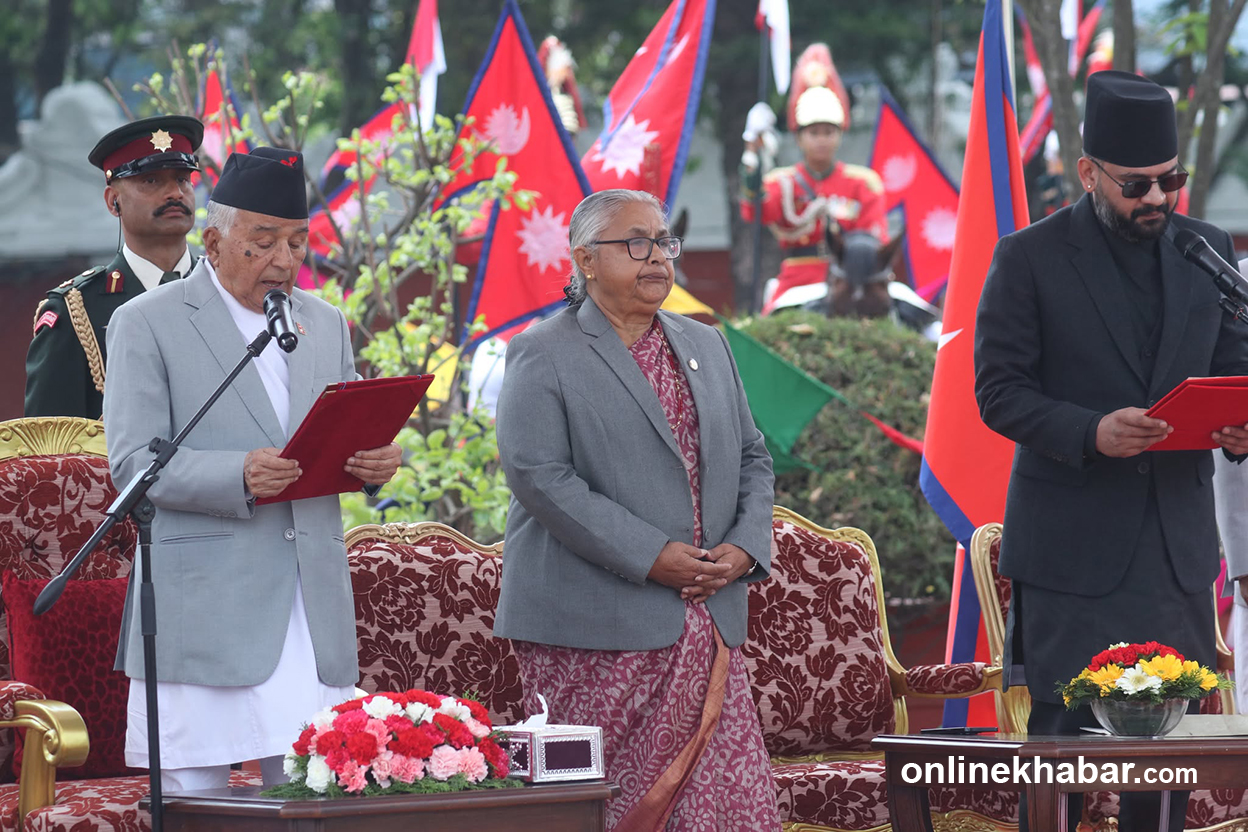
March 26, Kathmandu – The inauguration ceremony of newly appointed Prime Minister Balendra Shah (Balen) was held with great grandeur. The event, conducted at the President’s official residence, Sheetal Niwas, marked a special and memorable occasion in Nepal’s history.

The oath-taking ceremony was scheduled for 12:34 PM, a time chosen for its auspiciousness, coinciding with the unique numerical pattern 1–2–3–4.

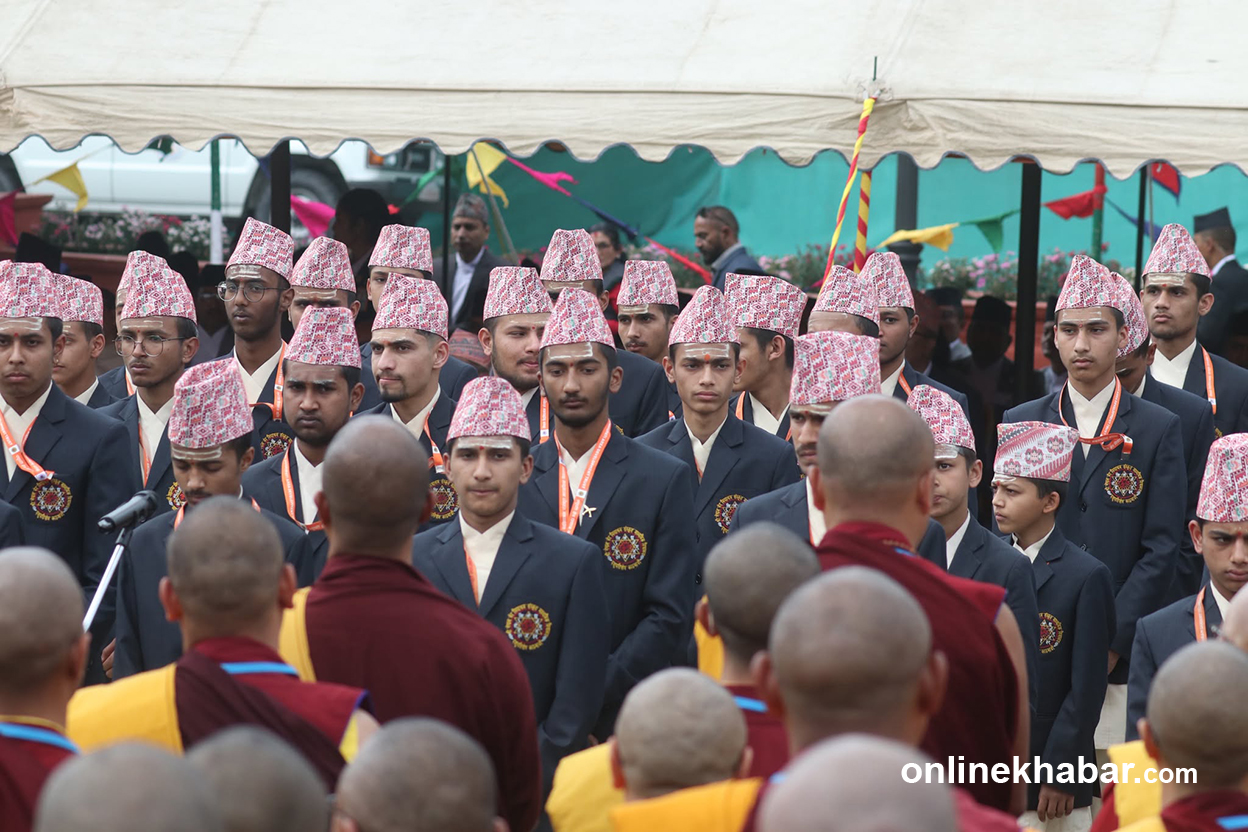
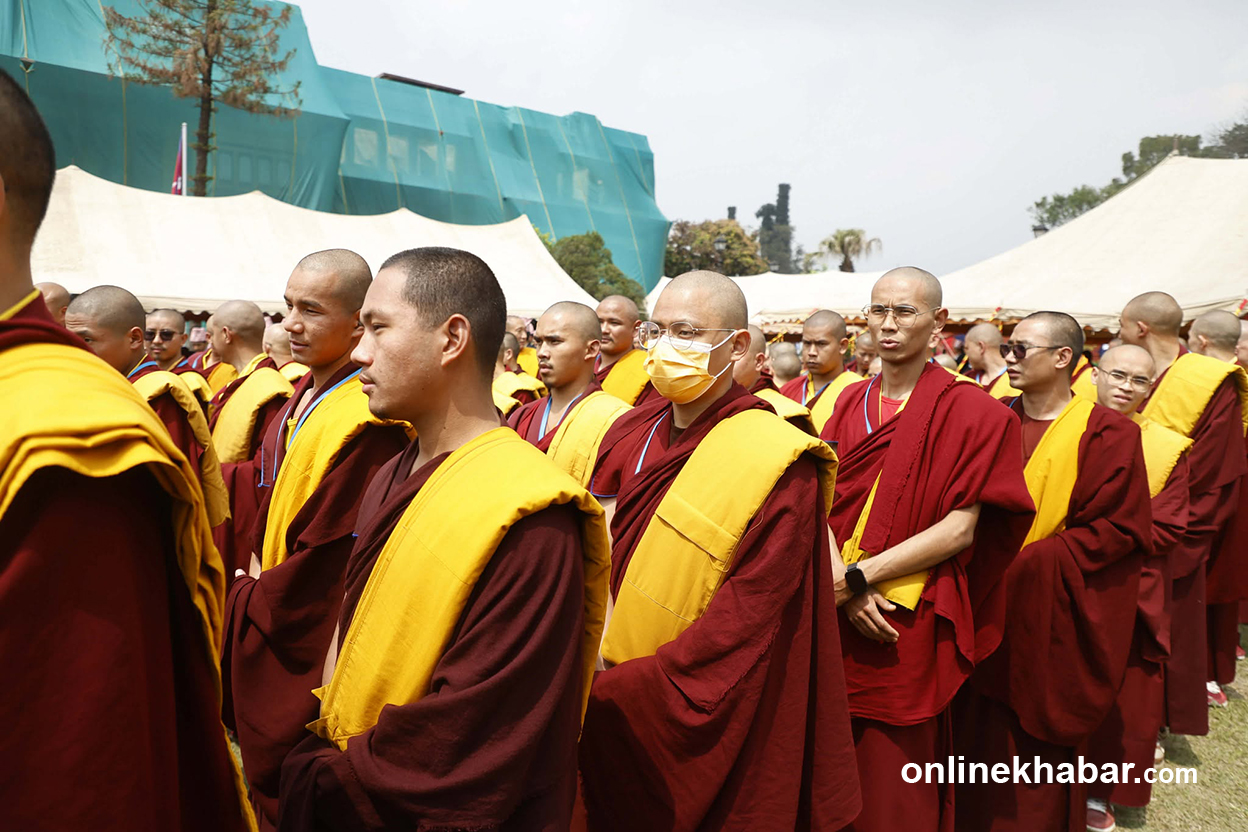
The event embraced traditional and cultural elements from the outset. Prior to the oath, 108 Hindu boys performed prayers, and 107 Buddhist monks recited the Ashtamangala text.

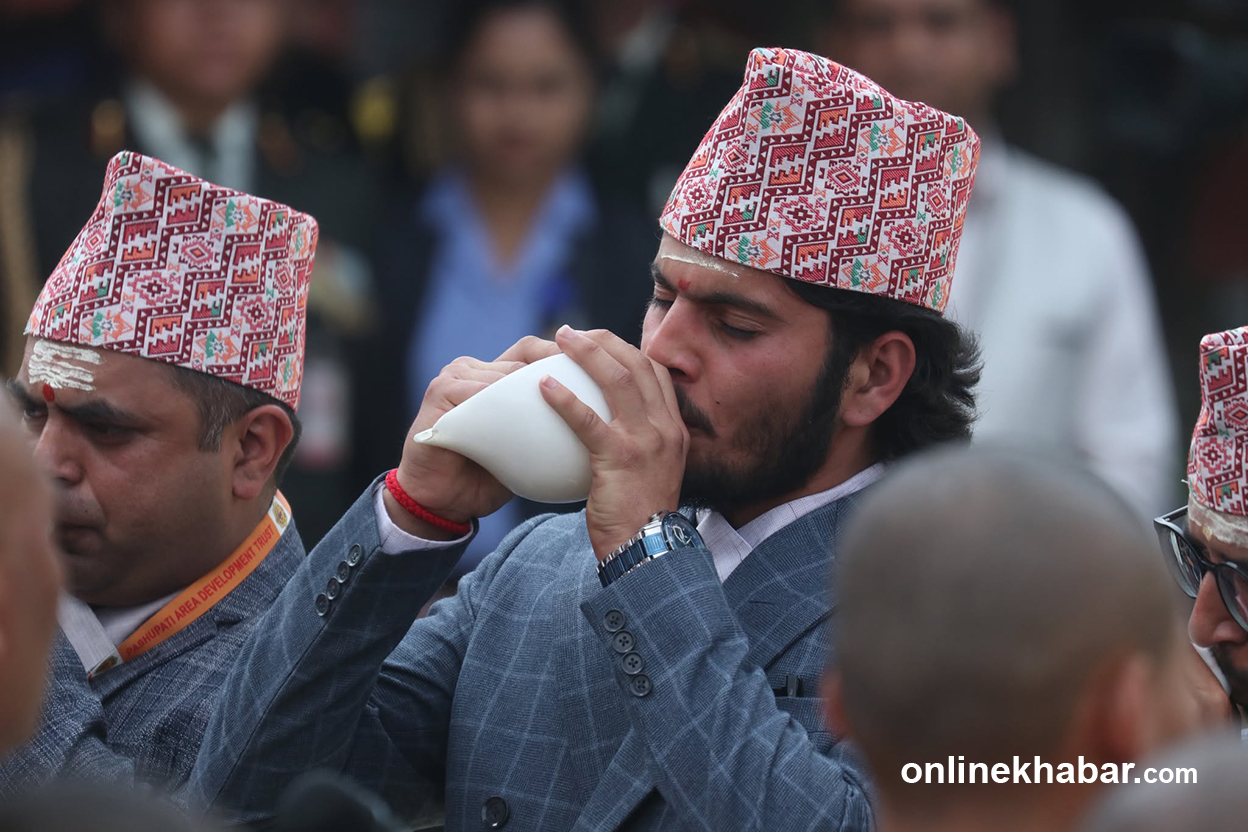
Seven Brahmin priests blew conch shells during the ceremony, infusing the environment with sanctity and energy.

Rooted in a multicultural identity, the ceremony featured two prominent cultural symbols representing Mithila and Kirati traditions.

The Mithila art, renowned as a traditional painting style, and Silam Sakma, representing Kirati culture, highlighted Nepal’s cultural diversity while conveying a message of unity in diversity.

Two individuals personifying Lord Shiva and Goddess Parvati were present at the ceremony, honoring Hindu beliefs that hold these deities in deep reverence.

President Ramchandra Paudel administered the oath of office and secrecy to Prime Minister Balen, paying tribute to his commitment. Throughout the oath, Balen appeared solemn and confident.

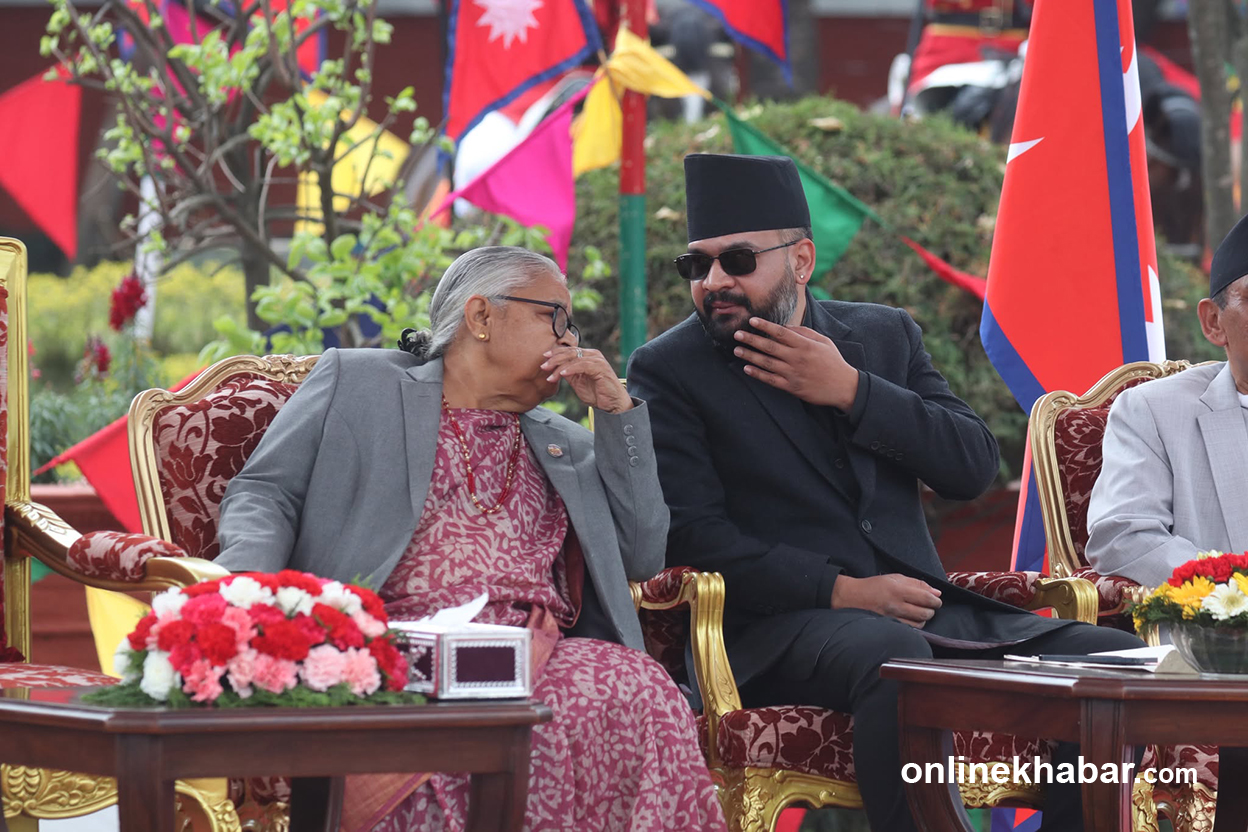
Leaders from various political parties, high-ranking officials, elected members of the House of Representatives, and supporters attended the traditionally styled ceremony.

Prime Minister Shah’s inauguration is seen as the beginning of a new political era for Nepal. Emerging from the world of rap music into politics, Balen’s victory symbolizes the awakening of a new generation and their aspirations for change.

The 36-year-old Balen commenced his parliamentary journey after defeating former Prime Minister KP Sharma Oli by 49,614 votes in Jhapa-5 during the House of Representatives elections held on February 3.

Prior to the election, he served as the Mayor of Kathmandu Metropolitan City. He resigned from the mayoral post to become a senior leader of the Rastriya Swatantra Party (RSP).

In the local elections of 2079 BS (2023 AD), Balen ran as an independent candidate and was elected mayor by defeating Nepali Congress leader Srijana Singh by 23,426 votes.

Minister Pokharel: Sports Should Be Led by Sports Professionals, Not Politicians

March 26, Kathmandu.

Newly appointed Minister for Education, Science and Technology, as well as Minister for Youth and Sports, Sasmit Pokharel, has emphasized the need to stop the politicization of the sports sector.

After assuming office at Singha Durbar on Friday, Minister Pokharel briefly responded, stating that ending political interference in sports is his primary priority.

“The first step must be to stop politicization in sports. Not only in sports and education but also in professional sectors after the National Independent Party government came to power, politics has started to interfere, and this must be halted. Many problems in Nepal’s sports sector stem from excessive political involvement,” he said. “Nepal’s problem is this: politics does not happen where it should; it happens where it should not.”

He stressed that henceforth, individuals from the sports community, not politicians, should lead the sports sector. “From now on, it should be sports professionals leading sports, not politicians engaged in politics.”

Minister Pokharel highlighted the importance of bringing experienced sports personnel into relevant sports organizations.

“We will include regional experts who possess relevant expertise and experience in organizations like RAKHEP and other sports bodies to move forward together. Our key plan is to end the politicization within the sports sector,” he clarified.

He also noted that the ongoing controversy involving the All Nepal Football Association (ANFA) has worsened due to political interference and stressed the need to resolve such issues by involving sports experts.

“The ANFA controversy has deteriorated because of political involvement. Sports and politics should be separated first, and then collaboration with regional experts should be established,” he said.

Minister Pokharel pointed out that many Nepali athletes come from three departments, emphasizing the need to focus on training and nutrition from an early age. “Many Nepali athletes come from three different departments. Good training is essential up to a certain age, and even after reaching that age, quality training remains necessary. Starting proper training and nutrition from a young age will be beneficial.”

He also mentioned that programs he initiated during his tenure as the Mayor of Kathmandu Metropolitan City will now be transformed into laws and policies to advance them more effectively.

गृहमन्त्री सुधन गुरुङले गरे दुई आईजीपीसँग डेढ घण्टा छलफल

Home Minister Sudhan Gurung Holds Lengthy Meeting with Two IGPs

March 26, Kathmandu – Home Minister Sudhan Gurung held discussions with the chiefs of Nepal Police and Armed Police Force Nepal. On Friday evening, he summoned Nepal Police Inspector General of Police (IGP) Danbahadur Karki and Armed Police Force IGP Raju Aryal to the Ministry of Home Affairs at Singh Durbar and engaged in a one-and-a-half-hour meeting.

The specific topics discussed during the meeting have not been publicly disclosed. However, on the same day, the Council of Ministers decided to implement the report of the investigation commission led by Gauribahadur Karki, which was formed to probe the incidents related to the Janajati movement.

Following the cabinet’s decision to put the Karki Commission’s report into action, Minister Gurung’s dialogue with the two IGPs is seen as highly significant.

The Karki Commission’s report recommended taking criminal action under the law against the then Prime Minister KP Sharma Oli, Home Minister Ramesh Lekhak, among others.

HJNABL 2026: KVBC Hounds Secure Sixth Consecutive Victory

In the HJNABL 2026, KVBC Hounds continued their winning streak by defeating Solo Basketball Club 102-69. Golden Gate Basketball Club beat Kirtipur by 87-62, with Ajay Kushwaha named Man of the Match. Eight teams are competing in the tournament, with the top four advancing to the playoffs. March 26, Kathmandu.

Maintaining their victorious momentum in the Himalayan Java National Basketball League (HJNABL) 2026, KVBC Hounds won their sixth straight game. The match, held on Friday evening at the covered hall of Dashrath Rangashala in Tripureshwor, saw the Hounds overpower Solo Basketball Club by a wide margin of 102-69. Having lost their first three games, the Hounds have since delivered outstanding performances to win consecutive matches.

Solo took the first quarter 25-22. However, the Hounds gained control in the second quarter, scoring 28-19 to lead 50-44 at halftime. They dominated the third and fourth quarters with 29-14 and 26-11 respectively, securing a decisive victory. After nine matches, the Hounds have 15 points, placing them fourth in the standings. Ugen Norbu Gurung of the Hounds was named Man of the Match.

Solo suffered their seventh loss and currently sit fifth with 11 points from nine games. On Thursday night, Golden Gate Basketball Club defeated Kirtipur 87-62, with Ajay Kushwaha earning Man of the Match honors. The second edition of HJNABL, organized by the Nepal Basketball Association (NEBA), features eight competing teams.

The league stage follows a double round-robin format with a total of 56 games. The top four teams will advance to the playoffs. The playoffs start with the first qualifier between the first and second placed teams and an eliminator match between the third and fourth placed teams. The loser of the first qualifier faces the winner of the eliminator in the second qualifier. The winners of the first and second qualifiers compete in the final. The champion will receive NPR 400,000, the runner-up NPR 200,000, and the third-place team NPR 100,000. Additionally, the player delivering the most outstanding performance throughout the tournament will be named Most Valuable Player (MVP) and awarded a special prize.

स्थायी सरकार बन्दा गदगद निजी क्षेत्र  – Online Khabar

Private Sector Optimistic About Increased Investment Following Formation of Stable Government

Following the establishment of a stable political environment under newly appointed Prime Minister Balen Shah, the private sector expects increased investment. Finance Minister Dr. Swarnim Wagle has expressed commitment to collaborating with the private sector to repeal outdated laws and create an investment-friendly environment. Chandram Dhakal, President of the Federation of Nepalese Chambers of Commerce and Industry, conveyed confidence in the new government, anticipating accelerated economic recovery and sustainable development. Kathmandu, 27 March – The private sector, affected by the Gen Z movement, has shown enthusiasm after the formation of the new government.

Having endured a lack of an investment-friendly environment due to political instability, the private sector is responding positively to signs of political stability. Entrepreneurs have expressed confidence that investments will increase with the new government, and they expect appropriate coordination from the government moving forward.

Newly appointed Finance Minister Dr. Swarnim Wagle stated his intention to move forward in partnership with the private sector. He has taken responsibility for boosting the morale of private enterprises, a commitment that has generated a positive response among entrepreneurs and businesspeople. Dr. Wagle emphasized the government’s dedication to repealing outdated laws, stating, “The government will create a conducive environment by involving the private sector in decision-making.” He also mentioned the elimination of certain state structures that previously discouraged industrialists and entrepreneurs.

Prime Minister Balen Shah, who is under 40 years old, has inspired excitement among young people, according to Sudip Ghimire, President of the Nepalese Young Entrepreneurs Forum. Ghimire expressed hope that the youth-led government will actively seek suggestions and counsel from youth-focused business organizations. He remarked, “Youth entrepreneur associations must be promoted, and youth should be involved in policy-making—this is our greatest hope and expectation.” He welcomed the government’s intention to repeal laws that hinder industry and commerce.

“A stable government has created an environment of trust, confidence, and hope for young entrepreneurs,” Ghimire said. “This will contribute to strengthening the country economically.” He believes the government must address sector-specific business challenges and implement digital governance accordingly. It is anticipated that this government will foster an environment conducive to service exports, including in digital sectors, hospitality, tourism, and education.

The youth-led new government is expected to create opportunities for entrepreneurs, said Manish Shrestha, President of the Industry Federation Youth Entrepreneur Forum. Shrestha emphasized the need to ease business operations by removing minor obstacles. According to him, reducing bureaucratic hurdles in company registration and permit procedures will boost direct foreign investment. If the government implements its plans, increased public spending will positively impact industry and commerce, he added.

“Previously, political instability and a lack of an investment-friendly environment were challenges. Even though essential raw materials could be easily sourced from nearby borders, unnecessary complications increased production costs,” Shrestha explained. “Further challenges arise in producing and delivering goods and services to markets, which must be eliminated.” He stressed the need to regulate border areas effectively to protect domestic enterprises. He is confident that a government serving a full five-year term will lead to investment growth. He remains optimistic that the current government can create an environment where every young entrepreneur can expand investments.

Confident that Finance Minister Dr. Wagle understands entrepreneurial spirit, Shrestha believes the private sector will be encouraged. Rahul Chaudhary, Managing Director and CEO of CG Hospitality Global, expressed support and trust in the government led by Nepal’s new Prime Minister Balen Shah, predicting increased investment amid a stable political environment. Chandram Dhakal, President of the Federation of Nepalese Chambers of Commerce and Industry, congratulated Prime Minister Shah and wished him success, emphasizing the anticipation of political and policy stability. Dhakal stated, “Promotion of investment-friendly policies will accelerate economic recovery and sustainable development. In partnership with the private sector—the backbone of the overall economy—we will advance the journey toward prosperity.”

Mahesh Basnet Warns: Crackdown over Karki Commission Report Implementation Could Push Country Toward Conflict

March 26, Kathmandu – Mahesh Basnet, secretary of the Communist Party of Nepal (Unified Marxist-Leninist), has issued a warning that if the government resorts to a crackdown in the name of implementing the Gaurav Bahadur Karki Commission report, the country could spiral toward conflict.

Today, in its first meeting, the newly formed cabinet led by Rastriya Swatantra Party parliamentary leader Balendra Shah decided to move forward with implementing the Karki Commission report.

The decision included constituting a study committee regarding the security apparatus recommended for action by the commission, and proceeding according to its recommendations before implementation. For all other recommendations, immediate enforcement was agreed upon.

Shortly after this decision was made public, Basnet reacted on social media, cautioning that such a move would lead the country toward conflict.

“The government under Balendra’s leadership, in its first cabinet meeting, has decided on the Karki Commission’s report on the Jenajee incident. It plans to form a study committee regarding security personnel, but directly implement measures concerning the former prime minister, home minister, and others. This is heard to be a cunning and conspiratorial decision,” Basnet wrote. “If the government uses the report implementation as a pretext for crackdown and political revenge, not only will it face initial backlash, but it also risks pushing the country back into conflict.”

Basnet described such a decision as partisan and unacceptable under any circumstance, warning of strong resistance.

“Such biased decisions are absolutely unacceptable. Justice must be equal for all; otherwise, strong opposition will surely arise,” he stated.

Basnet also demanded investigation and action against individuals involved in the protests on September 8 and 9 of the previous year.

“Those who incited protests on September 8, forcibly brought children in school uniforms onto the streets, created tense and terrorizing environments by surrounding them from all sides, and those who engaged in violent riots on September 9, targeting the Parliament, Singha Durbar, Supreme Court, government offices, private industries, and residential premises causing arson and vandalism—including those who later became prime ministers, ministers, and lawmakers—must be impartially investigated and punished,” he wrote.

He expressed suspicion that funds from various suspicious national and international non-governmental organizations were used in criminal activities, stating that terrorism conducted under the guise of power and its leadership is unacceptable to society. “Any action taken without impartial investigation of all parties will be inherently biased,” he emphasized.

Nepal Advances to Semifinals as Group A Winner in SAFF U-20 Championship

Nepal has secured its spot in the semifinals of the ongoing SAFF U-20 Championship in the Maldives by finishing as the group winner. In the final group stage match, Nepal drew 1-1 against the Maldives. From Group B, India and Sri Lanka have already qualified for the semifinals, while Pakistan has been eliminated from the tournament.

In the final group match held in Male, Maldives, Nepal fought to a 1-1 draw against the hosts, clinching the top position in Group A and advancing to the semifinals. Nepal had already guaranteed its place in the next round with consecutive wins in its previous two games. The semifinal opponent for Nepal will be determined after the conclusion of Group B’s final match.

The match at the National Stadium in Male saw the Maldives open the scoring early, with Mohamed Imran netting in the 14th minute to give the home side the lead. However, Nepal’s Nishan Raj Lawat equalized late in the 86th minute, ensuring a draw. Nepal had earlier secured a 2-1 victory over Bhutan in their opening match and a 1-0 win against Sri Lanka in their second game.

After three matches in Group A, Nepal leads the group with 7 points. Sri Lanka sits second with 3 points from two matches. The Maldives have 2 points from three games and are eliminated from the tournament. Bhutan is in fourth place with 1 point from two matches. The final semifinal spot from Group A will be decided after the matchup between Sri Lanka and Bhutan. A draw will suffice for Sri Lanka to advance, while Bhutan must defeat Sri Lanka to qualify. From Group B, India and Sri Lanka have already secured semifinal berths, each having defeated Pakistan. With two losses, Pakistan has been eliminated from the competition.

बालेनको शपथग्रहणमा बाबुराम- आफ्नै १२ वर्ष पहिलेको अग्रलेख सम्झिएँ

Baburam Bhattarai Recalls 12-Year-Old Article at Balendra Shah’s Swearing-In Ceremony

March 26, Kathmandu – Former Prime Minister Dr. Baburam Bhattarai reflected on an article he wrote 12 years ago during the swearing-in ceremony of Prime Minister Balendra Shah (Balen). Sharing a lengthy post on Facebook on Friday evening, Bhattarai recalled his editorial titled “Need for a New Force,” published in the Nepali weekly magazine Nepal Saptahik in Chaitra 2070 (March 2014).

At that time, the constitution was being drafted by the Constituent Assembly, and Bhattarai was part of the Maoist party’s senior leadership. He noted, “Analyzing both national and international situations, I had advocated the need for a new force—comprising new ideas, policies, programs, and leadership—as an alternative to the old parties and leadership once the constitution was completed and a new era began.”

Now, with Balendra Shah assuming office as prime minister representing the new party, Rastriya Swabhiman Party (Raswap), Bhattarai said the memory of his article vividly came to mind upon congratulating him at the ceremony.

He also recalled a passage from Karl Marx’s famous work The Eighteenth Brumaire of Louis Bonaparte, which states, “Men make their own history, but they do not make it as they please; they do not make it under self-selected circumstances, but under circumstances existing already, given and transmitted from the past.” Bhattarai remarked, “Isn’t Nepal’s current situation similar to this?”

Government Decides to Implement Karki Commission Report


March 26, Kathmandu – The government has decided to implement the report of the investigation commission formed to probe the suppression of the Janajati movement.

Government spokesperson Sashmit Pokharel stated that the first cabinet meeting held on Friday resolved to implement the report.

“The commission, chaired by Gauribahadur Karki, submitted its report to the Government of Nepal investigating the incidents that occurred during the protests on September 8 and 9 (Bhadra 23 and 24). It has been decided to implement the report accordingly,” Pokharel announced while conveying the government’s decision.

According to him, the implementation plan is divided into two phases.

First, a study committee will be formed regarding the security agencies as recommended by the commission; the recommendations presented by this committee will then be implemented.

Second, decisions recommended by the commission on other matters will be implemented immediately.

कर्मचारीलाई प्रधानमन्त्री बालेनको निर्देशन- सरकारको स्पिरिट समात्नू, ढिलासुस्ती चल्दैन

Prime Minister Balen Instructs Staff to Embrace Government’s Spirit, Avoid Any Delays


March 26, Kathmandu. Newly appointed Prime Minister Balen Shah has directed government employees not to delay work under any pretext.

Shortly after taking the oath on Friday and assuming office at the Prime Minister and Council of Ministers’ office, he urged the staff to embrace the spirit of his government.

Reminding employees that his government is strong enough to amend any rules and regulations if necessary, he explicitly instructed them not to make excuses, a secretary revealed.

“Just as we have formed the government and are trying to move forward, you must also adopt the same spirit,” the secretary quoted Prime Minister Shah as saying. “When it comes to necessary changes in rules and laws, we can bring about these changes without any excuses. Work without excuses.”

He also clearly instructed the employees not to be late in performing their duties for any reason. “There should be no delays citing any reasons,” Balen emphasized.

The briefing held with government employees and newly appointed ministers was brief.

“He spoke for only about five minutes while giving the instructions; we just listened,” the secretary added.

Four Decisions Announced from the Council of Ministers’ Meeting


March 26, Kathmandu – The decisions from the first Council of Ministers meeting of the newly formed government have been made public.

Government spokesperson Samit Pokharel stated that four decisions were made, including the implementation of the investigation commission report on the Janjati (Jangi) Movement.

Balen Shah, who was appointed Prime Minister today, had convened the first Council of Ministers meeting.

He informed that the meeting decided to implement the report submitted by the Karki Commission along with other resolutions.

The decisions of the meeting are as follows:

– To honor and pay tribute to all known and unknown martyrs of the Janjati Movement that occurred on September 8 and 9, as well as previous various movements.

– To appoint the Minister of Education, Science, and Technology as the Government of Nepal’s spokesperson.

– To approve one hundred action plans for governmental reform (to be published by tomorrow).

– To implement the report submitted to the Government of Nepal by the commission formed under the chairmanship of Gauribahadur Karki to investigate the events of the protests on September 8 and 9, which includes:

  • First, to establish a study committee on security mechanisms among the individuals and entities recommended by the commission and to proceed according to this committee’s recommendations.
  • Second, to immediately implement other recommendations.

Experts Express Optimism About New Cabinet Led by Balendra Shah

Swearing-in ceremony of newly appointed ministers

Image Source, Nepal Photo Library

Caption, Newly appointed ministers have taken office

The cabinet led by Prime Minister Balendra Shah ‘Balen’, formed on Friday, includes individuals from various fields and communities.

Experts have described this government’s composition as very positive, particularly in terms of youth participation and female representation. They note that the inclusion of educated and widely engaged young members will inject fresh energy into the cabinet.

Among the fifteen members of the cabinet, five are women, and the team includes professionals such as writers, economists, journalists, and teachers.

On Friday, the Prime Minister and the ministers took the oath of office and secrecy and officially assumed their duties.

The first meeting of the cabinet has also been held, and its decisions have been made public.