




News Summary
Editorial review completed.
- Prime Minister Balendra Shah has yet to address the House of Representatives, while Parliament seeks to learn about his vision and policies.
- Parliamentary rules allow direct question-and-answer sessions with the Prime Minister, but he has not spoken so far.
- Members of Parliament are questioning the Prime Minister on loan approvals and the release of the investigation commission’s report, awaiting his response.
April 6, Kathmandu – After the National Independent Party achieved a near two-thirds victory in the House of Representatives election following the Janajati uprising, senior party leader Balendra Shah was appointed Prime Minister nearly two weeks ago. In the four subsequent House sessions, leaders from all parties have presented their formal views, yet Prime Minister Shah has remained silent.
With the support of almost two-thirds of his party, questions are emerging within Parliament about the Prime Minister’s plans to steer the country in a new direction. What is Nepal’s future course under his leadership?
In previous parliamentary sessions, it was customary for the Prime Minister and top party leaders to address the house on the first day, but this practice has not been followed this time. On the session held on March 31, ruling party leader Ravi Lamichhane noted that the Prime Minister had yet to speak.
Former Secretary of Parliament, Suryakiran Gurung, emphasized that it is a citizens’ right to know where and how such a powerful government intends to take the country.
“What is the overall vision of the Prime Minister? How does he aim to advance the nation? This is something the members of the House must hear. With a two-thirds majority, how is the government driving the country forward? What kind of relief is being planned for the people? These points need to be clarified,” said Gurung.
According to Gurung, not just the Nepali people but the international community is eager to understand Nepal’s new foreign and economic policies under this government.
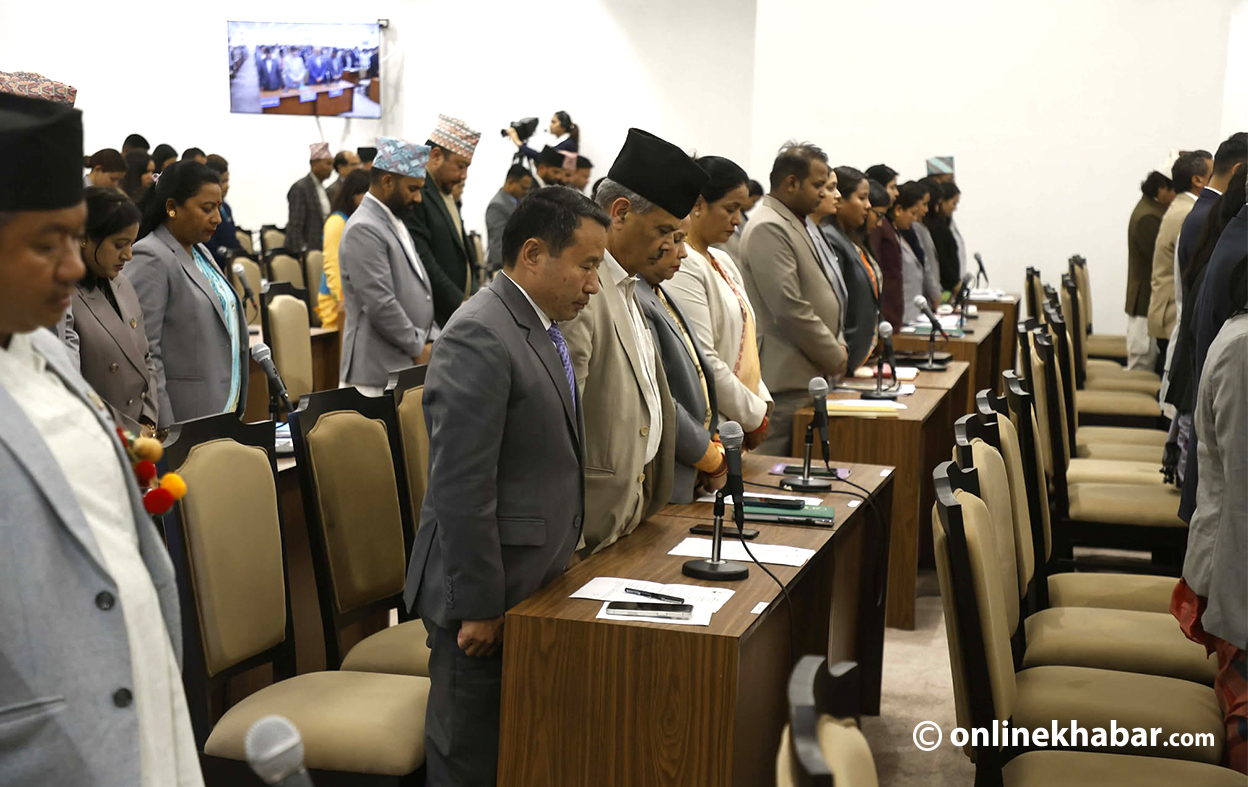
Gurung advises that the Prime Minister should provide clarity on all issues raised or likely to arise in Parliament, ranging from foreign relations and economic policy to citizen relief measures.
“The Prime Minister needs to stand at the parliamentary rostrum and present his stance,” he said. “All issues brought up in Parliament should be discussed openly so that ordinary citizens understand the government’s policies and the country’s progress.”
Prime Minister’s Chief Personal Secretary Subash Sharma stated, “There are no immediate plans for the Prime Minister to address Parliament.”
On the first day of Parliament, constitutional expert Dr. Bipin Adhikari remarked that the Prime Minister’s absence caused some uncertainty. “He will likely address the House after the Speaker’s election,” he suggested.
Previously, when the party chairman and Prime Minister were the same person, the Prime Minister routinely presented views from the rostrum. This time, since the party leader and Prime Minister are different individuals, experts say it is appropriate for the Prime Minister to express his own views personally.
What Are the Prime Minister’s Plans?
Since March 31, meetings of the Federal Parliament’s House of Representatives and National Assembly have been ongoing. Officials from the Prime Minister’s Secretariat say he will address Parliament when the time is right.
When asked, “When will the Prime Minister address Parliament?” Chief Personal Secretary Subash Sharma replied, “There is no immediate preparation.”
According to the Federal Parliament Secretariat, the Prime Minister can speak in Parliament at any time and does not require special permission or a strict schedule.
House rules mandate that on one day each month, a direct question-and-answer session must be held with the Prime Minister.
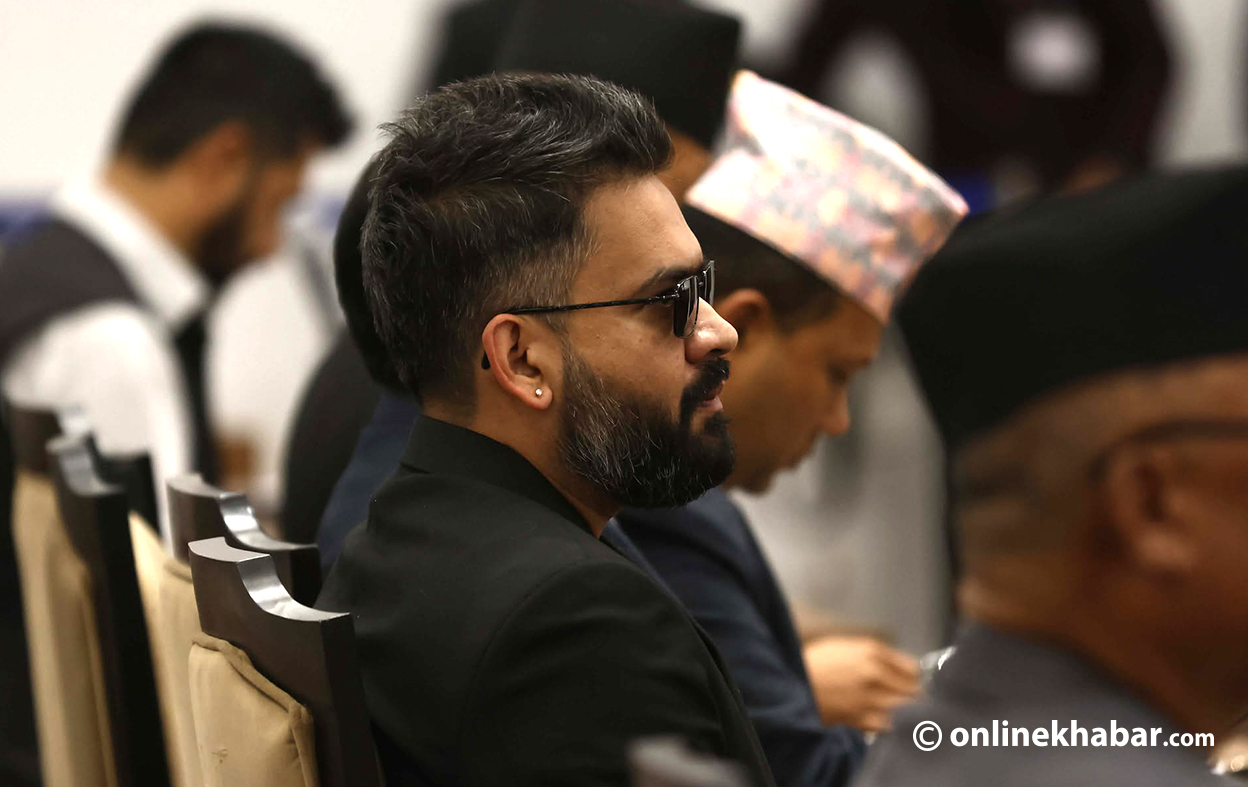
Rule 56 of the House of Representatives procedural regulations states, “The Speaker shall allocate the first hour of the first week’s meeting each month to questions directed to the Prime Minister or related portfolios.”
A similar rule applies in the National Assembly where the Chairperson can allocate time during the third week’s session for direct Q&A with the Prime Minister.
The Prime Minister may use these question-and-answer sessions to articulate his policies and vision.
“The Prime Minister Is Being Sought in Parliament”
At the House session last Monday, Rastriya Swatantra Party MP Khushbu Oli questioned the government’s acceptance of loans from the Asian Development Bank and the World Bank.
She asked, “Which parliamentary committee or policy debate validated this loan approval, and on what basis?”
On the previous Sunday, the Cabinet decided to accept a concessional loan of 90 million USD for the Digital Nepal Transformation Project, alongside an additional concessional loan of up to 95 million USD from the World Bank.
MPs have raised questions about whether the separation of powers principle is upheld, whether the government listens to Parliament, if budget discussions happen in time, whether ministers keep their doors open to MPs, and if vested interest groups dominate legislation processes.
The government has previously accepted concessional loans, but following this decision, Parliament must seek answers.
MP Oli noted, “Our Parliament is still in its infancy. Parliamentary committees and subcommittees have not even been formed. In such circumstances, decision-making cannot be fully transparent.”
She also questioned the loan procurement process: “Did we request this loan, or was it imposed? Is it an offered loan or a requested one?”
The government will have to respond to these inquiries in Parliament. The Prime Minister is also expected to answer these questions.
At the March 31 House session, Nepali Congress MP Bhishmaraj Angdambe asked whether the government intends to publicly release the investigation commission’s report.
The Janajati uprising on March 6 and 7 resulted in 76 fatalities nationwide, along with widespread arson and destruction.
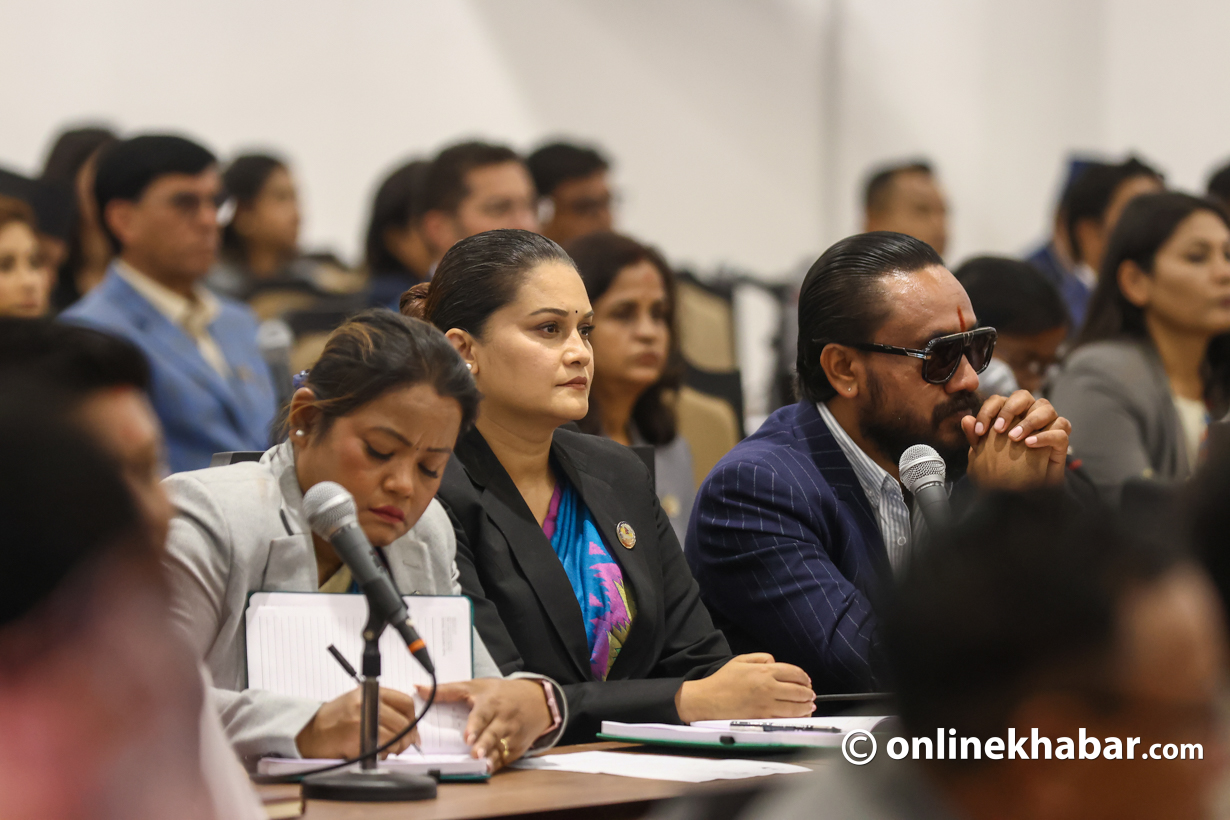
Led by former Justice Gauribahadur Karki, the investigation commission has submitted its report to the government, but it has yet to be officially published. Despite the government’s silence, media outlets have reported some details.
MP Angdambe demanded answers from the Prime Minister about releasing the report and emphasized the need to clarify the events of March 6 and 7.
Though it remains unclear when the Prime Minister will respond to these parliamentary questions, MPs continue to express their concerns and reminders.
In the National Assembly on Monday, Nepali Congress MP Ranjit Karn proposed cooperation with the government, saying, “I request the Prime Minister to come forward for national unity, to prepare agendas through collaboration.”
Despite potential differences during elections, once completed the goal is a prosperous Nepal and a respected Nepali citizenry. It remains to be seen whether the Prime Minister will accept this offer of collaboration from the opposition.
Commitment to improving relations between Parliament and the government has also been demanded.
Rastriya Swatantra Party MP Manish Jha has called for a guarantee that the Parliament Palace will never be held hostage from within Parliament. He said in the previous session, “In the past, the Parliament was confined to Khumaltar, Baluwatar, and Balkot, counting numbers only while weakening principles.”
These remarks notably referenced former Prime Ministers Pushpa Kamal Dahal ‘Prachanda’, KP Sharma Oli, and Sher Bahadur Deuba—Prachanda was in Khumaltar, Oli in Balkot, and Baluwatar was the then-Prime Minister’s residence.
MP Jha further demanded that Parliament remain free from interference by Baluwatar, the Prime Minister’s office.
Rastriya Swatantra Party MP Ganesh Parajuli also raised issues including respect for the separation of powers, government responsiveness to MPs, punctual pre-budget discussions, MPs’ access to ministers, and the influence of vested interest groups in lawmaking.
He urged against repeating past political mistakes and stressed the importance of timely resolution of issues raised in Parliament.
“The government must advance the issues raised in Parliament into constitution, legislation, and policy. Once raised in Parliament, they can be resolved,” Parajuli stated.
All these questions and concerns require the Prime Minister’s direct response from the parliamentary rostrum so he can clearly communicate his vision to both Parliament and the public.


