




News Summary
Created by AI, editorially reviewed.
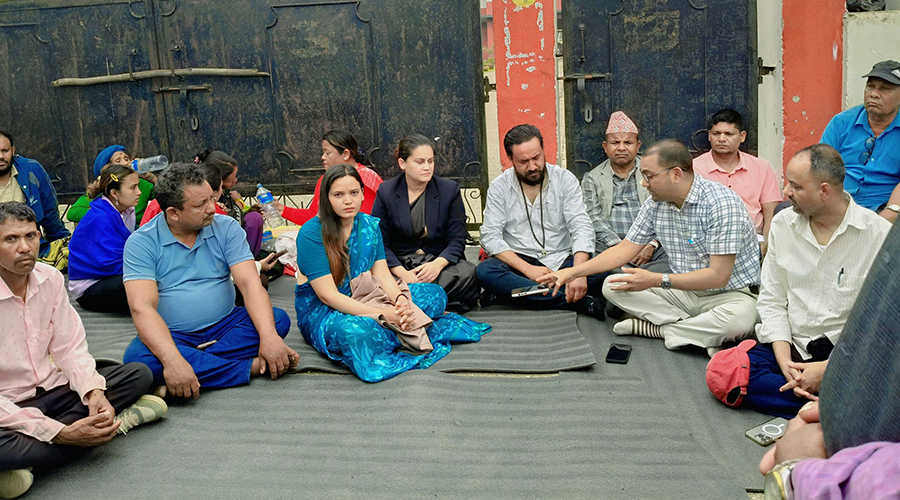
- Following the suspicious death of Dalit youth Shreekrishna Bik in police custody in Sindhuli, six MPs from Rastriya Swatantra Party (Raswapa) and CPN held a sit-in protest in front of the district administration office.
- The police claim that after filing a rape complaint against Shreekrishna, he was sent to Sindhuli and committed suicide while in Khurkot custody, but his family suspects foul play.
- Inspector General of Police Dan Bahadur Karki has formed an investigative committee chaired by DIG Dinesh Kumar Acharya to probe the case, yet the family and MPs demand a fair investigation.
April 13, Kathmandu – On Thursday evening (April 10), six parliamentarians staged a sit-in protest at the gate of the District Administration Office in Sindhuli. Among them, five were MPs from Rastriya Swatantra Party (Raswapa), currently close to a two-thirds majority in government.
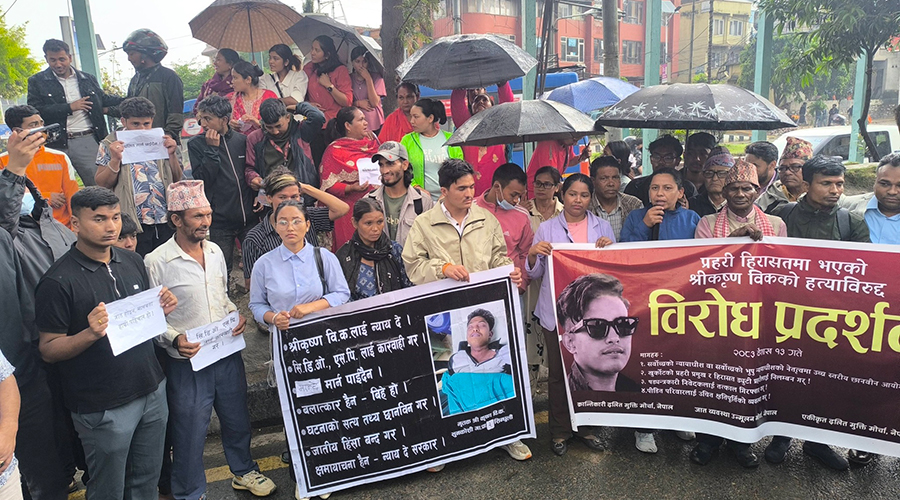
The protesters included Raswapa MPs Khagendra Sunar, Rima Bishwakarma, Sushma Swarnakar, Khima Bishwakarma, Ashish Gajurel, and CPN MP Ganesh Bik.
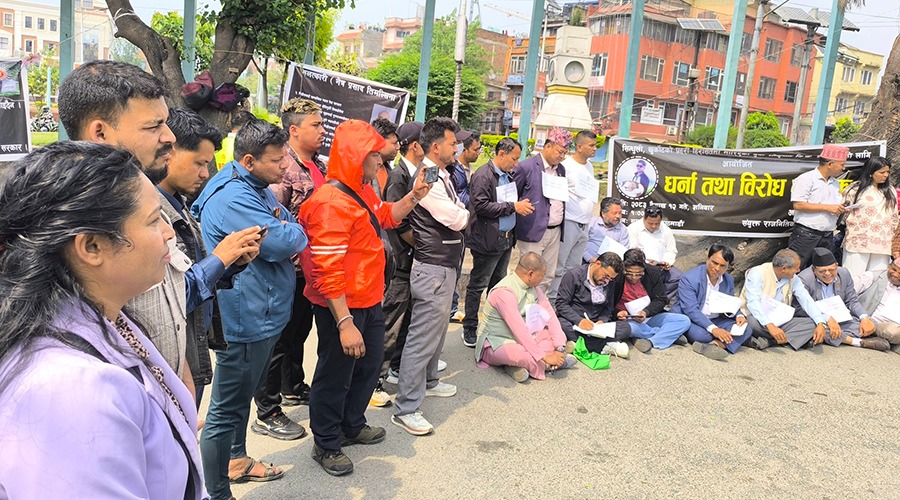
Except for Gajurel, all are Dalit representatives. Gajurel is an MP representing the constituency where the protest took place. The sit-in continued on Friday and expanded to Maitighar, Kathmandu, on Saturday.
The protest also drew participation from former lawmaker Bimala Bik, Laxmi Pariyar, J.B. Bishwakarma, President of the Dalit NGO Federation, Vice President Sushila Bik, General Secretary of the Dalit Women’s Centre Gauri Nepali, among others.
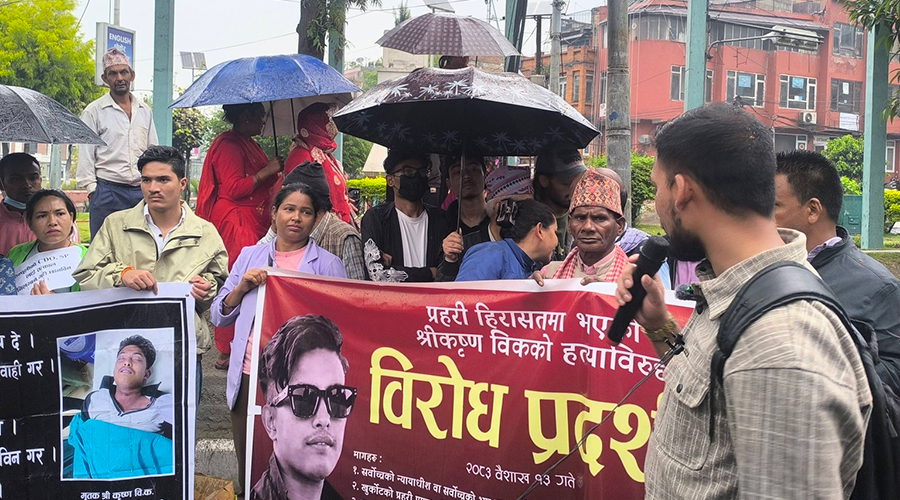
All these Dalit MPs and activists share a common commitment: “Justice for Sindhuli’s Shreekrishna Bik, who died suspiciously in custody.” On Sunday, family members of the victim and other Dalits held a sit-in at Maitighar.
Although 275 MPs were elected to the House of Representatives on February 21 with a commitment to political, economic, and social justice, only Dalit MPs and activists have so far demanded an impartial investigation into the suspicious death of Dalit youth Shreekrishna Bik in custody. It appears that while other issues concern everyone, Dalit issues are considered solely theirs.
Apart from one CPN MP, all those protesting belong to the ruling Raswapa. MPs from other parties and non-Dalit representatives appear unaffected by this incident. The Nepali Congress’s reaction was limited to a press statement. On April 11, their Central Working Committee expressed concerns and called for a fair investigation.
The UML party did not even dare to issue a statement. Despite a CPN MP participating in the protest, the party has not made this an issue.
Harka Sampang, chairperson of the Fifth State Power Labor Culture Party, has consistently spoken out about squatters on Facebook but remained silent on this Sindhuli incident.
Shreekrishna Bik’s death came shortly after Raswapa apologized to the Dalit community for historic oppression—less than a month after Raswapa Chairperson Ravi Lamichhane offered a public apology on the House floor on March 19.
“When in doubt if a mistake happened, Khagendra Sunar apologized. Have we been apologizing for centuries of injustice against Dalits?” Lamichhane said. “To the Dalit community of this country, I want to say: this government is publicly and collectively asking forgiveness from this House for centuries of discrimination, injustice, and oppression.”
Lamichhane emphasized that the discrimination and injustice faced by Dalits are organized crimes and that “no Nepali will feel insulted based on caste from now on.”
However, less than a month after this declaration, Shreekrishna’s love marriage was forcibly broken because he was Dalit, leading to his death. The Dalit youth, in an inter-caste relationship, was taken from Satdobato, Lalitpur to Sindhuli, where he mysteriously died in police custody at Khurkot.
Though some Raswapa MPs raised the issue of Shreekrishna, the party that apologized to Dalits has not officially spoken on the matter. No official party stance has been made public.
This demonstrates a developing political culture that confines caste-based violence to Dalit issues alone.
Shreekrishna’s mysterious death reflects not just a family tragedy but also serves as a mirror to the structural psychology of the Nepali state. Similarly, the decade-old case of Ajit Mijar’s body in the forensic department of the Teaching Hospital shows the same pattern: Dalits speak, while others listen. This is not coincidence but a structural trend.
How Did an Inter-Caste Love Relationship Become a Rape Case?
According to the victim’s family and police, Shreekrishna Bik and the girl who filed the rape complaint were acquaintances for about two years. The victim’s uncle, Labikumar Bik, said, “They reportedly had a love relationship for around two years.”
Yet, a rape case was filed against Shreekrishna, which ultimately led to his death. Initially, no rape complaint was reported to the police.
The girl lived in the same Satdobato area. Her family filed a report on March 30 after she went missing on March 28. SP and spokesperson of Lalitpur Police Gautam Mishra explained that the girl’s family requested a search.
On April 3, the missing girl and Shreekrishna visited the Satdobato police station with their relatives. According to SP Mishra, the girl’s relatives filed a written rape complaint at that time.
“Since the victim was only 16, the law does not permit marriage even with consent, so it was impossible to settle the matter through mutual agreement,” SP Mishra explained.
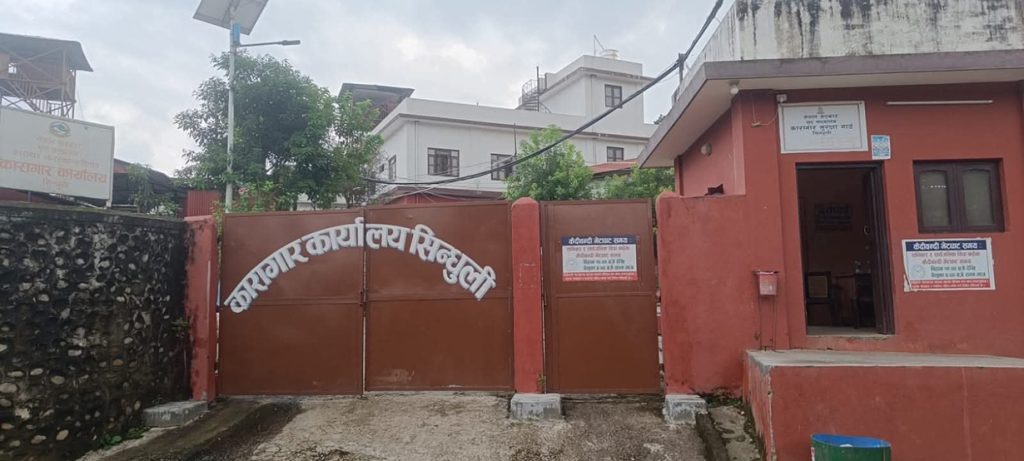
On April 4, the Satdobato police sent Shreekrishna to Sindhuli with a police team. Subsequently, Khurkot Police Office registered the rape case and began investigation.
“The law prohibits marriage for persons under 16. Since a complaint was filed, investigation was necessary,” said Sindhuli Police Chief SP Lal Dhwaj Subedi.
MP Khagendra Sunar, vocal about Shreekrishna’s death, revealed that the girl was allegedly coerced into signing the complaint. “Her uncle was a policeman. After threatening that they would accept the relationship only if the boy stayed separate, she was tricked into signing the document, which was a rape complaint,” Sunar stated.
Though sent to Sindhuli after the complaint, Sunar voiced that dying in custody is a serious concern.
Shreekrishna’s uncle Labikumar said that after receiving a call from the girl’s side proposing marriage, Shreekrishna was brought to Kathmandu from Sindhuli, but police lodged him at Satdobato Police Station, which he alleges led to the tragic outcome.

How Did the Death Occur?
Upon arriving at Khurkot Police Office, Shreekrishna’s uncle Labikumar stated that he advised Shreekrishna to admit any mistakes, maintain calm, and not be afraid.
Police called the family on April 3 and on April 4 transferred Shreekrishna to Khurkot, where the police obtained a seven-day extension to continue investigations.
According to SP Lal Dhwaj Subedi, he was kept in judicial custody at Khurkot because legal proceedings were ongoing.
Shreekrishna was kept alone in custody. Under Inspector Commander Basant Bhujel’s leadership, 23 police personnel were stationed at Khurkot. On April 7, when he was to be transferred to Sindhuli for legal matters, relatives did not visit.
The family was informed that Shreekrishna committed suicide at 6 PM by hanging himself with a black shirt in the custody bathroom and was taken to Sindhuli hospital, where he died during treatment, according to SP Subedi.
He dismissed rumors of police beating and murder, noting that the investigation committee was formed even before the post-mortem. Nevertheless, he admitted that death in custody is tragic and reflects police lapses.
Family’s Account: Suspicious Circumstances
Despite police claims that Shreekrishna hanged himself, the family refuses to accept this. They argue that as he was the only detainee in custody, no other prisoners could have been involved. Hence, they suspect police involvement.
“Though police claim he hanged himself, they have not shown us the photo. We have not seen CCTV footage. There are bruises on his body,” said uncle Labikumar Bik.
MP Sunar also labeled the incident mysterious, alleging that after coercion into a rape complaint and subsequent threats, the girl chose to stay with Shreekrishna. He further asserted that police tortured him when she considered leaving.
“All these events followed by such a sudden death make the police responsible. A five-foot man cannot hang himself in a three-foot window,” expressed Sunar’s doubts.
The family demands an investigation and punishment for those responsible.
Shreekrishna’s mother, Nandamaya Bik, has come to Kathmandu seeking justice for her son.
The National Dalit Commission has also met IGP Dan Bahadur Karki to demand a fair investigation. Chairman Devaraj Bishwakarma said, “We have requested a fair investigation and brought this to the police chief’s attention.”
Police Investigate Police?
Following the suspicious circumstances, IGP Dan Bahadur Karki formed an investigative committee on Friday. The committee, signed by Karki, is chaired by DIG Dinesh Kumar Acharya and includes officials from the National Police Training Academy Maharajgunj, UN branch SP Ravindranath Paudel, Central Investigation Bureau Inspector Indrajit Sunar, Kathmandu Valley Crime Investigation Office Inspector Prem Regmi, and Assistant Police Inspector Rajeshwar Devkota. They were given seven days to complete the probe.
The team has already started investigating in Sindhuli. However, given suspicions about police involvement, questions remain about how credible a police-led investigation can be. Former DIG Hemant Mall agrees.
“This is an internal police investigation with no outside members. If dissatisfaction persists, the government may need to form another committee,” he said.
The committee will examine police negligence and areas needing improvement. Once the post-mortem report is out, the death circumstances will become clearer, Mall added. “Hanging cases are usually clarified by post-mortem reports.”
Given doubts about police roles, the possibility of a judicial or parliamentary inquiry is also being discussed.
Who Was Shreekrishna?
Shreekrishna Bik, 23, was from Jumli Danda, Ward No. 3, Sunkoshi Rural Municipality in Sindhuli. A vehicle driver by profession, his family depended on him after his father died a few years ago.
He was the youngest among five brothers. Shreekrishna had been supporting the family, and the brothers had even taken a loan to buy another vehicle.
In a longstanding love relationship, Shreekrishna had brought his girlfriend from Khotang to his home in Jumli Danda on March 28.
Why Do Suspicious Deaths in Custody Continue?
Shreekrishna is not the first to die suspiciously in custody. Numerous such deaths have occurred, affecting Dalits and non-Dalits alike.
These incidents raise repeated questions about the role of police within their own detention facilities, which remain largely unreformed despite reports of torture.
The Human Rights Commission occasionally monitors detention centers, noting their unsuitability for habitation and citing ongoing torture, while suggesting reforms. Despite this, custody deaths persist.
Former DIG Mall emphasizes the need to improve police duties. “When the police arrest someone, questions naturally arise if any incident happens. Most custody deaths involve hanging in bathrooms without CCTV coverage. When families fail to trust the police, problems follow,” he stated.
He insists on necessary reforms in custody facilities and police conduct to prevent deaths. Without improvements, incidents like the one in Sindhuli may continue.


