




News Summary
Created by AI. Editorially reviewed.
- Gita Adhikari from Tanahun sold her house in Kathmandu and started ‘Green Himalaya Farm Stay’ in her village.
- The farm stay spans 75 ropani land, cultivating vegetables and fruits alongside dairy farming, offering local produce to tourists.
- The farm stay provides regular employment to six people and attracts both domestic and international visitors.
April 7, Chitwan – While many people continue to migrate from villages to cities and abroad seeking facilities and opportunities, Gita Adhikari of Bhanu Municipality-9, Chiti, Tanahun, has sold her house in Satungal, Kathmandu, and launched a farm stay enterprise in her own village.
After residing outside the village for nearly 25 years, Gita is now managing ‘Green Himalaya Farm Stay’ within about 1.5 kilometers of Archaldhara Customs area in Tanahun.
She shared, “Initially, I planned to live simply in the village and farm vegetables and fruits. However, staying here inspired me to try something new. I invested close to 20 million rupees in renovating the traditional stone and mud house and establishing the farm stay.”
Located about 1.3 kilometers south from Archaldhara on the Tanahun-Dumre to Besisahar road, ‘Green Himalaya Farm Stay’ combines tradition with modernity. The farm aims to connect the younger generation with rural tourism and to set a model of successful entrepreneurship.
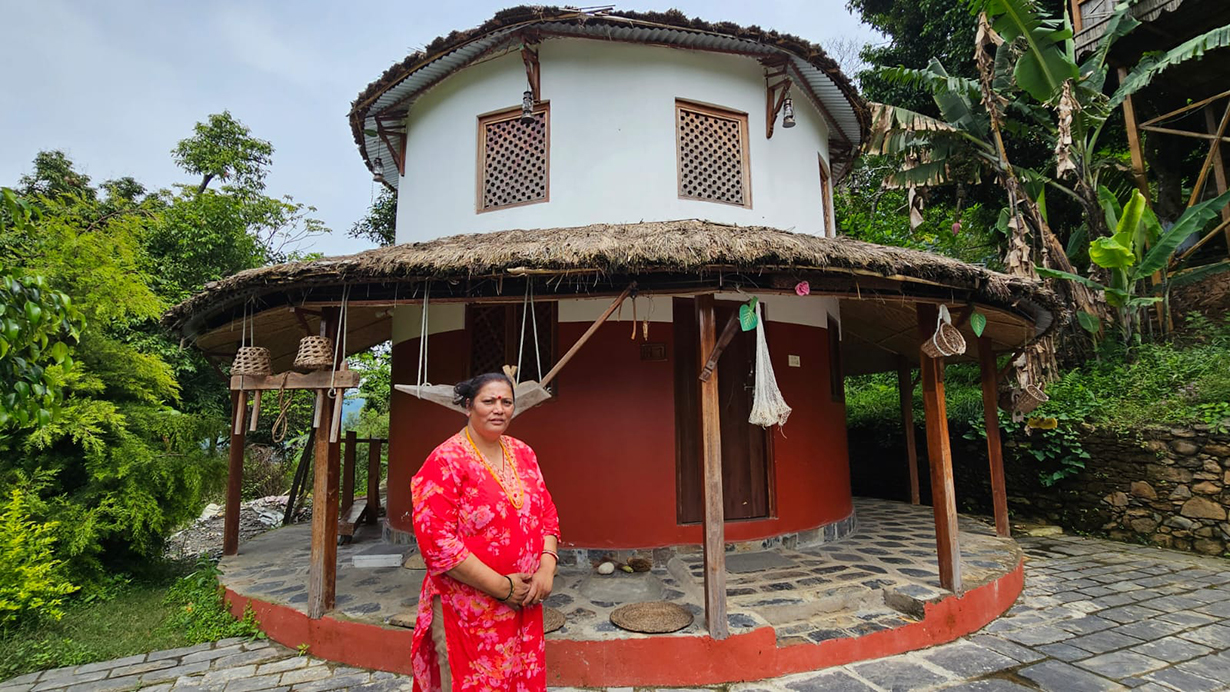
The ancestral stone and mud home has been repaired and painted. The “kitchen house” is built using stone, and added conveniences and an attractively landscaped lawn with fencing enhance the courtyard.
Traditional farming tools such as dhiki (traditional rice husker), yanto (winnower), plow, juwa (rice pounder), khurpeto (small sickle), and fishing traps are preserved in a specially built roundhouse that serves as a focal point for visitors.
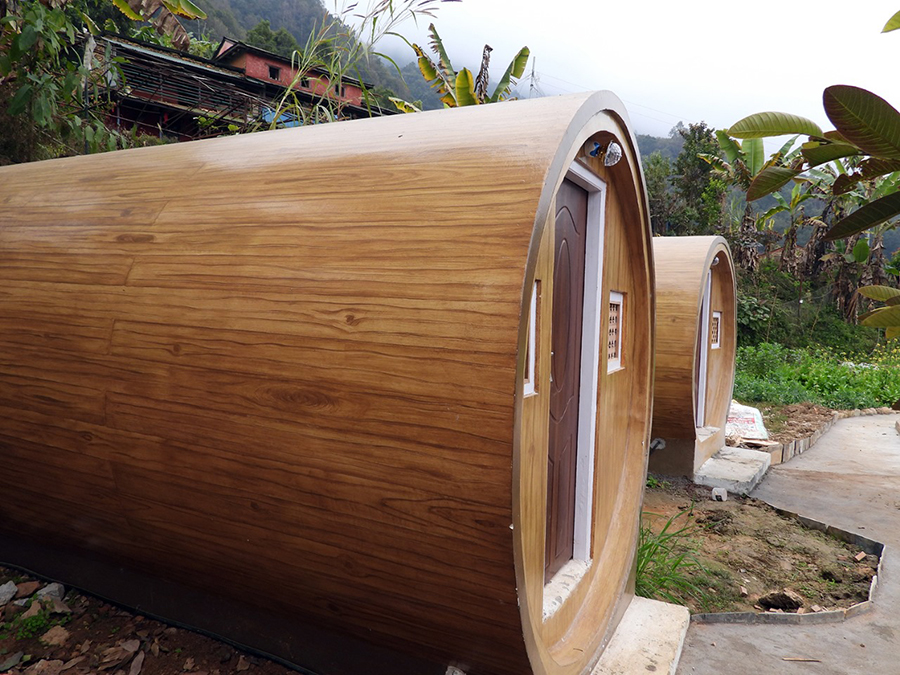
The roundhouse’s ground and first floors feature fully equipped guest rooms with bathrooms. Nearby, a treehouse has been constructed on a lychee tree for tourist accommodation. Additionally, a three-room villa and two barrel houses provide unique stay experiences.
Gita explained, “Our village houses were traditionally built from stone and mud, but these homes are disappearing. To help tourists remember the past and educate the younger generation, we have constructed a stone and mud house.”
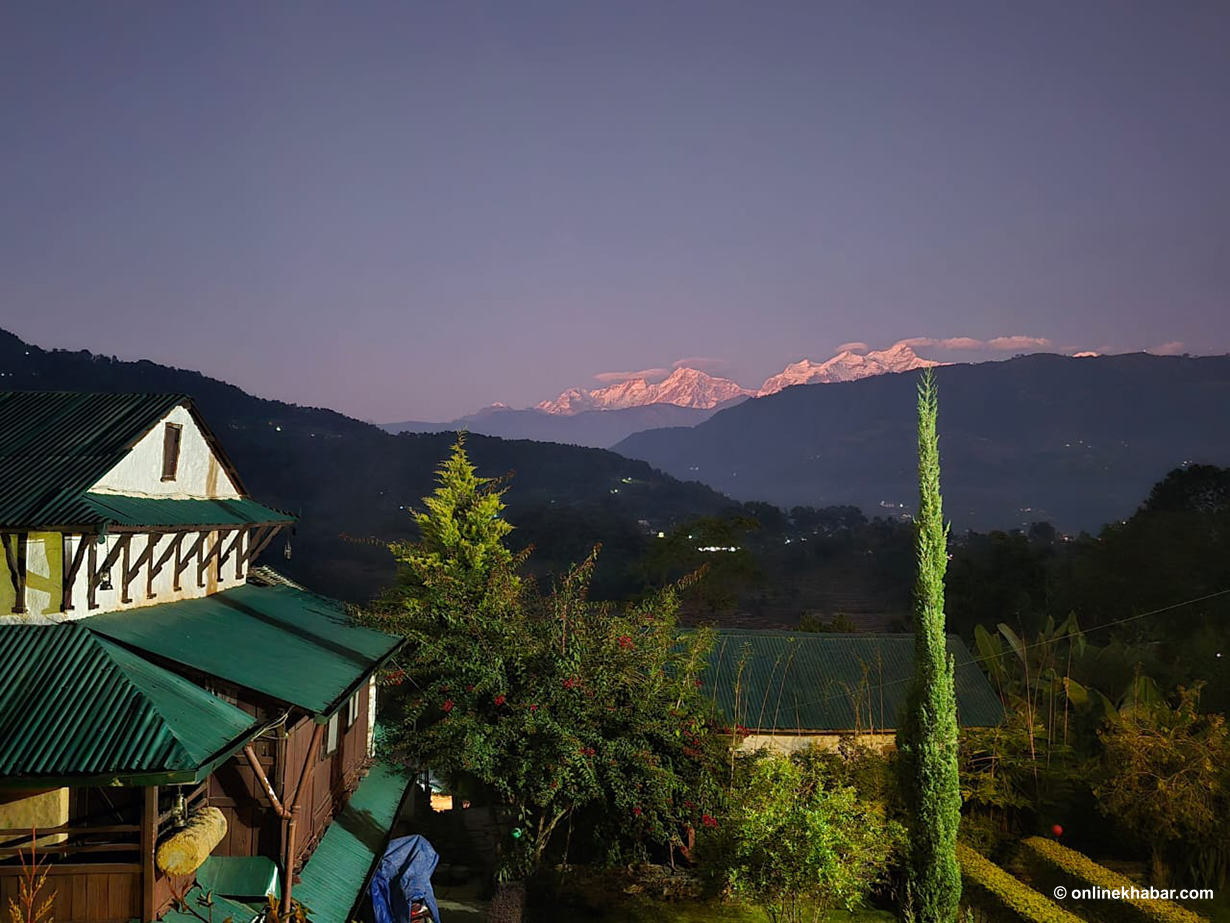
From here, various Himalayan peaks and scenic hills are visible to the north. Situated amidst lush green mountains, the farm stay has been named ‘Green Himalaya Village Farm Stay.’ The goal is to promote rural tourism connected with local agriculture using indigenous products.
Her husband, Rajendra Dev Pandey, added, “Following the concept of ‘farm to kitchen and kitchen to farm,’ our aim is to involve the younger generation in rural tourism.”
Currently, six people have regular employment at the farm stay, with more hired as needed. Tourists from various parts of Nepal including Tanahun, Chitwan, Lamjung, Kathmandu, Pokhara, Dhankuta, Ilam, and Butwal, as well as international visitors, have been frequent guests.
The charge for visitors is NPR 2,500 per person, NPR 4,500 for a couple, and NPR 2,000 per person for groups of more than ten people.
Guests are served snacks including sticky rice and maize, evening meals featuring local chicken, and breakfast including fruits, milk, yogurt, millet bread, and vegetables.
According to the founder, the farm stay can accommodate 30 guests simultaneously, expandable up to 40 if necessary. Many tourists also visit during the day just to enjoy the surroundings and sample meals.
Guests Served Produce From Own Farm
Vegetables and fruits grown on the farm are offered to guests. The farm stay spreads over 75 ropani, with about 10 ropani occupied by buildings and the rest utilized for farming and cattle rearing.
Guests are served rice, mustard oil, vegetables, local chicken meat, milk, yogurt, sticky rice, and clarified butter sourced directly from the farm.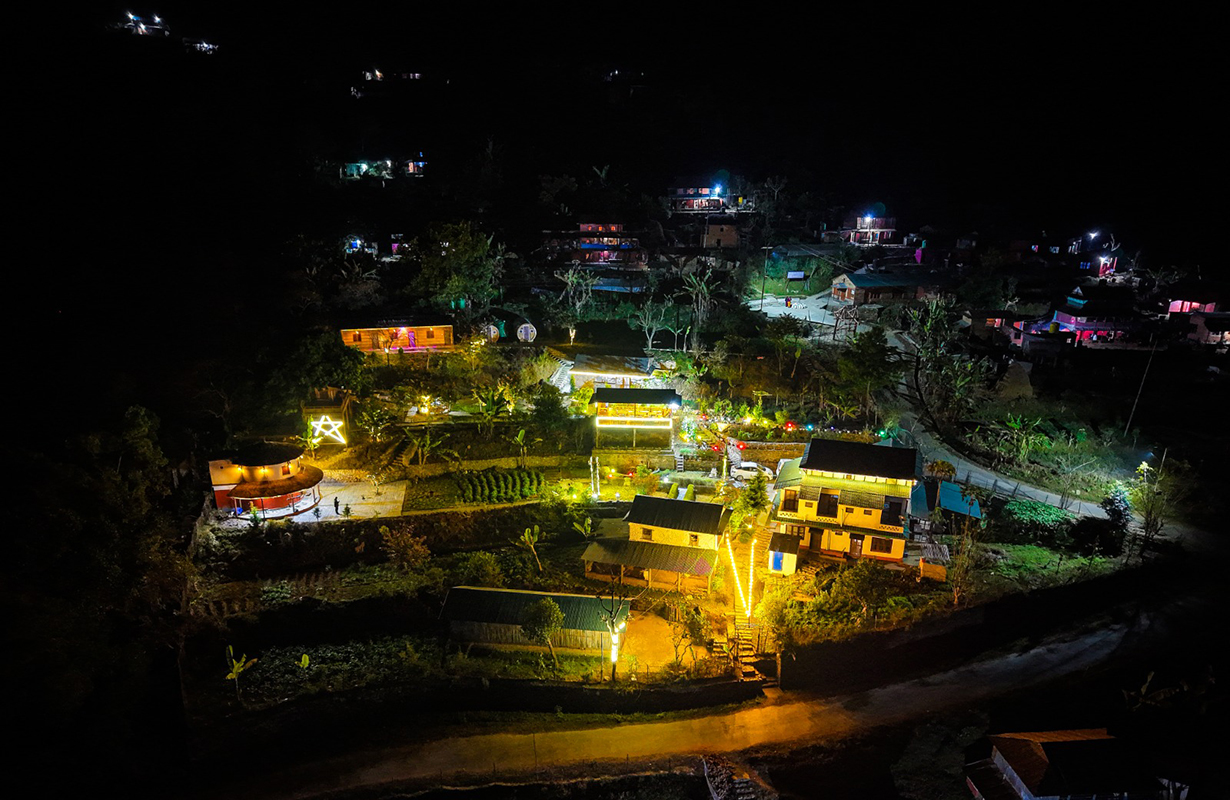
Fruits such as mango, lychee, peach, avocado, and nuts are also provided. If farm production is insufficient, fresh vegetables, fruits, chicken, eggs, and milk are procured from neighboring villages to ensure 100% organic quality. This has also increased income opportunities for locals.
Gita remarked, “When we left the village, the farmland was barren. We made it cultivable, planting various fruits and medicinal herbs. We have worked hard to provide visitors a unique experience.”
Revitalizing Village Life
Gita and Rajendra observed increased activity in the village since their return. Rajendra noted, “Educated people are coming back, and the urge to leave the village has lessened. Living in the village is easier and more peaceful than the city. I supported my wife’s wish to return, which sends an important message.”
Their investment and efforts have inspired other homeowners to start community homestays, where guests share accommodations and cultural programs are conducted.
They have two children; their son lives in America and daughter works in Kathmandu. Although initially opposed, their children are now eager to return to the village.
Focus on Preserving Traditional Materials and Agro-Tourism
They believe agro-tourism educates young people about agriculture and traditional materials. Various school students, farmers, and cooperative groups visit the farm stay to learn ways to revive the village.
Village infrastructure has improved, with paved roads, water supply, internet, and health posts available. Rajendra remarked, “If educated people return with the intention to contribute, it can have a positive social impact. We chose to leave comfortable city life and do something meaningful in the village.”
Parents are pleased when their children visit the farm stay to learn about agro-tourism. Gita explained, “Tourists get to understand the traditional social fabric of the village. Our goal is to establish how the village was and is now.”
She added, “Working with your hands outdoors is far more satisfying than living confined in the city. I have no regrets about selling my Kathmandu home and returning to the village. I am eager to undertake more new initiatives.”


